The dietary and wellness supplement market in the MENA region is growing fast. Consumer demand for weight management and general wellness products has been rising steadily across North Africa and the Middle East, driven by an increasingly health-conscious population with growing purchasing power and expanding access to e-commerce. The supply side of that equation has been slower to respond.
Most Western supplement brands and affiliate advertisers have kept their distance from MENA. The reasons are familiar: regulatory complexity, cultural nuance, logistics challenges, and the perception that markets without established e-commerce infrastructure aren’t worth the investment.
INB.bio wellness ecosystem has spent six years proving that perception wrong.
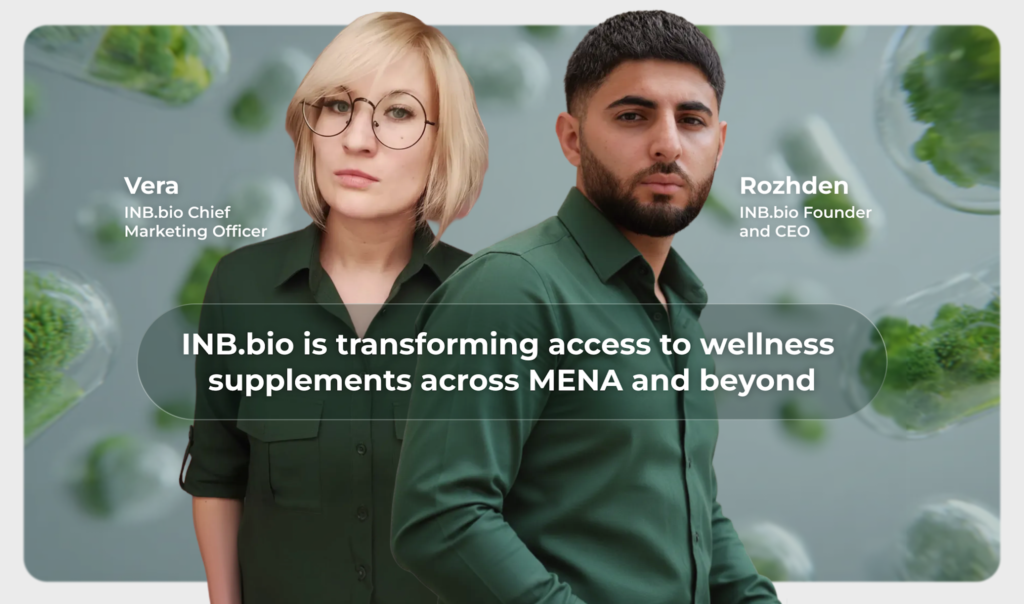
Founded by Rozhden Totskoinov and now operating in 15+ countries across Africa, Asia, and Latin America, INB.bio is a direct wellness advertiser that builds full operational infrastructure in every market it enters: local production, native call center teams, country-specific delivery networks, and a product portfolio developed specifically for local demand.
The gap INB.bio was built to close
The structural problem in MENA’s supplement market has never been demand. There has been a mismatch between what international brands offer and what MENA consumers actually need.
Products developed for European or North American markets don’t translate cleanly. Formulations that suit one population’s dietary patterns, health concerns, and cultural context often miss in another. Marketing that works in Germany reads as tone-deaf in Egypt. A call center script written in English and run through a translation tool is a liability.
Rozhden Totskoinov built INB.bio around the conviction that the only way to serve these markets properly is to operate inside them.
“The opportunity in MENA is real and substantial,” Rozhden says. “But you can’t access it by pointing traffic at a generic offer from a European server. You have to understand what people in these markets actually want, why they want it, and how they make purchasing decisions. That requires being present, with local teams, local products, and local infrastructure. We are doing it through research, not only online, but through focus groups with real people. Enter a new market the way you would enter someone’s home: by studying the culture, language, and religion, and by learning what people actually need instead of imposing rules. This approach leads to better outcomes.”
That presence is what differentiates INB.bio from most international advertisers attempting to operate in the region. The company builds the operation itself, country by country, function by function and invites local experts to participate at every stage of development.
The operational infrastructure behind the market entry
Building a product that works in a MENA market is one challenge. Getting it to customers reliably, in a region with varying levels of logistics infrastructure, is another.
INB.bio operates on a cash-on-delivery model across its markets, the dominant payment model in MENA e-commerce, where a significant share of consumers remain cautious about online payment. COD works well when the delivery operation is reliable and the customer experience at the door is professional. It fails when either of those things breaks down.
The company’s delivery infrastructure in each country it operates in is built to make that experience consistently positive. Warehousing and fulfillment are managed internally. Delivery confirmation is handled by native call center teams who communicate with customers in their language, in a register that matches local norms. In major cities with sufficient order volume, INB.bio uses its own courier teams. In smaller cities and more remote areas, the company works with local logistics partners under strict SLA requirements and with backup providers in place.
The result is a last-mile experience that functions as a brand touchpoint rather than a logistical afterthought.
The cultural intelligence layer
Beyond logistics and product development, INB.bio’s operation in MENA relies on a layer of cultural knowledge that is difficult to build and impossible to fake.
The company’s native specialists in each country are professionals who understand the specific social context of their market, how trust is built between a brand and a consumer, what claims resonate and what claims create skepticism, what visual and verbal cues signal legitimacy versus suspicion, and how marketing needs to be adapted not just for language but for the way people in that culture process commercial messages.
Vera Petryk leads the team responsible for that intelligence. Her professional training at the Netherlands Institute of Marketing and 14 years of experience across markets that most of her peers haven’t operated in gives her a specific fluency in the gap between data and culture.
“Culture says the drop came from a cultural misread: either an untrustworthy visual cue in that context or a claim that felt implausible for how the market understands the category. You can’t A/B test your way out of that, you have to understand the market first.”
How products are built for MENA markets
INB.bio’s product development process starts with the market.
Before any product enters a new country, the company conducts local demand research: analyzing what health and wellness concerns are most prevalent in that specific population, what product formats consumers are familiar with and trust, what price points work within local purchasing patterns, and what regulatory requirements apply to supplement products in that jurisdiction.
What the MENA opportunity looks like now
The markets INB.bio operates in across North Africa and the broader MENA region (Algeria and Morocco) are at different stages of development within the company’s network. Some are established operations with multiple years of performance data, refined delivery infrastructure, and strong product lines. Others are newer entries where the infrastructure is still being built and optimized.
What they share is the underlying demand dynamic: populations with growing health awareness, expanding e-commerce adoption, and limited access to quality wellness products positioned and priced for their market.
For the wellness and beauty supplement industry, that combination represents a significant and largely untapped opportunity. INB.bio has been building toward it for six years. The infrastructure it has built, the local teams, the native operations, the culturally adapted products and campaigns, is the platform from which the next phase of expansion is running.
“We are still in the early stages of what’s possible in these markets,” Rozhden says. “The consumer demand is there. The e-commerce infrastructure is developing quickly. And the gap between what people in MENA can currently access in health and wellness and what they actually want is still significant. We intend to close that gap, market by market, product by product, one delivery at a time.”