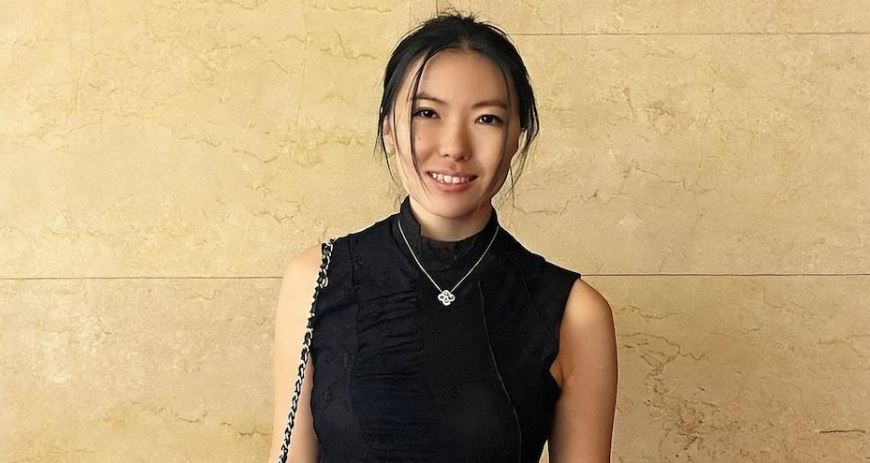
In today’s rapidly advancing world of AI and computational science, some breakthroughs quietly redefine what’s possible, combining elegant theory with concrete impact. That’s certainly the case for Shuwan Feng, whose recent research on the Move-to-Escape Enhanced Dung Beetle Optimization (MEDBO) and a novel U-Net Remote Sensing Image Segmentation Algorithm Based on Attention Mechanism Optimization has drawn widespread recognition across academic and industry circles. Her work, selected for special coverage, marks a significant step forward in both optimization algorithms and computer vision with real-world applications.
Currently, Feng works as a software engineer at Google, where she regularly leverages large models and large-language models (LLMs) in her day-to-day work. Her dual role, part industrial engineer, part academic researcher, gives her a unique vantage point: she understands both the demands of real-world engineering and the frontiers of algorithmic innovation.
From Nature-Inspired Metaheuristics to Engineering Solutions
TechBullion: Your MEDBO algorithm builds on the classic Dung Beetle Optimization (DBO). What motivated you to revisit and enhance DBO?
Feng: DBO is widely recognized for its robust optimization capability and relatively fast convergence, which makes it an attractive swarm-intelligence metaheuristic. Yet, like many nature-inspired metaheuristics, it suffers from a risk of being trapped in local optima during later stages of optimization. My goal was to overcome these limitations: to design a variant that retains DBO’s strengths while improving diversity, convergence stability, and practical performance in engineering and real-world tasks.
TechBullion: And how does MEDBO address those limitations?
Feng: MEDBO uses a “good point set” strategy for initializing the swarm, promoting a more uniform population distribution from the start. We also introduced a dynamic balance through adjusting the number of offspring versus foraging individuals over time. This design means the algorithm emphasizes global exploration early on, then gradually shifts toward local exploitation. This dynamic adjustment helps avoid stagnation, improving both convergence speed and the likelihood of finding high-quality solutions. In our experiments using the CEC2017 benchmark suite, MEDBO significantly outperformed the original algorithm.
Moreover, we validated MEDBO on practical engineering design problems, including pressure vessel design, three-bar truss design, and spring design, showing that MEDBO’s theoretical advantages carry over to real-world engineering performance.
Given the widespread interest in metaheuristic optimizers, MEDBO has quickly attracted attention. Some follow-up studies, including newer dung-beetle–based optimizers, have cited and extended MEDBO’s mechanisms for exploration-exploitation balance and escape behavior, underscoring its influence within the research community.
Bridging Optimization and Computer Vision
TechBullion: Your work isn’t limited to optimization, you also applied your expertise to computer vision, with a focus on remote sensing. What inspired the U-Net segmentation project?
Feng: Remote sensing imagery is both rich and challenging: high-resolution satellite or aerial images often contain complex spatial patterns and high variability in object scales. Traditional segmentation approaches sometimes struggle with this complexity. I saw an opportunity to combine optimized algorithmic strategies with modern deep-learning architectures to improve segmentation accuracy and robustness.
TechBullion: How does your attention-mechanism optimized U-Net differ from standard segmentation networks?
Feng: The key lies in enhancing how the network captures both local detail and global context. In many encoder–decoder segmentation architectures, including classical U-Net, features from different levels are combined, but often without sufficient refinement or context modeling. Drawing inspiration from attention-based segmentation research, our method integrates attention mechanisms to better capture long-range dependencies and refine feature representations. This not only improves segmentation precision, but also helps the model generalize across varying terrain, lighting, and sensor conditions, which is critical for remote sensing applications.
Given the growing demand for accurate Earth-surface analysis, our approach aligns well with recent advances: modern research shows attention-enhanced U-Net variants substantially improve segmentation performance on water-body, land-cover, and built-environment tasks in remote sensing.
Recognition, Impact, and the Path Forward
TechBullion: Your work has drawn attention from both academia and industry. Why do you think that is?
Feng: Because it matters on two fronts. First, from a theoretical and algorithmic standpoint, MEDBO shows that careful, biologically-inspired metaheuristics still have enormous potential, especially when thoughtfully improved. Second, on the application side, segmentation of remote sensing imagery has far-reaching, practical use cases: environmental monitoring, urban planning, disaster response, agricultural management, infrastructure mapping. Bridging these domains demonstrates versatility and real-world relevance, which resonates with a broad audience.
To date, the MEDBO paper has already been cited by several follow-up studies that further adapt or extend dung-beetle–based optimizers for more specialized tasks.
TechBullion: What about the potential financial or societal, or even medical, benefits of your work?
Feng: On the optimization side: many engineering design tasks, like structural design, resource allocation, scheduling, path planning, depend on efficient, reliable global optimization. MEDBO can help reduce material costs, improve structural safety, and speed up design cycles; in large-scale industry, that could translate into significant cost savings and faster time-to-market. For remote sensing segmentation: better segmentation accuracy supports more reliable land-use and land-cover maps, more accurate disaster assessment (flood zones, wildfire impact, deforestation), and improved monitoring of agricultural or environmental changes. Such capabilities can feed directly into economic decision-making, environmental policy, urban planning, even public safety.
Beyond that, attention-based segmentation models similar to ours (and to other state-of-the-art U-Net variants) are widely used not only in remote sensing, but also in medical imaging, for instance, segmenting organs or lesions in MRI/CT scans. The techniques and insights we develop could therefore inspire improvements in medical image segmentation as well, a crossover from Earth observation to human health.
Dual Role: Industry Engineer & Scientific Innovator
It’s especially noteworthy that Feng is not only an academic, she works full-time at Google, using large models and LLMs in practical engineering. This dual role gives her a unique perspective: she understands both cutting-edge research and the demands of real-world systems. That background has, no doubt, helped shape research that is both ambitious and grounded in practical application.
Her ability to navigate between deep algorithmic innovation and industry-scale engineering reflects a broader trend: AI and optimization research increasingly straddle the boundary between academic novelty and industrial impact.
Reflecting on Innovation in AI and Beyond
In a landscape where breakthroughs often come from incremental tuning or scaling, Feng’s dual-track innovation, revisiting and improving classic swarm-intelligence algorithms while adapting modern deep-learning techniques to high-impact tasks, stands out. It’s a reminder that meaningful progress sometimes comes from rethinking the foundations, rather than simply chasing the newest wave.
For both established researchers and emerging engineers, Feng’s work serves as an example: with careful design, cross-disciplinary thinking, and a readiness to bridge theory and application, it’s possible to contribute tools that matter, both in the lab and in the world.
TechBullion will continue following Feng’s progress closely, and we look forward to seeing where her next innovations will lead.