A closer look at the infrastructure, applications and community vision behind DannyChain
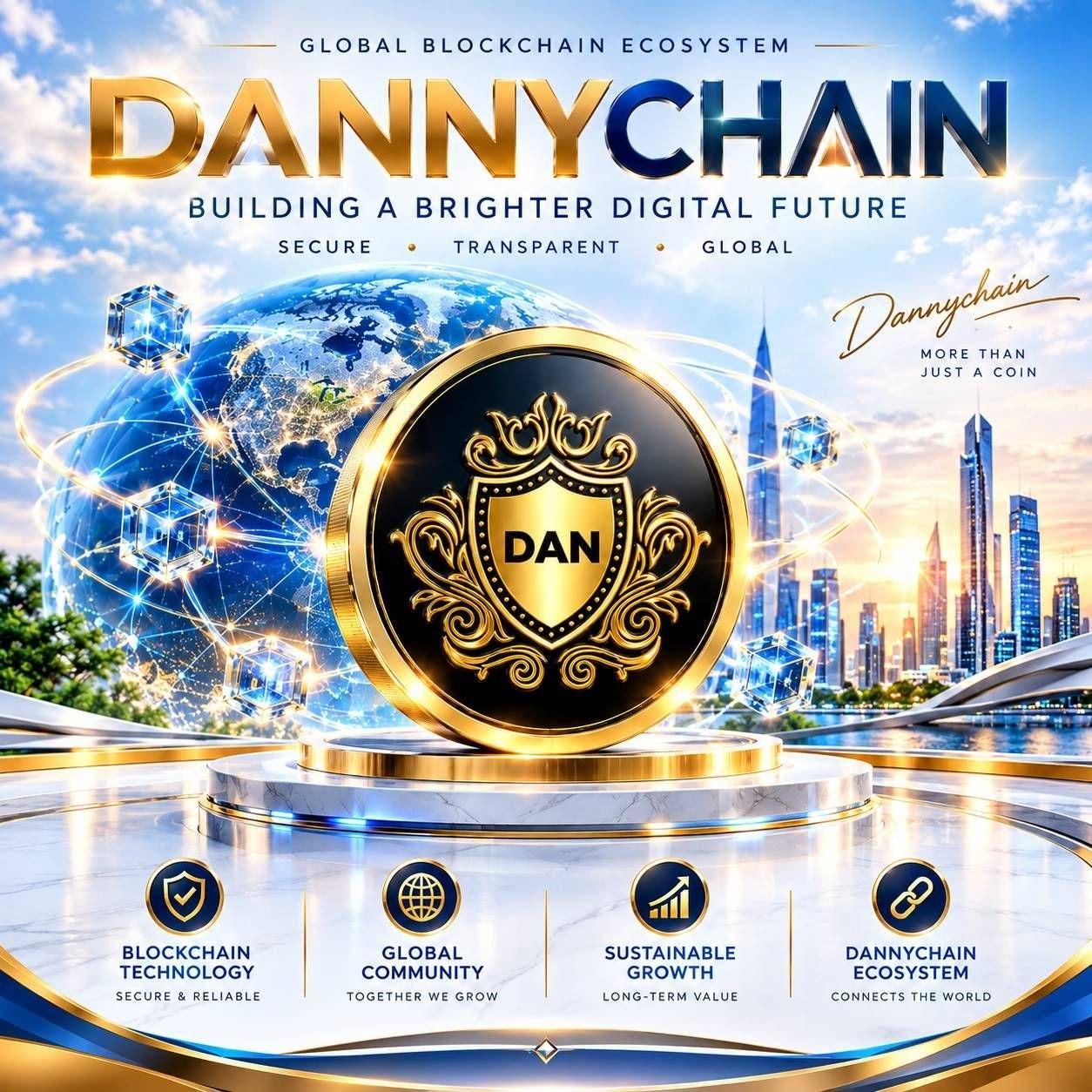
Blockchain has spent years proving that value can move without traditional intermediaries. The next question is broader: what happens when the underlying technology becomes useful enough to support the everyday digital experiences built around it?
That is where DannyChain is taking an interesting approach. Rather than presenting its network simply as a place to move tokens, the project is building toward a connected Layer 2 environment where decentralized applications, digital assets, developers and users can operate within the same wider ecosystem.
The Layer 2 Opportunity Is Bigger Than Speed
Layer 2 networks have become an important part of the blockchain landscape because they can make decentralized applications more practical by improving transaction economics and throughput while remaining connected to established blockchain infrastructure. Ethereum describes Layer 2 networks as a way to make activity faster and more cost-effective while extending the capabilities of the broader Ethereum ecosystem.
DannyChain approaches that opportunity with a Proof of Authority consensus model and an EVM-compatible architecture. The network presents itself as a high-speed, low-cost Layer 2, giving developers a familiar environment for Solidity-based applications and Ethereum-compatible tools. Its stated network configuration includes Chain ID 5069, a Web3 RPC endpoint, and a block explorer through DannyScan.
The appeal is straightforward: infrastructure only becomes valuable when people can actually build on it. DannyChain is therefore placing as much emphasis on what can exist around the chain as on the chain itself.
A Network Designed to Become an Ecosystem
DannyChain’s broader proposition starts with variety. Its ecosystem brings together decentralized exchange functionality, liquidity pools, staking, mining, bridging, wallets, NFTs and marketplace capabilities. That gives the network a much wider surface area than a single-purpose transaction layer.
Its DANDex platform, for example, provides token swapping and liquidity functionality across EVM-compatible environments. The platform is built around wallet-connected trading, liquidity pools and automated market-making, giving users a direct way to interact with digital assets without relying exclusively on centralized intermediaries.
This matters because ecosystems tend to become more useful when their individual pieces reinforce one another. A wallet becomes more useful when there are assets to hold. A DEX becomes more useful when there is liquidity. A blockchain becomes more relevant when developers have reasons to build on it and users have reasons to return.
Making the Builder Experience More Familiar
For developers, one of the biggest barriers to entering a new blockchain environment is not necessarily the technology itself. It is the learning curve around tools, interfaces and infrastructure.
DannyChain’s EVM compatibility addresses part of that challenge by allowing developers to use Solidity smart contracts and familiar Ethereum development tools. Its Web3 API is intended to work with popular wallets and development environments, including MetaMask, Trust Wallet, Remix IDE and Web3.js.
The network also supports interfaces for fungible and non-fungible tokens, with compatibility across commonly used standards such as ERC-20, TRC-20 and BEP-20. For project teams, that creates a foundation for experimenting with tokens, applications and new digital products without having to start from an entirely unfamiliar technical environment.
Where DeFi Meets the Rest of Web3
DannyChain is not limiting its story to decentralized finance. Its stated ecosystem direction stretches into NFTs, GameFi, marketplaces, digital payments and other Web3 applications, while its infrastructure is also positioned for areas such as AI platforms and high-volume transactions.
That broader positioning reflects how Web3 itself is evolving. Digital ownership, payments, gaming, financial services and online communities increasingly overlap. A user might interact with a token through a DeFi application, use the same wallet for an NFT marketplace, participate in a game economy and move assets between networks. The infrastructure underneath those experiences needs to be flexible enough to accommodate all of them.
DannyChain’s ecosystem model is built around that idea: one underlying network can support different experiences without requiring each application to exist in isolation.
Interoperability Makes the Ecosystem More Connected
Another important piece is connectivity between blockchain networks. DannyChain includes bridge infrastructure as part of its ecosystem, reflecting a broader push toward interoperability rather than treating individual chains as closed environments.
For users and developers, interoperability can mean greater flexibility around where assets live, where applications operate and how liquidity moves. It also fits naturally with DannyChain’s larger philosophy: connect people, connect applications and make the digital environment less fragmented.
DAN Gives the Ecosystem a Market-Facing Identity
Every blockchain ecosystem needs a native asset that connects its infrastructure with its users. For DannyChain, that role is played by DAN.
DAN is not presented simply as a token detached from the network. It sits within a broader environment that includes the chain, decentralized exchange infrastructure, staking, liquidity and other ecosystem components. That gives the asset a natural place within DannyChain’s wider digital economy narrative.
The token has also gained an additional point of market access through its listing on IndoEX. DAN is available against USDT, giving users a direct trading venue while creating another gateway into the DannyChain ecosystem. The DAN/USDT market can be accessed through IndoEX at https://m.indoex.io/trade/DAN_USDT.
The More Interesting Story Is What Comes Next
Technology alone rarely creates a lasting ecosystem. The harder challenge is creating enough reasons for people to build, participate and keep coming back.
DannyChain’s answer is a combination of infrastructure and participation. Its stated vision brings developers, businesses, communities and users into the same environment, with ecosystem expansion driven by new applications and services rather than by the blockchain layer in isolation.
That approach also explains the project’s emphasis on community. In a network economy, users are not simply an audience. Developers create applications, project teams introduce new assets and services, liquidity providers support markets, and communities help determine which products gain traction.
Connect. Build. Grow.
The phrase at the center of DannyChain’s identity is simple: “Connect. Build. Grow.” But its significance becomes clearer when viewed through the project’s broader strategy.
Connect means bringing users, developers, applications and networks closer together. Build means providing infrastructure that can turn ideas into working digital products. Grow means allowing those products, communities and use cases to develop together over time.
That is a more ambitious proposition than launching another blockchain and waiting for applications to appear. DannyChain is trying to create the surrounding environment at the same time.
A Different Way to Think About Layer 2
The strongest case for DannyChain may ultimately be found outside the technical specifications. Fast blocks and low fees are useful, but they are only the starting point. The longer-term question is whether those capabilities can support an ecosystem that people actually want to use.
By combining EVM-compatible Layer 2 infrastructure with DeFi, digital assets, NFTs, gaming, marketplaces, payments, developer tools, cross-chain connectivity and community participation, DannyChain is building toward a broader vision of blockchain utility.
If the next phase of Web3 is less about isolated protocols and more about connected digital economies, DannyChain’s strategy is aimed squarely at that transition.
The Bigger Vision
DannyChain’s ambition can ultimately be reduced to a straightforward idea: blockchain infrastructure should do more than process transactions. It should create an environment in which people can build, participate, exchange value and discover new digital experiences.
That is the thinking behind DannyChain’s Layer 2 approach and its expanding ecosystem. The technology provides the foundation, applications create utility, users bring activity, and communities give the network a reason to keep evolving.
For anyone watching the next generation of Web3 infrastructure, DannyChain is therefore a project worth watching, not simply for the chain it is building, but for the connected digital economy it is trying to build around it.
About DannyChain
DannyChain is a blockchain infrastructure project focused on building a connected digital ecosystem for the next generation of the digital economy. Its Layer 2 network uses Proof of Authority consensus and EVM-compatible infrastructure, with an ecosystem spanning DeFi, decentralized exchange services, staking, NFTs, GameFi, marketplaces, digital assets, bridging, wallets and other Web3 applications.
Official website: dannychain.com
Media Contact
Email: [email protected]
Telegram: https://t.me/dannytoken
DannyChain | Connect. Build. Grow.