In the rapidly evolving world of digital technology, the line between marketing and engineering is blurring. As startups face tighter capital markets and stricter privacy regulations, the old playbook of growth at any cost is being replaced by a demand for sustainable unit economics. We sat down with Timothy Oluwapelumi Fadipe, a Performance Marketing Strategist and Growth Engineer, to discuss why businesses need to stop obsessing over ad creatives and start focusing on their data infrastructure.
Timothy, you often describe yourself as a Growth Engineer rather than a traditional marketer. Can you explain the distinction for our readers?
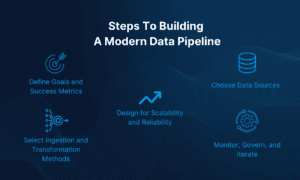
Timothy Fadipe: Certainly. The traditional definition of a marketer is someone who focuses on the message. They worry about the copy, the visuals, and the brand story. While those things are important, they are no longer enough to scale a technology company. A Growth Engineer focuses on the mechanism. We look at the data pipelines, the attribution logic, and the technical infrastructure that captures a user. My job is not just to get a user to click an ad. It is to mathematically ensure that the cost of getting that user is lower than the value they bring to the business over time. It is an engineering problem, not just a creative one.
Many business owners we speak to are frustrated with their return on ad spend. They feel that platforms like Facebook and Google are becoming too expensive. Is paid media dying?
Timothy Fadipe: Paid media is not dying but the era of lazy arbitrage is over. Five years ago, the algorithms were so smart that you could be sloppy with your data and still make money. Today, privacy changes from Apple and regulators mean that ad platforms are partially blind. If a business owner relies solely on the default dashboard provided by an ad platform, they are likely burning cash. The businesses that are winning right now are the ones who have taken ownership of their own data. They are not waiting for Facebook to tell them who their best customers are. They are building internal models to predict it themselves.
You mentioned building internal models. For a non-technical founder, what does that actually mean?
Timothy Fadipe: It means moving beyond vanity metrics. A lot of founders get excited when they see high traffic or low Cost Per Lead. But I always ask them one question. Do you know the difference between a lead who buys today and a lead who churns tomorrow? Usually, the answer is no. Building an internal model means connecting your marketing tools to your actual product database. You need to be able to trace a dollar of revenue all the way back to the specific keyword or ad that generated it. When you do that, you often realize that your most expensive channels are your most profitable ones because they bring in higher quality users.
That sounds like a shift toward what the industry calls Unit Economics. Why is this becoming so critical now?
Timothy Fadipe: It is critical because the investment landscape has shifted. We are no longer in a zero-interest rate environment where Venture Capitalists will fund growth at all costs. Investors today demand profitability or at least a clear path to it. If you cannot prove your Unit Economics, specifically that your Customer Lifetime Value is significantly higher than your Customer Acquisition Cost, you will struggle to survive. My advice to startups is to pause the scaling until the math makes sense. Do not pour water into a leaking bucket.
What role do you see Artificial Intelligence playing in performance marketing over the next few years?
Timothy Fadipe: Most people look at AI as a content generation tool. They use it to write blogs or design images. That is useful but it is at a low level. The high-level application of AI is in predictive analytics. We are moving toward a world where we can use machine learning to analyze user behavior in their first 24 hours and predict their value over the next 24 months. This allows marketers to bid more aggressively for the right users. The future of marketing is not about who writes the best prompt. It is about who has the cleanest data to train their models on.
Finally, for young professionals looking to enter this field, what skills should they focus on?
Timothy Fadipe: Stop just learning how to run ads. Learn how to query data. If you can learn SQL, understand how APIs work, and master data visualization tools, you will be infinitely more valuable than someone who just knows how to make a TikTok video. The industry is desperate for people who bridge the gap between the marketing department and the engineering team. Be that bridge.