Data engineering has moved far beyond simply collecting information and moving it from one system to another. Modern organisations need workflows that can process growing volumes, support analytics, respond to changing business requirements, and remain reliable in production. For professionals seeking to strengthen their practical expertise, Databricks training can provide a structured way to understand the technologies and engineering practices behind scalable workflows. The real value, however, comes from learning how to design efficient systems rather than simply becoming familiar with platform features.
Key Takeaways
|
Why Efficient Workflows Matter More Than Ever
The volume and complexity of organisational information continue to increase. Engineering teams may have to combine application records, customer interactions, operational systems, streaming inputs, and external sources within a single analytical environment.
Simply increasing infrastructure capacity does not automatically solve these challenges. Poorly designed pipelines can consume unnecessary resources, create bottlenecks, and become difficult to troubleshoot as workloads grow.
Moving Beyond Basic Pipeline Construction
A basic pipeline can successfully move information from point A to point B. An efficient production workflow must answer more complex questions about reliability, scalability, cost, and maintainability.
Engineers should consider:
- How frequently should workloads run?
- Where are the major processing bottlenecks?
- How should failures be detected and handled?
- Can repetitive tasks be automated?
- How can resources be used efficiently?
- Is the workflow easy for another engineer to understand and maintain?
These questions shift the focus from simply making a pipeline work to designing one that can continue working effectively as requirements change.
Understanding the Databricks Architecture
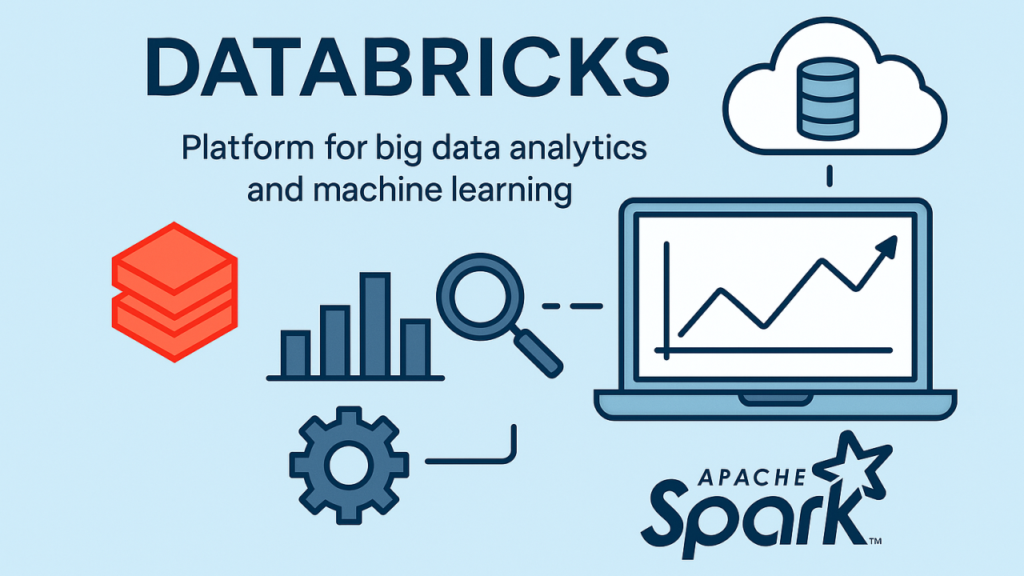
Efficient development begins with understanding the environment in which workloads operate. Databricks brings several engineering and analytical capabilities together, allowing teams to build workflows within a more unified ecosystem.
Why Architecture Influences Performance
Performance problems are often symptoms of architectural decisions rather than isolated technical errors. An inefficient storage strategy, poorly designed transformation process, or unsuitable workload configuration can create recurring problems.
A strong architectural foundation can help teams:
- Reduce unnecessary data movement.
- Organise workloads more effectively.
- Support different processing requirements.
- Improve scalability.
- Simplify governance and maintenance.
Professionals who understand the reasoning behind architectural choices are better positioned to troubleshoot problems and optimise systems over time.
Designing Workflows for Scalability
A workflow that performs well with a small workload may behave very differently when the volume increases significantly. Scalability therefore needs to be part of the initial design rather than an emergency response after performance deteriorates.
Building for Growth
Scalable engineering requires anticipating future requirements instead of optimising exclusively for today’s workload.
Teams can improve scalability by:
- Designing modular pipelines.
- Separating reusable processing logic from workload-specific operations.
- Avoiding unnecessary full-data processing.
- Choosing appropriate partitioning and storage strategies.
- Monitoring resource consumption.
- Testing workloads under realistic volumes.
This approach helps prevent technical debt from becoming a barrier when organisations expand their systems.
Improving Pipeline Performance
Performance optimisation is one of the most important aspects of efficient engineering. A slow workflow can increase infrastructure costs, delay downstream processes, and affect the availability of business insights.
Useful areas of investigation include:
- Query execution patterns.
- Data layout and storage organisation.
- Transformation complexity.
- Resource utilisation.
- Repeated processing.
- Job scheduling.
- Input and output volumes.
Measure Before You Optimise
An evidence-based approach produces better results than making changes simply because they appear technically sophisticated. Monitoring and workload analysis can reveal whether a problem originates in processing logic, storage, resource allocation, or another part of the workflow.
Automation Makes Operations More Reliable
Manual intervention becomes increasingly difficult to sustain as organisations operate more pipelines and workloads. Engineers need repeatable processes for scheduling jobs, managing dependencies, monitoring execution, and responding to failures.
Creating Repeatable Production Processes
Effective automation should be accompanied by clear operational standards. Teams should know what happens when a workflow succeeds, fails, or exceeds expected execution times.
Important practices include:
- Automated scheduling.
- Dependency management.
- Failure notifications.
- Retry strategies.
- Logging and monitoring.
- Documented operational procedures.
Automation is most valuable when it makes the overall system easier to operate, not merely when it reduces the number of manual clicks.
Data Quality and Governance Belong Inside the Workflow
Quality issues can undermine even the most technically advanced architecture. Incorrect, incomplete, duplicated, or outdated records can produce misleading analytical results and affect downstream applications.
Creating Trustworthy Engineering Systems
A dependable workflow should provide visibility into both processing and information management. Teams can strengthen trust by incorporating:
- Validation rules.
- Lineage tracking.
- Access controls.
- Audit capabilities.
- Documentation.
- Quality monitoring.
- Appropriate security practices.
These controls become increasingly important when workflows support financial reporting, customer analytics, machine learning, or other business-critical applications.
Collaboration Can Improve Engineering Efficiency
Modern projects frequently involve multiple technical roles. Engineers may collaborate with analysts, architects, machine learning professionals, and business stakeholders throughout a project’s lifecycle.
A shared platform can reduce friction between these groups by giving them a common environment for working with the same underlying resources.
Connecting Different Technical Roles
Better collaboration can reduce duplicated effort and improve the movement of projects from experimentation to production.
Teams can benefit from:
- Shared development practices.
- Greater visibility into workflows.
- Reusable components.
- Faster issue resolution.
- Clearer communication between technical disciplines.
Efficiency is therefore not only a technical challenge. The way teams communicate, document, and share responsibility can have a significant impact on project outcomes.
A Practical Approach to Learning Efficient Workflows
Platform knowledge becomes much more valuable when professionals can apply it to realistic engineering problems. Reading documentation can establish a foundation, but hands-on implementation reveals challenges involving performance, failures, scalability, and operational decisions.
A practical learning approach should progressively increase complexity.
Build Skills Through Realistic Projects
Projects can be structured around common engineering scenarios such as ingestion, transformation, quality validation, orchestration, and optimisation.
A useful progression is:
- Build a simple ingestion workflow.
- Introduce transformation and validation steps.
- Add scheduling and dependencies.
- Test the workflow with larger workloads.
- Monitor execution and identify bottlenecks.
- Optimise processing and resource usage.
- Add governance and documentation.
- Simulate production failures and recovery scenarios.
This method encourages professionals to think like engineers responsible for a working system rather than learners completing isolated exercises.
Professionals looking to strengthen their capabilities can develop advanced data engineering skills to better understand modern platforms, scalable workflows, performance optimisation, and efficient engineering practices.
The Future of Efficient Data Workflows
The next generation of engineering environments is likely to place greater emphasis on automation, real-time processing, AI-assisted development, governance, and cost-conscious infrastructure.
| Today’s Engineering Focus | Emerging Workflow Priority |
| Pipeline creation | End-to-end workflow design |
| Batch processing | Batch and real-time workloads |
| Manual monitoring | Automated observability |
| Separate systems | Unified architectures |
| Reactive optimisation | Continuous performance improvement |
| Basic access controls | Integrated governance |
| Tool-specific knowledge | Broader architectural expertise |
Databricks is part of this larger transformation, but successful implementation still depends on sound engineering principles. Technology can provide capabilities; skilled professionals determine how effectively those capabilities are applied.
Skills Professionals Should Develop
Building efficient workflows requires a combination of technical knowledge and engineering judgment. Professionals should avoid focusing exclusively on individual platform features and instead understand the principles behind scalable systems.
Key areas worth developing include:
- SQL and programming fundamentals.
- Distributed processing.
- Cloud architecture.
- Workflow orchestration.
- Performance optimisation.
- Data quality management.
- Governance and security.
- Monitoring and troubleshooting.
- Version control and collaborative development.
- Production deployment practices.
Combining these capabilities creates a stronger foundation for working with changing platforms and increasingly sophisticated workloads.
Final Takeaway
Efficient engineering is about more than processing information quickly. It requires thoughtful architecture, scalable design, performance measurement, automation, governance, and continuous improvement. Databricks provides a platform that can support these practices, but the effectiveness of any implementation ultimately depends on the skills and decisions of the professionals building it.
For learners who want to develop practical technology expertise, TrendyTech provides structured training designed to help professionals understand modern tools and apply their knowledge to real-world technology challenges.
Ready to Build More Efficient Workflows?
Take your technical skills beyond the basics with practical, industry-focused learning from TrendyTech. Connect TrendyTech to explore training options that can help you strengthen your expertise and prepare for evolving technology demands.
Frequently Asked Questions
- What makes a Databricks workflow efficient?
An efficient workflow balances performance, scalability, reliability, cost, and maintainability. It avoids unnecessary processing while using resources appropriately for the workload. Strong monitoring, automation, quality controls, and clear architecture also contribute to long-term efficiency.
- Why is scalability important in modern engineering?
Workloads rarely remain at the same size indefinitely. A pipeline designed only for today’s volume may become slow or expensive as usage increases. Scalable architecture allows teams to accommodate growth without repeatedly redesigning the entire system.
- How can engineers improve pipeline performance?
The first step is to measure actual workload behaviour and identify bottlenecks. Engineers can then evaluate processing logic, storage organisation, query performance, and resource usage. Testing individual improvements helps determine whether an optimisation produces a measurable benefit rather than relying on assumptions.
- Is automation necessary for production workflows?
Automation is not simply about convenience; it can improve consistency and reduce repetitive operational work. Scheduling, dependency management, monitoring, and failure notifications can all benefit from automation.
- Why are governance and data quality important?
Reliable outputs depend on reliable inputs and responsible access. Quality controls help identify problematic records, while governance establishes how information is managed and protected.