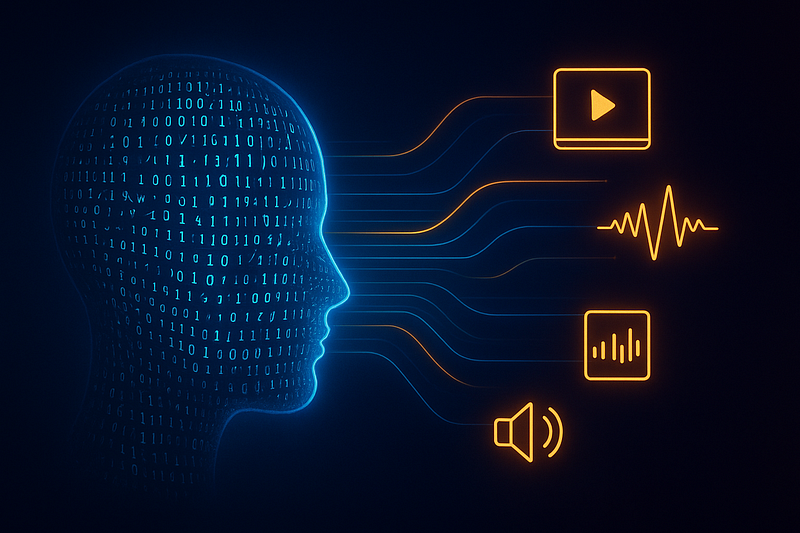
Generative AI first reached mainstream users through outputs that were easy to inspect: a paragraph, an illustration, a presentation, or a block of code. Audio is a different challenge. A finished track is not a single object created in one step. It is the result of composition, arrangement, performance, sound design, mixing, mastering, and delivery.
That complexity is now shaping the next phase of generative AI. The important shift is not simply that models can produce music or sound. It is that previously separate production stages are beginning to connect into one coherent workflow.
Audio Generation Is Moving Beyond the Prompt Box
The earliest generative audio tools were often presented as simple prompt-to-output systems. A user described a mood or genre, waited for processing, and received an audio file. That experience demonstrated the model’s capabilities, but it offered limited control after generation.
Professional and serious creative work rarely follows such a linear path. A creator may want to preserve a melody while changing the instrumentation, shorten an introduction without affecting the chorus, remove a vocal, or adapt one composition into multiple versions for different channels.
Modern tools are therefore becoming less like novelty generators and more like production environments. An AI song generator can serve as the starting point, but the broader value comes from what happens next: revising the structure, separating components, refining words with an AI lyrics generator, preparing alternate mixes, and exporting usable assets.
The competitive question is shifting from “Can the model create audio?” to “Can the system help a user complete the job?”
A Complete Workflow Requires Several AI Layers
A practical generative audio platform must coordinate multiple kinds of intelligence. Language models can interpret creative direction and turn vague ideas into structured instructions. Music generation models can create melody, harmony, rhythm, instrumentation, and vocals. Other systems may handle stem separation, transcription, timing alignment, noise reduction, source enhancement, or mastering.
Each model solves a different part of the process. The workflow becomes valuable when users do not have to understand every technical boundary between them.
For example, a creator might request an upbeat electronic track, revise the chorus through natural-language feedback, isolate the instrumental version, and generate a shorter cut for a video. Behind the interface, these actions may involve several models and processing services. To the user, however, they should feel like stages of one project.
This orchestration layer is likely to become a major product differentiator. Raw model quality matters, but consistency, editability, project memory, and reliable handoffs between tools increasingly determine whether generated audio is useful outside a demonstration.
Conversation Can Become the Control Surface
Traditional audio software gives users precise control through timelines, tracks, effects, and automation curves. That precision is powerful, but it assumes familiarity with production terminology.
Conversational interfaces introduce another control layer. Instead of adjusting an equalizer directly, a user might ask for a warmer vocal. Instead of manually restructuring a timeline, the user could request a shorter opening and a more energetic final chorus.
This does not make traditional controls obsolete. Natural language is effective for expressing intent, while visual and technical controls remain useful for detailed adjustments. The strongest interfaces will likely combine both: conversation for direction and familiar editing tools for verification and precision.
The result could make audio production accessible to marketers, filmmakers, game developers, educators, and independent creators without removing the depth required by experienced musicians and engineers.
Editability Matters More Than One-Shot Perfection
Generative systems are often judged by their best outputs, but real workflows are defined by revision. A result that is impressive yet difficult to change has limited production value.
Audio tools need to treat generation as editable project state rather than a final file. That means preserving information about sections, lyrics, timing, instruments, source material, and prior decisions. It also means supporting variations without forcing the user to restart the entire composition.
This approach changes the role of AI. The system is no longer just a content vending machine. It becomes a collaborator that can retain constraints, offer alternatives, and modify specific parts while protecting the elements a user wants to keep.
Reliable revision also improves efficiency. Creators can explore multiple directions while maintaining continuity across a project, rather than repeatedly generating disconnected outputs and assembling them elsewhere.
Trust Will Depend on Transparency and Control
As generative audio becomes part of commercial workflows, users will expect clarity about what they can do with the result. Platforms need understandable licensing terms, visible project histories, dependable exports, and clear distinctions between uploaded material and generated content.
Control is equally important. Users should know when a tool is replacing a section, transforming an existing source, or creating a new variation. They also need ways to review changes before committing them.
These requirements are not peripheral policy features. They are part of the product experience. A system that produces strong audio but leaves ownership, provenance, or revision history unclear will be difficult to adopt for professional work.
The Next Breakthrough Is the Connected Studio
The future of generative audio will not be defined by a single model producing a flawless track from one sentence. It will be defined by connected systems that support the full creative cycle: idea, generation, revision, production, and delivery.
Text and image generation showed how quickly AI can expand creative access. Audio adds a harder test because its production process is layered, time-based, and highly iterative. Solving that challenge requires more than better generation. It requires a studio built around collaboration between users, models, and specialized tools.
When those pieces work together, generative audio stops being an isolated feature and becomes creative infrastructure.