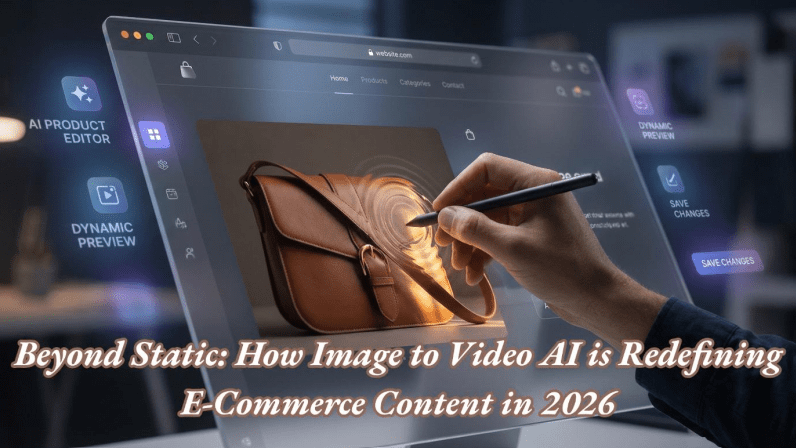
The e-commerce landscape has never been more competitive. For discerning entrepreneurs and developers building beautiful websites with powerful tools like the Porto theme, standing out requires more than just premium products and clean design; it demands compelling, dynamic visual content. For years, video has been the undisputed king of engagement, but its high production costs and time-consuming nature have kept it just out of reach for many businesses.
This is the common challenge: your Porto-powered website features stunning, high-resolution product photos, but in a world of fleeting attention, even the best static images are losing their “scroll-stop” power. Customers are becoming numb to traditional product galleries. The critical question is, how do you create the engaging video content you need to capture attention and drive sales, all without a dedicated production team or a five-figure budget?
This is where a profound technological shift offers a solution: Image to Video AI. This emerging category of generative AI allows anyone to create AI videos from images, transforming a single static photo into a short, captivating video clip—often with just a single click. This isn’t science fiction; it’s a practical tool that’s changing the e-commerce content game. This article will demystify Image to Video AI, exploring what it is, how it works, and most importantly, providing you with actionable use cases to enhance your Porto e-commerce site using a modern AI image to video generator.
What Is Image to Video AI?
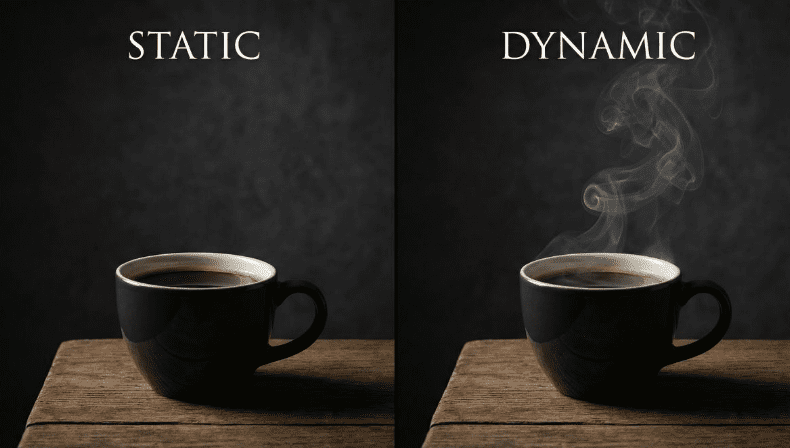
At its core, Image to Video AI is a type of artificial intelligence that analyzes the content and context of a still image and intelligently adds realistic, plausible motion to it. The technology effectively animates the inanimate, breathing life into a static scene. It can make clouds drift across a sky, steam rise from a coffee cup, fabric sway in a gentle breeze, or light pan across a reflective surface. It doesn’t just stretch or warp the image; it generates entirely new frames to create a fluid, believable video sequence.
How It Works (A Simple Overview)
You don’t need a degree in computer science to understand the magic behind it. Think of the AI model as a digital artist that has studied millions of hours of video footage. It has learned the physics of our world—how water ripples, how hair moves, how smoke dissipates. When you upload a product photo, the AI does three things:
- Deconstruction:It identifies the different elements in your image (e.g., the product, the background, the sky, a person).
- Inference:Based on its training, it infers what kind of motion would be natural for those elements.
- Generation:It applies that motion, rendering the subsequent frames needed to build a short video clip.
The result is a transformation from a single moment frozen in time to a living, breathing scene that tells a more complete story.
Why It Matters for Your E-commerce Business
For a Porto theme user dedicated to creating a premium online store, the value of this technology is immediate and tangible.
- Dramatically Increased Engagement:Motion is the single most effective way to capture attention online. A dynamic product image is far more likely to make a user pause on a product page or in a social media feed.
- Unprecedented Cost & Time Efficiency:What once required an animator, a videographer, or complex software can now be accomplished in minutes. This frees up invaluable resources to focus on other areas of your business.
- Enhanced Product Storytelling:A subtle animation can communicate qualities that a static photo cannot. The way a dress flows can convey its material quality; a slow zoom on a piece of jewelry can highlight its intricate details.
- A Tangible Competitive Edge:This technology levels the playing field, allowing small to medium-sized businesses to produce the kind of sophisticated, dynamic content that was previously the exclusive domain of large brands with massive marketing budgets.
5 Practical Ways to Use Image to Video AI on Your Porto Site
Theory is great, but results are better. Here’s how you can move from concept to execution. Below are five specific scenarios where you can apply Image to Video AI to directly improve the user experience and marketing effectiveness of your Porto and WooCommerce website.
1. Create Dynamic Product Page Galleries
Your WooCommerce product page is the final frontier before a customer clicks “Add to Cart.” Instead of a standard gallery of static JPEGs, imagine your main product photo subtly coming to life. A leather handbag gleams as a soft light pans across it; the fabric of a designer shirt gently sways as if in a light breeze; the water in a bottle for sale has subtle ripples. Using an AI image to video generator here adds a premium, “wow” factor right at the point of decision, making the product feel more luxurious and real.
2. Generate Eye-Catching Social Media Ads and Stories
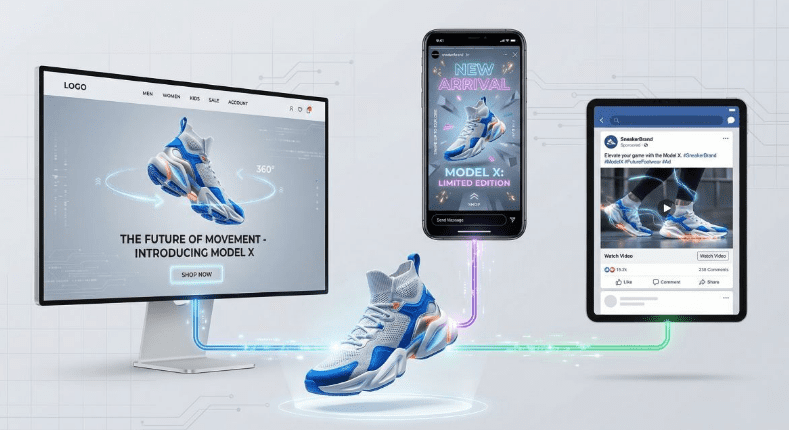
Your marketing efforts live or die by the quality of your creatives. Take a single, high-quality product photo and use it to create AI videos from images for all your social media campaigns. Animate a lifestyle shot of your product for an engaging Instagram Story. Add a slow, dramatic zoom-in on a product flat-lay to use as a Facebook video ad. This simple workflow allows you to A/B test dozens of video creatives derived from a single image asset, helping you find the perfect ad and maximize your return on ad spend.
3. Animate Your Porto Theme’s Hero Banners
Your homepage’s hero banner is your digital storefront window—it’s your first and best chance to make an impression. Porto provides powerful, full-width banner options that are perfect for this. Use Image to Video AI to transform that beautiful but static banner into a living scene. If you sell outdoor gear against a mountain backdrop, make the clouds drift slowly overhead. If you sell artisanal home goods, make the steam gently rise from a featured scented candle. This small touch of motion creates an immediate, immersive, and highly professional first impression that invites users to explore further.
4. Enhance How-To Content and Feature Callouts
Do you use images with text overlays to explain key product features or benefits? You can make them significantly more effective with subtle animation. For example, if you’re highlighting a specific button or component on an electronic device, a gentle “pulse” effect can be applied to that area. If you’re showcasing the texture of a material, a slow pan across the surface can guide the user’s eye and make the feature more apparent. This makes instructional content more digestible and visually engaging.
5. Bring Customer Testimonials and Social Proof to Life
Social proof is one of the most powerful conversion tools. If your Porto site features a section with customer photos showcasing them using your products, you have a golden opportunity. By applying a very gentle and subtle animation—like a slow, almost imperceptible zoom or a light shimmer effect—you can elevate that testimonial. It transforms the social proof from a static quote with a picture into a piece of content that feels more personal, present, and dynamic, reinforcing its authenticity.
Top Tools to Help You Create AI Videos from Images
As this technology matures, a growing number of powerful and accessible tools are making it available to everyone. While the space is evolving rapidly, here are a few platforms leading the charge, each suited for slightly different needs.
- RunwayML:Often considered a pioneer in this space, Runway’s Gen-2 model is known for producing very high-quality and coherent videos from images or text prompts. It’s an excellent choice for users who want a professional-grade creative suite with a host of other AI “magic tools.”
- Pika Labs:This platform has built a strong reputation through its community-driven approach (primarily on Discord) and its ability to generate highly creative and sometimes beautifully surreal results. It’s a great option for brands with a more artistic or avant-garde style.
- For e-commerce owners who don’t need a complex creative suite but require an efficient, reliable workflow, a more focusedAI image to video generator is often the best path. Platforms such as MindVideo AI are specifically engineered to streamline the process of turning standard product photos into clean, professional, and commercially-ready video clips perfect for a product page or a social media ad campaign, minimizing the learning curve.
The Future of Dynamic Content: What’s Next for Image to Video AI?
What we’re seeing today is just the beginning. The development in this field is accelerating, and we can expect several key advancements in the near future:
- Higher Fidelity and Control:Soon, we’ll see 4K resolutions, longer clip durations, and more granular user controls to direct the AI’s output (e.g., “animate only the water but keep the boat still”).
- Text-and-Image Integration:The lines will blur between text-to-video and image-to-video. You’ll be able to upload a photo of a car and simply type “make the car drive down the road at sunset,” and the AI will generate it.
- 3D Scene Generation:The most advanced AI models will not just animate an image in 2D but will infer the 3D geometry of the scene. This will allow for virtual camera movements, such as orbiting around a product, all generated from a single photograph.
Conclusion: Your Next Step in Visual Commerce
We have moved past the point of speculation. Image to Video AI is no longer a futuristic concept; it is a practical, accessible, and powerful tool available to savvy e-commerce entrepreneurs today. It elegantly bridges the long-standing gap between engaging but limited static photos and compelling but expensive high-production video.
For dedicated Porto theme users, this technology isn’t just a novelty—it’s a direct-impact lever for growth. It allows you to maximize the value of your existing photographic assets and elevate your professionally designed website into a dynamic, highly engaging, and ultimately more profitable customer experience.
The barrier to entry has never been lower. The best way to understand the potential is to try it yourself. Start small: pick one of your best-selling products, use one of the tools mentioned to create an AI video from your image, and simply swap out the main static photo on that product’s page. The positive impact on user engagement may be the most pleasant surprise you have this quarter.