How enterprise architecture is evolving from technical design toward business-aligned decisions and intelligent systems.
Enterprise technology is rarely difficult because of a single programming language or cloud platform. The real complexity emerges when business priorities, legacy systems, security requirements, operating costs, and delivery constraints intersect. As organizations introduce artificial intelligence into established environments, these challenges become even more interconnected.
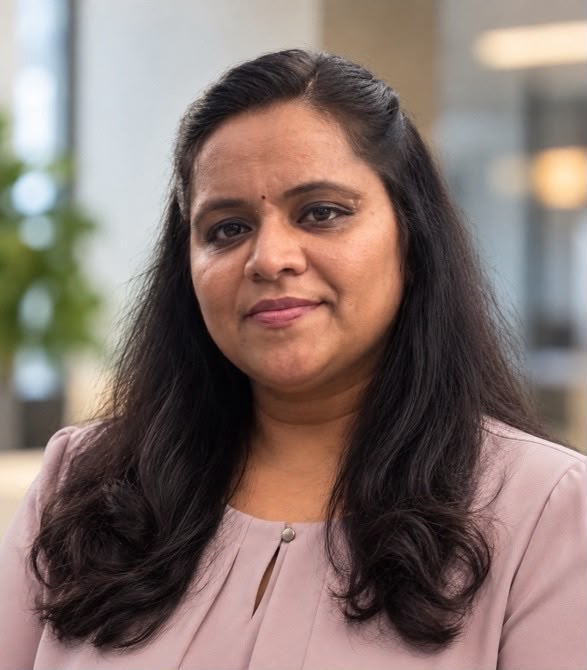
For Kalaranjani Sathishkumar, a senior solution architect and technical product owner with more than 17 years of experience in information technology, this complexity defines the real work of enterprise architecture. Her career has evolved from hands-on software engineering to designing cloud-based platforms and taking responsibility for technology decisions that must support business objectives, operational reliability, and long-term growth.
Today, her work sits at the intersection of enterprise architecture, product ownership, large-scale delivery, and emerging AI-enabled systems. The common thread is not simply designing technology, but ensuring that technical decisions remain practical, governed, and valuable throughout the life of an enterprise platform.
Architecture Is More Than an Approved Design
Enterprise architecture can lose relevance when it is separated from product decisions. A technically sound solution may still fail to deliver value if it does not address the underlying business problem, fit delivery constraints, or account for how the system will be operated and maintained.
Sathishkumar’s approach reflects an evolution from solving individual technical problems to addressing broader enterprise-level challenges. Her experience across application development, software architecture, cloud engineering, and product ownership has shaped how she evaluates complex systems today.
“For me, architecture is not complete when the diagram is approved. The real test is whether the solution can be delivered, governed, operated and evolved without creating the next generation of problems.”
That perspective places architecture within the full lifecycle of a product. Design decisions must account for release schedules, security and compliance reviews, operational readiness, team capacity, and user adoption. They must also remain aligned with the business priorities that determine which capabilities should be developed and when.
In her current work, Sathishkumar combines architectural design with product and stakeholder responsibilities. These include understanding business problems, evaluating technical trade-offs, influencing roadmap and backlog decisions, and carrying solutions through governance and delivery.
The result is an approach in which architecture is not treated as an isolated technical exercise. It becomes part of the decision-making process that connects business needs with implementation.
Turning Cloud Complexity into Measurable Outcomes
The practical value of this approach can be seen in Sathishkumar’s work on enterprise data export and document management workloads.
At enterprise scale, these workloads can create significant pressure on memory and infrastructure resources. Simply adding more capacity may address immediate performance demands, but it can also increase recurring cloud costs without resolving the underlying resource inefficiencies.
The challenge was therefore not just to accommodate demand, but to understand how the processing architecture used resources and where optimization could reduce the need for additional infrastructure.
Through memory and resource optimization, Sathishkumar reduced infrastructure scaling requirements by approximately 50 percent.
The result illustrates a broader principle in cloud architecture: scaling is not always a matter of adding capacity. Understanding workload behavior and designing more efficient processing can also change the amount of infrastructure a platform needs.
For Sathishkumar, this type of work connects engineering decisions directly to business outcomes. Infrastructure requirements affect operating costs, while the design of data processing and document workflows can influence the platform’s ability to support growth.
A similar enterprise-scale challenge involved integrating document management and access control across application platforms and SharePoint. The integration supported more than 7,000 enterprise clients, making consistency of access and information management an important architectural concern.
Her work also included expanding business-context modeling from parent accounts to hierarchical client structures, covering more than 7,000 parent clients and large numbers of associated child entities.
These examples demonstrate how architecture decisions extend beyond individual services. They shape how enterprise information is organized, how access is managed, and how systems support complex business relationships.
Connecting Architecture Decisions with Business Outcomes
As enterprise platforms grow, technical decisions become increasingly connected to product priorities. A change in data structure, integration design, or processing behavior may affect several teams, release plans, compliance requirements, and the experience of business users.
Sathishkumar’s combination of solution architecture and technical product ownership places these considerations within the same decision-making process.
Her responsibilities include working with stakeholders to identify business needs, prioritizing backlogs, aligning technical decisions with product roadmaps, and presenting trade-off analyses to architecture review boards and senior leaders.
This requires balancing competing considerations. A solution must address the required functionality while remaining feasible to deliver, secure to operate, and sustainable to maintain. It must also fit the organization’s capacity and adoption plans.
The approach depends on collaboration across development, infrastructure, information security, operations, and product teams. Architectural guidance is useful only when teams understand the constraints, the available options, and the consequences of their decisions.
This connection between architecture and product ownership is especially relevant in complex enterprise environments, where a decision that appears local can have consequences across the wider platform.
Rather than treating delivery as something that begins after design approval, Sathishkumar’s approach considers implementation and operation as part of the architectural problem itself.
Bringing AI into Established Enterprise Systems
Artificial intelligence represents the newest stage in Sathishkumar’s professional journey, building on her established foundation in enterprise architecture. Rather than treating AI as a separate area of technology, she has increasingly incorporated AI capabilities and agentic approaches into her architecture and product-design work.
Her early work in this direction included machine-learning-based predictive mapping between client-specific accounts and a standard chart of accounts, aimed at reducing manual reconciliation effort. She later expanded the use of AI into software development lifecycle activities, working with AI tools and agents to support requirements analysis, user story creation, architecture documentation, and test-data generation.
Her work has since progressed toward agent-based enterprise workflows. In tax-processing proofs of concept, she has built and guided solutions involving document ingestion, content analysis, and structured output generation, with AI agents participating in defined steps of the workflow.
More recently, Sathishkumar has been contributing to product-design and solution-architecture discussions for a new enterprise product with an agentic AI approach at its core. Her role includes helping translate business requirements into architectural decisions and evaluating how AI agents, enterprise data, workflows, integrations, governance controls, and human decision points should come together within the broader product architecture.
This progression reflects a practical question: how can AI capabilities be incorporated into established enterprise processes without losing control over security, reliability, validation, and accountability?
“I don’t see enterprise AI as a separate technology layer. Once an AI agent begins accessing enterprise data, making recommendations or participating in workflows, it becomes part of the enterprise architecture—and the same questions around security, reliability, governance and accountability become even more important.”
That perspective places AI within the wider system in which it operates. The model or agent is only one component; the surrounding architecture must also define how information is accessed, how outputs are validated, where exceptions are routed, and when human judgment remains necessary.
Sathishkumar’s experience with cloud platforms, APIs, identity, integration patterns, and architecture governance provides the foundation for this evolution. Her recent work extends those established architectural principles into enterprise systems in which AI tools and autonomous agents increasingly participate in business and technology workflows.
Governance as Part of Delivery
In distributed enterprise systems, risks often emerge where components and teams meet. Applications may depend on queues, external document stores, identity services, and multiple databases, each with its own operational requirements and ownership.
Sathishkumar’s work includes architecture standards, governance reviews, compliance coordination, and production-readiness assessments. These activities help teams evaluate how design decisions affect security, reliability, and the broader operating environment.
The same considerations become important when AI is introduced. Data access, generated outputs, workflow decisions, and integration with existing services all need to be considered as part of the architecture.
Governance, in this context, is not simply a final approval step. It provides a framework for comparing options, documenting trade-offs, and making responsibilities visible while allowing teams to deliver.
Her professional credentials—including IEEE Senior Member status and TOGAF certification—complement this experience. They form part of a broader professional background spanning enterprise applications, cloud architecture, product decisions, and technology delivery.
The Evolving Role of the Enterprise Architect
Sathishkumar’s career reflects the changing scope of enterprise architecture: from designing software solutions to helping organizations make technology decisions that connect business objectives with complex systems.
Her work in cloud optimization demonstrates how architectural choices can affect infrastructure requirements. Enterprise document and access-control integrations illustrate the challenges of supporting large client environments. Her product ownership responsibilities bring business priorities and delivery feasibility into architectural decisions, while her recent AI projects extend these practices into intelligent workflows.
Together, these experiences point to a consistent approach: begin with a defined business problem, understand the constraints of the existing environment, evaluate the consequences of design choices, and remain accountable for how the solution performs after implementation.
As organizations explore agentic AI and other intelligent capabilities, enterprise architecture increasingly needs to consider not only what a system can do, but how it accesses information, interacts with people and processes, and remains reliable and governable over time.
For Sathishkumar, the evolution is not a departure from architecture. It is a continuation of its central purpose: making technology decisions that work in the real conditions of enterprise delivery.
About Kalaranjani Sathishkumar
Kalaranjani Sathishkumar is a senior solution architect and technical product owner with more than 17 years of information technology experience and more than 10 years in software architecture. Her work spans enterprise applications, Microsoft Azure, distributed systems, product strategy, architecture governance, and the integration of Al and agentic approaches into enterprise systems. She holds a Bachelor of Engineering in Computer Science from Anna University in India and is a Senior Member of IEEE.