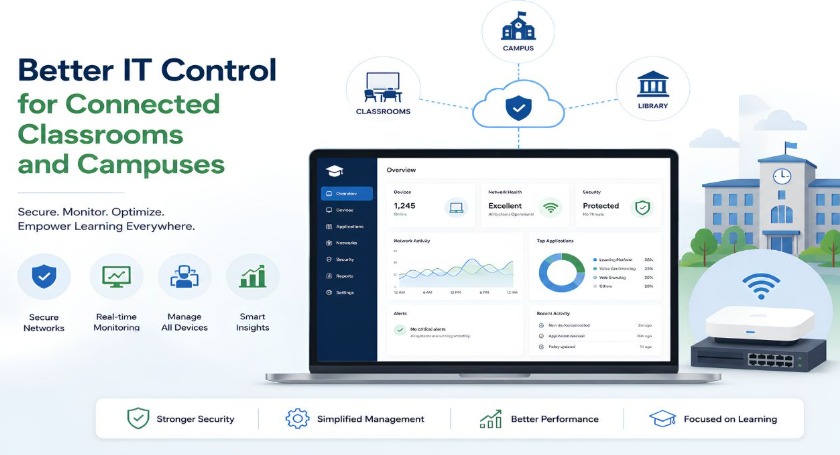
A modern classroom is no longer just a whiteboard and a few computers. It runs on Wi-Fi, tablets, smartboards, online lessons, cloud apps, and dozens of devices logging in at the same time. When all of this works, nobody thinks about it. When it slows down or breaks, a lesson stalls, an online test stops, and staff lose time they do not have. This is where steady education network monitoring becomes the quiet backbone of daily learning, because it lets a school see what is happening across its network and step in before a small glitch turns into a big problem. Better IT control is not about buying more gadgets. It is about truly understanding and managing what you already have, so the technology supports teaching instead of getting in its way.
What IT Control Actually Means
IT control means you know what is connected to your network, how it is performing, and who is using it, at any moment. In simple terms, it is the difference between guessing and knowing. A school with good control can answer basic questions in seconds: Is the Wi-Fi healthy in every building? Are the online platforms loading quickly? Is anything on the network behaving strangely? A school without that control usually finds out about problems only when a teacher or student complains, and by then the lesson has already been disrupted. Think of it like a caretaker walking the corridors. A good one notices a loose wire or a flickering light before anyone trips over it. Network control works in the same way, spotting the early warning signs while there is still time to act calmly. It turns IT from a daily source of surprises into something steady and predictable, which is exactly what a busy campus needs.
Why Connected Campuses Are Harder to Manage
Campuses are harder to manage today because there are simply more things to watch. A single school can have hundreds of laptops and tablets, plus phones, printers, cameras, and smartboards, all sharing the same network. Many students and staff also bring their own devices, so the number of connections changes by the hour. Add cloud tools, learning platforms, and several buildings spread across one site, and the network becomes a moving target. Each new device is one more thing that can slow traffic, open a security gap, or fail at the worst possible time. Picture a normal Monday morning. Hundreds of devices wake up and try to connect within the same few minutes, lessons begin, and video starts streaming all at once. A network that coped fine last year can suddenly buckle under that rush, and without a clear view, the IT team is left guessing where the pressure is building. The old habit of fixing issues only after they appear simply cannot keep up with this much activity.
The Real Cost of Weak IT Control
Weak IT control costs far more than most schools expect, and the bill is rarely just money. When the network goes down during an online exam or a live class, learning stops for everyone at once. Staff then spend hours chasing problems by hand instead of teaching or helping students. Worse, gaps in the network can put sensitive student information at risk, which adds trust and legal worries on top of the technical mess. Most of these costs stay hidden because they show up as wasted time and frustration rather than a clear line on a budget. It is rarely one big crash that hurts the most. It is the steady drip of small slowdowns, a frozen video here, a dropped connection there, that wears down teachers and quietly eats into learning time week after week. That is the reason these problems are so easy to ignore, right up until something serious goes wrong.
Simple Steps Toward Better Control
Getting better control does not need a huge budget or a complete rebuild. It starts with a few clear habits that any school can put in place over time:
- See the whole network. You cannot manage what you cannot see, so begin with a clear, live view of every device, connection, and key system in one place.
- Watch performance, not just uptime. A network can be switched on and still be painfully slow, so track speed, Wi-Fi health, and how well online tools are responding.
- Catch issues early. Set up alerts so the IT team hears about congestion or outages before users do, not after the complaints arrive.
- Protect student data. Keep an eye out for unusual activity and limit who can reach the most sensitive systems.
- Keep good records. Clear logs make it easier to review what happened, plan ahead, and pass any compliance checks.
Done consistently, these steps move a school from reacting to problems toward quietly preventing them.
Building a Network Students and Staff Can Rely On
Reliable IT is built over time, not bought overnight. The goal is a network that quietly does its job, so teachers can teach and students can learn without interruption. For many schools and campuses, the practical route is to pair strong monitoring with steady, ongoing support, whether that is handled by an in-house team or a dependable IT services partner who keeps systems healthy day to day. What matters most is consistency: regular checks, quick responses, and a clear plan for when something does go wrong. A connected campus is only ever as strong as the attention and care behind it.
Conclusion
Technology will keep moving deeper into classrooms and across campuses, and that is a good thing for learning. But more devices and more connections only help when the people running them stay in control. Better IT control really comes down to three things: clear visibility, quick action, and steady care for the systems students and staff depend on every single day. Schools that treat their network as something to manage closely, rather than something to repair later, give themselves a calmer, safer, and more reliable place to learn. Start small, stay consistent, and the network will begin working for you instead of against you.