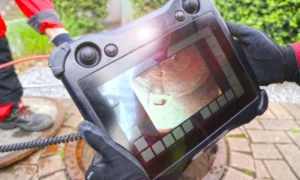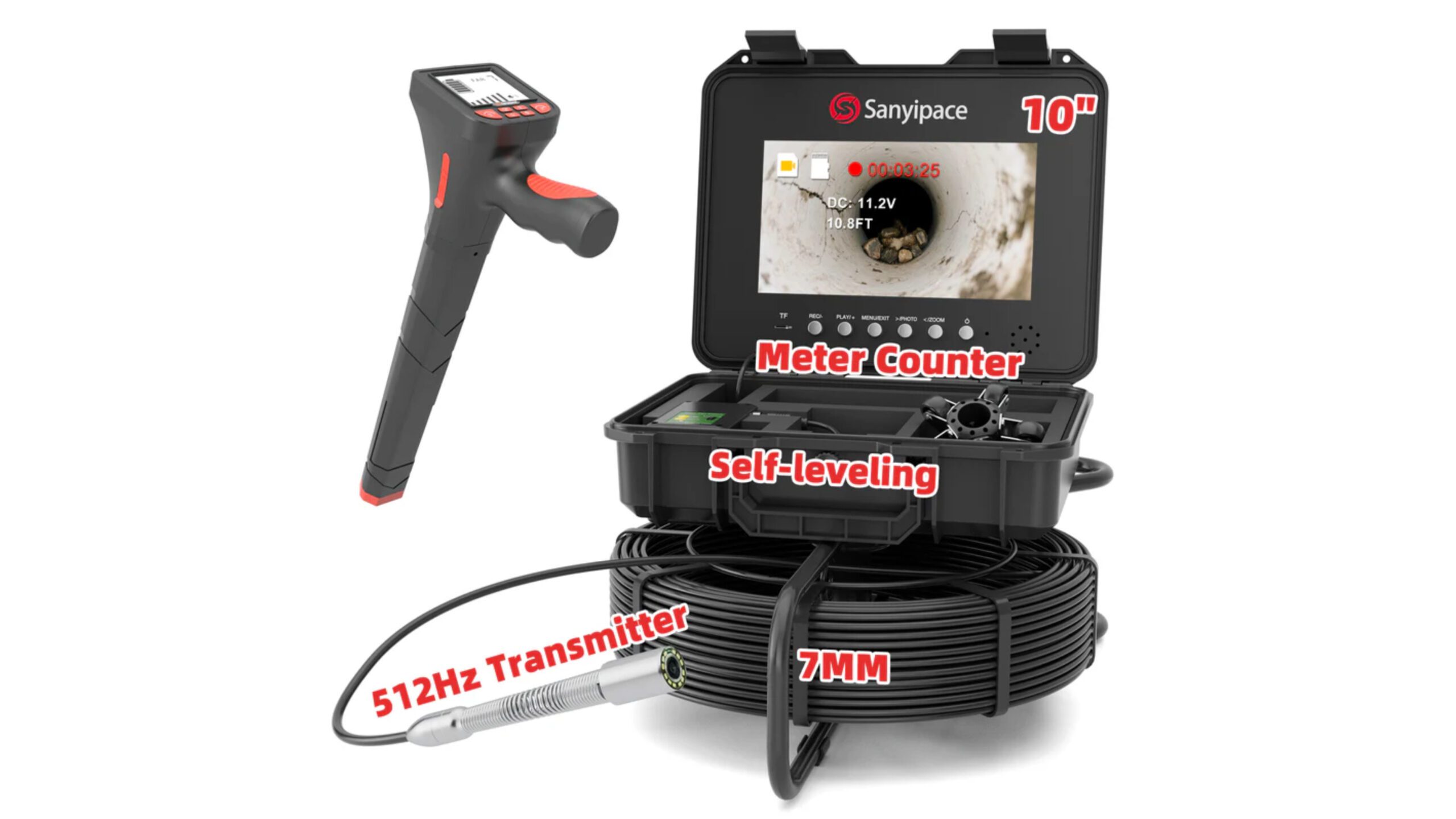
A sewer camera can detect the causes of over 95% of pipe blockages, cracks, or missing items. They can perform troubleshooting, location, and repair suggestions without guesswork. However, choosing the best product often requires considering your specific needs, taking into account features such as waterproofing, positioning, self-leveling, distance measurement, and DVR capabilities.
This article recommends five well-known and feature-rich sewer cameras in the plumbing industry to help you choose the right product for your needs.
What to Look for in a Sewer Inspection Camera?
1. Camera head size & pipe range
Match the camera head diameter to the pipe sizes you inspect most often. A head that’s too large won’t pass bends; too small can sacrifice lighting and durability.
2. Self-leveling (highly recommended)
A self-leveling head keeps the image upright even when the pushrod twists—faster interpretation and fewer “what am I looking at?” moments.
3. Cable length & stiffness
Longer isn’t always better if the rod is too flexible to push through turns. Choose a length and rod stiffness that fits your typical property layout.
4. 512Hz locating workflow
If you ever need to mark the problem spot outdoors (for spot repair or excavation), prioritize a 512Hz sonde/transmitter so you can locate the camera head from above ground. (Many pro systems support 512Hz.)
5. Recording and storage
DVR recording and easy export (SD/USB/internal drive) matter if you provide estimates, documentation, or client-facing reports.
6. Durability & waterproofing
Look for solid waterproof ratings (commonly IP68) and build quality that can handle gritty, wet, and occasionally abusive environments.
Quick Comparison: Top Picks at a Glance
- Best overall value for most plumbers: SANYIPACE S830ASMKT
- Best pro brand ecosystem: RIDGID SeeSnake Compact M40
- Best for HD recording/reporting: Vivax-Metrotech vCam-6
- Best rugged workhorse: Hathorn H7
- Best budget basic: VEVOR 100ft pipe inspection camera
Best Sewer Cameras — Our Top Picks
1) Best Overall Value: SANYIPACE S830ASMKT
If you want a professional feature set without jumping straight into the highest-priced ecosystems, the SANYIPACE S830ASMKT sewer camera is a strong all-rounder. It’s built around features that directly impact day-to-day inspection speed: self-leveling, a 512Hz transmitter, and a meter counter—so you can keep orientation, locate the issue, and track insertion distance efficiently.
Other practical touches include 24 LED lights with adjustable brightness, an IP68 waterproof camera head, and a 9mm push coil that resists kinking. It’s offered in longer cable options (e.g., 50m/70m/100m variants), which helps if you routinely deal with longer lateral lines.
Best for: service plumbers, drain techs, contractors who want self-leveling + locating + footage counting in one kit
Potential trade-off: like any pushrod system, you’ll still want to match rod stiffness and head size to the pipe diameters you run most.
2) Best Pro System: RIDGID SeeSnake Compact M40
RIDGID’s SeeSnake line is a staple in many professional fleets. The Compact M40 is designed for inspecting lines ranging from 1.5″ to 8″ with a 131 ft (40 m) push cable and includes a 25 mm self-leveling camera head and 512Hz locating capability.
If you already use the RIDGID ecosystem (monitors, reporting workflows, accessories), the Compact M40 can be a dependable investment.
Best for: established plumbing companies, technicians who want ecosystem compatibility and wide service coverage
Potential trade-off: premium cost compared with many all-in-one kits.
3) Best HD Recording Setup: Vivax-Metrotech vCam-6
When video quality, recording convenience, and “report-ready” workflows are top priorities, the vCam-6 stands out. It supports 1080p HD self-leveling camera heads, a 9.7-inch display, one-touch recording, and 1TB internal storage, with AC/DC operation and an advertised 4-hour battery life.
This kind of system is especially useful for municipal work, property inspections, or any job where documentation is part of the service.
Best for: inspectors and contractors producing evidence-based recommendations
Potential trade-off: higher entry cost and more “system” to manage than a simple kit.
4) Best Rugged Workhorse: Hathorn H7
If durability and jobsite toughness matter most, Hathorn’s H7 is built with rugged construction and portable power options. The H7 line highlights self-leveling camera heads as standard, 512Hz sonde control, an optional Wi-Fi option, and power via 18V Milwaukee-style batteries, with up to about 5 hours of runtime depending on configuration.
Best for: contractors who want a tough, field-ready system
Potential trade-off: “industrial-grade” usually comes with an industrial-grade price tag.
5) Best Budget Option: VEVOR 100ft Pipe Inspection Camera
For occasional inspections, light-duty work, or as a backup unit, VEVOR offers popular budget-friendly kits. One example model lists a 23 mm (0.9″) camera with 12 LEDs, designed for pipes ≥ 25 mm, and a waterproof build intended for real-world drain environments.
Best for: DIY users, landlords, maintenance teams, entry-level techs
Potential trade-off: budget kits can vary by exact model/version—double-check head size, cable type, and recording features before buying.
How to Use a Sewer Camera (Fast Workflow)
- Flush/clear standing water if possible (better image).
- Set brightness so you can see cracks and joints without overexposure.
- Push steadily, don’t force turns—use short advances and gentle pulls.
- Use meter counter/footage to note distance to the issue (helpful for quotes).
- If you need excavation, locate via 512Hz and mark the spot above ground.
Maintenance Tips
- Rinse and wipe the camera head after gritty jobs.
- Avoid hard bends tighter than the cable’s recommended radius (reduces kinks).
- Store the pushrod clean and dry; check connectors for debris before packing.
Conclusion
The “best sewer camera” depends on your workflow: quick service calls, long runs, report-grade inspections, rugged job sites, or budget basics. If you want a balanced setup that checks the big boxes—self-leveling + 512Hz locating + meter counting—the SANYIPACE S830ASMKT is a practical place to start.
FAQ
1. Is a borescope the same as a sewer camera?
Not really. Borescopes can help in short runs, but sewer cameras are designed for longer pipes, waterproof conditions, and pushrod navigation.
2. Do I really need 512Hz?
If you ever mark the problem spot for digging/spot repair, yes—it can save major time by helping you locate the camera head position underground.