The audiobook industry is experiencing explosive growth. The market hit $8.70 billion in 2025 and is projected to grow at 26.2% annually (Grand View Research). Over 51% of U.S. adults have listened to an AI audiobook. To content creators and authors, this is a golden chance to create passive income and extend their reach to listeners who favor on-the-go consumption. But it has been hindered by conventional audiobook production, which, if done professionally by human narration, can cost thousands of dollars and take weeks or even months to produce. AI audiobook narration helps address these challenges by delivering scalable, consistent voice delivery at a fraction of the cost
The text-to-speech AI is replacing that equation completely, providing speed and cost effectiveness that simply was not achievable a few years ago. Let’s learn how to make an audiobook with AI—this guide will walk you through choosing the best AI tool to turn your book into an audiobook, preparing a step-by-step production process, and exploring where this technology is headed.
Best AI Tools to Turn Your Book Into an Audiobook
The transition from long studio recordings to rapid AI-generated audiobooks has been quite radical. It is no longer necessary to spend time finding a studio with a high cost, paying professional voice actors, and spending weeks in the recording and editing process to achieve the same results, which can now be done within hours at a fraction of the price. The state-of-the-art AI-based audiobook generators have brought about total democratization of the whole production process and it has become available to producers across all budgets. These are the five top AI tools to turn your book into an audiobook, enabling this transformation:
1. Edimakor
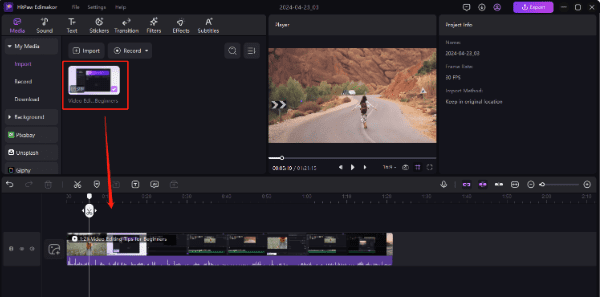
Edimakor offers 400+ royalty-free AI voices across 50+ languages with studio-quality output. You get clear commercial rights for all generated content. The voice cloning feature lets you use your own voice for authentic narration. Built-in editing tools streamline production from manuscript to finished audiobook.
Pricing: Flexible plans for all project sizes
Try Edimakor’s Text-to-Speech Feature
2. ElevenLabs
ElevenLabs leads in emotional expression with 32+ languages and sophisticated voice design capabilities. It is selected for its multi-character presentation and natural intonation, which evoke subtle feelings in fiction writers.
3. Murf AI
Murf AI provides 200+ professional voices in 20+ languages. The built-in Grammar Assistant catches errors before narration begins. Best in non-fiction and business books, and other educational material that should be clear (Resemble AI, 2025).
4. Speechify
Speechify provides natural voices in 60+ languages with incredibly high turnaround times. The site is concerned with simplicity and ease of access. Good when the authors are in need of quick conversions and do not want to complicate it.
5. Play.ht
Play.ht supports 142 languages with high-quality neural voices. Authors use it to launch in multiple markets simultaneously. One health publisher increased international sales by 340% using multi-language releases (Articsledge, 2025).
Complete Guide: How to Turn Your Book Into an Audiobook with AI
With the right tools in place, the production process becomes simple and efficient. Follow these five essential steps on how to make an audiobook with AI to transform your manuscript into a polished, professional-quality AI audiobook.
-
Step 1: Prepare the Audio Manuscript
Quality AI narration is built on appropriate text preparation—listening requires optimized formatting compared to traditional reading. You have to write that you adapt to the ear, not only to the eye.
Preparation Checklist:
Check and Clean Formatting: Delete blank lines, headings, and footings, and eliminate spelling mistakes. Although the AI audiobook reader handles the text the way the user wants, a clean document helps the reader to go through the text smoothly without interruptions or awkward pauses.
Control Pacing of the AI: Intentionally use commas, periods and ellipses. These sounds will be perceived as natural pauses by the AI voice which will provide a more appropriate rhythmic and flow during your narration.
Control Narrative Rhythm: Divide your story into chapters / scenes. Unmanageable portions of text may cause uneconomic flow and lack of narrative energy that gets tiresome to the audience.
Keep it simple: Do not use any special characters as much as possible since ampersands and slashes are confusing the TTS engines. Instead write them out as and or or to process the data more easily.
Highlight Important Elements: The dialogue within characters should be clearly highlighted with the help of quotation marks or line breaks. This assists the AI to portray feelings and distinguish speakers better.
-
Step 2: Choose the Right AI Tool
The process of creating audiobooks can be broken down into the quality of AI audio tools. A fantastic platform should perform on several important fronts.
Characteristics of an Excellent AI Audiobook Tool:
- Natural, Expressive, and Emotionally Rich Voices: This is the most essential part of having listeners be immersed; robotic delivery will push customers away and make your content less effective.
- Clear Commercial Rights: Make sure that the created speech is royalty-free to be published without any legal issues or with the presence of any other hidden licensing costs.
- Voice Cloning Capability: Voice recording or voice uploading capability enables you to speak in your own unique voice or voice a character in a special and unique voice.
- Multi-language and Accent Support: This is necessary in order to reach out to a global audience and broaden your market beyond the English speaking listeners.
- Included Audio Editing Features: Saves time and simplifies the process of work by removing the need to use other programs.
The Strengths of Edimakor:
One of the examples of such characteristics is Edimakor with its full set of features tailored to audiobook creators. The library of 400+ royalty-free AI voices is available in 50+ languages and regional accents, and you have the most unlimited choice when it comes to voice selection.
The studio-grade sound is a guarantee of high-quality sound, which is also in industry standards, and the voice cloning feature provides an opportunity to do everything with the sound: either you speak your own words or create your own voice, which will be remembered every time you mention your company name. This is why Edimakor is a one-stop solution to transforming your book into an audiobook without affecting its quality or flexibility.
-
Step 3: Customize the Narration
You have your manuscript ready and your choice of the tool to use, now, it is time to bring your words alive using the ideal voice.
Selecting the Voice:
When selecting your tool, determine the way you will tell your story. For instance, you have a choice of hundreds of voices, differing in tone, age, gender, and the quality of their emotions. Choosing the best AI voice for audiobooks ensures your narration sounds natural, engaging, and ideally suited to your content.
Methods for Voice Selection:
By Language: Select a voice that your book will use. Voice recognition in modern applications such as Edimakor can be done in English, German, Indonesian, Portuguese, and most other languages, and in many localized pronunciations to match your target audience.
Through Narrative Style: Choose a voice style, which fits into your genre: delighted, conversational, business, and gentle. There is a difference in energy that is required in a thriller and a children book or a business guide.
Customization:
After picking your voice, you can further customize it by altering the speech rate to pace it, providing strategic pauses where emphasis is needed to highlight specific points in your work, and creating test samples to be sure that the voice accurately portrays your work before you proceed to full production.

-
Step 4: Review and Adjust
After generating the audio, you must ensure to review it so that you can perfect your audiobook to become a professional.
Post-Production Checklist:
Control Pacing: Have fade-in and fade-out effects in the start and end of the chapters, to create a smooth and professional transition which will not shock your listeners.
Spelling: Check the pronunciation of words, particularly names of characters, places or technical words. The AI can trip over rare words thus it can be necessary to make corrections manually.
Ensure Consistency: Pay attention to every chapter and ensure that volume, tone and voice characteristics remain constant throughout the course of audiobook. Mixed signals will distract the listeners and present your work to them as not being finished.
-
Step 5: Publish Your Audiobook
Your audiobook is finished–now it is time to get in the hands of listeners.
Choosing a Platform:
- ACX (Audible/Amazon): The most significant player in the industry that has the greatest audience. An important point that should not be overlooked is that AI-narrated content on ACX now has specific requirements. The creators will be obligated to specify that AI has been used and have to verify the current policy of the platform when publishing.
- Findaway Voices: This is a large distributor that reaches a very large customer base (exceeding 40 retailers) and is reputed to be more accessible to AI-narrated works. It is usually the most appropriate with AI audiobooks.
- Other Platforms: The Apple Books, Google Play Books, and Kobo have their own audience and can be explored as a potential distribution platform.
Final Requirements:
The last steps include preparing a square cover image that meets your platform’s specifications, metadata such as your title, author name, and a compelling description, and preparing your final audio files in accordance with each platform’s technical specifications.
How AI Audiobook Narration Tools Work
The AI technology of audiobooks is no longer as robotic and monotonous as it was before. The modern tools apply deep learning models that have examined thousands of hours of human speech to learn how we typically talk, our rhythm, our tone, pauses, and our expression of emotions.
It is actually very simple: you feed the AI your text, the AI reads and decodes the context and the feeling you were talking about, and produces a high-quality audio file that sounds considerably more human than not. This has led to the entry of those independent writers and small publishers who would not have been able to pay the thousands of dollars to go on with the traditional narration.

AI vs. Human Narration: Making the Right Choice
Choosing between AI and human narration is a critical decision for creators, as each approach offers distinct strengths depending on your goals, budget, and content type.
AI Advantages:
- 90% cheaper (The AI Journal, 2025)
- Hours instead of months
- Perfect consistency throughout
- Multiple languages simultaneously

Human Advantages:
- Unmatched emotional depth
- Creative artistic interpretation
- 7.5x more royalties average
- Premium positioning
Bottom line: The future does not lie in replacement but division of labor. AI is more efficient and scale-able with simple content, whereas human narrators are much more artistic with high-value productions. The most inventive creators will combine both methods and apply them where they will be effective.
The Future of Audiobooks: Where Do We Go From Here
The audiobook industry is evolving at lightning speed, reshaping how stories are created, distributed, and experienced—so where do we go from here?
Hyper-Emotional Narration: The emotional subtlety of humans will soon be replicated by AI. Fine-tuned literary works will enjoy high-level expression.
Personalized Listening: Imagine audiobooks that adapt to your preferences: custom pacing and voice styles for each listener.
Multi-Modal Experiences: Auto-synced soundscapes and visual elements. “Watchable” audiobooks combining audio with imagery.
Industry Impact: Lower barriers mean more content. However, quality and unique vocal identity will become key differentiators.
Voice cloning lets authors create signature sounds. This builds brand recognition in a crowded market.
Conclusion
The audiobook market grows at 26.2% annually and will reach $35 billion by 2030. You can now join this opportunity without a massive investment or months of production time. AI tools like Edimakor make professional audiobook creation accessible to everyone who writes.
Start with clean manuscript preparation. Choose the best AI tool to turn your book into an audiobook, matching your needs and budget. Customize narration carefully to fit your story. Review thoroughly before publishing to ensure quality. Your messages are worth listening to by all the people in the world.
Ready to transform your book into an audiobook? Try Edimakor’s Text-to-Speech Feature and start creating today.
FAQs About AI Audiobook Creation
Q1: What does an AI-generated audiobook mean?
An AIS-created audiobook is a text-to-speech-based technology that enables written text to be converted into audio speech. The more advanced algorithms generate natural text speech that sounds like a human voice, even without human voice actors.
Q2: Can AI-narrated audiobooks be published on Audible or ACX?
Currently, ACX requires human narration. However, Audible is testing AI voice programs. Check their latest policy. Alternative platforms like Findaway Voices accept AI narration with disclosure.
Q3: Can I create AI audiobooks free of charge?
Some platforms offer free tiers with limitations. Google Play Books provides introductory AI narration at no cost. However, professional tools with commercial rights typically require paid plans.
Q4: Can I add background music to my audiobooks?
Yes, the majority of the sites allow you to export the audio files and modify them. Introduce music and sound effects with the help of such programs as Adobe Audition or Audacity.
Q5: Will AI voiceovers replace human voiceovers?
No. AI handles efficiency and scale. Human narrators excel at high-artistic value projects. Both will coexist, serving different market segments (PublishDrive, 2025).
Q6: What are the advantages of using AI in audiobook production?
The benefits of AI are that it will save 80% or more, take hours to create and not months, deliver consistent quality, support multiple languages, and scale. It provides audiobooks to indie writers and smaller publishers.