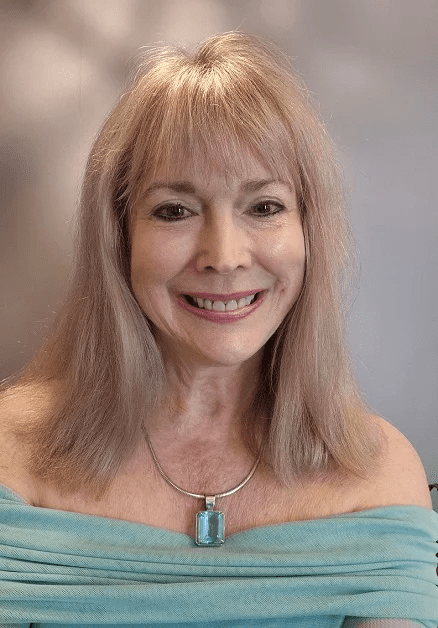
One in four women in the wealthiest nations will experience domestic violence in their lifetime. It is a staggering statistic, yet the reality of what happens behind closed doors often remains hidden in shame and silence. In her new book, Madness in Memphis, licensed counselor and author Patricia Gordon Stevens confronts this darkness head-on through the story of Morgan Sage—a successful, loving mother who unwittingly invites a monster into her home.

Drawing from her own lived experience and professional background in trauma counseling, Stevens explores the chilling complexity of coercion, control, and survival. We sat down with Patricia to discuss why abuse doesn’t discriminate, the importance of a support system, and the message of hope she wants to send to survivors everywhere.
Q: You have just released Madness in Memphis, a novel that exposes the emotional realities of domestic violence. As a licensed counselor who also draws from “lived experience,” was there a specific moment or realization that made you feel it was finally time to share this harrowing yet hopeful story with the world?
Patricia Gordon Stevens:
For years now, for decades, I have listened to the stories of other women and then pursued an undergraduate degree in psychological science and sociology. I was so enamoured with the studies I wanted to go further, so at a mature age in my life, I decided to continue studying psychology and directed my intentions towards a master’s in counselling. This is a work of fiction loosely based on my life. I was married to a man (now deceased) who was diagnosed with bipolar and a severe personality disorder. I wanted to better understand how mental health and mental disorders impact a person’s behaviour. My own son, the only male born in four generations of my tiny family, made a decision to take his life a few months prior to his twenty-fifth birthday, so I was especially keen to find answers surrounding mental health.
As a counsellor, I know the devastating statistics on domestic violence here in Australia and am well aware that the statistics are aligned in the United States and the United Kingdom – one in four women are living in a domestic violence relationship or situation. These numbers are simply not acceptable. I knew, too, if I had written a non-fiction book loaded with further statistics and the types of violence or abuse women experience, I think people would have read it, acknowledged it, and moved on. With ‘Madness In Memphis’, the reader will remain with the context of the book for a while and come away with a comprehensive understanding of what many women go through and how difficult it is to flee, especially while considering the well-being of two small children, constantly under pressure, knowing she must protect them from harm. It was a combination of realities: my former fractured and destructive relationship plus listening to women describe the abuse they lived through daily as if the violence were to be expected the exact same way as the expectation of meals delivered to a table. I remain astonished at the bravery of the women I have had the privilege of listening to throughout my life. This book is not about me. This book is about all women who have and are experiencing domestic violence.
Q: Your protagonist, Morgan Sage, is a successful stockbroker—a detail that challenges the stereotype of what a victim looks like. Why was it important for you to show that domestic violence “doesn’t discriminate” and can happen to women of any income level or background?
Patricia Gordon Stevens:
My first question to you would be: Why does this profession challenge the stereotype? Has tv or the movies made us believe or think that victims are undereducated, noneducated, poor, or working only in entry-level jobs? Nothing could be further from the truth. Domestic violence does not discriminate. If a man (or anyone) has their sights set on control and they have determined their ‘prey’, the individual can be from all walks of life. Profession does not matter, religion or culture, race or colour of skin, financially fluid or poor as a church mouse; if a male is determined to control the female in his life, he will go to great lengths to do so. If a woman is in a higher position, earning more money, and powerful in her profession, this can make the deal sweeter – the package more attractive. He may have to work harder to earn her trust, but that would only make his ultimate goal loftier. I am talking in broad strokes here. A man who must control will find ways to do it, and if his demands are not met or he feels threatened by the thought of losing the person in whom he has invested time and energy, he will begin to feel out of control and lash out, beginning with threats and moving on to violence.
Q: The book describes Morgan’s journey from believing she found the “missing piece” to realizing she is trapped in a cycle of fear. Can you talk about the subtle shift from charm to cruelty that so many women experience, and why that “emotional manipulation” often makes it so hard to leave initially?
Patricia Gordon Stevens:
Your words were carefully chosen and this is an excellent observation: ‘subtle shift’ is a perfect description. A look, an attitude, a change in demeanour can be subtle in the beginning. You have heard of stories where women exclaim, ‘He changed right after the vows – almost immediately after saying ‘I do.’ This happens. It is hard work to keep a facade – a disingenuous personality chugging along for a long duration. It can happen; people have been known to suppress their true personalities for at least a year, sometimes longer. It is such a sly act and most times, planned. The emotional manipulation has been in play since Day One. The woman is made to feel inferior, inept, at fault, to blame, not good enough, irresponsible, and – if she would just change – her behaviour, her attitude, her way of managing her life, he would not behave the way he does. She begins to doubt herself, her looks, her capabilities, her capacity, and if she is a mother and has brought her children into the marriage, she has much more to consider than just herself. So, she tries harder. She makes changes. She thinks she is making strides, but the complaints continue to roll in and the violence escalates. Nothing she does is going to ease his pain or his mind. If she is exceptionally successful and cares a great deal about her professional reputation, she might be the last person who wants to admit she has a failed relationship or, even more importantly, that she is afraid. She, again, might be the last person to reach out for help – before it is too late. For many women, the final straw is when the violence carries over to the children. It is hard for anyone to admit failure, especially if the marriage is fairly new, but it is unacceptable for anyone to live in fear and danger, too.
Q: A critical theme in the book is that while the world is dark, it is “not hopeless.” Morgan eventually finds strength through a small circle of allies—her mother, best friend, colleague, and attorney. How vital is that “support system” for a woman trying to flee with her children versus trying to do it alone?
Patricia Gordon Stevens:
A support system, a tribe, a circle of support, whatever description you like, is crucial for a woman when trying to escape domestic violence. They need a safe space to land for themselves and for their children. He will find her. If she ‘goes it alone’, the abuse will carry on wherever she chooses to live. If she is surrounded by people, he is going to want to save his reputation and most abusers would not dare behave the way they do behind closed doors if they knew people were observing. The smallest offer – the tiniest opportunity for a woman to take herself and her children to safety is all she needs. If you have a room; if you have a second property; if you have relatives who live in the country with enough space to provide a safe haven, even if it is temporary, weeks or a few short months, enough time for the woman to breathe, to think, to plan a path to safety – you might be saving someone’s life. If a woman has no family or no close friends to speak of, the best place to reach out will be local churches or community centers. These places normally have lists on hand of services provided locally or nearby. A woman’s general practitioner or personal doctor is an appropriate place to ask for help; however, deep shame and disbelief at how she managed to get herself into this position will, more than likely, prevent her from describing her state of affairs to her own doctor. Shame and guilt become anchors for most women experiencing domestic violence. The more people who are surrounding the person fleeing and who are aware of her situation…the more hope for a brighter future, I say.
Q: You now run Maxwell House Counseling in South Australia, specializing in trauma and grief. For the reader who might see herself in Morgan’s story—or knows a “coworker, neighbor, sister, or friend” who is suffering—what is the most important message you hope they take away from Madness in Memphis?
Patricia Gordon Stevens:
This is the question I treasure. Thank you. Don’t be shy; remain curious. If a female in your life, family or not, has changed her dress, her demeanour, or if you notice things simply seem a ‘bit off’, if you see her with her partner and he answers for her or touches her arm when she attempts to answer, or if you are not seeing her or hearing from her the way you used to prior to the relationship or marriage – these observations should all be red flags. I understand, of course, in new, loving relationships when people hear the birds singing and have butterflies in their stomach at the mere thought of seeing one another – you will not see them as much as you are accustomed to being around them. But this is different. You might see the subtle changes if you are a genuinely perceptive person. Be persistent. Go to their home. Knock on the door. If he answers and states, ‘Oh, she has a headache, or she’s not feeling well, or she cannot come to the door at the moment’; if you feel safe enough respond, ‘Well, it’s been too long and we are too close, I must see her.’ We never know what’s going on behind closed doors. Morgan Sage, the protagonist in ‘Madness In Memphis’ could be your daughter, your sister, niece, cousin, mother, or even grandmother. We must remain vigilant and forever curious in order to protect the ones we love. We have lost far too many females to violence. It must stop. Discussing violence and coming to terms with the fact behaviour starts at the earliest of ages from the way we are treated by our parents, might make a difference. Not having discourse will allow abuse to escalate. It all starts from the beginning. Young people mirror the behaviour they observe and they receive at home. Education and observing the experiences of others in non-violent homes can open eyes and allow young people to see not all families ‘hit’ when they are angry, distressed, or feel ‘less’ than other people. Most societies are looking for short-term fixes; we all want the abuse to stop, however, until we start educating our youngest members of society on the proper, appropriate ways to treat one another, the cycle will continue. Education begins at home. Education begins with decent leaders.
For more information, visit www.patriciagordonstevens.com or find the author on Facebook and Instagram at Patricia Gordon Stevens Author.
Madness in Memphis
- Publisher: Hembury Books
- Release date: November 27, 2025
- ISBN-13: 978-1923517332 (Paperback)
- Available from: https://www.amazon.com/Madness-Memphis-Patricia-Gordon-Stevens/dp/1923517333