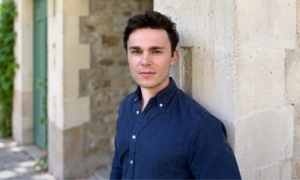
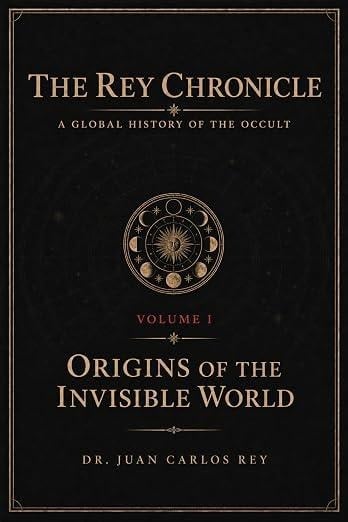
Dr. Juan Carlos Rey’s The Rey Chronicle places ancient divination beside a modern problem: people have always needed to act before certainty arrives.
Prediction is one of civilization’s oldest industries.
Before probability tables, econometric models, weather satellites, machine learning, or artificial intelligence, human beings still wanted an answer to the same unbearable question: what happens next?
They watched birds, stars, entrails, dreams, lots, weather, birth signs, bodily sensations, sacred calendars, and patterns in chance. They built priesthoods, manuals, interpretive schools, ritual procedures, and archives around the hope that uncertainty could be made legible.
It’s tempting to laugh at the distance between an oracle and an algorithm, and it’s just as tempting to collapse that distance until ancient divination starts looking like an early draft of data science. Neither move helps much, because the interesting comparison begins only after we’ve admitted how different the two things really are.
An omen reader and a predictive model aren’t doing the same thing. Their assumptions, methods, evidence standards, and theories of causation differ radically, but both meet the human being at a familiar moment of pressure, when a consequential choice has to be made before the future becomes knowable.
That distinction is where Dr. Juan Carlos Rey’s training becomes especially relevant. Rey approaches the problem from an unusual academic vantage point: he’s a classicist, a professor of Comparative Religious Studies, and holds his doctorate in Comparative Religious Studies. Comparative scholarship teaches a discipline that technical culture also needs: distinguish analogy from identity, shared function from shared mechanism, authority from accuracy, and resemblance from proof.
Rey is also the creator of Temporal Architecture™, author of books on intuition, anomalous experience, grief, agency, and human judgment, and host of The Observable Unknown. In The Rey Chronicle: A Global History of the Occult, Volume I: Origins of the Invisible World, those concerns are carried backward through history. The book traces omen systems, ritual technologies, astrology, funerary texts, spirit communication, alchemy, mystical traditions, and manuscript cultures across multiple regions and centuries.
Read narrowly, it’s a history of occult practice. Read more deeply, it becomes a history of what people do when they have to decide before they can know, which is a problem no century has managed to retire.
PREDICTION BEFORE PROBABILITY
Ancient divination systems weren’t primitive versions of modern predictive analytics. They belonged to cosmologies in which hidden causes could be moral, divine, ancestral, celestial, political, or spiritual, and a sign mattered because a culture had a theory about why that sign could speak.
The useful lesson isn’t that ancient people were secretly doing modern science.
It’s that uncertain human beings keep building procedures that make uncertainty bearable enough to act inside.
A Mesopotamian omen series did more than generate a prediction. It specified who could read signs, which signs mattered, how anomalies should be classified, what precedent existed, and what action might follow. The procedure did social work as well as interpretive work. It narrowed ambiguity by placing judgment inside a recognized system.
That pattern hasn’t vanished, and once a prediction enters a decision it starts changing the person who has to act on it.
A forecast can alter attention, confidence, fear, timing, resource allocation, and willingness to act, which means it’s no longer merely describing a possible future.
It has entered the behavior of the person receiving it.
Prediction doesn’t remove uncertainty. It redistributes it.
THE MIND’S APPETITE FOR SIGNAL
Human beings are pattern-detecting creatures because survival requires it. We learn from recurrence, notice regularity, infer cause, anticipate danger, and pick up on faces, voices, intentions, rhythms, anomalies, and sequences.
The trouble is that the same mind capable of detecting a real pattern can also manufacture one, finding intention in coincidence, structure in noise, or certainty in a weak signal.
Rey’s A Simplified Neuroscience of Intuition approaches that problem from a contemporary cognitive angle. Intuition can begin before conscious explanation. The nervous system can process subtle cues, prior learning, memory, salience, bodily response, and prediction before a person can narrate how a judgment formed.
That doesn’t make intuition infallible, which is exactly why source analysis matters.
A person can have a genuine experience of knowing without yet knowing why the experience occurred, and that distinction matters far beyond occult history.
A dream, bodily sensation, omen, sudden conviction, dashboard alert, model output, or analyst recommendation can all arrive with a felt quality of urgency, but the strength of that feeling doesn’t settle the question of cause or accuracy.
Human beings don’t merely process information. We experience it, fear it, trust it, resist it, and sometimes hand it more authority than it has earned.
RITUAL, PROCEDURE, AND THE COMFORT OF SEQUENCE
Ritual is often described as symbolic behavior, but that description misses part of its force because ritual also organizes sequence.
There’s comfort in sequence when the world feels unruly: do this first, wait for that, abstain from something, consult someone, speak the formula, mark the threshold, and accept the result.
Such procedures can narrow the field of action when too many choices are psychologically costly, while also creating delay, distributing responsibility, establishing group consent, or making a decision feel authorized.
That doesn’t tell us whether the supernatural premise is true, but it does help explain why ritual can remain powerful even when outsiders reject its metaphysics.
The Architecture of Command, another of Rey’s works, is concerned with agency, discipline, attention, and directed action. Read beside The Rey Chronicle, it suggests a broader continuity: human beings repeatedly create forms that convert uncertainty into procedure.
Sometimes those forms are ritual, while in other settings they’re law, military protocol, medical triage, financial models, safety checklists, review committees, or software.
The objects change, but the human wish for sequence remains recognizable.
Ritual gives uncertainty a choreography, and protocol is one of its secular relatives.
TEMPORAL ARCHITECTURE AND THE DECISION DEADLINE
Ancient omen readers and modern executives share an awkward predicament: the decision deadline often arrives before certainty.
Rey’s Temporal Architecture: Human Rhythm, Pressure, Interpretation, and Adaptive States studies judgment as something altered by timing, pressure, fatigue, recovery, context, and consequence.
That matters because prediction is never received by a neutral mind; it lands in a body that is tired or rested, frightened or calm, hurried or patient.
The same forecast presented to a rested person and an exhausted person may not produce the same decision. The same probability may feel tolerable when stakes are low and intolerable when reputation, money, safety, or identity is on the line. Urgency changes how much evidence feels sufficient.
Data can narrow uncertainty, but it can’t abolish consequence.
Ancient systems often created calendars, auspicious windows, prohibited intervals, ritual delays, and authorized moments for action because they weren’t merely trying to know what would happen. They were also trying to know when action could be carried.
Modern organizations do something structurally comparable in secular form when they define review periods, risk thresholds, escalation rules, decision rights, launch windows, and conditions for delay. The metaphysics differ, but the need to structure action in time doesn’t.
The future has always arrived on a schedule that certainty ignores.
FROM ORACLE TO MACHINE AUTHORITY
Artificial intelligence is one current expression of a much older problem: what happens when an answer arrives with more authority than the recipient can independently inspect?
Today the answer may come from a model, a scoring system, a recommendation engine, or an automated process. In a few decades the machinery will probably look different, but the human question won’t disappear with the interface.
What gives an output authority is rarely one thing.
Sometimes it’s speed, sometimes complexity, technical language, past success, organizational trust, or the simple fact that a system is difficult enough to understand that challenging it feels presumptuous.
This is where Rey’s comparative training becomes unexpectedly useful. Comparative Religious Studies teaches the scholar to distinguish form from function and analogy from identity. An oracle and a machine-generated recommendation may both influence a consequential choice, but that shared function doesn’t make their mechanisms equivalent. One may rest on divine causation, another on statistical inference. One may claim sacred authority, another technical authority.
The comparison only becomes useful after the difference has been protected.
The point isn’t that AI is modern divination.
The point is that human beings repeatedly build authority around outputs they can’t fully inspect, and we’re often less skeptical of an answer when the machinery behind it looks expensive, technical, or difficult to question.
What does the recipient do with an answer whose internal process is partly opaque? How much confidence does the answer acquire from the status of the system that produced it? What happens when the recommendation conflicts with direct experience? Who bears responsibility when someone follows the system and the outcome is poor?
Those questions will survive any particular generation of software because the problem isn’t confined to software.
An oracle could relocate responsibility to divine order, while a machine can relocate it to data, code, process, or “the system.” Trouble begins when consultation becomes surrender.
A tool can inform judgment, but it can’t own consequence.
Where prediction becomes human consequence, judgment remains the final burden.
THE EVIDENCE PROBLEM
One of the strongest features of The Rey Chronicle is its five-level evidence system, which separates direct attestation, strong reconstruction, disputed interpretation, traditional attribution, and legendary or mythic chronology.
That framework matters beyond historical writing because it teaches a habit modern decision-makers badly need: identify the kind of claim before deciding how much authority it deserves.
Before granting authority to a claim, it helps to ask which category it belongs to: observation, inference, model output, expert judgment, testimony, tradition, projection, marketing language, or a hypothesis wearing a necktie and pretending to be settled fact.
Category errors can be expensive because a claim often gains power from being mistaken for a stronger kind of claim.
A traditional claim can be culturally meaningful without being independently verified. A model output can be mathematically sophisticated without being suitable for the case at hand. A vivid anecdote can be memorable without being representative. A correlation can be real without telling us the cause.
Rey’s historical rule translates cleanly into modern knowledge work: one kind of evidence shouldn’t be allowed to impersonate another.
The larger danger isn’t only false information. It’s misplaced authority, especially when prestige makes questioning feel impolite.
THE PROBLEM OUTLIVES THE MACHINE
The value of studying old divination systems isn’t that they teach us to revive them. Their value is that they expose the recurring human conditions beneath prediction.
We dislike uncertainty, overvalue authoritative answers, seek patterns under pressure, outsource difficult decisions, ritualize thresholds, remember hits better than misses, and build stories around outcomes after they occur.
None of those habits began with computation, and none will vanish when today’s software becomes a museum piece.
Tools, interfaces, and models will change, while the human appetite for certainty will remain.
That’s why occult history belongs in a technological age. It gives us a long record of what people do when an answer claims to reveal what ordinary perception can’t yet know.
The oracle and the algorithm aren’t twins. They’re separated by evidence, mathematics, mechanism, and world view, yet they stand before the same creature: a human being who wants tomorrow disclosed before today requires a choice.
Certainty has always been expensive, while consequence has never waited for it.
The Rey Chronicle: A Global History of the Occult, Volume I: Origins of the Invisible World is available on Amazon: https://www.amazon.com/dp/B0HHYSS4Z9
ABOUT DR. JUAN CARLOS REY
Dr. Juan Carlos Rey is a classicist, professor of Comparative Religious Studies, author, publisher, public speaker, creator of Temporal Architecture™, and host of The Observable Unknown. His doctorate in Comparative Religious Studies supports a cross-disciplinary body of work on prediction, ritual, intuition, symbolic authority, consciousness, anomalous experience, and human judgment under uncertainty.
More from Dr. Juan Carlos Rey, including Temporal Architecture, A Simplified Neuroscience of Intuition, The Architecture of Command, and The Observable Unknown: https://drjuancarlosrey.com