
ATL Takes Aim at Tech Pain: How a Serial Entrepreneur Is Reshaping Everyday Neck and Shoulder Pain Relief


A newly launched brand developed by Seylaneh Sabz Holding is building its identity around the physical discomforts of digital life, from tech neck and shoulder tension to muscle fatigue from hours of screen time.
By midday, you may already notice some familiar signs: stiffness in the neck, tension in the shoulders, a dull ache in the upper back or tired wrists. Programmers, designers, gamers, freelancers, drivers and anyone who spends hours using a smartphone or laptop will likely recognise this pattern. While technology has made life faster and more connected, it has also forced the human body into positions it was never designed to maintain for extended periods.
ATL (pronounced Atel) is a new health and personal care brand developed by Seylaneh Sabz Group. The company has created the world’s first product designed to directly address an increasingly common issue known as “Tech Pain”.
What Is Tech Pain?
Tech Pain is not a formal medical diagnosis; rather, it serves as an umbrella term for muscle and joint discomfort arising from prolonged sitting, repetitive movements, sustained postures, limited physical activity, poorly organised workspaces and stress-related tension.
The most well-known example is “tech neck” or “text neck”, which refers to the discomfort associated with spending long periods looking down at a smartphone or other digital device. Research has found connections between prolonged device use and neck pain, although there is no conclusive evidence that bending the neck is the direct cause of this discomfort. Factors such as the duration of device use, sleep quality, stress levels, physical conditioning and overall activity may also contribute to neck complaints.
For Mazen Hariri, CEO of Seylaneh Sabz and founder of the ATL brand, this complexity is precisely why the issue requires a broader definition.
“Most pain-relief products still address pain from a traditional perspective, focusing on physical labour, sports injuries or ageing,” says Hariri. “However, the nature of physical discomfort has evolved. Many people do not engage in heavy manual work but may spend eight hours at a computer and several more hours on a smartphone, resulting in significant tension in the neck and shoulders by the end of the day. We believed this modern experience required its own language and a more targeted response.”
“Tech Pain is not our attempt to create a new disease,” he says. “It describes a new reality of modern living. The body isn’t in conflict with technology, but it isn’t meant to remain still or bent forwards, repeating the same limited movements for hours on end. ATL started with a simple question: what would a product look like if it were designed around this reality from the very beginning?”
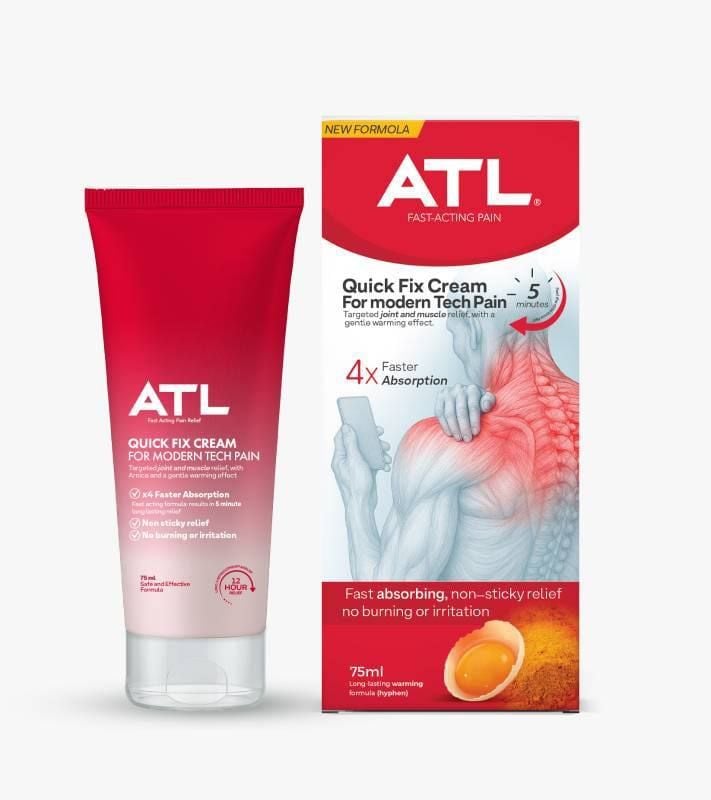
ATL: A Product Designed for Digital Life
ATL has launched its first product, a 75 ml warming topical cream designed to alleviate mild to moderate muscular discomfort in the neck, shoulders and upper back. According to Seylaneh Sabz, the cream generates controlled local warmth, which may help provide temporary relief from stiffness and muscular tension.
The company presents ATL as the world’s first product specifically developed around the concept of Tech Pain. This claim reflects ATL’s broader ambition: to establish a recognisable category within consumer health rather than introduce another general-purpose muscle cream.
The formulation includes a warming agent called Thermolate, along with arnica, turmeric and egg. The combination of turmeric and egg is inspired by a local Persian tradition and is presented in a standardised, contemporary product format.
“We aimed to avoid portraying tradition and modern formulation as opposites,” Hariri explains. “Turmeric has long been a significant part of the cultural heritage of Iran and, more broadly, the Middle East. Our goal was not simply to recreate a homemade remedy. Instead, we sought to explore how that heritage could guide the creation of a standardised product suitable for contemporary use.”
“Innovation doesn’t always involve discovering a new ingredient,” he explains. “Sometimes, it means recognising a problem that has been overlooked, understanding the people affected by it and combining existing knowledge in a more relevant manner. At ATL, we believe that true innovation starts with how we define the problem.”
Who Is ATL Designed For?
ATL’s intended audience extends beyond traditional desk workers. The brand targets a diverse group of potential consumers, including programmers, designers, remote workers, gamers and frequent smartphone users. Additionally, it recognises drivers, artists engaged in detailed or repetitive tasks, athletes experiencing mild muscle fatigue, new mothers and individuals whose stress manifests as tension in the neck and shoulders.
“We didn’t define ATL based on a specific age group because Tech Pain is often influenced more by behaviour than by age,” Hariri explains. “A 20-year-old gamer, a 35-year-old software developer, a 50-year-old artist and a new mother may all experience different types of muscular tension. However, they all share one common issue: their bodies are kept in demanding or repetitive positions for too long.”
“That insight shaped the product’s format, texture, application and the information provided with the cream. If a product is intended for modern life, it must seamlessly fit into the situations where people need it.”
ATL is not clinically tested and does not claim to be classified as a medicine, but results from its internal R&D, focus groups and research involving early adopters show that users may start to experience the warming effect of the cream within about five minutes. The company refers to this feature as “five-minute relief”. However, individual responses may vary, and the product brief does not mention any independent clinical studies verifying this outcome for all consumers. Therefore, this timeframe should be viewed as a claim made by the manufacturer rather than a guaranteed medical result.
ATL provides guidance on massage, stretching and lifestyle adjustments, recognising that screen-related muscular discomfort often requires more than a single-product solution.
The US Occupational Safety and Health Administration (OSHA) advises computer users to take a five-minute break from screen-based tasks every hour. This allows time to move, stretch and let the muscles recover.
Mazen Hariri and the Innovation Engine Behind Seylaneh Sabz
ATL represents the latest chapter in a larger entrepreneurial narrative shaped by Mazen Hariri, the founder and CEO of Seylaneh Sabz. Since establishing the company in 2001, Hariri has guided its evolution from a personal care and hygiene manufacturer into a diversified fast-moving consumer goods (FMCG) business with a growing presence in the region.
According to published reports, Seylaneh Sabz currently employs over 1,200 specialists and boasts a portfolio of 700 products across 20 specialised brands. The company has a presence in more than 20 countries, with brands that include Comeon, Misswake, Kodex, Dafi, and Umbrella, which cover categories such as skincare, oral care, sexual wellness, and personal care. Additionally, Seylaneh Sabz has opened a new manufacturing facility in Oman, marking its third strategic production site in the region.
For Hariri, creating brands starts with recognising shifts in consumers’ lives before these shifts become established product categories.
“Creating different brands has shown me that innovation begins with careful observation,” he explains. “Entrepreneurs need to understand how people’s lives are changing, pinpoint the needs that current products don’t address, and then align product development, design, and communication to respond to these needs effectively.”
Hariri has shared his experience and industry knowledge through his book, “The Brand Playbook”, which focuses on brand management, growth, and innovation. Additionally, the company’s expanding portfolio, investment in research and development, and regional manufacturing strategy have contributed to his reputation as a creative and forward-thinking entrepreneur in the Middle East.






Comment