Close your eyes and imagine walking into a room where books aren’t just stored, they’re displayed.
Where spines don’t just hold pages together, they catch light and draw the eye like paintings on a wall.
Where opening a book isn’t just about accessing information, it’s about experiencing beauty.
This isn’t fantasy. This is what happens when bookbinding becomes art.
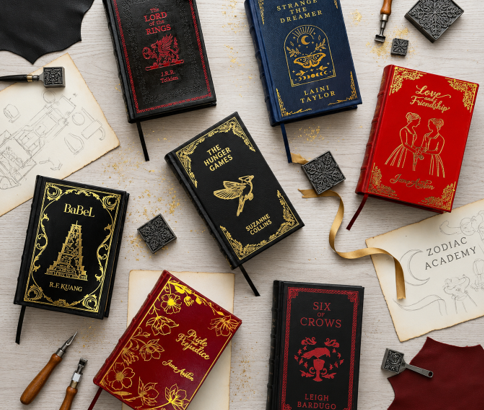
Fine binding transforms any book into something extraordinary, whether the epic world of The Lord of the Rings, the linguistic beauty of Babel, or thought-provoking works like Meet Your Strawman.
Each becomes a tangible masterpiece through skilled craftsmanship, something you don’t just read but treasure.
The History of Bookbinding as Art
Before printing presses, before mass production, before Amazon and e-readers, every book was a work of art.
Scribes spent months copying texts by hand. Illuminators added intricate decorations and gold leaf.
Binders created covers from leather, wood, and metal, often studded with jewels.
These weren’t just books. They were treasures. Objects so valuable that they were chained to library shelves.
So beautiful, they were commissioned by kings and housed in cathedrals.
The art of bookbinding evolved over centuries, from medieval monasteries to Renaissance workshops to modern artisan studios.
But the core principle never changed: books that matter deserve a binding that honors their importance.
When you hold a beautifully bound book today, you’re touching a tradition that stretches back through centuries.
Anatomy of Artisan Book Binding
Let’s pull back the curtain on what actually makes a book beautiful.
Not just attractive, anyone can print a pretty cover, but genuinely artful.
Worth displaying, worth keeping, worth passing down.
Leather Selection: Where Art Begins
Not all leather is equal, far from it. The leather chosen for fine binding must be supple enough to work with, strong enough to protect, and beautiful enough to showcase.
It needs to age well, developing patina rather than deterioration.
Color matters enormously. The rich burgundies, deep forest greens, midnight blues, and warm cognac browns of quality leather create an immediate visual impact.
Touch matters too. Run your hand across quality leather, and it responds.
There’s warmth there, texture, life. Synthetic alternatives feel dead by comparison, plasticky, cold, generic.
Gold Foil: Bringing Light to the Spine
Here’s where bookbinding truly becomes art. Gold foil embossing and printing isn’t just decoration; it’s a craft that requires precision, patience, and practiced skill.
Traditional gold embossing uses actual gold leaf, pressed into leather using heated tools and dies.
The gold doesn’t just sit on the surface; it’s bonded to the leather through heat and pressure.
Done properly, it will never fade, never wear away, never lose its luster.
The artisan creates the design, title, author name, and decorative elements, then heats the die to the exact temperature. Too cool, and the gold won’t adhere. Too hot and the leather burns.
The pressure must be precise. The timing must be perfect.
When light hits gold-embossed text on a leather spine, something magical happens.
Interior Architecture: The Hidden Artistry
Open a fine-bound book and the artistry continues inside, in ways most readers never consciously notice but definitely feel.
Sewn page binding is invisible architecture. Each section of pages, called a signature, is hand-sewn to the next.
The thread connects everything, creating a flexible spine that opens fully without breaking.
This isn’t just stronger than glued bindings, it’s more beautiful.
The spine moves like a living thing, bending and flexing naturally.
Marble endpapers greet you immediately upon opening the cover.
These aren’t just pretty pages; they’re miniature works of art. Traditional marble paper is created by floating ink on water, creating swirling patterns, then pressing paper onto the surface.
The result is unique every time, like fingerprints or snowflakes.
When you open a book and see marble endpapers, there’s a moment of surprise and delight.
“Oh,” you think, “someone cared about every detail of this book, even the parts most people never notice.”
That care is palpable. It transforms the reading experience before you’ve read a word.
These techniques elevate any work. They transform fantasy epics like The Lord of the Rings, turning Tolkien’s doorstop into something worthy of display in your home’s finest room.
They honor delicate literary works like Babel, giving Kuang’s prose about language and power the physical presence it deserves.
They lend distinction to specialized texts like Meet Your Strawman, signaling that unconventional ideas merit serious attention and beautiful presentation.
Choosing Books Worthy of Art Treatment
Not every book needs artisan binding. That thriller you read on vacation? The diet book you’ll follow for three weeks? The business manual that will be outdated next year? Those are fine in paperback.
But some books call out for more. Recognizing which ones matter if you want to build a library that’s both beautiful and meaningful.
Personal Significance Trumps Prestige
Don’t bind books because they’re “important” or “classics” if they don’t matter to you personally.
A beautifully bound book you never read is just expensive decoration. The books worth binding are the ones you’ll actually open, read, treasure.
Your library should reflect your mind and heart, not someone else’s list of great books.
Books You’ll Display with Pride
Fine binding transforms books into objects you want visible, accessible, showcased.
Think about which books you’d be proud to display prominently, which ones you’d want guests to notice and ask about.
These conversation-starter books deserve a binding that invites examination.
When someone picks up your beautifully bound copy of Babel and says, “I’ve heard about this, is it good?” you’ve just created a moment. That’s what beautiful books do: they create moments.
Works That Deserve Physical Presence
Some books are better in physical form.
Displaying Book Art in Your Home
Once you have beautifully bound books, displaying them properly matters. These aren’t just books anymore; they’re functional art that deserves thoughtful presentation.
Location, Location, Location
Light is both friend and enemy. Natural light makes gold embossing gleam and leather glow, but direct sunlight fades and damages over time.
Solution: Place your bound books where they catch indirect light, near windows but not in the sun’s direct path.
Eye-level matters too. The most beautiful books should be at natural viewing height, where their spines are easily visible. Save lower or higher shelves for less decorative volumes.
Consider traffic patterns. Books displayed where people naturally pause, near seating areas, by doorways, in conversational spaces, get noticed and appreciated more than books hidden in unused corners.
Arrangement as Art
Color blocking can be stunning with leather-bound books. Group similar colors together for visual impact: all the burgundies, all the greens, all the blues. The uniformity of quality binding makes this work better than with random paperbacks.
Alternatively, arrange by size for clean, architectural lines. Or by author, if you have multiple books from the same creator, beautifully bound.
Mix in bookends, small sculptures, or other objects that complement without competing.
Remember: books are art. Everything else is support.
Lighting for Impact
Proper lighting transforms a bookshelf from storage into a gallery.
Picture lights above shelves, LED strip lighting behind them, or carefully placed lamps nearby can make gold embossing shimmer and leather textures pop.
Avoid harsh overhead lighting that flattens everything.
Instead, use directional light that creates shadows and highlights, giving your bound books the dimensional presence they deserve.
The Reading Nook
Consider creating a dedicated space where your most beautiful books live alongside comfortable seating and good reading light.
This isn’t just about display; it’s about using these beautiful objects for their intended purpose.
When beautifully bound books inhabit a space designed for reading, they fulfill both functions: they’re art to admire and books to read. That dual nature is what makes them so special.
The Emotional Return
Here’s what nobody tells you about owning beautifully bound books: they change how you feel about reading.
When you reach for a leather-bound book, pull it from the shelf, feel its weight, smell the leather, and turn to your bookmarked page with the silk ribbon, reading becomes an event.
Not just information consumption. Not just killing time. An event.
This might sound pretentious, but it’s psychologically real. Physical rituals create mental states.
The ritual of handling a beautiful book creates a reading state of mind that’s more focused, more present, more appreciative.
Conclusion: Books as Living Art
We live in a world drowning in content but starving for beauty.
We have access to millions of books, but most of them look generic, disposable, forgettable.
Where we read on screens that disappear when we close them, leaving nothing behind but eye strain.
Fine book binding pushes back against all that. It insists that some stories deserve beautiful vessels.
That craftsmanship matters.
That books can be both readable and displayable, functional and artistic, contemporary and timeless.
When you transform a book through artisan binding, you’re not just creating a pretty object.
You’re making a statement: this story matters enough to preserve beautifully. These ideas deserve physical presence.
This author’s words warrant the finest presentation we can give them.
At RareBiblio, we believe every book lover deserves to experience reading as art.
We believe the marriage of beautiful binding and meaningful content creates something greater than either alone. We believe books can be both deeply functional and genuinely artistic.
From page to shelf, from text to treasure, from reading to experiencing, that’s the transformation artisan binding creates.
Your books are waiting to become art. All they need is the binding they deserve.