For decades, televisions have largely followed the same formula: a screen mounted on a wall or placed in a fixed location, designed primarily for entertainment. But as homes become more connected and family routines grow increasingly complex, the role of the screen itself is beginning to change.
Modern families juggle cooking, homework, meetings and family plans across different rooms, with no single screen flexible enough to keep up.
A new generation of smart displays is challenging the idea that large screens belong in only one room or serve only one purpose. Instead, these devices are becoming flexible tools for entertainment, communication, learning, organization, and productivity throughout the home.
Among the products helping drive this shift is the Apolosign 32″ Smart Portable TV, a device that combines a large touchscreen display, built-in battery power, Android functionality, and mobility in a single platform. Rather than remaining attached to a wall, the screen moves wherever it is needed, adapting to different activities and environments throughout the day.
When the Screen Comes to You
The biggest difference between a traditional television and a portable smart display is simple: the screen can move.
Apolosign Portable TV features a rolling design with five wheels, while the 32-inch model comes with a built-in 15,000mAh battery. Instead of treating a large screen as a permanent fixture, families can move it to wherever it is needed throughout the day.
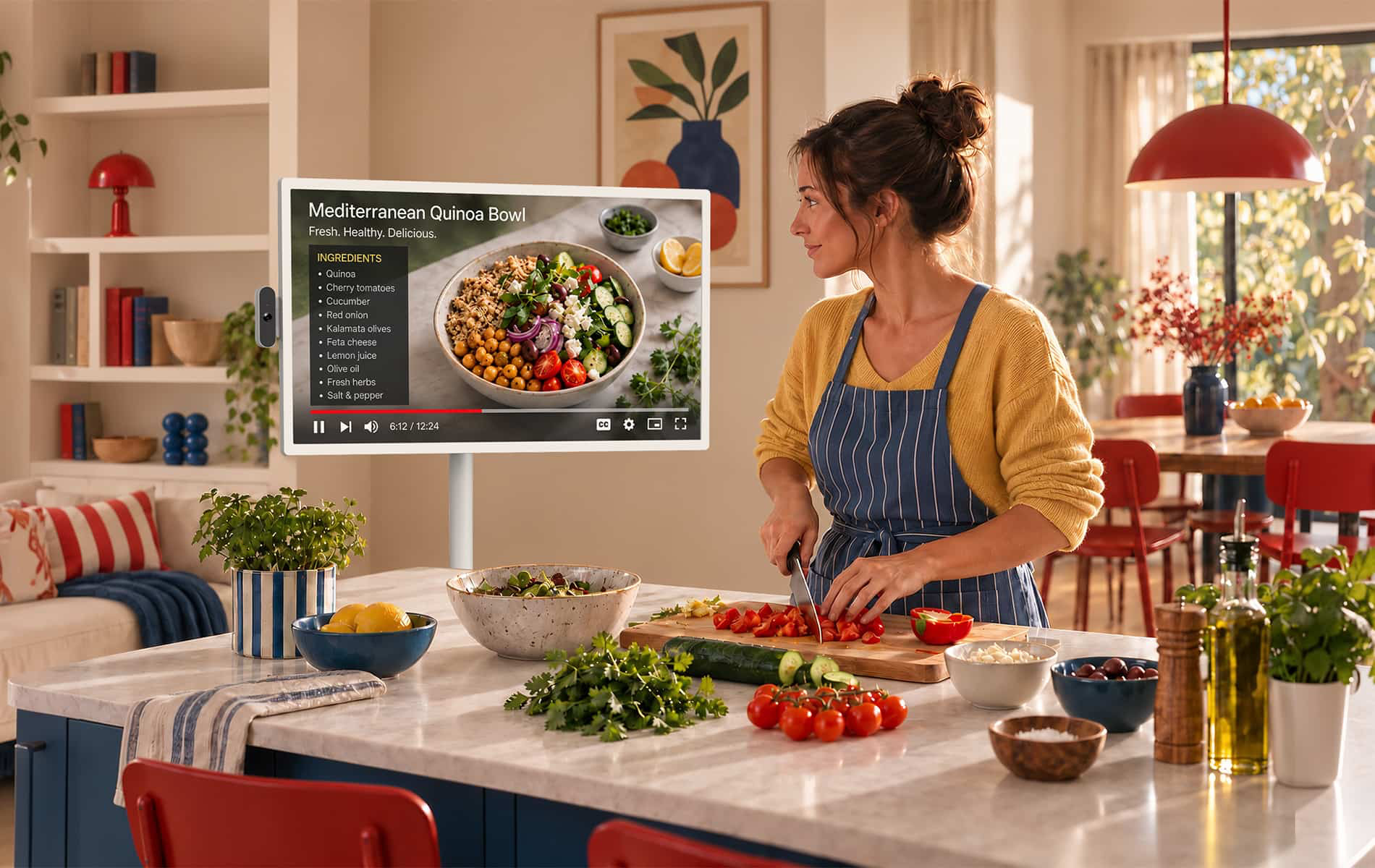
In the kitchen, it can display a recipe or cooking tutorial. In a study area, it can support online learning or provide a larger screen for work. In the living room, it can return to its familiar role as an entertainment screen.
The difference becomes clearer when the two approaches are placed side by side:
| Traditional TV | Apolosign Portable TV | |
| Placement | Fixed single location | Movable between rooms |
| Installation | Wall-mounted / stationary setup | Wheeled rolling stand |
| Power | Needs constant mains power | Rechargeable built-in battery |
| Interaction | Remote only | Touchscreen + remote control |
| Primary Purpose | Primarily entertainment | Entertainment, learning, work & video calls |
| Daily Flexibility | Restricted to one room | Built for multi-room, multi-scene use |
The goal is not necessarily to replace the traditional television, but to make a large screen useful in more places and for more parts of everyday life.
Android 16 & Touchscreen: Beyond Traditional Entertainment
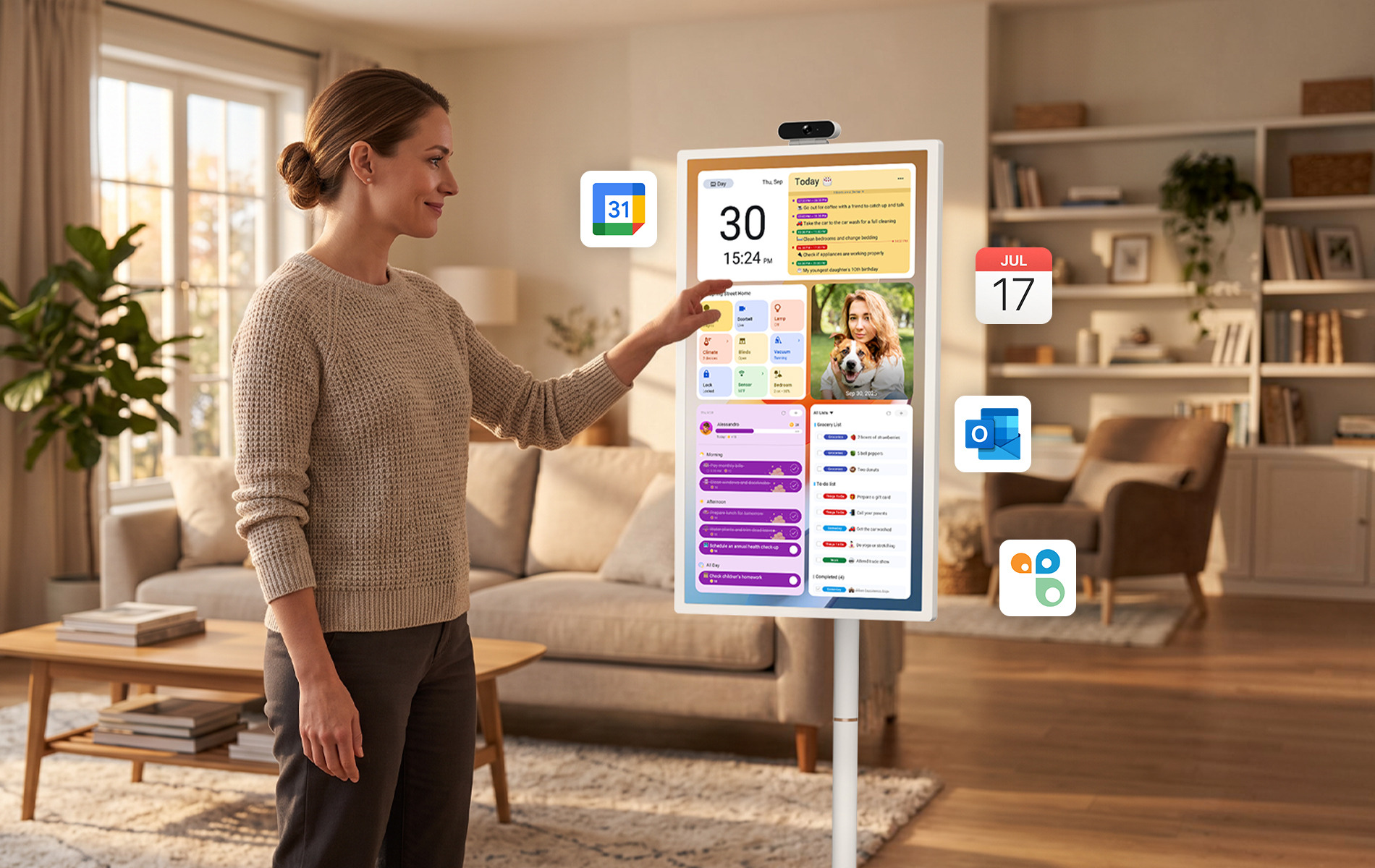
Mobility is only part of the experience.Apolosign Portable TV runs on Android 16 with Google Play support, giving users access to streaming services, educational apps, productivity tools, communication platforms, and other applications.
Its touchscreen also provides a more interactive way to use the device. Users can browse the web, follow a recipe, join an online class, make a video call, or use other apps directly on the large display.
This makes the Portable TV less like a screen used only for watching content and more like a shared smart display that can take on different roles throughout the day.
Key Specifications
| Feature | Details |
| Screen Sizes | 24-inch, 32-inch |
| Resolution | 24-inch: FHD; 32-inch: FHD or 4K |
| Battery | 24-inch: 6,800mAh; 32-inch: 15,000mAh |
| Smart Platform | Android 16, with Google Play support |
| Touchscreen | Multi-touch display |
| Mobility | Five-wheeled rolling stand |
| Connectivity | Wi-Fi, Bluetooth, HDMI, USB ports |
The 32-inch model is available in both FHD and 4K versions, while the 24-inch model features an FHD display. Both models are designed around the same idea: making a large smart screeneasier to move and use in different spaces.
Versatile Smart Screen for Kitchens, Living Rooms, and Workspaces
The value of a portable screen becomes clearer when looking at how modern homes are actually used.
Rooms rarely serve just one purpose. The kitchen can become a cooking space, homework area, or place for family conversations. The living room can shift between movie nights, workouts, gaming, and gatherings. A bedroom or study area may function as a workspace during the day and a personal space later on.
A portable display can adapt to these changes without requiring a separate television for every room.
A parent preparing dinner can keep a recipe or cooking video visible on the larger screen instead of relying on a phone. Children can use the display for online classes or educational content. During a family gathering, the same screen can show photos, play entertainment, or support a video call.
The screen becomes part of the activity rather than determining where the activity has to happen.
Built-in Digital Calendar for Family Organization
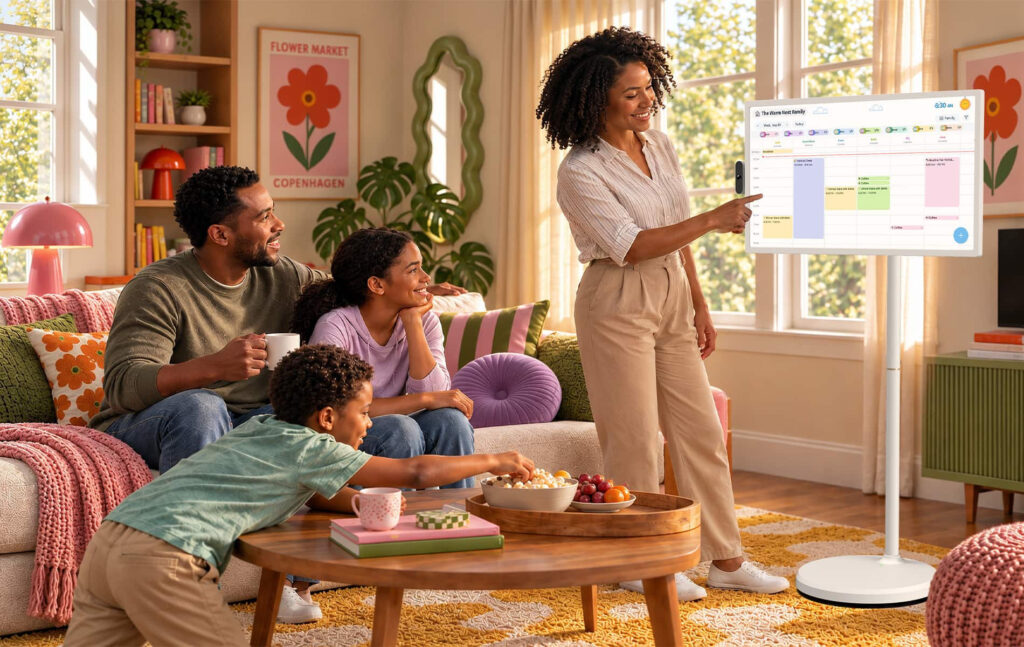
Once a large screen can move with the family, its role does not have to stop at entertainment.The Apolosign Portable TV comes with the Apolosign Calendar built in, giving families another way to use the large screen beyond entertainment—as a shared space for everyday planning and organization. The Calendar is part of the Portable TV’s built-in software experience, rather than a separate screen that needs to be purchased separately.
Families can use the built-in Digital Calendar to view schedules, routines, tasks, rewards, and meal plans on the same large display. The latest software upgrade also adds features such as Family View, upgraded Stickies, enhanced To-Do tools, and recipe functions.
The idea is simple: when the Portable TV is not being used for entertainment, the same screen can help keep family plans and responsibilities visible to everyone.
For busy households where information can become scattered across phones, calendars, messages, and notes, a shared display can make everyday plans easier to see at a glance.
One Screen, Different Roles Throughout the Day
The appeal of the Apolosign Portable TV ultimately comes from its ability to change roles.
In the morning, it might be used for news or entertainment. Around lunchtime, it can move into the kitchen for a recipe or cooking video. In the afternoon, it can support learning or work. In the evening, it can become the family’s entertainment screen again.
It can also support video calls, gaming, screen mirroring, or family scheduling depending on what the household needs.
That flexibility changes how a large screen fits into the home. Instead of being tied to one room and one primary purpose, it becomes a shared device that can respond to the family’s changing routines.
Designed for More Flexible Spaces
Portable technology is also changing the relationship between personal and shared devices.
A smartphone is typically personal. A traditional television is usually stationary and shared. A portable smart display sits somewhere in between: it is large enough for multiple people to use together, but flexible enough to move when the family’s needs change.
That makes the Apolosign Portable TV relevant beyond traditional entertainment. Its combination of a large touchscreen, Android functionality, built-in battery, and rolling design gives families more freedom over where and how they use a large screen.
Instead of adding another fixed screen to the home, one portable display can adapt to different spaces and activities.
Looking Ahead
As smart home technology continues to evolve, the definition of a television may become less about where a screen is installed and more about what it can do.
The Apolosign Portable TV reflects that shift by combining the familiar experience of a large display with the flexibility of a mobile smart device. It can move from entertainment to learning, from communication to everyday organization, depending on what the household needs at that moment.
And that may be the more interesting future for large screens: not simply smarter televisions, but screens that can adapt to the way people actually live.
Discover more at apolosign.com and pick the screen size that fits your family’s lifestyle.