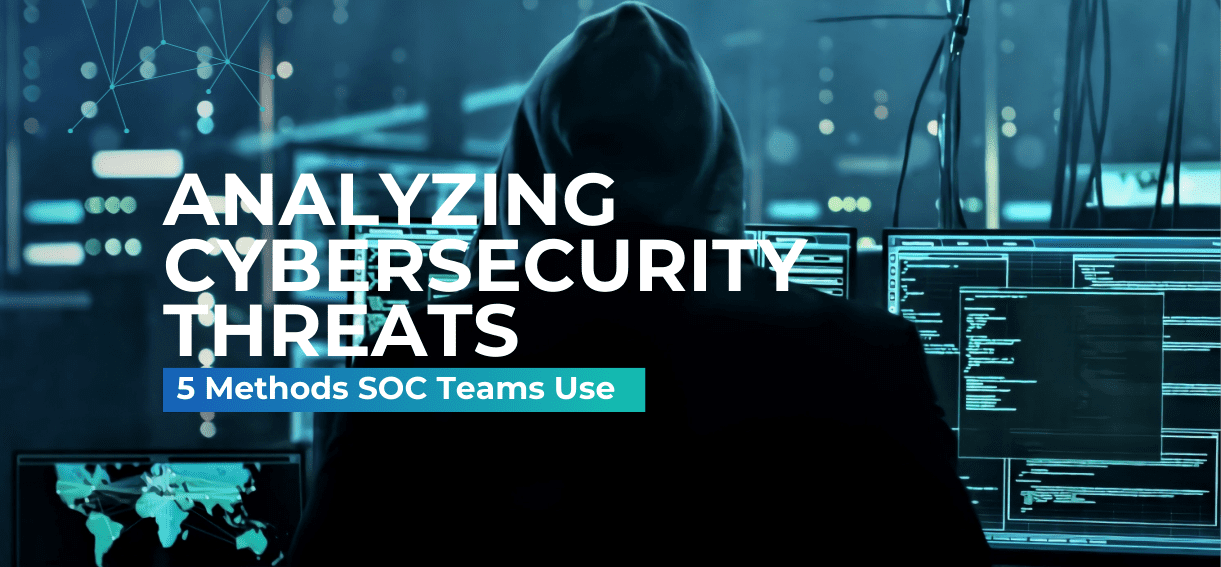
How do modern organizations keep up with digital criminals who never sleep? Every minute, automated bots and human hackers probe corporate infrastructures for one weak point. The cost is astounding when a breach takes place. In 2025, the global average cost of a breach was $4.4 million. To manage these cybersecurity threats, security operations centers (SOC) must move faster than the attackers themselves.
By looking at specific data breach patterns, teams can predict where the next strike might fall. It is not a simple matter of installing a firewall and hoping to be lucky. It involves an ongoing process of monitoring and action. We examine how technical experts use insights to keep business infrastructure safe.
Implementing Cybersecurity Analytics for Faster Response
Millions of entries are stored in standard log files and cannot be read manually by a human. But when we apply cybersecurity analytics, these piles of entries become useful narratives. These tools help to find correlations between seemingly unrelated events across the system. As an illustration, a failed login in London could be associated with an unusual file download in New York.
And since time is the most costly factor in a breach, speed is the only thing that matters. Attackers usually take days or weeks before they strike within a system. With advanced analytics, we can decrease the mean time to detect (MTTD) from months to hours. This change helps to prevent a small incident from becoming a total disaster.
| Feature | Log Management | Cybersecurity Analytics |
| Primary Goal | Compliance and storage | Real-time threat detection |
| Analysis Speed | Manual or scheduled | Automated and continuous |
| Input Sources | Single source (Syslog) | Multi-source (Endpoint, Cloud) |
| Cost (Estimated) | $50 – $100 per month | $5,000 – $15,000+ per month |
Advanced Detection Through Traffic Analysis
When we look at network monitoring, the focus shifts to how packets move between points. Every device on a network leaves a trail when it communicates. If a server that usually sends 5 MB suddenly sends 5 GB to an unknown IP address, we have a problem. This is where cyber threat detection becomes the primary line of defense for a company.
Security teams use traffic analysis tools to inspect packets and flow data in real time. They look for signs of lateral movement – a common tactic where hackers move from one machine to another. By watching the internal traffic, we can catch an intruder before they reach the core database. Many companies now look at fintech security trends to see how high-stakes industries handle this high-volume information.
Evaluating IP Reputation and Connection Patterns
Is the incoming traffic coming from a known malicious source? We check every connection against global databases of threat intelligence to find “bad” actors. If an IP address has a history of hosting malware, the system blocks it automatically. But attackers often use proxies to hide their true origin.
Technical teams often use a SOCKS 5 proxy to test their own defenses from different locations. This helps them understand how their filters react to traffic coming from various global nodes. By simulating different attack vectors, engineers can make sure their geolocation blocks work correctly. This method allows for testing without exposing the internal corporate IP to the public web.
Analyzing Behavior During Cybersecurity Threats
But what happens when an attacker uses legitimate credentials? If a username and password are correct, traditional tools might not trigger an alert. This is why behavioral analysis is essential for modern SOC teams. We build a baseline of “normal” behavior for every user and machine on the network.
If an accountant suddenly starts accessing sensitive engineering files at 3 AM, the system flags it as an anomaly. This anomaly detection does not look for a virus signature. Instead, it looks for human or machine behavior that does not fit an established pattern. And while it might be a false alarm, it allows the team to investigate before information leaves the building.
- Pros: Catches “zero-day” attacks and stolen credentials.
- Cons: High rate of false positives if the baseline is not accurate.
- Advice: Set a learning period of at least 30 days for new tools.
The Cost of Professional SOC Tools
Running a high-end security operation is expensive. Small startups often struggle with the price tags of top-tier software. But the cost of doing nothing is almost always higher. We’ve listed some common tools and their real-market pricing to help with budgeting.
- CrowdStrike Falcon Go: $299.95 per year for 5 devices (basic protection).
- Splunk Cloud: Starts around $150 per GB of data ingested.
- Fortinet FortiGate 40F: ~$500 for the hardware plus $200 annually for services.
- SentinelOne Core: Approximately $45 per endpoint annually.
And these prices do not include the cost of the personnel to run them. A junior SOC analyst often earns between $70,000 and $90,000 per year. For many startups, outsourcing to a managed security provider is the only way to get these cybersecurity threats under control.
Practical Steps for SOC Operations
How should a business start improving its stance? We recommend a tiered approach to building your security stack. Start with the basics and add complexity as the company grows.
1) Map your assets: You cannot protect what you do not know exists.
2) Enable detailed logging: Make sure every server and cloud instance records activity.
3) Perform malware analysis: When you find a suspicious file, run it in a sandbox to see its behavior.
4) Update threat feeds: Ensure you have the latest updates on global cybersecurity threats.
5) Review access: Regularly check who has permission to see your most sensitive data.
The Limits of Automation
Can software do everything? While AI and machine learning help, human intuition remains vital. Attackers are creative and can find ways to trick an algorithm. But they have a harder time tricking an experienced analyst who knows the specific quirks of their company’s network.
Final Remarks on Cybersecurity Threats
When we discuss the future of digital defense, we focus on resilience. No system is 100% unhackable. But we can make it so difficult and expensive for attackers that they choose a different target. By combining network monitoring with smart analysis, we build a formidable barrier.
Are your current systems ready for a sophisticated attack? Most businesses find that they have gaps in their visibility. By identifying these holes now, you avoid becoming another statistic in next year’s breach report. And as cybersecurity threats continue to evolve, our methods for catching them must change even faster.