
Aluminum Composite Panels and Glass Partitions in Modern Offices

An aluminum composite panel is a flat building material made of two thin aluminum sheets bonded to a central core. The core is either polyethylene (a lightweight plastic) or a mineral-filled compound that raises fire resistance. This sandwich structure stays rigid while keeping weight low, which is why modern offices use it for interior walls and exterior cladding (the outer skin of a building). Vision Art Aluminum manufactures and installs these panels for projects across New Jersey and New York.
Aluminum composite panel, often shortened to ACP, sits in the architectural cladding category. The panel ships in large formats that crews cut and fold on site. Vision Art Aluminum offers an Aluboard variant within this product line. The company is based at 28 Valley Road in Montclair, New Jersey, and serves both residential and commercial buildings. An office fit-out can pair this cladding with a glass partition for a single coordinated interior.
The material reads as a smooth, painted metal surface from across a room. Designers reach for the aluminum composite panel when they want a clean facade, reception wall, or signage face that resists weather and stays flat over time. Vision Art Aluminum pairs the panel with framing and fixings supplied by European system partners, including Schüco and Reynaers.
How does an aluminum composite panel work?
An aluminum composite panel works as a rigid skin that hides and protects the structure behind it. The two metal faces carry the finish and the impact resistance. The core absorbs minor knocks, dampens sound slightly, and keeps the panel from flexing under its own weight. The mineral-filled core also slows flame spread, which matters when an ACP covers an occupied office wall.
Installation runs on a hidden support frame, so no screws show on the finished face. Crews route grooves into the back, fold the panel into trays, and clip those trays onto rails fixed to the wall. This cassette method lets a damaged panel come off without disturbing its neighbours. Vision Art Aluminum handles the full sequence: design, drawings, permits, manufacturing, and expert installation by factory-trained teams.
Office facades face daily temperature swings, and metal expands and contracts with heat. The hidden-fix system leaves a small gap between trays so the panels can move without buckling. That detail keeps long cladding runs looking flat. The same logic applies indoors, where ACP wraps columns, ceilings, and feature walls in a continuous finish.
Why does an aluminum composite panel matter for modern offices?
An aluminum composite panel matters because it delivers a uniform, low-maintenance surface at a manageable weight. A modern office often needs hundreds of square feet of consistent cladding for facades, lobbies, and signage. Heavier materials such as solid stone add structural load and cost. ACP holds a flat painted finish across large spans while staying light enough for standard wall framing.
Fire performance is the second reason offices specify mineral-filled cores. After several high-profile facade fires, building codes in the United States tightened the rules on combustible cladding cores. A mineral-filled ACP core resists flame spread better than a pure polyethylene core. Vision Art Aluminum produces both variants and routes product through United States building-code certification on related window lines, such as the Miami-Dade approval on its single hung range.
Signage and branding form the third use case. The smooth panel face takes paint, vinyl, and cut lettering cleanly, so a company logo on a reception wall stays sharp. The panel also resists rain, ultraviolet light, and pollution outdoors. That durability lowers the repaint and replacement cycle that a building manager budgets for over a decade.
What is a frameless glass partition and how does it pair with ACP?
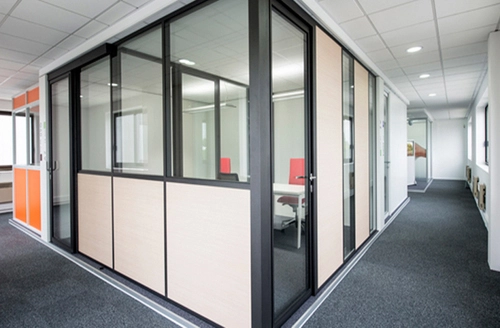
A frameless glass partition is an interior wall built almost entirely from glass, with the metal frame reduced to slim top and bottom tracks. Vision Art Aluminum builds this product as the InterNo 42 Series. The system reaches a height of up to 12 ft and uses glass 1/2 in thick. The partition divides space without blocking daylight, which suits open-plan offices that still need quiet rooms.
Frameless office partition systems carry an acoustic rating that offices check closely. The InterNo 42 Series reaches a Sound Transmission Class, the standard measure of how well a wall blocks airborne noise, of up to 37. Its soundproofing reaches up to 36 decibels. That level lets a meeting room stay private next to a busy open floor. The glass keeps sightlines open so managers retain a view across the space.
The two products work together because ACP handles the solid surfaces and glass handles the transparent ones. A designer can clad a core wall, a column, or a reception desk face in aluminum composite panel, then run a frameless glass partition between workstations and meeting rooms. The result is one coordinated interior where opaque and transparent elements share a single supplier and finish language.
What are the key specifications?
Aluminum composite panel and frameless glass partition specifications guide the design choices for an office fit-out. The table below lists the verified figures Vision Art Aluminum publishes for each system. These values set the limits a project architect designs within.
| Specification | Aluminum composite panel | Frameless glass partition (InterNo 42) |
| Core / build | Polyethylene or mineral-filled core between two aluminum sheets | Single-glazed glass in slim top and bottom tracks |
| Fire / safety feature | Fire resistance via mineral-filled core | Acoustic separation between rooms |
| Maximum height | Varies by facade design | Up to 12 ft |
| Glass thickness | Not applicable | 1/2 in |
| Acoustic rating (STC) | Not applicable | Up to 37 |
| Soundproofing | Not applicable | Up to 36 decibels |
| Primary office uses | Cladding, signage, facades, feature walls | Meeting rooms, quiet zones, open-plan dividers |
| Variant | Aluboard | InterNo 42 Series |
Where do these systems appear in an office?
Aluminum composite panel and glass partitions appear in distinct zones of a modern office. Each material answers a different design need, from the building skin to the internal layout. The list below maps common placements.
- Building facade: ACP cladding forms the weatherproof outer skin and gives the office a flat, modern face.
- Reception and lobby: ACP covers feature walls and the desk front, while a glass partition screens a waiting area.
- Signage: the smooth panel face carries the company logo and wayfinding lettering.
- Meeting rooms: the frameless office partition encloses rooms while keeping the STC up to 37 acoustic seal.
- Open-plan zones: glass partitions split desk clusters from quiet rooms without cutting daylight.
- Columns and ceilings: ACP wraps structural elements in a continuous finish.
What should buyers verify before specifying?
Buyers should verify the core type before specifying an aluminum composite panel for an office facade. A mineral-filled core meets stricter fire rules than a polyethylene core, and local building officials may require the mineral grade on tall or occupied buildings. Confirm the requirement with the project authority during the drawings and permits stage. Vision Art Aluminum includes this permit work in its seven-step process.
Acoustic targets are the second check for a frameless glass partition. An open-plan office that needs private calls should confirm the room sits behind the InterNo 42 Series rating of STC up to 37. A lower target may allow thinner glass and a smaller budget. Vision Art Aluminum quotes single-glazed glass at 1/2 in thickness for this series, reaching up to 36 decibels of soundproofing.
Lead time is the third factor a buyer plans around. The company manufactures after town approval, then installs with factory-trained crews. Average installation runs about one week for a typical project, measured after permits and production. A buyer scheduling an office move should add the permit and manufacturing windows to that installation week when setting a date.
Aluminum composite panels and glass partitions: the practical verdict
Aluminum composite panels and frameless glass partitions cover two halves of a modern office interior: the solid surfaces and the transparent ones. ACP delivers a flat, fire-resistant, low-maintenance skin for facades, signage, and feature walls, with a mineral-filled core for tighter fire rules. The frameless glass partition, built as the InterNo 42 Series, divides space at up to 12 ft tall while holding an STC up to 37 acoustic seal.
Vision Art Aluminum supplies both systems from one base in Montclair, New Jersey, serving New Jersey and New York. The company runs the full path from design and permits through manufacturing and installation, using European system partners such as Reynaers and Schüco. For an office fit-out, that single-supplier route keeps the opaque cladding and the glass dividers aligned in finish, scheduling, and code compliance.
This content is for informational purposes only. Specifications and availability may change; verify current product details on the official Vision Art Aluminum website before purchasing.
Frequently Asked Questions
What is an aluminum composite panel?
An aluminum composite panel is a flat cladding material made of two aluminum sheets bonded to a central core of polyethylene or a mineral-filled compound. The mineral core adds fire resistance. Modern offices use the panel for facades, signage, and interior feature walls. Vision Art Aluminum produces it, including an Aluboard variant, in New Jersey.
How does an aluminum composite panel work in an office?
An aluminum composite panel works as a rigid skin clipped onto a hidden support frame, so no fixings show on the face. The metal sheets carry the finish and impact resistance, while the core keeps the panel flat and slows flame spread. Small gaps between trays let the metal expand with heat without buckling across long facade runs.
Why do offices use frameless glass partitions?
Offices use frameless glass partitions to divide space without blocking daylight. The InterNo 42 Series from Vision Art Aluminum reaches up to 12 ft tall with glass 1/2 in thick. It holds a Sound Transmission Class of up to 37 and soundproofing up to 36 decibels, so meeting rooms stay private beside open-plan desks while sightlines remain open.
What are the common misconceptions about ACP?
A common misconception is that every aluminum composite panel carries the same fire rating. The core type sets the difference: a polyethylene core burns more readily than a mineral-filled core. Another misconception is that ACP is purely decorative. The panel also weatherproofs facades, wraps structure, and carries signage, all while staying light enough for standard wall framing.
How do you get started with an ACP or glass partition project?
You start with an initial consultation, held by Zoom or in person, with Vision Art Aluminum. The team then develops a design concept, inspects the site, and prepares drawings and permits. Manufacturing follows town approval, and factory-trained crews handle installation, which averages about one week for a typical project after permits and production finish.






Comment