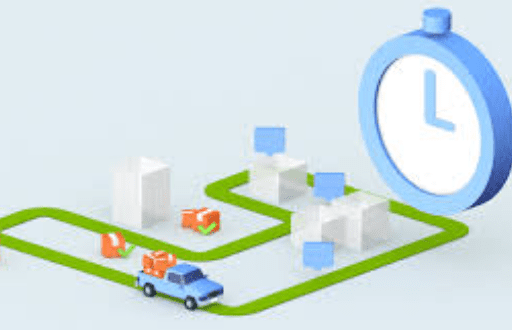
As we move through 2026, the logistical challenge for any modern Business has shifted from a one-way street to a continuous loop. In this era, “Reverse Logistics”—the process of bringing products back from the consumer for repair, resale, or recycling—is no longer a cost center; it is a strategic asset. The breakthrough driving this change is Algorithmic Logistics, where Artificial Intelligence optimizes the “Last-Mile” of returns, ensuring that the Circular Economy is both environmentally sustainable and highly profitable.
1. The Pulse of the Loop: AI-Driven Reverse Flows
In 2026, the “Last-Mile” is being reimagined as the “First-Mile” of the next product lifecycle. Technology has moved beyond simple route planning to “Real-Time Operational Decision-Making.”
-
Predictive Return Forecasting: Rather than reacting to returns as they arrive, businesses now use Artificial Intelligence to predict return volumes weeks in advance. By analyzing historical data, seasonal trends, and even the “Fit-Probability” of a purchase, AI allows warehouses to balance their labor and space before the first return package is even scanned.
-
Automated Exception Management: Logistics in 2026 is “Self-Healing.” If a return shipment is delayed by a port closure or weather event, autonomous AI agents renegotiate freight rates and reroute shipments in real-time, preventing bottlenecks in the circular processing centers without human intervention.
-
Intelligent Inventory Balancing: Technology now allows for “Dynamic Slotting.” As returned items are processed, AI determines the most efficient location for them—whether that is a local micro-fulfillment center for immediate resale or a regional hub for deep refurbishment—minimizing “Empty Miles” and maximizing asset velocity.
2. Digital Marketing: Monetizing the Circular Journey
In 2026, Digital Marketing is the tool that closes the loop by turning a return into a new opportunity for engagement. The focus has moved to “Recommerce” and building “Long-Term Value” over a single transaction.
-
Personalized Recommerce Recommendations: When a consumer initiates a return, AI-driven marketing engines suggest “Better-Fit” alternatives or refurbished “Pre-Loved” items in real-time. This has reduced return rates by 15-25% while increasing customer loyalty through “Personalized Intent.”
-
The “Zero-Waste” Customer Experience: Marketers are leveraging the “Digital Product Passport” to show customers the exact impact of their return. By providing a “Sustainability Score” for choosing a green return path (like a local drop-off point), brands turn logistics into a shared ethical win with the consumer.
-
Dynamic Pricing for Returns: Business models in 2026 often include “Incentivized Returns.” Digital Marketing platforms offer dynamic discounts on future purchases if a customer returns a product during a “Low-Traffic” window, allowing the algorithm to optimize the pickup route and reduce carbon emissions.
3. Management: Orchestrating the “Human-Machine” Logistics Team
For the 2026 manager, the goal is “Cognitive Orchestration.” The workforce is no longer divided into “Drivers” and “Planners” but into “Agent Orchestrators” who oversee an autonomous ecosystem.
-
From Firefighting to Orchestration: 2026 management has moved from “Firefighting” (reacting to crises) to “Orchestration” (designing systems). Leaders use AI-driven simulations to test “What-If” scenarios—like fuel price spikes or sudden regulatory shifts—ensuring the Business remains agile regardless of external shocks.
-
Upskilling for Agent Oversight: Professional roles are shifting toward “Human-in-the-Loop” supervision. Logistics teams now spend their time managing the high-level strategy of the AI agents that handle the repetitive analysis of route optimization and load lifting.
-
P&L Impact over Productivity Metrics: In 2026, the “Vanity Metric” of package volume has been replaced by the “Agent Value Multiple.” Management now measures how much margin improvement and carbon reduction the AI agents generate per unit of operational cost.
4. Technology: The Green Infrastructure of 2026
The infrastructure of 2026 logistics is built on a foundation of “Flexible Automation” and “Verifiable Sustainability.”
-
Urban Micro-Fulfillment Centers (MFCs): To shorten the last-mile, businesses have moved away from massive centralized warehouses toward automated urban units. These MFCs use AI to position high-demand products closer to the consumer, reducing lead times and emissions by up to 40%.
-
IoT and Blockchain Transparency: “End-to-End Visibility” is the backbone of trust. IoT sensors provide item-level tracking, while blockchain ensures every movement of a returned asset is securely recorded and verifiable, satisfying both the 2026 consumer and the regulator.
-
Energy-Efficient Autonomous Fleets: The last-mile is increasingly handled by electric, autonomous delivery bots. AI manages these fleets by optimizing charging schedules based on grid demand and route priority, ensuring that “Smarter” logistics is also “Greener” logistics.
Summary: The 2026 Logistics Transformation
| Focus Area | 2024 Logistics Model | 2026 Algorithmic Model |
| Returns | Operational Loss / Waste | Recoverable Asset / Recommerce |
| Decision Making | Human-Led / Reactive | AI-Agentic / Predictive |
| Infrastructure | Centralized Warehousing | Hyper-Localized MFCs |
| Sustainability | Reporting Requirement | Core Commercial Strategy |
Conclusion: The Circular Competitive Advantage
The integration of Algorithmic Logistics in 2026 marks the end of the “Throwaway Economy.” For a Business to thrive, it must embrace the complexity of the return loop as its greatest opportunity for growth.
By using Artificial Intelligence to turn the last-mile into a benchmark of sustainable innovation, organizations are doing more than just saving costs; they are building a resilient, high-trust ecosystem. In 2026, the leaders of industry are the “Architects of Logistics”—those who pair intelligent decision-making with a radical commitment to circularity, ensuring that every product journey begins and ends with value.