
17 Best AI SEO Tools in 2026: Which Platforms Are Worth Paying For

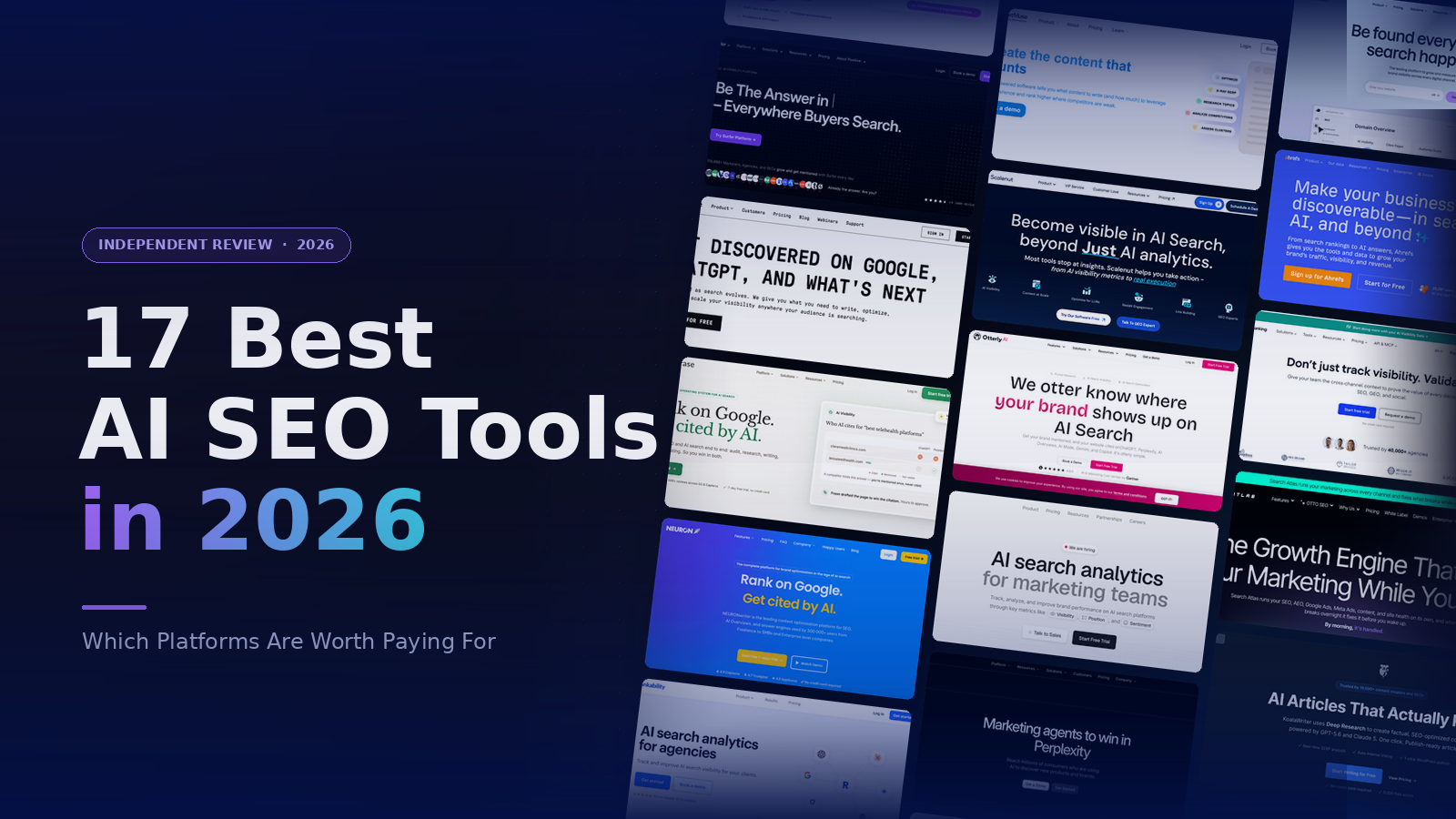
AI SEO tools in 2026 do three different things: keyword research, content optimization, and tracking whether AI mentions a brand. No tool does all three well, and prices start anywhere from $9 to $199 per month. The best pick is the one that covers what a team is still missing. TMX Visibility stands out for optimizing drafts and proving results, Semrush for doing the most in one subscription, and Otterly.AI for cheap AI citation tracking.
The AI SEO Landscape in 2026
Google is sending less traffic to websites every year. Chartbeat data reported by Axios shows small publishers lost 60% of their search traffic in two years. Medium sites lost 47%, and even large sites lost 22%.
That traffic went to AI. Similarweb counts 9.5 billion visits to AI platforms every month, up 70% in a year. And when Google shows an AI answer, people stop clicking. Pew Research found only 8% of users click a result when an AI summary appears, versus 15% without one.
This changed what an SEO tool needs to do. A traditional SEO tool optimizes for Google rankings through keywords, backlinks, and technical audits. An AI SEO tool adds a second target: getting content quoted inside AI answers, and tracking when that happens. Some tools find keywords and track rankings. Some make content easier for AI to quote. Others check if ChatGPT, Perplexity, Gemini, or Google AI Overviews actually mention a brand. Most tools only do one of these well, and that is what this list is built around.
Overview of the Best AI SEO Tools (Comparison Table)
Below are the best AI SEO tools, each with its own specialty. The table shows what every tool does best, with pricing verified from official pages in 2026:
| Tool | Best For | Pricing |
| TMX Visibility | AI citation tracking and Information Gain to differentiate content | From $199/mo |
| Surfer SEO | SERP-driven content editing | From $49/mo (annual) |
| Clearscope | Editorial teams with many writers | From $129/mo |
| Frase | End-to-end content workflow | From $49/mo |
| NEURONwriter | Budget content optimization | From $23/mo |
| Rankability | Agencies with white-label needs | From $199/mo |
| MarketMuse | Site-level content planning | Sales-gated, free plan available |
| Scalenut | Content production plus GEO tracking | From $59/mo |
| Otterly.AI | Cheapest AI citation tracking | From $29/mo |
| Peec AI | Competitive citation analysis | From $95/mo |
| Profound | Enterprise AI visibility | From $99/mo (billed yearly) |
| Writesonic | Tracking plus content execution | From $79/mo (annual) |
| Semrush | All-in-one marketing suite | From $139/mo |
| Ahrefs | Backlink research | From $29/mo |
| SE Ranking | Suite value for agencies | From $129/mo |
| Search Atlas | Automated SEO execution | From $99/mo |
| Koala AI | Bulk AI content on a budget | From $9/mo |
What to Look for in an AI SEO Tool
Not every tool deserves a line in the budget. Four things separate a good buy from shelf-ware:
- Job coverage. Buy a tool that does a job the team does not have covered yet.
- Real cost. Check the full price. AI tracking is often a paid add-on or a higher plan.
- Transparency. Pick tools that show their prices and limits openly.
- Clear next steps. A good tool tells the team what to fix, not just what is wrong.
Workflow Integration Friction
A tool that fits the workflow survives onboarding. A tool that fights it gets abandoned by month two. Four things are worth checking before buying:
- Seat costs. Extra users run from $45 to $100 per month on some suites, and free on others. This changes the real price fast.
- API and data limits. The tool should handle the team’s publishing scale without hitting rate caps.
- Data freshness. GSC and GA4 syncing daily is very different from weekly. Slow refresh means slow decisions.
- Time to value. Budget implementation time separately from the monthly cost.
Breakdown of Each AI SEO Tool
Here is a closer look at each tool, with real pricing from August 2026 and the downsides included:
1. TMX Visibility
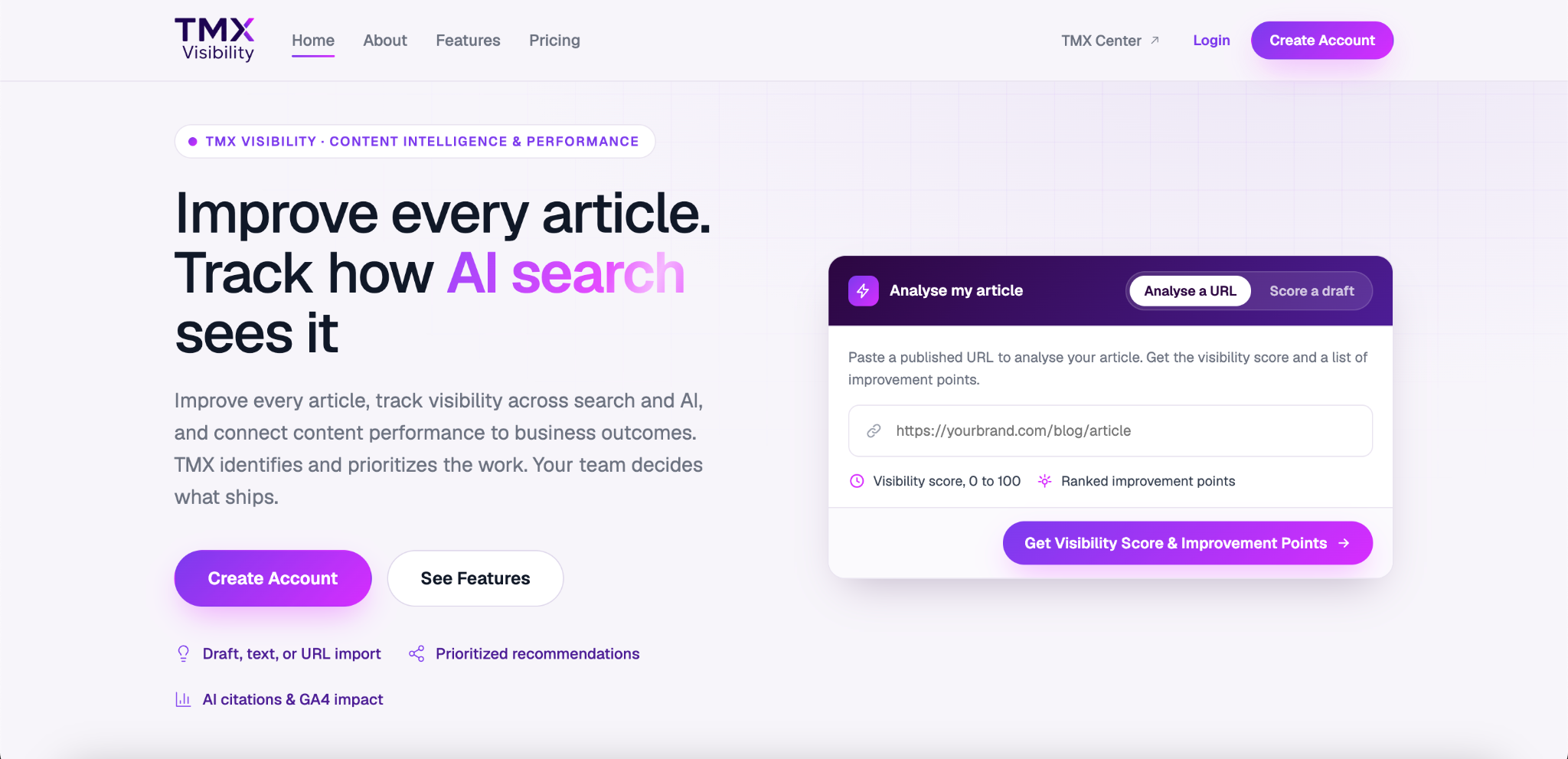
TMX Visibility is an AI-driven content optimization and visibility tracking platform. What makes this tool different is that it helps writers find high-traffic AI prompts relevant to their content, then optimize the article around those prompts. Writers can also add internal information through the Information Gain feature. Exclusive data, customer insights, and internal research can all go in. This is what separates an article from the AI-generated content covering the same topic.
Key features:
- AI Live Tracking that follows AI citations, average AI rank, and share of voice next to GA4 data
- AI prompt discovery that shows what users are asking about a topic before writing starts
- Information Gain feature that works in original internal data such as customer insights and expert knowledge
Why it stands out: most AI visibility tools can tell a brand it is not being cited. Very few explain what to fix, why it matters, and how to do it. TMX Visibility covers all three, then checks after publishing whether the changes worked. The honest downside is that the platform is still new, so independent reviews are not out there yet.
2. Surfer SEO
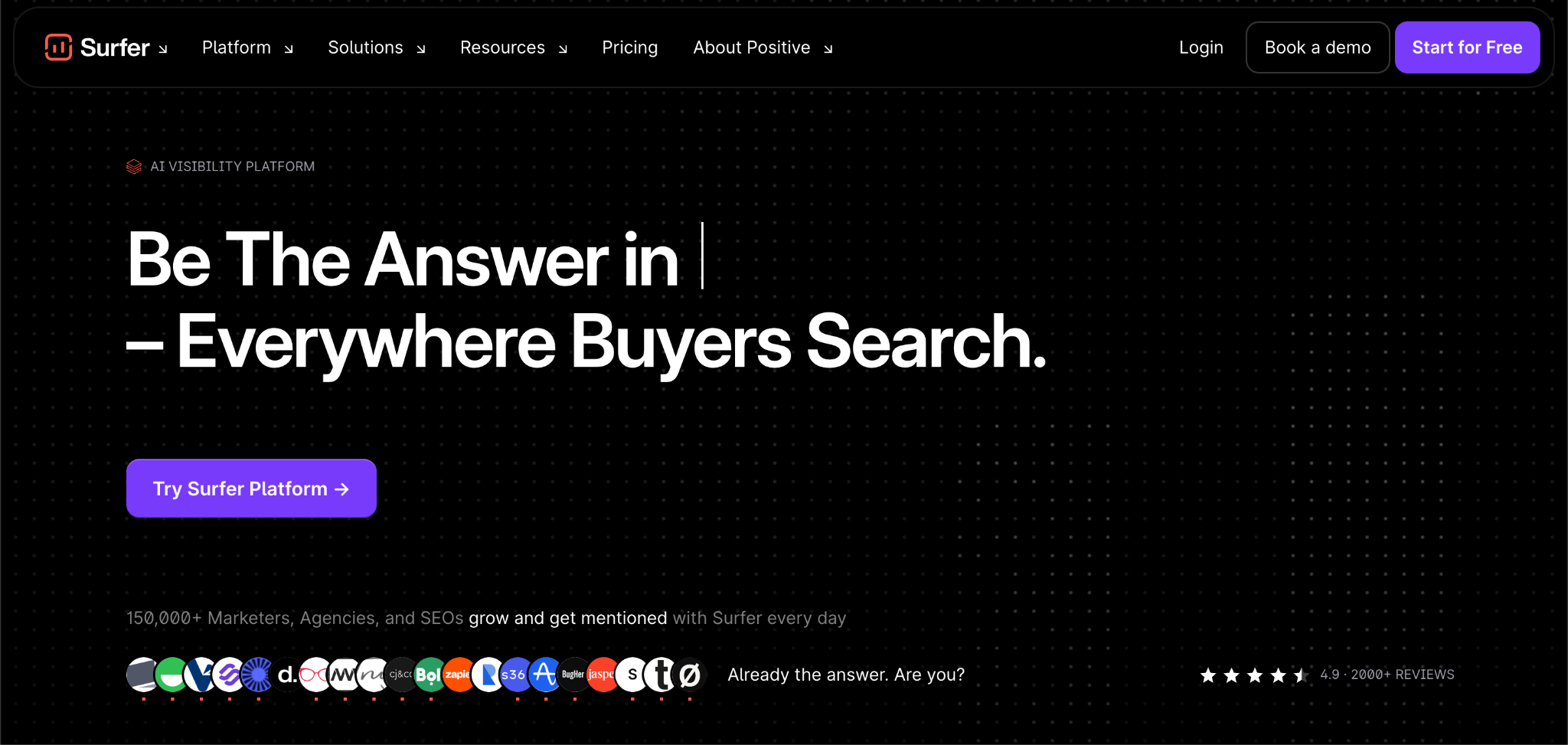
Surfer SEO scores drafts against pages that currently rank, and repositioned in 2026 as an AI Visibility Platform.
Key features:
- Content Editor with real-time SERP-based guidelines
- AI Tracker across ChatGPT, Perplexity, Gemini, Claude, and Google
- Content Audit with a prioritized fix list
Why it stands out: recommendations come from ranking pages, which removes most on-page guesswork. The documented limitation is that following term suggestions too literally can tip into keyword stuffing, and document credits burn fast.
3. Clearscope
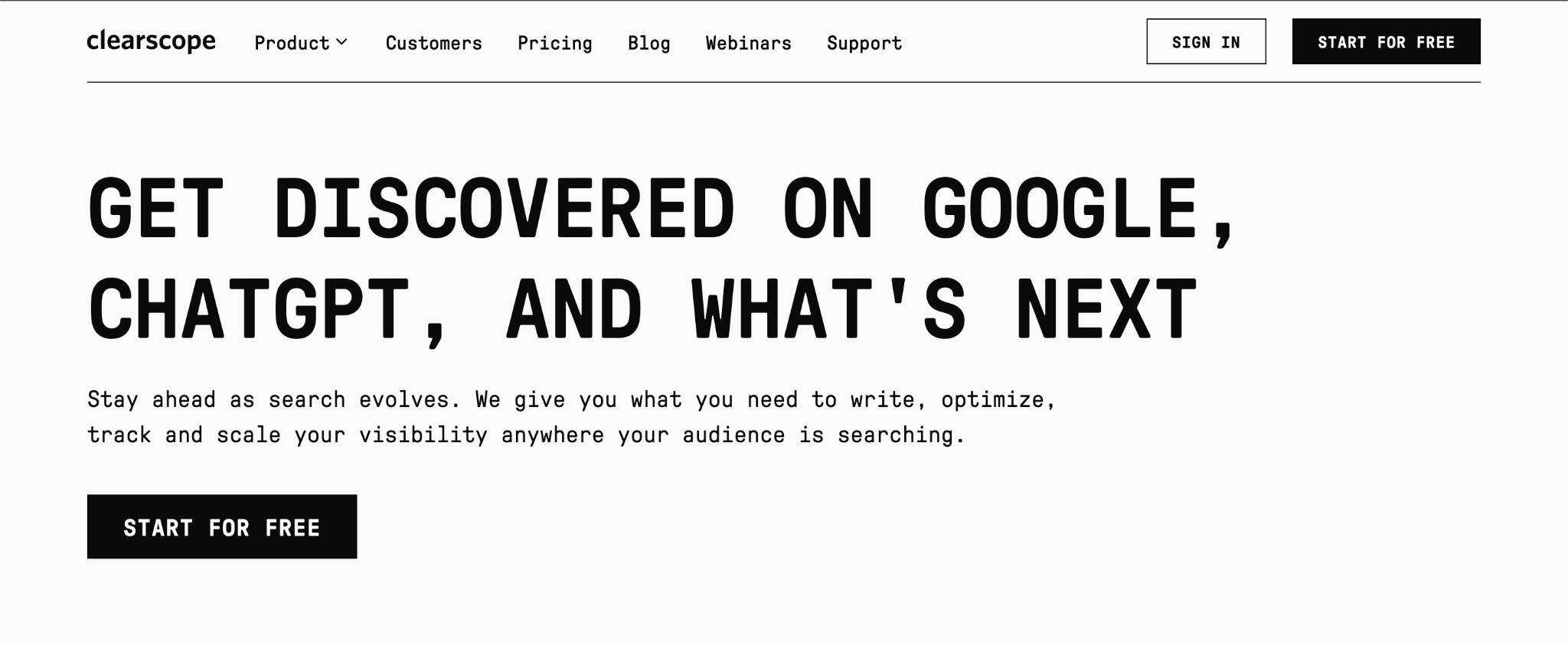
Clearscope grades content against top-ranking pages and now tracks brand mentions in ChatGPT and Gemini answers.
Key features:
- Content reports with term recommendations from ranking pages
- Prompt Tracking, 50 prompts on the entry plan
- Unlimited users and projects on every plan
Why it stands out: unlimited seats plus Google Docs, WordPress, and Word integrations make it the easiest optimizer to roll out across editorial teams. The limitation is price against scope, with no technical or backlink features and tight entry caps.
4. Frase
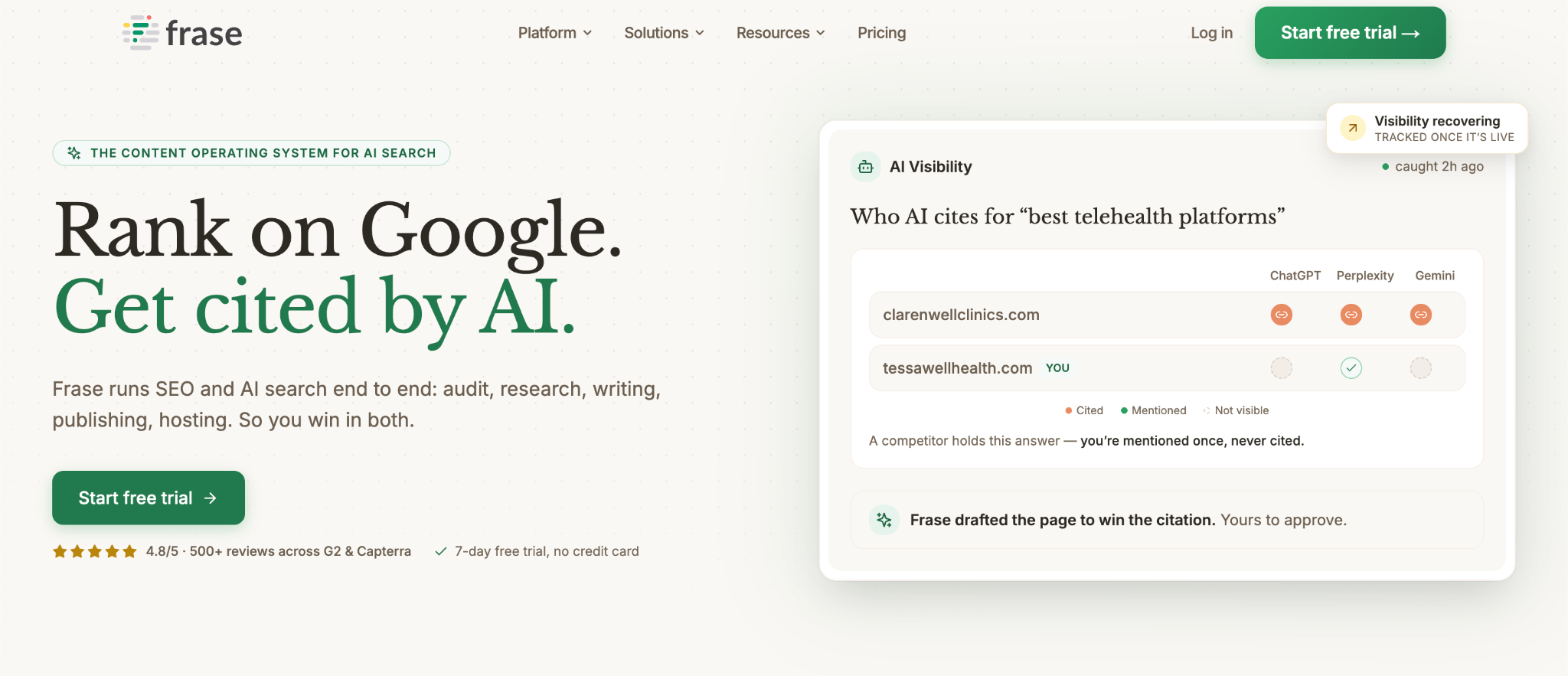
Frase grew from a brief tool into a content operating system covering research, drafting, optimization, publishing, and monitoring.
Key features:
- AI Agent drafting with optimization scoring built in
- Daily AI visibility tracking across ChatGPT, Perplexity, Claude, Gemini, and Google AI
- Content Guard that detects decay and auto-drafts fixes
Why it stands out: one subscription takes an article from brief to published page and keeps watching it. The documented limitation is a steep learning curve, and old $15 to $45 pricing in dated reviews no longer applies.
5. NEURONwriter
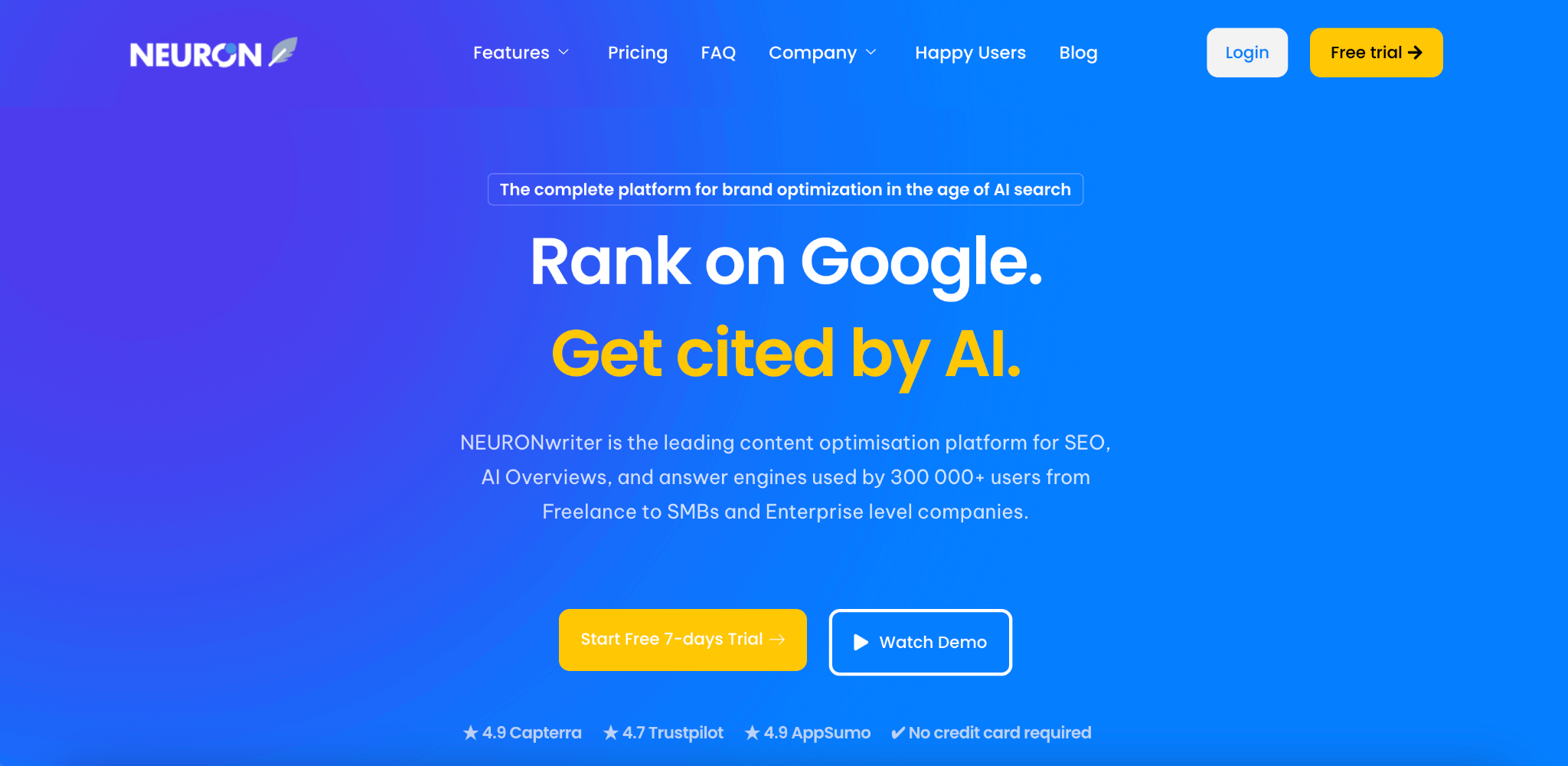
NEURONwriter is a budget NLP optimization editor rated 4.9 out of 5 on Capterra as of August 2026 (ratings change continuously).
Key features:
- NLP editor with competitor benchmarking and content scoring
- AI-monitored questions across Google, AI Overviews, ChatGPT, and Perplexity
- WordPress, Search Console, and Shopify integrations
Why it stands out: it covers the core optimization job at two to six times less than rivals. The documented limitation is a dated, cluttered interface and no keyword volume data.
6. Rankability
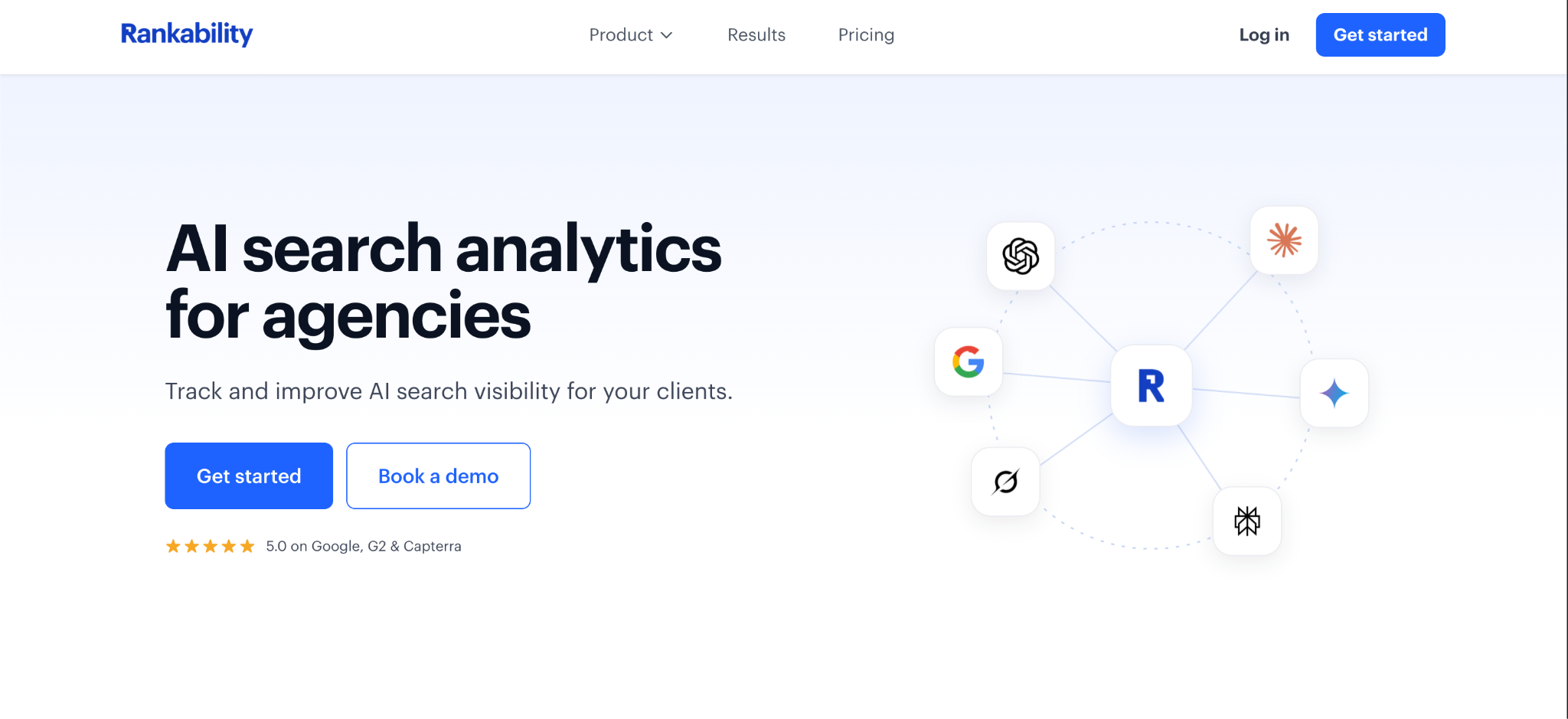
Rankability repositioned in 2026 as an agency operating system for AI search visibility.
Key features:
- NLP content briefs and optimization scoring
- AI Visibility Tracker, ChatGPT, Google AI Mode, and Claude on entry
- Unlimited seats, white-label, client portals, and API on all plans
Why it stands out: agencies pay for capacity, not headcount, which no rival here matches at entry level. The documented limitation is maturity, with a learning curve, bugs after big updates, a thin review base, and no free trial.
7. MarketMuse
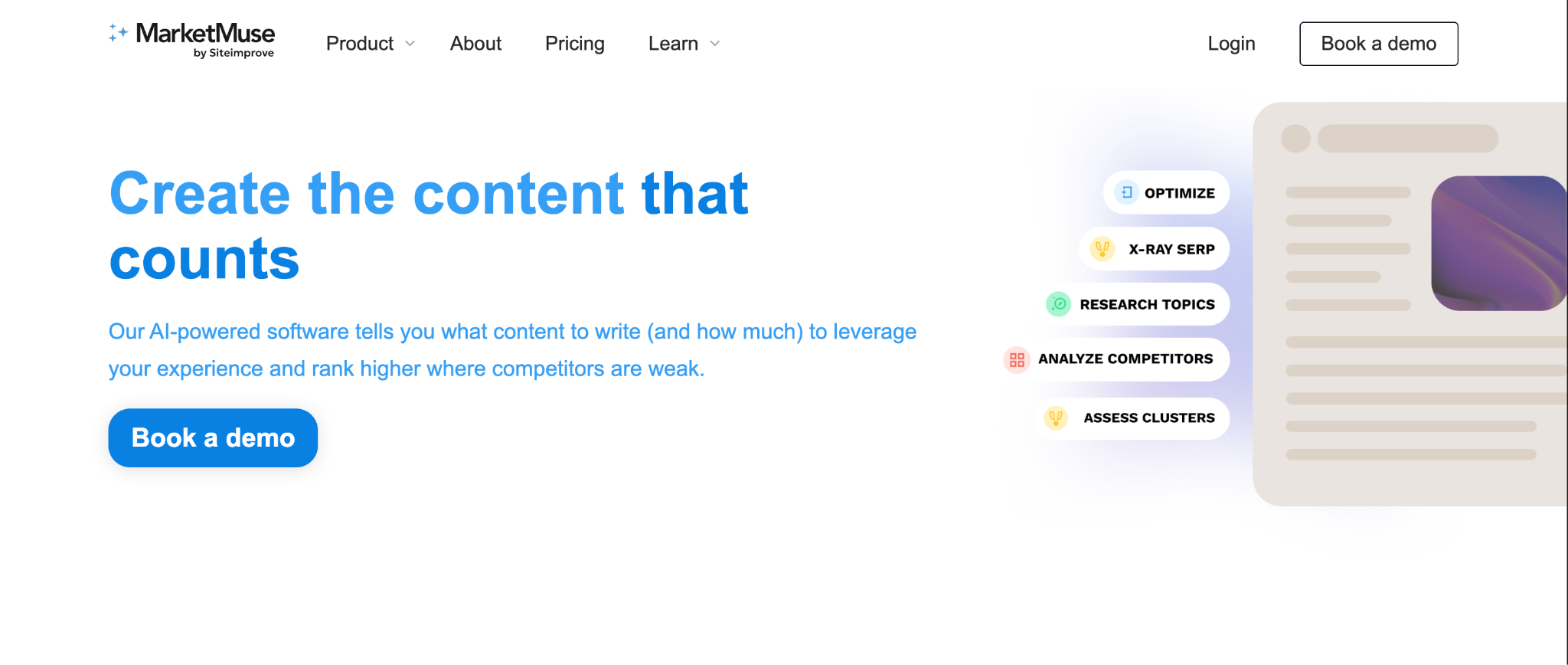
MarketMuse plans content at site level rather than page level.
Key features:
- Content inventory and audit that surfaces quick wins
- Personalized Difficulty scoring per domain
- Content Clusters for topical authority
Why it stands out: it answers what to write next and what to update first, based on the whole site. The documented limitations are cost and opacity, since prices moved behind sales after the Siteimprove acquisition, and it has no AI-visibility tracking.
8. Scalenut
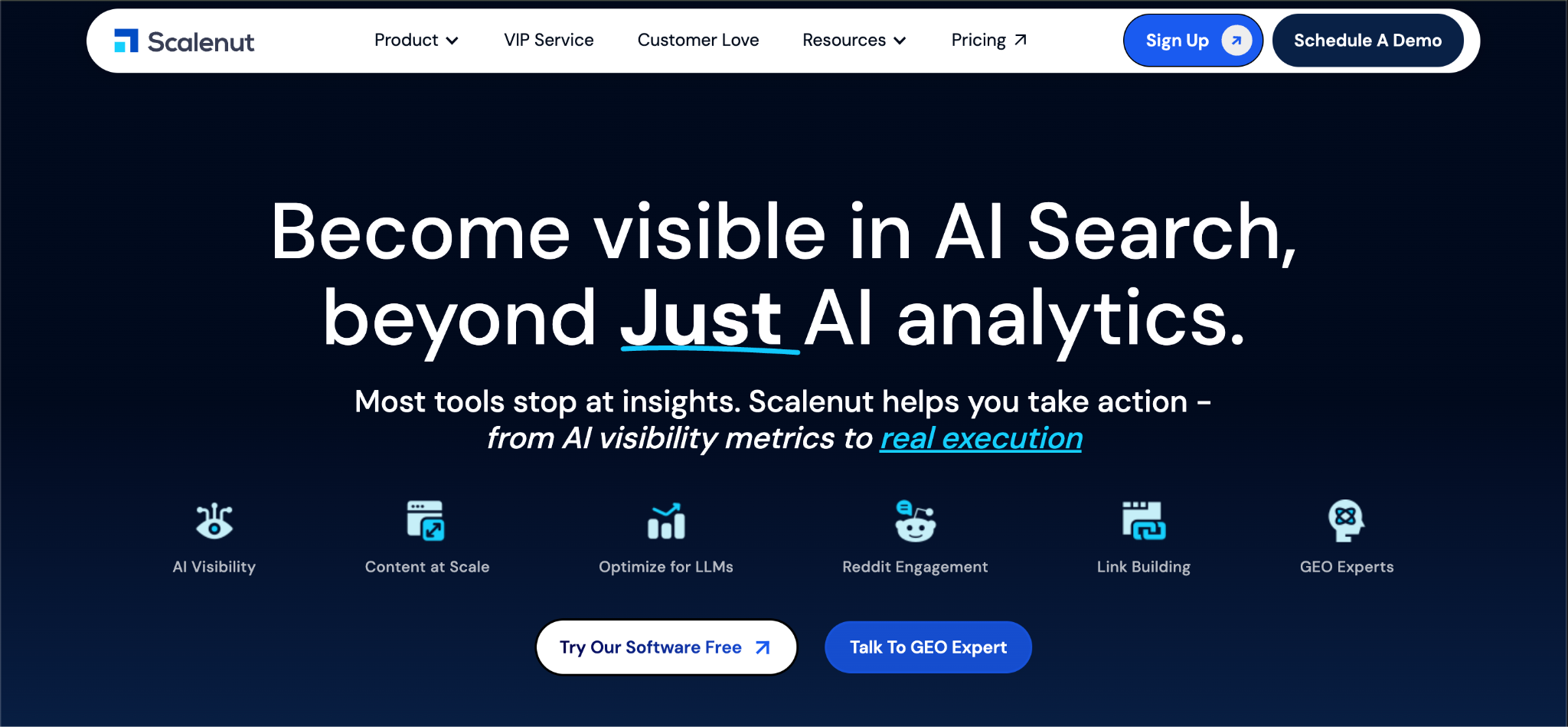
Scalenut combines keyword planning, AI drafting, optimization, and GEO tracking, rated 4.8 on Capterra as of August 2026 (ratings change continuously).
Key features:
- Cruise Mode guided long-form generation
- GEO Action Center with AI-search scoring
- Visibility tracking across ChatGPT, Perplexity, Gemini, Claude, and Grok by tier
Why it stands out: it closes the loop from keyword to draft to visibility at a mid-market price. The documented limitation is repetitive AI phrasing that needs human editing.
9. Otterly.AI
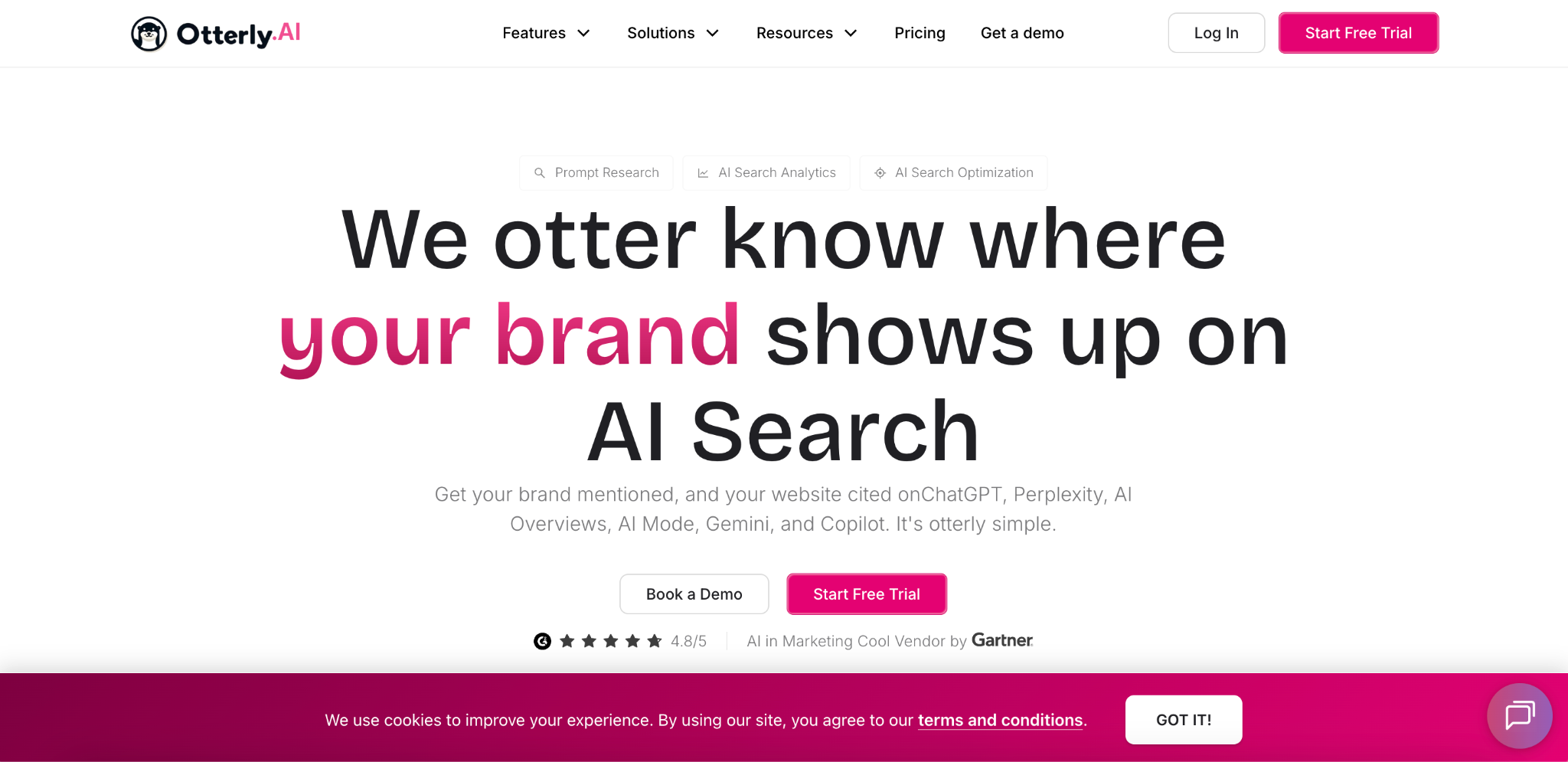
Otterly.AI is the cheapest credible entry into AI citation tracking.
Key features:
- Tracked prompts across ChatGPT, AI Overviews, Perplexity, and Copilot
- Share of AI Voice competitor benchmarking
- GEO URL audits with citation-likelihood scoring
Why it stands out: at $29/month with no annual contract, it answers whether AI engines mention a brand at all. The documented limitation is scope, since Gemini, AI Mode, and Claude cost extra and it monitors without execution features.
10. Peec AI
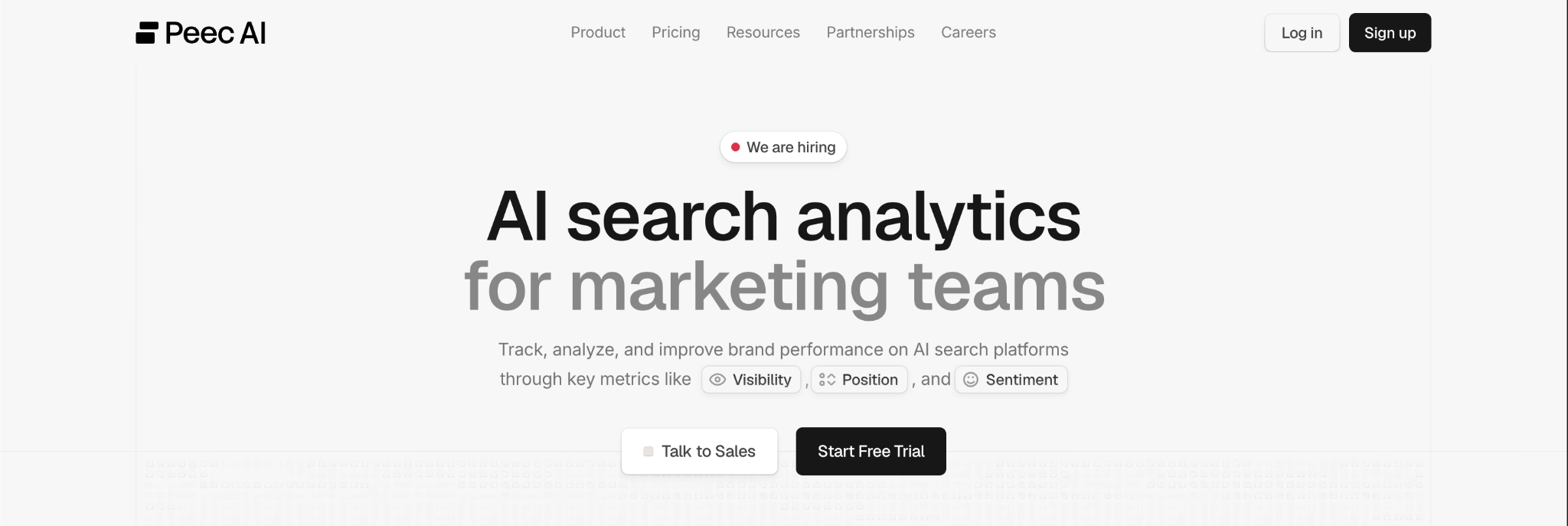
Peec AI benchmarks brand visibility, position, and sentiment in AI answers against competitors.
Key features:
- Daily prompt tracking with country segmentation
- Source versus citation analysis with competitor gaps
- Unlimited seats on every paid tier
Why it stands out: its citation intelligence turns tracking data into an outreach and content plan. The documented limitation is a three-engine cap on every self-serve plan, even the $495 tier, and history starts only at signup.
11. Profound
Profound is the enterprise option, pairing answer-engine monitoring with AI crawler analytics.
Key features:
- Brand mentions and citations across up to nine engines on Enterprise
- Agent Analytics on how AI bots crawl a site
- Prompt Volumes data on real AI queries
Why it stands out: no lighter tool produces its depth of evidence for enterprise teams. The documented limitation is gating, since the $99 Starter tracks ChatGPT only, billing is annual, and the API and full coverage require Enterprise.
12. Writesonic
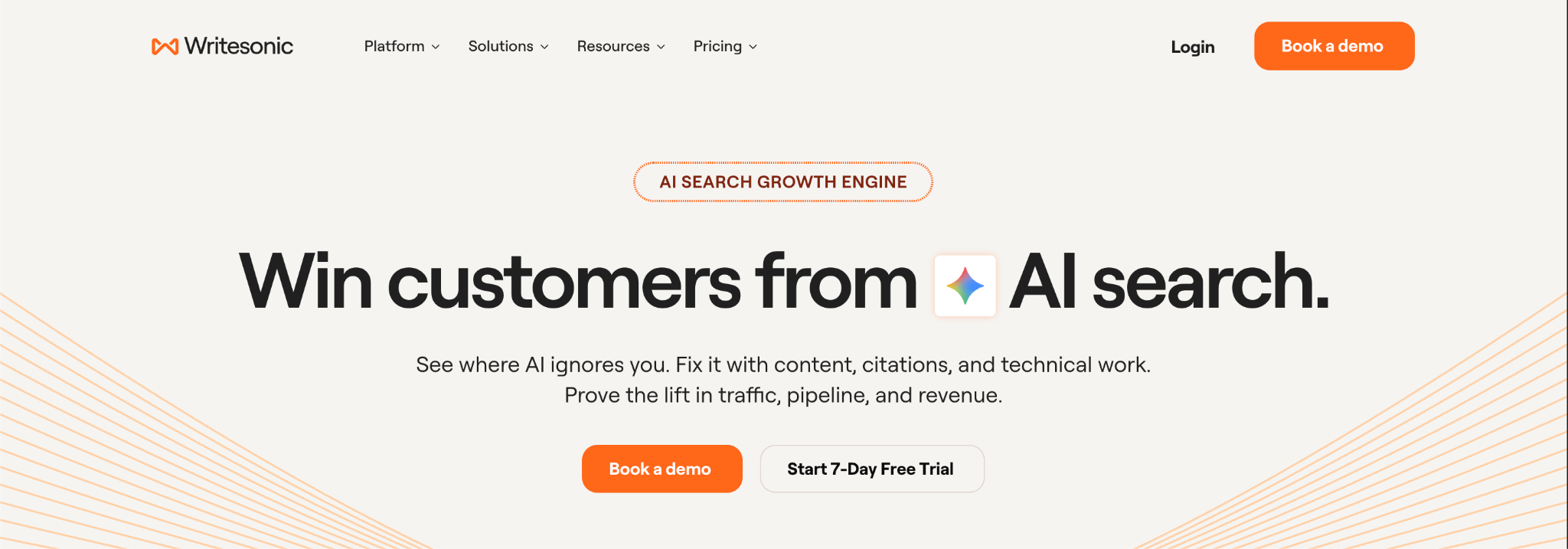
Writesonic bundles AI visibility tracking with content execution.
Key features:
- Daily prompt tracking with citation and sentiment analysis
- Share of voice benchmarking
- Bundled AI articles, audits, and agentic workflows
Why it stands out: a team can spot a visibility gap and produce the fix inside one product. The documented limitation is that self-serve tiers cover only three of ten advertised platforms, with Perplexity and Claude reserved for Enterprise.
13. Semrush
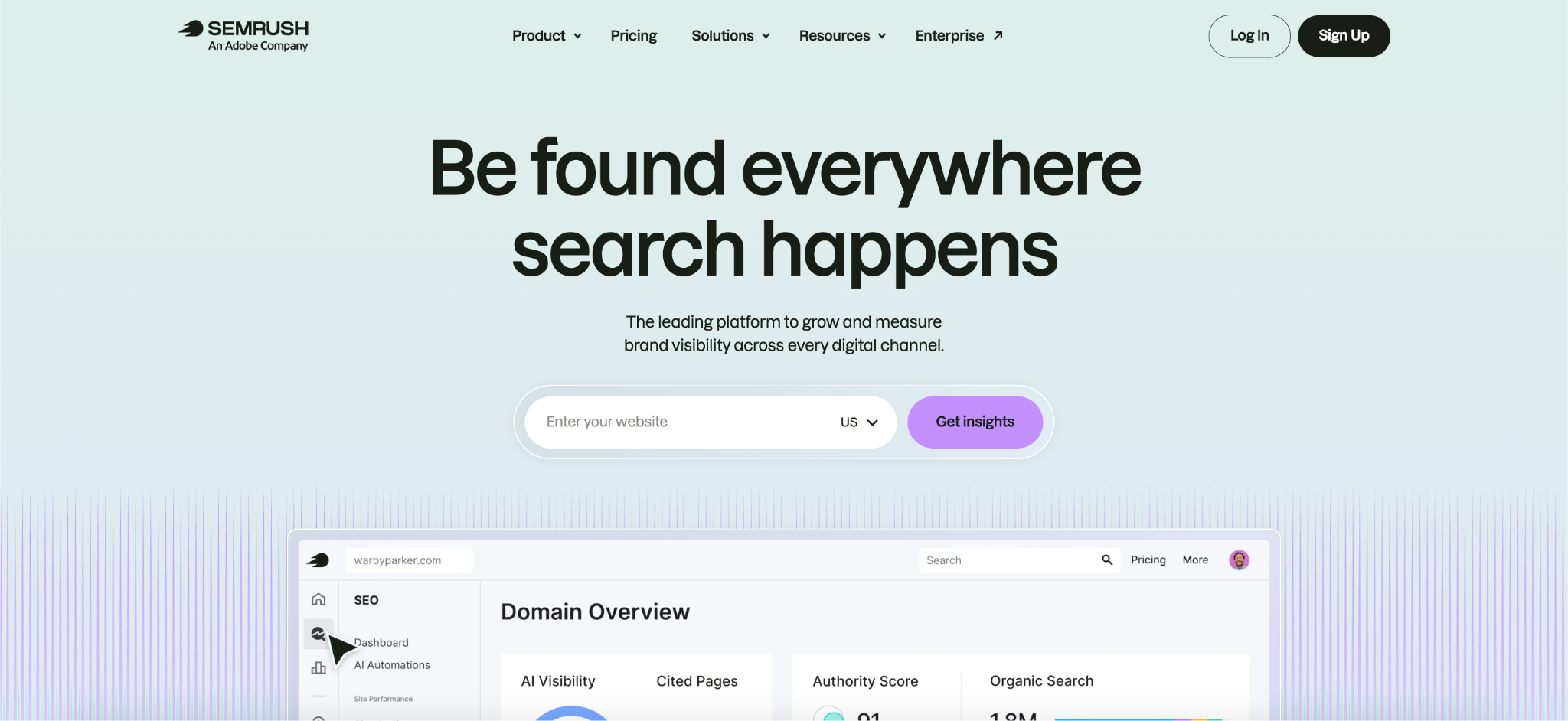
Semrush is the broadest all-in-one suite, now with first-party AI tracking.
Key features:
- Keyword research and daily rank tracking
- AI Visibility Toolkit across ChatGPT, AI Overviews, Gemini, and Perplexity
- Site audit, backlinks, and competitor research
Why it stands out: research and credible AI tracking live in one subscription, the widest coverage per dollar here. The documented limitation is seat economics, with one user per base plan and extra seats at $45 to $100.
14. Ahrefs
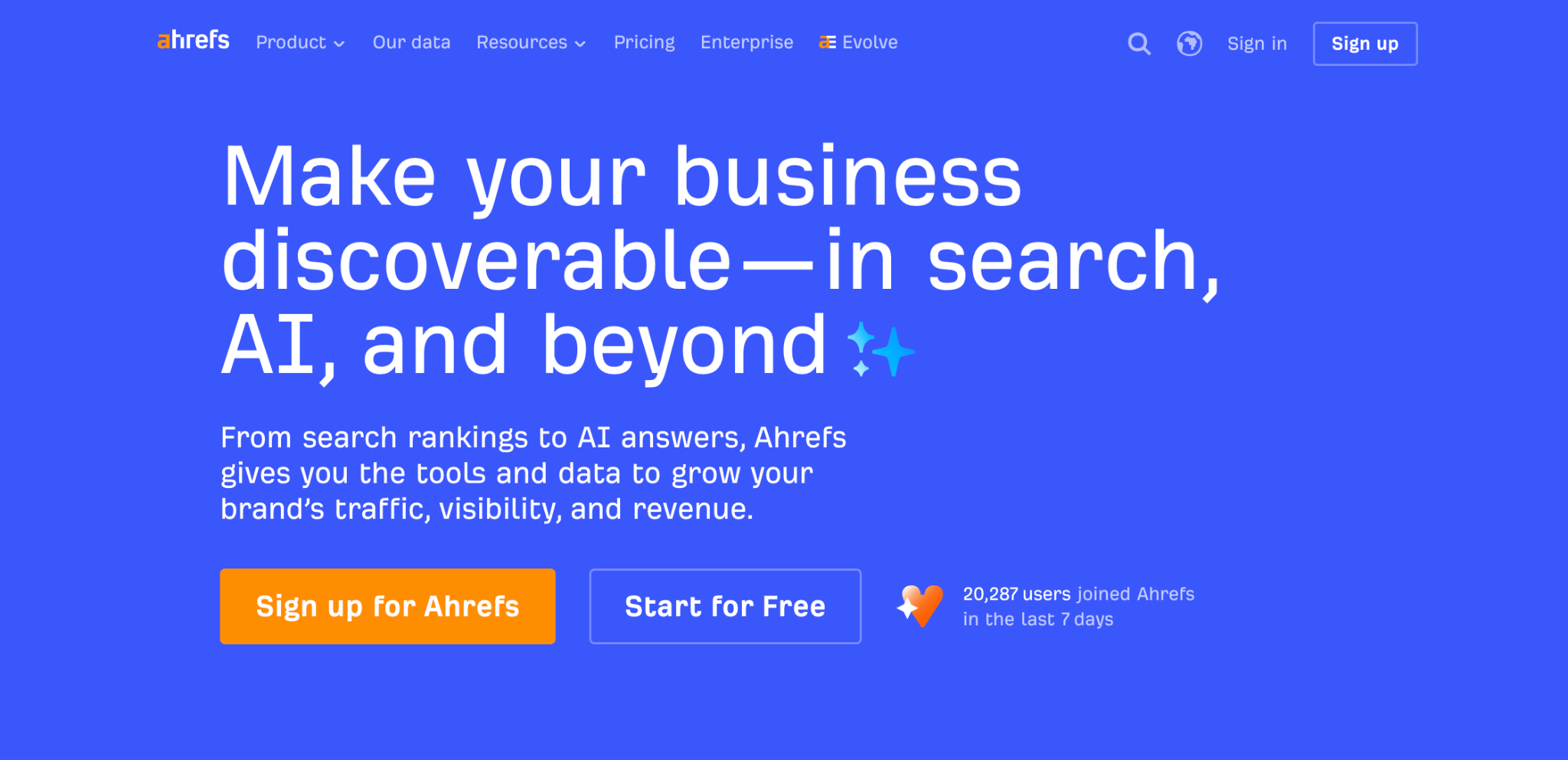
Ahrefs remains the reference for backlink research.
Key features:
- Site Explorer with an industry-leading link index
- Keywords Explorer across Google, YouTube, and Amazon
- Brand Radar AI tracking across six platforms as an add-on
Why it stands out: link data quality is the benchmark, and the $29 Starter is the cheapest entry into serious research data. The documented limitation is the add-on economy, with no free trial, Brand Radar at $199 to $699 extra, and credit caps on lower tiers.
15. SE Ranking
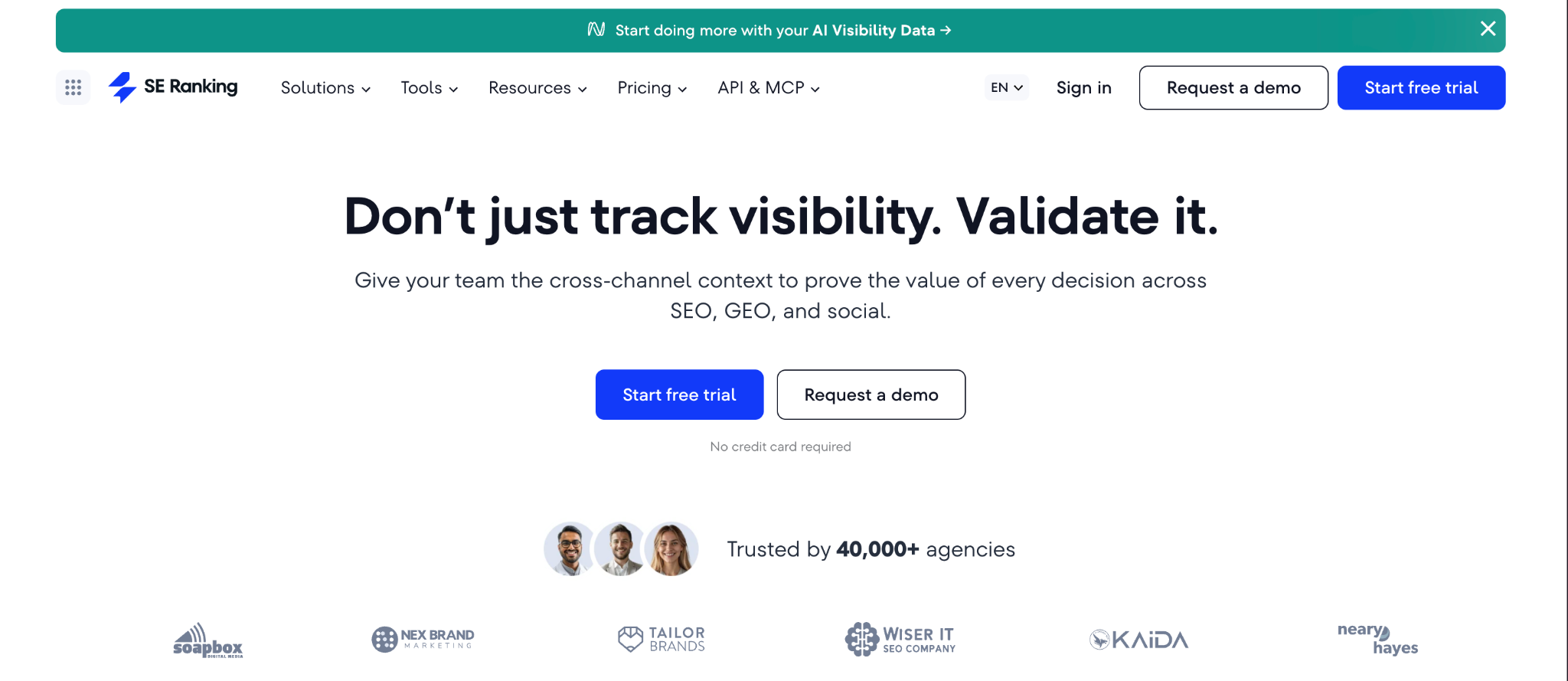
SE Ranking is the value suite, rated 4.7 on G2 across roughly 1,600 reviews.
Key features:
- Daily tracking for 2,000 keywords on entry
- AI Visibility Tracker across five AI platforms, 100 prompts daily included
- Audits, backlinks, and white-label agency add-ons
Why it stands out: it bundles AI tracking into a $129 entry plan that rivals sell separately. The documented limitation is cost creep from paid add-ons and restrictive limits as projects multiply.
16. Search Atlas
Search Atlas is built around OTTO, an agent that deploys SEO fixes automatically.
Key features:
- OTTO pushes technical and on-page fixes live
- LLM visibility projects with ChatGPT citation tracking
- Content Genius editor plus local SEO tools
Why it stands out: it is the only platform here that executes fixes itself, which converts audits into shipped changes. The documented limitation is usability, with a steep learning curve, cluttered navigation, and one seat at entry.
17. Koala AI
Koala AI produces SEO-informed articles at scale from live SERP analysis.
Key features:
- KoalaWriter one-click long-form generation
- Bulk creation and Amazon affiliate mode
- One-click publishing to WordPress, Shopify, Webflow, and Ghost
Why it stands out: at $9/month it is the cheapest working entry into AI content in this comparison. The documented limitation is quality at volume, with output turning robotic across big batches and premium models burning credits at twice the rate.
How We Selected These Tools
Every AI SEO tool on this list had to fill at least one of the three jobs credibly, publish verifiable pricing, and show real user evidence. Features were cross-checked against live product trials and documentation as of August 2026, and tools with vague or unverifiable claims were excluded. Each entry names one documented limitation, because a comparison without trade-offs reads as advertising, not analysis.
Which AI SEO Tool Is Worth It in 2026?
The right tool depends on what is missing. Here is the short version:
- Teams that need keyword data and rank tracking can go with Semrush, Ahrefs, or SE Ranking.
- Teams whose articles are not getting cited by AI need an optimizer like TMX Visibility, Surfer, or Clearscope.
- Teams that have no idea whether AI mentions them at all can start cheap with Otterly.AI.
- Teams on a tight budget can still cover the basics with NEURONwriter or Koala AI.
What this looks like in practice: one TokenMinds client, an enterprise content team in a compliance-heavy industry, swapped its generic rank trackers for TMX Visibility’s AI citation tracking with Information Gain scoring. The first finding was that 40% of its pages never appeared in AI answers, even though they ranked in Google. The team spent four hours per week rewriting those pages with proprietary data and expert insight. Within 90 days, its AI mention rate climbed from 8% to 34% of tracked prompts, and traffic from AI sources rose 23%. Nothing in the tool stack changed after the first month. The gain came from a clear visibility target and the discipline to execute against it.
AI-visibility tracking is the newest of the three needs, and the one most teams still have not covered. Teams that want to score a draft before publishing and track its AI citations afterwards can run it through TMX Visibility.
When NOT to Buy an AI SEO Tool
Some purchases are a mistake no matter how good the tool is. Skip it when:
- The job is already covered. Overlap is the biggest source of wasted spend in this category.
- Publishing volume is too low. An optimizer earns its fee across many articles. One post a month does not feed it.
- Nobody can act on the reports. A dashboard of missing citations only pays off when someone has time to fix them.
FAQs
1) What is the best AI SEO tool in 2026?
No single tool wins, because the category covers three jobs. TMX Visibility leads for draft optimization with citation proof, Semrush for research breadth, and Otterly.AI for low-cost tracking.
2) How much do AI SEO tools cost per month?
Entry plans run from $9 to $199 as of August 2026. Buyers should check what entry tiers include, since AI tracking often sits behind add-ons.
3) Which AI SEO tool tracks ChatGPT and AI Overview citations?
Dedicated trackers include Otterly.AI, Peec AI, Profound, and Writesonic. Semrush, SE Ranking, Surfer, Frase, and Ahrefs add tracking to broader platforms, and TMX Visibility ties citations to GA4 revenue.
4) What is the difference between an AI SEO tool and a traditional SEO tool?
Traditional SEO tools optimize for Google rankings through keywords, backlinks, and technical audits. AI SEO tools add a second target: getting content quoted and cited inside AI answers on ChatGPT, Perplexity, Gemini, and Google AI Overviews, and tracking when that happens.
5) Is there a free AI SEO tool?
Yes, at the entry level. TMX Visibility offers a free trial, MarketMuse offers a limited free plan, and Semrush and Ahrefs have restricted free tiers. As of August 2026, AI citation tracking at useful volume is paid on every credible platform, and Otterly.AI at $29 per month is the lowest-cost entry.





Comment