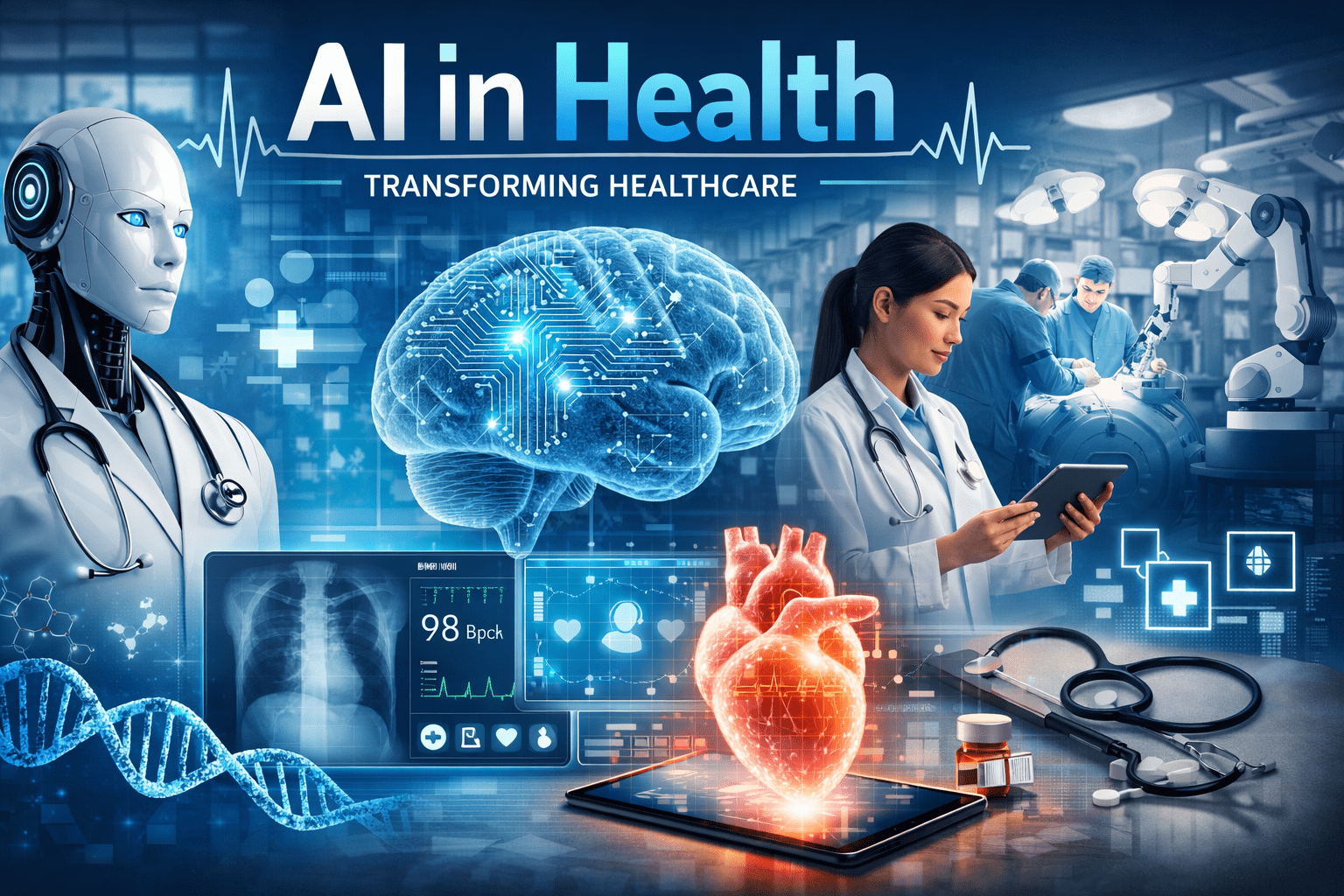
Artificial Intelligence (AI) is rapidly reshaping the healthcare industry. From diagnosing diseases faster to improving patient care and hospital management, AI is becoming a powerful partner for doctors and medical professionals. As healthcare systems around the world face growing challenges such as rising costs, increasing patient numbers, and complex diseases, AI offers innovative solutions that improve efficiency and accuracy.
In this article, we explore how AI is transforming healthcare, the benefits it brings, and what the future of AI-powered medicine might look like.
🧠 What is AI in Healthcare?
Artificial Intelligence in healthcare refers to the use of advanced computer systems and algorithms that can analyze medical data, learn from patterns, and assist doctors in making decisions. AI systems can process huge amounts of information much faster than humans, helping medical professionals detect diseases, recommend treatments, and predict health risks.
AI technologies such as machine learning, natural language processing, and computer vision are widely used in hospitals, clinics, and research centers to improve medical services.
🔬 AI in Disease Diagnosis
One of the most important applications of AI is helping doctors diagnose diseases more accurately and quickly.
AI-powered diagnostic tools can analyze medical images such as:
- X-rays
- CT scans
- MRI scans
- Ultrasounds
These tools can detect abnormalities, tumors, fractures, or infections earlier than traditional methods in many cases.
For example, AI systems are helping doctors identify diseases like:
- Cancer
- Breast Cancer
- Alzheimer’s Disease
- Heart Disease
Early detection can save lives by allowing doctors to start treatment sooner.
🏥 AI in Hospitals and Patient Care
Hospitals are using AI to improve patient care and streamline operations. AI-powered systems can monitor patients, predict medical emergencies, and assist healthcare staff with decision-making.
Some common uses include:
- Predicting patient deterioration in intensive care units
- Managing hospital bed availability
- Automating administrative tasks
- Supporting doctors with treatment recommendations
AI-powered virtual assistants and chatbots can also answer patient questions and provide basic medical guidance.
💊 AI in Drug Discovery
Developing new medicines traditionally takes years and costs billions of dollars. AI is helping researchers speed up this process by analyzing biological data and predicting how different chemical compounds may interact with the human body.
During the global outbreak of COVID-19, AI played a role in analyzing data to support vaccine research and drug development.
By reducing the time needed for drug discovery, AI can help bring life-saving treatments to patients faster.
📊 Predictive Healthcare and Personalized Medicine
AI can analyze patient history, genetic information, and lifestyle data to predict potential health risks. This allows doctors to create personalized treatment plans tailored to each individual.
For example, AI systems can help predict the risk of conditions like:
- Diabetes
- Stroke
- Hypertension
This approach shifts healthcare from reactive treatment to preventive care.
🌍 Benefits of AI in Healthcare
AI provides many advantages for both patients and healthcare providers:
Faster Diagnosis
AI tools can analyze medical data quickly and detect diseases earlier.
Improved Accuracy
Machine learning models reduce the chances of human error in diagnosis.
Cost Reduction
Automation can lower healthcare costs by improving efficiency.
Better Patient Experience
AI-driven systems help reduce waiting times and provide faster services.
Support for Medical Research
AI can analyze large datasets to discover new medical insights.
⚠️ Challenges and Ethical Concerns
Despite its benefits, AI in healthcare also raises several challenges.
Data Privacy
Medical data is highly sensitive. Healthcare systems must ensure patient information remains secure.
Bias in Algorithms
If AI systems are trained on limited datasets, they may produce biased results.
Dependence on Technology
Doctors must balance AI assistance with human judgment and experience.
High Implementation Costs
Advanced AI systems require significant investment in infrastructure and training.
🔮 The Future of AI in Healthcare
The future of AI in healthcare looks incredibly promising. Experts predict that AI will soon play a larger role in:
- Robotic surgery
- Remote patient monitoring
- AI-powered wearable health devices
- Smart hospitals with automated systems
As technology continues to evolve, AI will likely become an essential tool that supports doctors and improves patient outcomes worldwide.
📝 Conclusion
Artificial Intelligence is revolutionizing healthcare in ways that were unimaginable just a decade ago. From early disease detection to faster drug development and personalized treatment plans, AI is helping medical professionals deliver better care.
While challenges remain, the integration of AI into healthcare systems promises a future where medical services are smarter, faster, and more accessible for everyone.