Artificial Intelligence (AI) is no longer a futuristic concept—it’s a daily reality shaping how we communicate, create, and work. From AI companions that simulate human relationships to image generators capable of producing near-photorealistic visuals, AI is advancing at an unprecedented pace. As we move into 2026, the conversation around AI has shifted from “What can it do?” to “How is it changing us?”
This article explores the rise of AI companions, the growing difficulty of distinguishing real images from AI-generated ones, the top AI image generators for 2026, and how AI In The Workplace is redefining productivity and careers.
The Rise of AI Companions: Digital Relationships in a Real World
One of the most intriguing developments in AI is the rise of AI companions. These are conversational agents designed to provide emotional support, companionship, and even entertainment. Unlike traditional chatbots, modern AI companions use advanced natural language processing, memory retention, and emotional modeling to simulate meaningful interaction.
For many users, AI companions help reduce loneliness, offer mental health support, or serve as creative collaborators. Games and interactive platforms have also embraced this trend, blending AI with entertainment. Experiences like Play AI Photo Game demonstrate how AI can merge creativity, fun, and human interaction into immersive digital experiences.
While AI companions offer convenience and emotional engagement, they also raise ethical questions about dependency, data privacy, and the nature of human connection—topics that will only become more relevant in the coming years.
Real vs AI: Why It’s Getting Harder to Tell the Difference
AI-generated images have reached a point where even trained professionals struggle to distinguish them from real photographs. Advances in diffusion models, neural rendering, and dataset quality have eliminated many of the visual artifacts that once gave AI images away.
This creates both opportunities and risks:
- Opportunities: Faster content creation, lower production costs, and limitless creativity for marketers, designers, and educators.
- Risks: Deepfakes, misinformation, identity misuse, and erosion of trust in visual media.
Tools like AI or Not have become essential for verifying whether an image was created by AI or captured in the real world. As AI-generated content floods social media, journalism, and advertising, image authentication is quickly becoming a necessity rather than a luxury.
Top AI Image Generators to Watch in 2026
AI image generation continues to evolve rapidly. By 2026, the best tools will be defined not just by realism, but by control, speed, and ethical safeguards. Here are the key characteristics shaping top AI image generators:
1. Hyper-Realistic Output
Modern generators can create lifelike faces, environments, and products indistinguishable from professional photography.
2. Advanced Customization
Users can control lighting, camera angles, facial expressions, and artistic styles with precise prompts.
3. Ethical Guardrails
Top platforms now include watermarking, content moderation, and traceability to combat misuse.
4. Commercial Licensing
Businesses increasingly rely on AI imagery for ads, websites, and branding—making clear usage rights critical.
As AI creativity expands, detection tools and transparency frameworks will be just as important as generation itself.
AI In The Workplace: Redefining Productivity and Careers
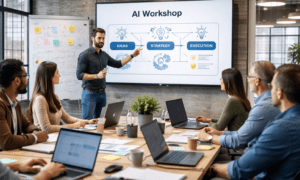
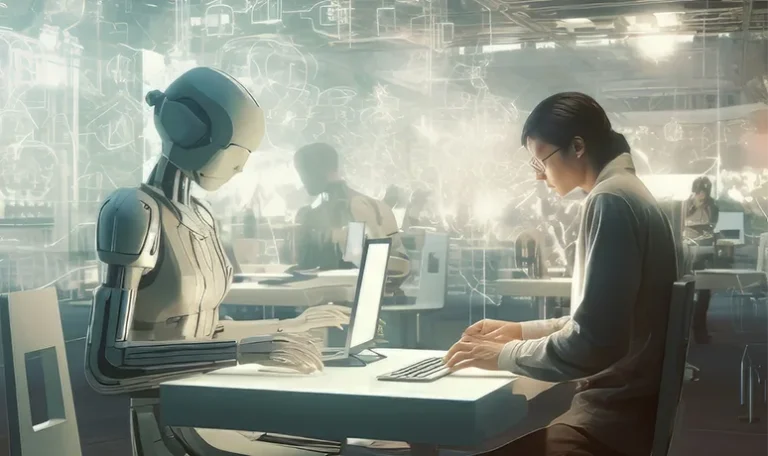
Perhaps the most impactful transformation driven by AI is happening at work. AI In The Workplace is no longer limited to automation—it’s reshaping how decisions are made, how teams collaborate, and how jobs are defined.
According to insights from Workplace AI research, companies are increasingly integrating AI into daily operations, including:
- Hiring & HR: Resume screening, performance analytics, and employee engagement tools
- Customer Support: AI chatbots handling first-line inquiries 24/7
- Marketing & Sales: Predictive analytics, personalized content, and lead scoring
- Operations: Workflow automation and demand forecasting
Rather than replacing humans entirely, AI is augmenting roles—freeing employees from repetitive tasks and allowing them to focus on strategy, creativity, and problem-solving.
However, this shift also demands reskilling. Workers who understand how to collaborate with AI tools will have a significant advantage in the job market.
Challenges and Ethical Considerations
With rapid adoption comes responsibility. Key concerns surrounding AI include:
- Job displacement vs job evolution
- Data privacy and surveillance
- Bias in AI decision-making
- Transparency in AI-generated content
Organizations that adopt AI responsibly—balancing innovation with ethics—will be best positioned for long-term success.
The Future of AI: What Comes Next?
As we look ahead, AI will continue to blur the line between human and machine creativity. AI companions will become more emotionally intelligent, AI-generated images more realistic, and workplaces more automated yet collaborative.
The challenge for individuals and businesses alike will be learning how to use AI without losing authenticity, trust, and human judgment. Whether it’s through creative platforms like Play AI Photo Game, verification tools, or smarter workplace integration, AI in 2026 is less about replacement—and more about partnership.