
AI Impact on Digital Marketing: Insights From Murafa Digital

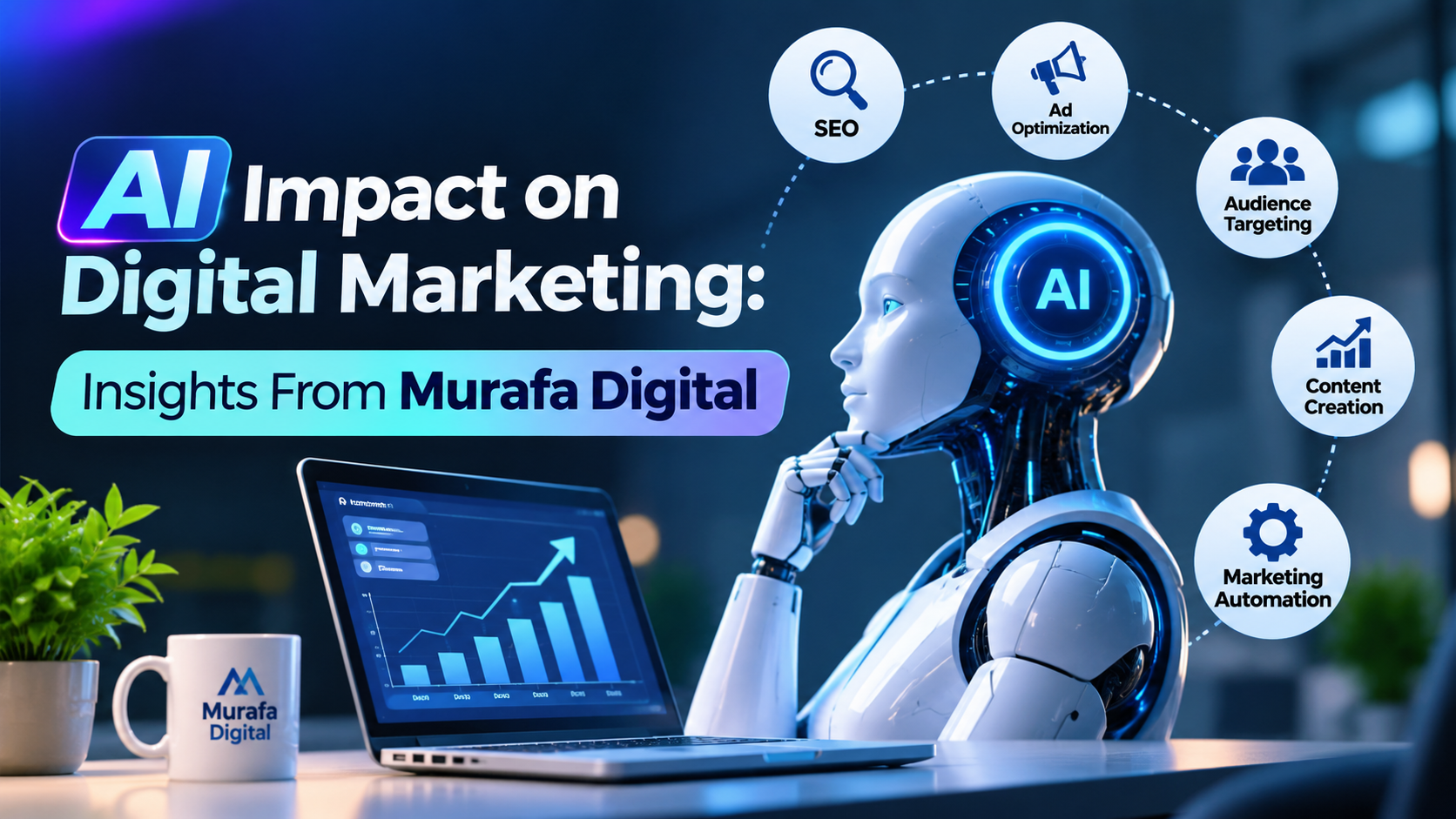
Artificial intelligence has changed how businesses approach digital marketing. Tasks that once required hours of manual research, campaign analysis, and customer segmentation can now be completed with the support of AI-powered tools. From understanding customer behavior to improving advertising performance, artificial intelligence is giving marketing teams new ways to work with information and make better decisions.
However, the real value of AI is not simply about automating existing tasks. It is about understanding audiences more accurately, identifying opportunities, and creating marketing strategies that respond to changing customer needs.
Businesses that combine artificial intelligence with human creativity and practical marketing experience can build more effective campaigns. Insights associated with Murafa Digital also highlight an important point: technology works best when it supports a clear marketing strategy rather than replacing the people responsible for developing it.
How Artificial Intelligence Is Changing Digital Marketing
Traditional digital marketing often involves collecting information from multiple sources, reviewing campaign performance, and making adjustments based on previous results. Although this approach remains useful, it can become time-consuming when businesses manage several advertising platforms and large customer databases.
AI-powered marketing tools can process substantial amounts of information and identify patterns that might otherwise be difficult to notice. Marketers can use these insights to understand audience interests, evaluate campaign performance, and improve their overall digital marketing strategies.
For example, an online retailer can analyze browsing activity and previous purchases to identify products that may interest different customer groups. Similarly, a service-based company can examine website visits, search queries, and enquiry patterns to understand which marketing channels generate potential customers.
These applications make AI an increasingly important part of modern marketing operations.
Major Applications of AI in Digital Marketing
1. Predictive Analytics and Customer Behavior
Understanding what customers might do next is one of the most useful applications of artificial intelligence in marketing.
Predictive analytics uses historical information, customer interactions, and statistical models to estimate future behavior. Businesses can use these insights to identify purchasing patterns, recognize potential customer interests, and improve marketing decisions.
For example, an e-commerce company may analyze previous transactions to identify customers who are likely to purchase again. Marketing teams can then develop targeted email campaigns or personalized product recommendations.
Predictive analytics can also help businesses identify customers who may stop engaging with their services. This allows companies to review their communication strategies and introduce more relevant offers.
Although predictions are not guaranteed outcomes, they provide another source of information for making informed marketing decisions.
2. Personalized Content and Customer Experiences
Customers are more likely to engage with marketing messages that address their interests and requirements. Artificial intelligence helps businesses organize customer information and deliver more relevant experiences.
AI-driven recommendation systems can suggest products based on browsing history, previous purchases, and customer preferences. Email marketing platforms can also use automation to determine which messages should be delivered to different audience segments.
Content personalization extends beyond product recommendations. Businesses can create different landing page experiences, promotional messages, and website content for specific customer groups.
However, personalization should remain useful rather than intrusive. Companies must handle customer information responsibly and respect privacy preferences when collecting and processing personal data.
3. AI and Search Engine Optimization
Search engine optimization continues to be an important part of digital marketing, but the way businesses approach SEO is becoming more data-driven.
AI tools can assist with keyword research, search intent analysis, content planning, competitor research, and technical website audits. They can also help marketers identify content gaps and understand which topics deserve more attention.
For example, keyword clustering tools can organize related search terms into topic groups. This helps content teams develop comprehensive pages rather than creating separate articles for every minor keyword variation.
Businesses looking to strengthen their organic visibility may also consider professional seo services to support keyword targeting, technical optimization, content improvements, and long-term search performance.
Nevertheless, AI-generated recommendations should be reviewed by experienced SEO professionals. Search engine optimization still requires an understanding of search intent, website quality, competition, and the actual needs of visitors.
4. Automated Advertising and Campaign Optimization
Digital advertising platforms generate significant amounts of performance information. Monitoring every campaign manually can become difficult, especially for businesses managing multiple audiences and advertising channels.
AI can help analyze impressions, clicks, conversions, and customer engagement to identify opportunities for improvement.
Advertising systems can use machine learning to adjust bidding strategies, test audience segments, and allocate budgets according to campaign objectives.
For example, a company running several advertising campaigns may use automated optimization to identify which combinations of audiences, advertisements, and landing pages produce better results.
However, automation does not eliminate the need for human supervision. Marketers still need to define campaign objectives, review spending, monitor conversion quality, and ensure advertisements communicate the right message.
5. AI-Powered Customer Support and Chatbots
Customer communication plays an important role in digital marketing. Potential customers often have questions about pricing, availability, product features, and service options before making a purchasing decision.
AI-powered chatbots can answer common questions, guide website visitors toward relevant information, and collect basic enquiry details.
For businesses operating outside normal office hours, automated customer support can provide an additional communication channel when employees are unavailable.
More advanced systems can understand natural language and respond to different customer requests. They can also direct complicated enquiries to human representatives.
The best approach is to use chatbots for straightforward interactions while keeping human support available for situations requiring judgment, detailed explanations, or personalized assistance.
How Small Businesses Can Benefit From AI Marketing
Artificial intelligence is not limited to large corporations with dedicated marketing departments. Smaller businesses can also use affordable AI-powered platforms to improve their online presence and manage marketing activities more efficiently.
Consider a local service business that wants to attract customers from nearby communities. Its marketing team can use analytics tools to understand which website pages receive attention, what services people search for, and which enquiries generate actual business.
For example, a local pest control provider such as Pest Control Wausau operates in a service category where local visibility and customer enquiries are particularly important.
A business in this industry could use AI-assisted marketing research to identify relevant local search topics, analyze seasonal demand, improve service-page content, and understand customer questions.
AI can also help organize incoming enquiries and identify patterns in customer requests. This information may help businesses improve their website content and make their marketing communication more useful.
For small businesses with limited resources, these applications can make marketing activities easier to manage without requiring a large internal team.
The Role of AI in Social Media Marketing
Social media platforms provide businesses with opportunities to communicate directly with their audiences. However, maintaining consistent activity across multiple platforms requires planning, content creation, and performance monitoring.
AI tools can assist with generating content ideas, analyzing engagement patterns, organizing publishing schedules, and identifying topics that interest specific audiences.
Social listening tools can also examine public conversations and customer feedback to help businesses understand how people discuss their products, services, and industry.
For example, a brand may notice repeated customer questions about a particular product feature. Its marketing team can use that information to develop educational posts, short videos, or detailed website resources.
Human review remains important because automated content can sometimes misunderstand context, produce inaccurate information, or fail to reflect a brand’s communication style.
Challenges of Using Artificial Intelligence in Marketing
Despite its advantages, AI marketing comes with several challenges that businesses should consider before adopting new technologies.
Data privacy: AI systems often depend on customer information. Businesses must follow applicable privacy regulations and use responsible data collection practices.
Content accuracy: AI-generated material can contain incorrect information or misleading statements. Human fact-checking is essential before publication.
Lack of originality: Relying entirely on automated content can result in repetitive marketing messages that fail to distinguish a business from its competitors.
Implementation costs: Some advanced AI platforms require subscriptions, technical integration, and employee training. Businesses should evaluate whether the expected benefits justify these expenses.
Over-automation: Customer relationships depend on trust and communication. Replacing every interaction with automated responses can make a brand feel impersonal.
A balanced strategy allows businesses to benefit from automation while maintaining the expertise and personal understanding that effective marketing requires.
What Is the Future of AI in Digital Marketing?
Artificial intelligence will likely become more closely integrated with marketing analytics, search optimization, customer relationship management, and advertising platforms.
Generative AI is already changing how marketers research topics, develop content ideas, and create different versions of marketing materials. Predictive systems are also helping businesses understand customer behavior and make more informed decisions about campaign planning.
Another important development is the growing use of AI-powered search experiences. Businesses will need to focus on creating accurate, useful, and well-structured content that answers real customer questions.
At the same time, technical SEO, website accessibility, page experience, and trustworthy information will remain important considerations.
Rather than treating AI as a replacement for traditional marketing knowledge, businesses should view it as a tool that can improve research, support decision-making, and reduce repetitive work.
Conclusion
Artificial intelligence is reshaping digital marketing by changing how businesses understand customers, develop content, manage advertising, and evaluate campaign performance.
From predictive analytics and personalized experiences to search engine optimization and automated customer support, AI offers practical applications for organizations of different sizes.
However, successful implementation requires more than adopting new software. Businesses must combine reliable information, human expertise, responsible data practices, and clear marketing objectives.
The companies that approach AI strategically will be better positioned to improve customer experiences, manage marketing resources, and adapt to the changing digital landscape.







Comment