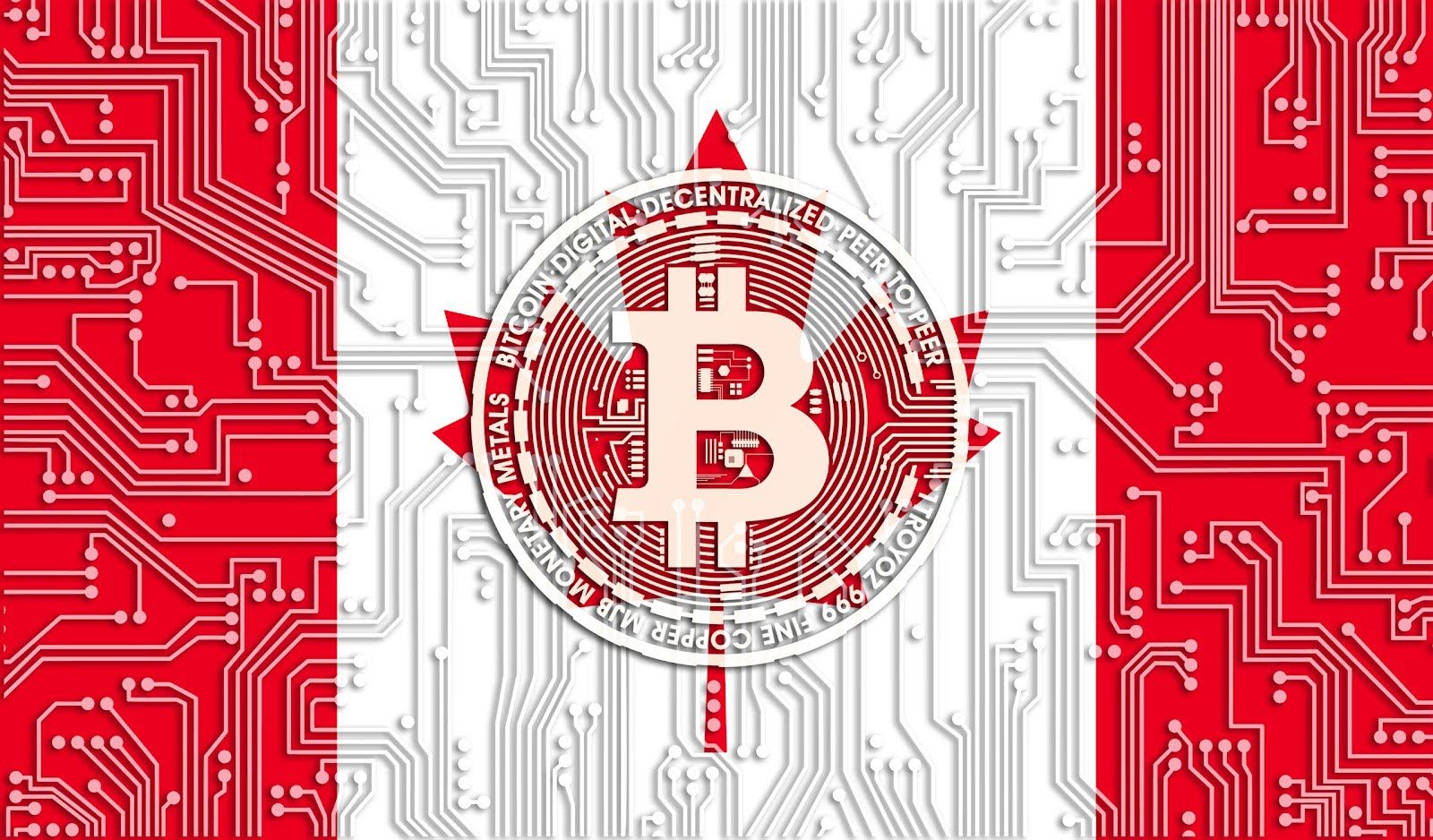
The landscape of cryptocurrency trading in Canada has undergone a profound transformation. Gone are the days when investors relied solely on gut instinct, crowded Telegram groups, or lagging technical indicators on basic charts. In 2026, a new paradigm has taken hold: artificial intelligence is now the engine driving market analysis, risk management, and trade execution for a growing number of Canadian investors. From AI-native sentiment analysis platforms born in Calgary to adaptive arbitrage systems operating out of Montreal, technology is fundamentally reshaping how traders interact with the cryptocurrency market. This shift is occurring against a backdrop of maturing regulations from bodies like the Canadian Securities Administrators (CSA) and the Financial Transactions and Reports Analysis Centre of Canada (FINTRAC), which have brought a new level of stability and transparency to the industry [citation:3][citation:6]. For Canadian investors, both retail and institutional, the ability to leverage AI is no longer a competitive advantage—it is becoming the baseline for sophisticated participation. Platforms like equlumapp-ai.com are at the forefront of this evolution, offering tools that help investors synthesize vast amounts of data to identify opportunities in a market that never sleeps. This comprehensive guide explores how AI-driven data platforms are revolutionizing cryptocurrency trading for Canadians in 2026.
The New Intelligence Layer: AI-Powered Data and Sentiment Platforms
The foundation of modern AI-driven trading is the ability to process and interpret information at a scale impossible for any human. In Canada, companies are leading the charge in developing this “intelligence layer” for the crypto market. These platforms don’t just provide raw data; they deliver structured insights, enabling traders to make faster and more informed decisions.
Guavy: Canadian-Made AI Sentiment Analysis
One of the most significant developments in 2026 is the rise of Calgary-based cryptocurrency analysis platform, Guavy. In early February, Guavy officially launched its iOS app, bringing powerful AI-driven sentiment tracking to the pockets of individual traders [citation:5]. The platform uses an advanced AI large language model (LLM) that reads and weights hundreds of millions of data points from approximately 350 sources, including global news articles, specialized crypto blogs, and institutional-grade feeds [citation:5][citation:8].
The goal is to cut through the noise and provide a clear, quantifiable indicator of market mood for major assets like Bitcoin, Ethereum, and XRP, indicating whether the prevailing sentiment is bullish, bearish, or neutral [citation:5][citation:8]. This is not a simple task. As Donna Tilden, CEO and founder of Guavy, explained in an interview, weighting data from diverse sources is critical because “each individual source has bias” [citation:5]. By using AI to cross-reference and analyze this vast information network, Guavy aims to offer a more objective view of market psychology.
Beyond the consumer app, Guavy’s ambitions signal a major shift for institutional trading. The company has launched an “AI-native API” platform, providing developers, quantitative teams, and funds with real-time sentiment analysis, trend signals, and curated news across more than 350 digital assets [citation:2]. This API is built with native support for the Model Context Protocol (MCP) and LLMs.txt, allowing autonomous AI agents to query market conditions and integrate structured intelligence directly into their trading workflows [citation:2].
While a hedge fund in the U.K. is already using Guavy’s more detailed service, Tilden stresses that even the best sentiment data is only one piece of a larger puzzle [citation:5]. The ultimate goal is to expand this analytical capability to the growing field of tokenized securities, working with wealth management firms to make these insights available to portfolio managers and their clients [citation:5]. This represents a significant step toward bridging the gap between the crypto market and traditional finance.
Chaos Labs: Democratizing Institutional-Grade Research
The push to democratize financial intelligence is also being driven by firms like Chaos Labs. In a move to make sophisticated analysis accessible to everyone, Chaos Labs previewed Chaos AI, which it calls the first AI-powered crypto researcher [citation:9]. Designed with deep domain expertise and powered by proprietary crypto data, Chaos AI provides users with instant, institutional-grade insights through a simple, natural language chat interface [citation:9].
Whether an investor wants to assess the risk of a volatile asset, a researcher needs to turbocharge productivity, or a developer aims to build smarter DeFi applications, Chaos AI aims to deliver structured answers with interactive charts and visuals [citation:9]. Built by a team of quant researchers and former hedge fund analysts, the platform is built on technology that has already helped secure over $200 billion in assets [citation:9]. By making its agent toolkits open source, Chaos Labs is enabling developers and protocols to build specialized AI agents to analyze specific ecosystems, further decentralizing access to high-level financial intelligence [citation:9].
AI in Action: From Adaptive Trading to Crypto Arbitrage
Beyond market analysis, AI is being deployed to actively trade and manage risk. These systems operate with a speed and precision that is far beyond human capability, identifying opportunities and executing strategies in milliseconds.
Winston Pierce Investment: Bringing Adaptive AI to Canada
In a major development for the Canadian trading landscape, Winston Pierce Investment officially launched its operations in Canada in January 2026, introducing advanced AI-driven trading services designed for sophisticated investors [citation:1]. The firm’s technology combines powerful artificial intelligence with expertise in traditional financial markets and cryptocurrency arbitrage [citation:1].
At the heart of Winston Pierce’s offering is proprietary AI technology: deep learning models, real-time market data analysis, and ultra-fast high-frequency trading algorithms that adapt instantly to changing conditions [citation:1]. The system is designed to operate across multiple asset classes, including forex, equities, and commodities, as well as the more volatile digital asset space [citation:7]. This “adaptive AI” allows the system to identify trading opportunities, recognize complex patterns, and execute decisions with a speed and accuracy that manual trading cannot match, all while maintaining strong built-in risk controls to protect client capital [citation:1][citation:7].
The firm’s standout specialty is crypto arbitrage trading. This strategy involves continuously scanning major cryptocurrency exchanges worldwide, looking for brief price differences for the same asset [citation:1]. When a price gap is identified, the AI executes a low-risk, high-speed trade to lock in consistent returns with very limited market exposure. For Canadian investors, this offers a way to generate returns that are not dependent on the direction of the broader market, adding a valuable layer of diversification to their portfolios [citation:1][citation:7].
As Chloe Crawford, a spokesperson for the company, explained, “We’ve always believed trading should reward preparation and precision, not luck… Our AI doesn’t replace good judgment; it amplifies it” [citation:7]. This philosophy resonates in a market where regulatory oversight is tightening and transparency is paramount. By combining solid technology with a focus on client results and clear communication, firms like Winston Pierce are setting a new standard for AI-driven investment [citation:7].
Aibit: AI-Powered Exchange for Mainstream Traders
The integration of AI is also happening at the exchange level. Platforms like Aibit, which is licensed in both the US and Canada, are positioning themselves as AI-powered crypto exchanges designed to be easy for beginners while still offering professional tools [citation:10]. By incorporating AI tools directly into the trading interface, these platforms help users spot opportunities and manage risk, making advanced trading strategies more accessible to a broader audience [citation:10].
Practical Application: Analyzing the Market with AI Tools
How does a Canadian investor actually use these new AI tools to navigate the 2026 market? The process involves synthesizing different layers of intelligence, from macro sentiment to specific asset analysis.
Decoding Altcoin Season with AI and On-Chain Data
One of the most anticipated events in the crypto cycle is “Altcoin Season,” a period when capital flows from Bitcoin into other cryptocurrencies, causing altcoins to outperform. In 2026, this phenomenon is more complex than ever, shaped by institutional money, ETF inflows, and sector-specific breakthroughs [citation:3]. AI platforms are invaluable for navigating this environment. A Canadian trader might use Guavy’s API to detect a surge in positive sentiment for the AI and DePIN (Decentralized Physical Infrastructure Networks) sector [citation:2][citation:3].
This signal could be confirmed by on-chain data showing increased liquidity moving into specific tokens. Understanding the four phases of capital rotation is key: Bitcoin leads, money pivots to major Layer 1 platforms like Ethereum and Solana, then rotates into specific sectors like AI or Real World Assets (RWA), before finally spreading to smaller tokens during a peak altseason [citation:3]. AI tools help traders identify which phase the market is in by analyzing price movements, social volume, and on-chain flows across the vast cryptocurrency list.
Choosing the Best Cryptocurrency Exchange for AI-Driven Strategies
To execute trades based on AI insights, having access to the right platform is crucial. Canadian investors must choose from a range of exchanges, each with its own strengths [citation:3].
| Exchange | Key Strengths for Canadian Investors (2026) |
| Bitget | Fastest-growing all-in-one platform in Canada. Offers over 1,300 assets, low fees (0.1% spot, up to 80% discount with BGB), and a $300M+ Protection Fund. Ideal for discovering new altcoins early [citation:3]. |
| Kraken | Renowned for its robust security, transparent operations, and deep liquidity for major trading pairs. A top choice for investors who prioritize stability and powerful research tools [citation:3]. |
| Coinbase | The compliance leader, making it the go-to for institutional investors and those who want maximum regulatory clarity. Fees are higher, and the token selection is less broad [citation:3]. |
| OSL | A professional regulated platform that specializes in serving institutions with strict regulatory controls, ideal for large, professional trades [citation:3]. |
| Binance | The global volume leader with a vast product range and the highest trading volume, though it may feel less tailored to the Canadian market than other options [citation:3]. |
Choosing the right platform often depends on the strategy. For a trader focused on capturing quick moves in new altcoins, an exchange like Bitget with a wide selection and low fees is ideal [citation:3]. For an investor making larger, less frequent trades in major assets, Kraken’s deep liquidity might be more important [citation:3].
The Evolving Canadian Regulatory Landscape
The adoption of AI tools is happening within a maturing regulatory framework. Canada is ahead of many countries in setting transparent rules for crypto trading, which provides a more stable environment for both AI developers and the investors who use their tools [citation:3][citation:6].
Key Regulatory Trends in 2026
- Mandatory Transparency Standards: Platforms are now expected to disclose proof of reserves, risk policies, and security practices, building greater trust [citation:6].
- Stronger Identity Verification: Verification processes have become faster and more automated, making it harder for scammers to operate and creating a safer overall ecosystem [citation:6].
- Licensed Operations Only: Unlicensed platforms face penalties or are restricted from operating, ensuring that only compliant and legitimate services are available to Canadian investors [citation:6].
- CSA and FINTRAC Oversight: The Canadian Securities Administrators (CSA) and FINTRAC have standardized registration requirements, and new rules for Value-Referenced Crypto Assets (VRCAs) ensure stablecoins are properly backed [citation:3].
For investors, this regulatory clarity means less confusion and greater confidence. It also simplifies compliance with the Canada Revenue Agency (CRA), especially when using platforms like Bitget that offer tools for tax reporting [citation:3]. The focus has shifted from pure profit-seeking to a balanced approach that values stability and safety [citation:6].
Practical Application: A Canadian Investor’s AI-Driven Workflow
Imagine a swing trader in Toronto named Sarah. Her workflow in 2026 is fundamentally different from just a few years ago. She starts her day by querying an AI researcher like Chaos AI for a summary of overnight market developments, focusing on the AI and DePIN sectors she favors [citation:9]. She then checks the Guavy dashboard on her iOS app to see how sentiment for those sectors has shifted based on the latest cryptocurrency news today [citation:5].
The AI flags a subtle but persistent positive sentiment shift for a relatively new AI token. Sarah pulls up its chart on trading view and sees the cryptocurrency bitcoin price is stable, providing a good macro backdrop. She uses CoinMarketCap to verify the token’s liquidity and volume on various exchanges, confirming that it’s not a “liquidity trap” [citation:3]. Satisfied with the confluence of AI-driven sentiment, technical setup, and on-chain data, she uses her preferred trading app on Bitget to execute a swing trading position, setting a stop-loss based on recent volatility data. The entire process, from idea generation to execution, is data-driven, efficient, and grounded in insights that were previously only available to institutional players.
Frequently Asked Questions (FAQ)
Is AI-driven trading legal and regulated in Canada?
Yes, AI-driven trading is legal in Canada. The firms offering these services, such as Winston Pierce Investment, operate with a commitment to meeting Canadian and international standards [citation:1]. Investors should always choose platforms that comply with regulations set by bodies like the CSA and FINTRAC [citation:3].
What is the best cryptocurrency exchange for using AI trading tools in Canada?
There is no single “best” exchange. For accessing AI tools directly integrated into a platform, Aibit is an example [citation:10]. For investors who want a wide selection of assets to pair with their AI-driven insights, Bitget is a leading choice [citation:3]. For those focused on security and stability for larger trades, Kraken is excellent [citation:3]. The choice depends on your specific strategy.
How can an AI sentiment tracker like Guavy help my trading?
AI sentiment trackers analyze vast amounts of data from news and social media to quantify market mood [citation:2][citation:5]. This helps you cut through the noise, understand crowd psychology, and identify potential narrative shifts before they are reflected in price, providing a valuable “off-chain alpha” edge [citation:2].
What is crypto arbitrage and how does AI help?
Crypto arbitrage is the practice of buying an asset on one exchange where the price is low and simultaneously selling it on another exchange where the price is higher, profiting from the temporary difference. AI is essential for this because it can scan hundreds of exchanges in real-time and execute the complex, high-speed trades needed to lock in profits before the price gap closes [citation:1][citation:7].
How do AI tools help with risk management?
AI systems are designed with strong built-in risk controls. They can monitor portfolio exposure in real-time, identify suspicious activity that might indicate fraud, and automatically execute stop-loss orders faster than a human could react [citation:1][citation:6]. This adds an extra layer of protection that minimizes human error and emotional decision-making.
What is an “Altcoin Season” and how do I spot it in 2026?
Altcoin Season is a period when altcoins outperform Bitcoin. In 2026, it is less of a single event and more of a series of sector-based rotations driven by institutional money and tech breakthroughs [citation:3]. You spot it by monitoring capital flows, Bitcoin dominance, and using AI platforms to detect which sectors (like AI, DeFi, or RWA) are gaining momentum [citation:3].
Conclusion: The Future of Canadian Crypto Trading is Intelligent
The integration of artificial intelligence into cryptocurrency trading marks a new chapter for Canadian investors. The era of relying on intuition alone is fading, replaced by a data-driven approach where insights are generated by powerful algorithms that can process information at an inhuman scale. From the AI-native sentiment analysis platforms developed in Calgary to the adaptive trading systems operating in Montreal, Canadian firms are at the forefront of this global shift. For investors, this means access to tools that were once the exclusive domain of elite hedge funds. By combining the power of platforms like equlumapp-ai.com, the analytical depth of Guavy, the execution speed of exchanges like Bitget, and the safeguards of a mature regulatory framework, Canadians are better equipped than ever to navigate the complexities of the cryptocurrency market. The future belongs to those who can harness the power of AI—not just to chase profits, but to build smarter, more resilient, and more informed investment strategies.