Autonomous aviation is gradually moving from experimental technology toward real-world infrastructure. Across logistics, emergency response, and healthcare delivery, engineers are exploring how unmanned aerial systems can solve longstanding transportation challenges.
Among the innovators working in this field is Ankur Verma, an Aerospace engineer and Co-Founder & Chief Technology Officer of Bulbul Inc., a drone delivery startup developing aerial delivery systems for healthcare and emergency supply transport.
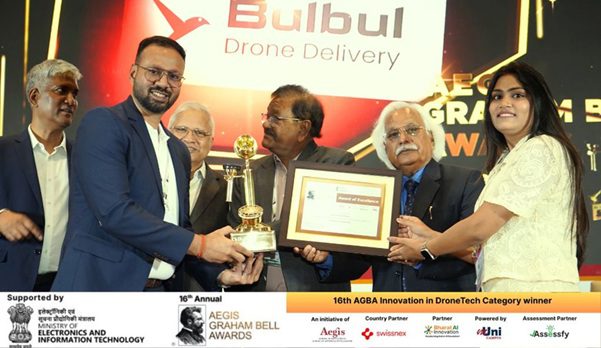
Verma was recently recognized with the India’s Most Credible Innovation Award Aegis Graham Bell Award for Innovation in Dronetech, a recognition that highlights emerging contributions in Advanced Arial Technology. Following the award announcement, we spoke with him about the engineering challenges behind autonomous drone logistics and the potential role of aerial delivery in healthcare infrastructure.
Winner of the prestigious Graham Bell Award for DroneTech, supported by the Ministry of Electronics and Information Technology (MeitY), Government of India, and Swissnex.
Q: Congratulations on receiving the Aegis Graham Bell Award. What does this recognition represent for you?
Ankur Verma:
Thank you. The recognition is encouraging because it reflects the growing importance of Autonomous Arial Systems. Drone logistics is still an emerging field, but the underlying engineering challenges are complex and require serious work.
For our team at Bulbul, the award represents recognition of the effort behind developing reliable Drone Delivery Platform that could eventually support real-world infrastructure.
Q: Your work focuses on healthcare delivery. What drew you to that problem?
Ankur Verma:
My background is in Aerospace Engineering and Flight Data Analysis. Over time I became increasingly interested in how these technologies could address real infrastructure challenges.
Healthcare logistics stood out immediately. Hospitals frequently need to move diagnostic samples, medications, and emergency supplies between facilities. These deliveries are often time-sensitive, and even small delays can impact patient care.
Drone delivery creates a new transportation layer that can reduce delivery times while improving logistics flexibility.
Q: Can you tell us about Bulbul and the system you are developing?
Ankur Verma:
Bulbul Inc., based in Irvine, California, is developing Autonomous Drone logistics systems designed specifically for healthcare and emergency deliveries.
Our focus has been on building a platform that combines reliable navigation, operational safety layers, and mission management software capable of supporting real deployments. The goal is not simply to demonstrate drone delivery, but to build a system that can operate consistently and safely.
To validate the technology, our engineering team has conducted more than 800+ hours of test flights, which has helped refine navigation algorithms and operational protocols.
Q: Are you currently preparing for pilot deployments?
Ankur Verma:
Yes, we are currently exploring pilot opportunities with healthcare stakeholders in Southern California. This includes discussions with Southwest Healthcare’s Temecula Valley Hospital, where drone logistics could potentially support the rapid transport of medical supplies between facilities.
We’ve also received strong encouragement from regional stakeholders such as the City of Menifee and EDC Southern California Wine Country, which are supportive of innovation in transportation infrastructure.
Those collaborations are important because deploying new technologies requires coordination between technology companies, healthcare providers, and local communities.
Q: What has been the most difficult engineering challenge in building drone logistics systems?
Ankur Verma:
The biggest challenge is operational reliability.
Demonstrating a drone delivery once is relatively easy. Building a system that can operate safely and consistently across thousands of missions requires much deeper engineering work.
Our research has focused heavily on navigation reliability, autonomous flight systems, and operational safety. That work has led to patents related to drone logistics technologies, as well as research publications exploring aspects of autonomous aerial systems.
The objective is to create systems that healthcare providers can trust in real operational environments.
Q: Beyond industry work, you’ve also been involved in mentoring engineering students. Why is that important to you?
Ankur Verma:
Innovation often happens at the intersection of academia and industry. I’ve had the opportunity to work with students at the University of California, Irvine, including mentoring projects connected to restoration of the iconic Curtiss JN-4D “Jenny”, one of World War I’s most iconic trainer aircraft at the Leatherneck Aviation Museum, Irvine, CA.
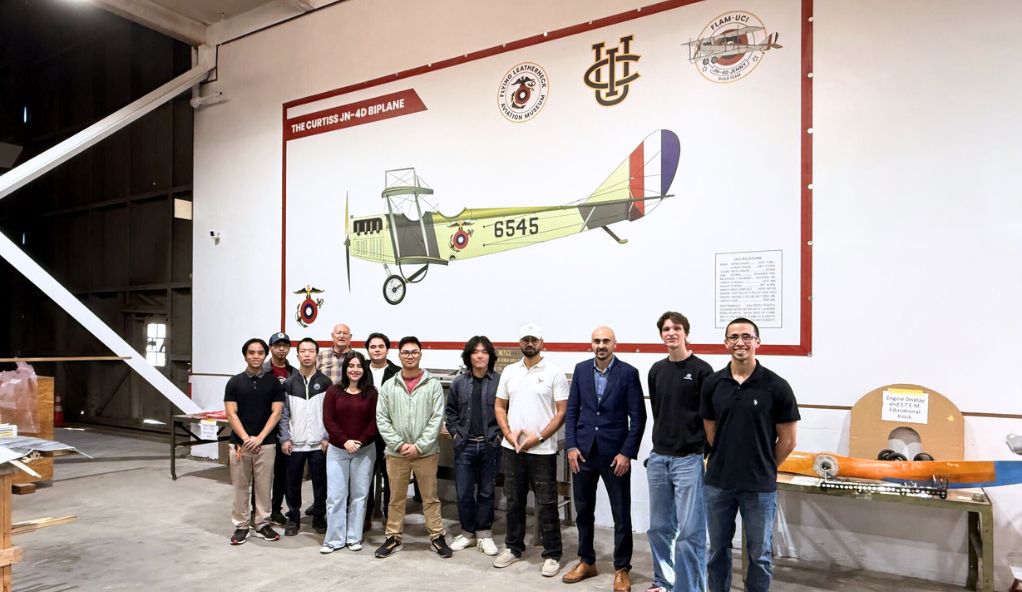
Those experiences allow students to work on real engineering challenges while connecting with aviation history and aerospace systems.
Q: Looking ahead, how do you see drone logistics evolving?
Ankur Verma:
Autonomous aerial logistics will likely become a meaningful layer of transportation infrastructure over the next decade.
But the transition will depend on solving several challenges, engineering reliability, Unit Economics, Regulatory Integration, scalable & operational deployment.
The real milestone will come when drone logistics moves from isolated demonstrations to dependable networks that support everyday operations.
That’s ultimately what we’re working toward at Bulbul.
For more information visit: bulbuldelivery.com