
Advertising Industry Won the Reach War, Lost Attentions

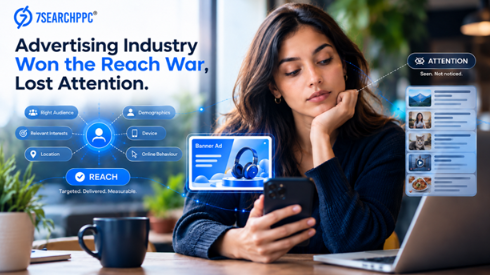
The metric that should worry the advertising industry most is viewability. Integral Ad Science’s most recent global report found display ad viewability at just under 68%, meaning most ads we see as “served” are never actually on-screen long enough to engage the audience.
Every ad you saw today probably did exactly what it was supposed to do. It found you. It showed up at the right time, on the right platform, based on data that predicted you’d be interested. And you still don’t remember most of them.
That gap is becoming one of the more uncomfortable problems in digital advertising. Campaigns are hitting their targets. They’re just not landing. Advertisers are learning that being placed correctly and being noticed are not the same thing, and for years, the industry has only solved for one of them.
The instinct, when an online ad campaign underperforms, is to blame targeting. Wrong ad platform. Wrong time. Wrong bid. Wrong audience segment. But increasingly, that diagnosis is wrong. The ad often reaches exactly who it was supposed to reach. It just never earns a second of that person’s attention. No algorithm can force someone to look at ads.
Attention Can’t Be Bought, Only Earned
We interviewed various professionals at popular advertising networks, and most agree that targeting alone is never the problem; grabbing attention is what makes an ad campaign successful. Even a perfectly targeted ad doesn’t guarantee people actually see it or that it leads to a conversion.
In a world where everyone can be targeted, attention is the only thing you can’t buy. You can put an ad in front of the right person a thousand times, but if it never earns a glance, you have spent your ad budget on placement, not perception. — Prashant Singh (Sr. Content Writer, 7SearchPPC, a popular advertising network)
What Worked Five Years Ago Doesn’t Work Now
Advertising platforms have become incredibly effective at delivering quality traffic to advertisers. But sometimes results don’t favor advertisers, with impressions deep but no clicks. That’s when they began to question whether their ad was reaching and engaging the correct audience. Five years ago, targeting alone was enough. Reach the ideal person, and the campaign usually worked. Not anymore.
“Platforms have spent the last decade perfecting who sees an ad. Almost nobody has solved whether they actually notice it.” — Musa Kazim Zaidi (Digital Advertising Expert).
An ad network’s intent is to reach an audience, but it often neglects whether they’re even paying attention. Advertisers now see that gap, and so do the ad networks themselves.
Every Piece of the Campaign Matters
So, what can you do? Stick to your goal and focus on making every part of the campaign better. That doesn’t come down to one single element; it’s the combination of everything: ad copy, ad format, creative, targeting, S2S tracking, and bidding.
A creative is worth a thousand words, but in advertising, the right image is worth a million emotions. An image stops the scroll, but the ad copy keeps people longer. Keep it short, lead with the benefit, speak directly to one specific person’s problem, and close with a perfect call to action. Also, S2S tracking will help you blacklist and whitelist traffic sources, and of course, we can’t ignore bidding. The competitive bid will give you a top-of-page placement.
Even with an attention issue in the advertising industry, don’t ignore precise targeting. Most advertisers reading this article should remember that running a successful ad campaign is only possible if their ads reach the right audience. You can’t force people to sit and watch your ad campaign. An ad nobody notices is worth exactly nothing, no matter how precisely it was aimed.







Comment