
Address Poisoning Costs Scams Pennies, Victims Millions. UPCX Wants to Eliminate Addresses Entirely
Press ReleaseThis is a press release. It was supplied by a third party and was not written by the TechBullion editorial team.

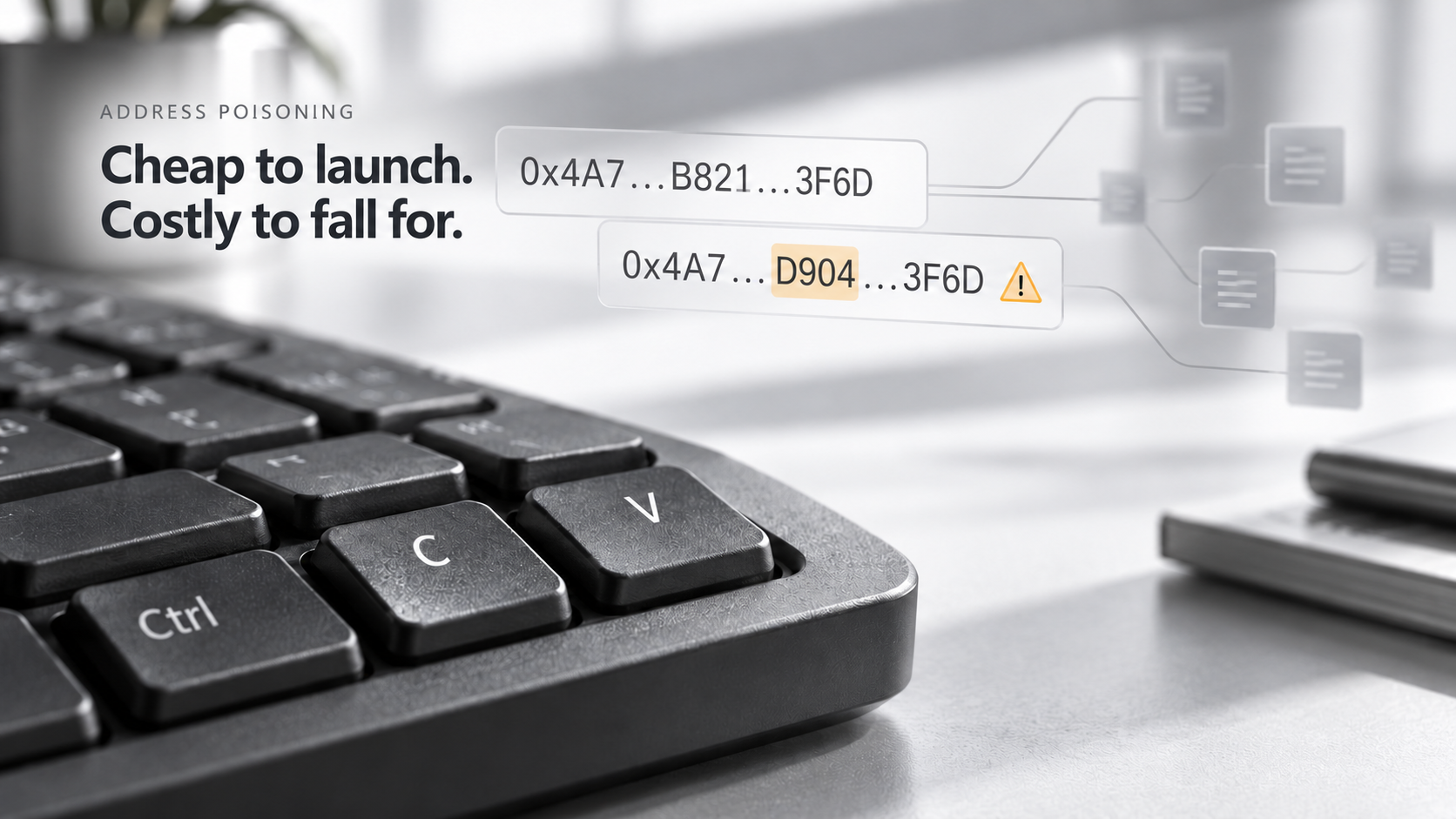
A $5,000 attack, a $50 million loss
The most expensive mistake in crypto is often the simplest: pasting the wrong wallet address. It is also one of the cheapest for scammers to exploit.
In one documented campaign, a single attacker contract sent three million tiny “dust” transfers to more than a million wallet addresses for a total cost of just $5,175 (SimpleSwap). The goal was to plant lookalike addresses in victims’ transaction histories, waiting for someone to copy the wrong one.
It only has to work once. In December 2025, a trader lost nearly $50 million in USDT after copying a poisoned address, one of the largest losses of its kind on record (The Block).
Cheaper transactions, more poisoning
The scam, known as address poisoning, has scaled sharply over the past year. Security firm Blockaid flagged more than 65.4 million poisoning transactions since January 2025, averaging about 160,000 a day (AVOID.NET).
Analysts link part of the surge to Ethereum’s Fusaka upgrade, which lowered the cost of sending tiny transactions and made dust attacks cheaper to run (Cointelegraph). Monthly poisoning attempts climbed from 628,000 in November 2025 to 3.4 million in January 2026.
The damage follows. Scam Sniffer counted $62 million lost by just two victims across December 2025 and January 2026, including a holder who sent about $12.2 million to the wrong address in January (Cointelegraph). Across Ethereum and BNB Chain, researchers have confirmed at least $83.8 million in poisoning losses over two years (Kerberus).
Borrowing from mobile payment apps
Mobile payment apps transformed how people send money by allowing them to pay contacts directly instead of entering lengthy account numbers. UPCX Wallet applies the same principle to self-custody cryptocurrency, making digital asset transfers simpler and more accessible.
The app allows users to discover registered recipients through their phone numbers or UPCX IDs and send cryptocurrency directly from a chat. This removes the need to request, copy, paste, and manually verify long blockchain addresses—a process that can expose users to address-poisoning attacks, where scammers exploit similar-looking wallet addresses to misdirect funds.
Behind the scenes, transactions still settle to the recipient’s blockchain address. A phone number simply helps identify the recipient’s linked wallet; it does not function as a private key. Importantly, UPCX does not take custody of users’ funds, preserving the self-custody model while simplifying the payment experience.
Co-founder and CEO Makoto Nakano has described the company’s ambition as building “a truly practical blockchain payment network in terms of user convenience and scalability.”
Contact-based transfers bring that vision into everyday crypto transactions. By combining familiar mobile payment functionality with blockchain settlement, UPCX aims to make sending digital assets to friends, family, and other known contacts more convenient while reducing reliance on manually entered wallet addresses. However, users should still verify recipient details and remain alert to scams, as contact-based transfers cannot eliminate every form of fraud.
Still the user’s keys, still the user’s job
Self-custody keeps its trade-offs. UPCX users remain responsible for their recovery phrase, and a phone number alone cannot restore a lost wallet.
The company also says real-world use will need to show whether contact-based payments lead to fewer mistakes. Transfers to addresses outside the app will still require careful checking.




Comment