
The First Statement a Property Makes: Why GTA Homeowners Are Paying More Attention to Their Driveways

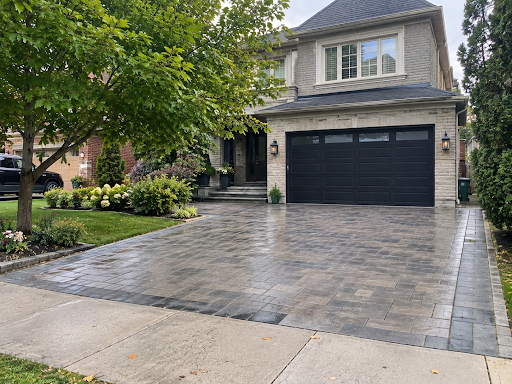
There is a moment, familiar to anyone who has ever stood at the edge of their property, when you stop seeing the driveway as a functional strip of pavement and start seeing it as part of something larger. The front of a home is the first thing anyone notices. The lawn, the facade, the door — and then, running right through the middle of all of it, the driveway.
In the Greater Toronto Area, that visual reckoning is happening more often. Property values across the GTA have made homeowners more conscious of how every square foot of their property looks and performs. The driveway, historically an afterthought, has become a point of genuine design consideration.
What materials do you choose? What shape? Does it need to hold two cars or three? And how much is this actually going to cost? These are the questions driving a noticeable shift in how GTA residents approach what used to be the most ignored part of residential design.
From Blacktop to Interlock: A Material Conversation
For most of the twentieth century, asphalt was the default answer for residential driveways in Ontario. It was affordable, it handled freeze-thaw cycles reasonably well, and it looked like what a driveway was supposed to look like. That consensus is loosening.
Homeowners are now choosing between three main options, each with distinct visual and practical tradeoffs:
Asphalt remains the most common and the most cost-effective. A standard residential driveway in asphalt costs significantly less than concrete or interlock, and it can be repaved or resurfaced rather than fully replaced when it shows wear. Its limitation is aesthetics — it has one look, and that look does not change. For homeowners prioritising budget and practicality over visual differentiation, it is still the right answer.
Concrete offers more visual variety than asphalt. It can be stamped, coloured, or brushed to create a surface that reads differently from the standard grey. It lasts longer than asphalt under normal conditions, though it is more expensive to install and significantly harder to repair when it cracks. In the GTA, where freeze-thaw cycling is aggressive, poorly installed concrete can deteriorate faster than expected.
Interlocking pavers are where most of the design conversation is happening right now. Interlock allows for colour combinations, patterns, and borders that cannot be achieved with poured surfaces. It handles water drainage more naturally because water moves between the stones rather than sitting on a sealed surface. And it can be lifted, repaired, and relaid in sections when something goes beneath it — a feature that matters enormously in older Toronto neighbourhoods where underground utility work is common.
The choice between these three is not purely aesthetic. It involves drainage considerations specific to your lot, the age of your existing driveway and what replacing it will require, and what you plan to do with the property in the next five to ten years.
What It Actually Costs: The Numbers Behind the Decision
One of the reasons driveway renovation gets delayed is that homeowners are not sure what budget range they are dealing with until they have a quote in hand. By that point, some of them discover the job is two or three times what they expected.
Understanding the realistic cost range before you pick up the phone makes a meaningful difference in how you plan.
In the GTA, pricing is driven by the size of the driveway, the material chosen, what needs to happen with the existing surface (removal and disposal costs are real), and whether the job includes grading, drainage work, or curb cuts. Asphalt sits at the lower end of the range. Concrete is mid-range. Interlock is typically the most expensive per square foot, though the variation within each material category is significant depending on the contractor and the complexity of the job.
For anyone planning a driveway project in 2025 or early 2026, reviewing a detailed breakdown of driveway paving cost GTA before getting quotes will help you understand what variables are driving the numbers and what you can realistically expect at different price points. Having that context before the first contractor visit changes the conversation considerably.
The Timing Question
In the GTA, the paving season runs from late spring through early fall. Asphalt cannot be laid properly when temperatures are below a certain threshold, and interlock work in cold or wet conditions introduces complications that most experienced contractors will not touch.
That window is shorter than most homeowners expect. And it fills up.
The contractors doing the best work in any given season — the ones who have been around long enough to know how to handle the specific soil conditions and drainage quirks of Toronto and its surrounding areas — are booked weeks and sometimes months in advance. The homeowner who starts thinking about a driveway project in July and wants it done by September is frequently disappointed.
Starting the planning process in late winter, getting quotes in February or March, and scheduling work for May or June is the approach that consistently gives homeowners the most control over timing, contractor choice, and cost. Waiting until the driveway is in obvious distress means making a decision under pressure, which almost never produces the best outcome.
Finding the Right People for the Job
A driveway is not a small project. Even at the lower end of the cost range, it represents a meaningful investment in a surface that will be used every single day for the next decade or longer. The quality of the installation determines how long it performs, how well it drains, and how it holds up through Ontario winters.
That makes contractor selection as important as material selection.
Homeowners in the Toronto area who want to understand what a professional crew actually delivers — the site preparation, the grading, the base layer work, the finishing — can explore paving services toronto to see what a full-service approach to residential driveway work looks like. The gap between a job done properly and a job done quickly is usually invisible at the time of installation and very visible eighteen months later.
Why This Matters More Than It Used to
The GTA real estate market has changed what it means to let a property deteriorate. A driveway that is cracking, heaving, or draining poorly does not just look bad — it signals neglect in a way that affects how buyers and neighbours perceive the whole property.
For homeowners who plan to stay put, a well-installed driveway is about daily use and long-term peace of mind. For those with an eye on eventual resale, it is part of the picture that determines how the front of the property photographs, how buyers feel when they arrive, and whether the first impression holds up.
Either way, the decision is worth making deliberately rather than putting off until the existing surface gives you no choice.
Previously in Business news: GalleryTicket Impersonation Alert: ‘GalleryTicket Does Cash-Out’ – Is It True?






Comment