
Simple Ways to Solve Complex Problems Using Online Calculators

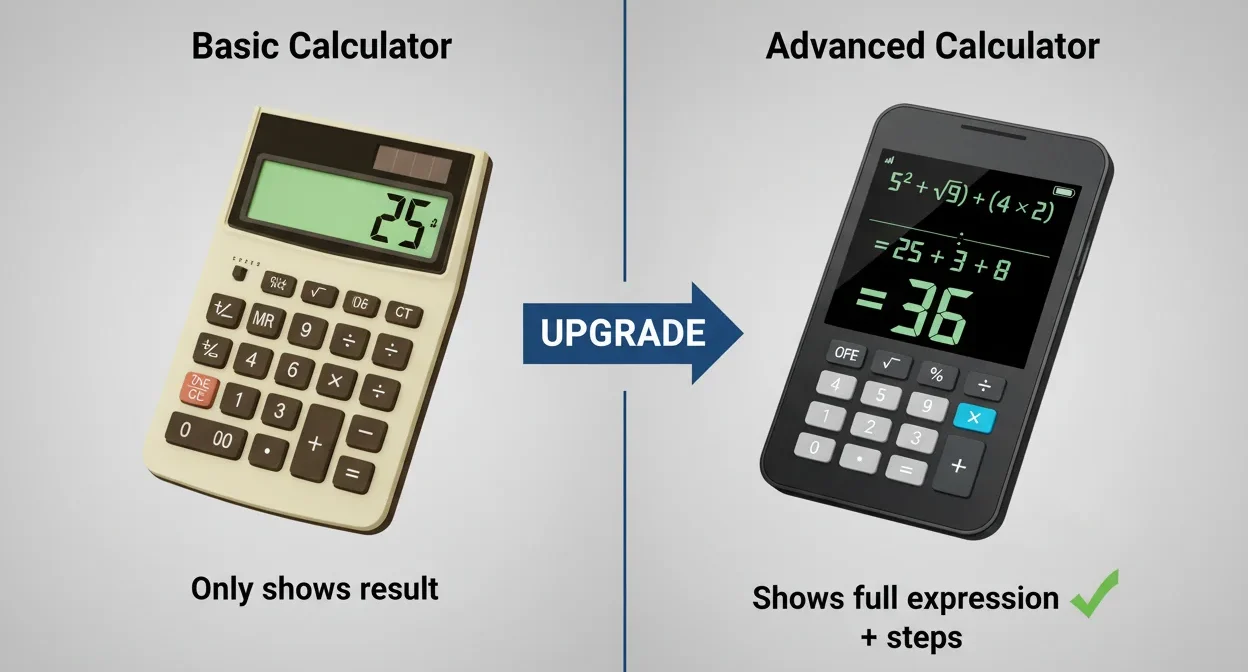
Complex problems rarely feel complex because the underlying idea is hard. More often, they feel that way because the steps are tedious, the numbers are awkward, or one small slip can throw off everything that follows. A student working through a physics assignment, a farmer planning a lambing season, and a party host trying to build a playlist all face the same obstacle: they need a reliable answer quickly, without wading through manual work.
Online calculators are built for exactly this. They take a specific problem, apply a proven method, and return a clear result in seconds. This article looks at how they simplify difficult tasks across three very different areas: mathematics, animal husbandry, and entertainment. It also covers how to get the most from them.
Why Online Calculators Work So Well
A good online calculator does three things. It removes repetitive arithmetic, it applies a consistent formula every time, and it presents the result in a form you can use immediately.
Speed. Tasks that once took ten minutes with a pencil and a scientific calculator take about ten seconds.
Accuracy. Humans make transcription errors, forget a step, or round too early. A well-built tool does not.
Accessibility. There is nothing to install, and most tools work equally well on a phone or a laptop. That matters when you are standing in a barn or sitting in a lecture hall.
Learning support. The best tools show their working or at least make the logic visible. This lets you check your understanding instead of blindly trusting a number.
With that in mind, here are three practical examples.
Solving Vector Problems Without the Headache
Vectors appear throughout physics, engineering, computer graphics, game development, and machine learning. A vector describes both a direction and a magnitude, and many problems require you to isolate just the direction. That is where normalization comes in.
Normalizing a vector means scaling it so its length equals exactly one while keeping its direction unchanged. The result is called a unit vector. The process is simple in principle: calculate the vector’s magnitude, then divide each component by that magnitude.
For a two-dimensional vector (3, 4), the magnitude is the square root of 3² + 4², which is 5. Dividing each component by 5 gives the unit vector (0.6, 0.8). That is easy enough by hand.
The trouble starts with three-dimensional vectors, decimals, negative values, or a long list of vectors that all need processing. A single misplaced square root can ruin the whole set. This is where a normalize vector calculator becomes valuable. You enter the components, and the tool returns the magnitude and the normalized result instantly.
Where Unit Vectors Matter in Practice
- Computer graphics and game design: Lighting, camera direction, and movement all rely on unit vectors so that speed and direction can be controlled independently.
- Physics: Force, velocity, and field directions are routinely expressed as unit vectors for cleaner equations.
- Machine learning: Normalizing vectors lets algorithms compare direction rather than raw size, which is central to similarity measures.
- Engineering and navigation: Direction cosines and orientation calculations depend on normalized values.
A Smart Way to Use the Tool
Do the first example by hand to confirm you understand the method. Then use the calculator for the rest. This builds understanding while saving time, and it gives you a quick way to check your own answers on homework or in code.
Planning a Flock With Confidence
Switching from mathematics to agriculture shows how flexible calculators can be. Sheep farming depends heavily on timing. Knowing when lambs are due affects feed planning, housing, veterinary visits, labor schedules, and the farmer’s own calendar.
Sheep have a gestation period of roughly 145 to 152 days, which is about five months. The exact figure varies with breed, the number of lambs carried, and individual factors. Counting forward on a paper calendar is possible, but it is easy to be off by a few days, particularly across month boundaries and leap years. Those few days matter when ewes need extra nutrition in late pregnancy or when you want to be present for lambing.
A sheep gestation calculator takes the breeding date and gives an expected lambing window. That single result supports many decisions:
- Feeding: The last six weeks of pregnancy are when the unborn lambs grow fastest, so ewes need higher-quality feed during this stage.
- Vaccinations and health checks: Some treatments are timed to fall before lambing.
- Housing and preparation: Lambing pens, supplies, and bedding can be ready well in advance.
- Labor planning: Knowing the likely window helps you schedule help and avoid conflicts.
For anyone managing more than one group of ewes, the benefit multiplies. Entering several breeding dates and comparing the results gives a clear picture of how the season will unfold. The same approach works for other livestock, and the principle is identical: turn a date and a known biological timeline into an actionable schedule.
One caution applies. A calculator gives an estimate based on averages, not a guarantee. Always combine it with observation of your animals and advice from a veterinarian, especially for first-time breeders or flocks with health concerns.
Taking the Pressure Out of Creative Choices
Not every complex problem involves numbers. Sometimes the hard part is simply choosing. Anyone who has stared at a music library with thousands of songs, unable to decide what to play, has experienced decision fatigue. It is a real effect: the more options you face, the harder it becomes to pick one.
A random song generator solves this by making the choice for you. With one click, you get a suggestion, often from genres or eras you would not normally explore. This is useful in several situations:
- Parties and gatherings: Let the generator settle disputes over who picks the next track.
- Music discovery: Break out of a listening rut and find artists you would never have searched for.
- Creative work: Writers, musicians, and designers sometimes use random prompts to spark ideas.
- Games and challenges: Build karaoke nights, trivia rounds, or “guess the song” games around random picks.
The calculator-style approach works here because randomness removes bias. You cannot overthink a suggestion you did not choose, and you may be pleasantly surprised by what turns up.
Tips for Getting the Best Results From Any Online Calculator
Whatever the task, a few habits will help you get more reliable answers.
- Understand the inputs. Read the labels carefully. Entering a value in the wrong unit or the wrong field is the most common source of error.
- Estimate first. Before you press calculate, make a rough guess of what the answer should look like. If the result is wildly different, recheck your input.
- Check the logic once. Work through one simple example manually so you trust the method. After that, let the tool handle repetition.
- Know the limits. Calculators give estimates or exact results depending on the problem. Gestation periods, for example, are averages, while vector normalization is exact.
- Keep a record. Note down the results you rely on, especially for ongoing projects like breeding schedules or engineering work.
- Use more than one source when stakes are high. For decisions involving animal health, finance, or safety, treat a calculator as a starting point and confirm with a professional.
Choosing the Right Tool for the Job
The internet is full of calculators, and quality varies. A reliable one usually has these qualities:
- A clear, uncluttered interface that explains what each field means
- Results shown instantly, with units and context
- A focus on one task, done well, rather than a cluttered page of unrelated features
- Responsive design that works on phones as well as desktops
- No unnecessary sign-ups or barriers to basic use
Specialized tools often outperform general ones because they are built around one specific problem and handle its quirks properly. A dedicated vector tool understands components and dimensions. A dedicated gestation tool understands breeding timelines. That focus is what makes them dependable.
Final Thoughts
Complex problems become manageable once you break them into clear steps and hand the repetitive parts to a reliable tool. Whether you are normalizing vectors for a physics project, preparing for a busy lambing season, or simply trying to decide what to listen to next, there is likely an online calculator that makes the job faster and less stressful.
The key is to use these tools wisely. Understand the basics, check your inputs, and treat estimates as estimates. Used this way, online calculators do not replace your thinking. They free it up, so you can spend your time on decisions, creativity, and learning instead of arithmetic.
Next time a problem looks daunting, ask whether a simple calculator can handle the heavy lifting. More often than you might expect, the answer is yes.
Read More From Techbullion
Previously in Business news: Inside 200,000 Hours of Real-Robot Data: What Makes Experience “Effective”?






Comment