
What AI SEO Agencies Actually Do: Optimizing Small Business Websites for Google & AI Search

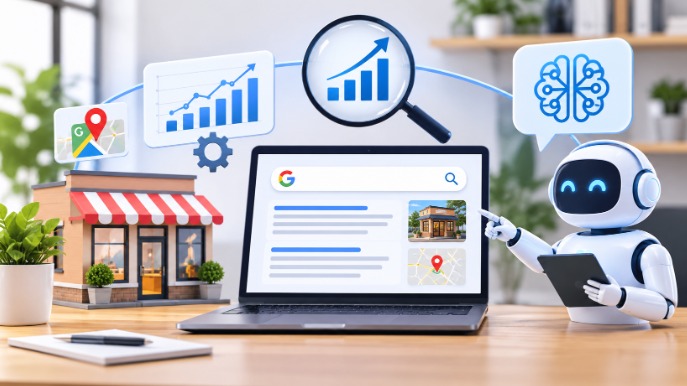
Search for a local service today and the first thing many people see is not a list of ten blue links. It is a written answer from Google’s AI Overviews or AI Mode, or a recommendation from ChatGPT, Gemini or Perplexity. In its June 2026 update for website owners, Google said AI Overviews has more than 2.5 billion monthly active users and AI Mode has passed one billion monthly users. For a small business, that changes what it means to be found.
That shift created a wave of agencies selling “AI SEO,” “generative engine optimization” (GEO) or “answer engine optimization” (AEO). Some of them do useful work. Others repackage ordinary SEO at a higher price. This article explains what a competent AI SEO agency does from the first audit to the monthly report, which tasks affect visibility in Google and in AI assistants, which tasks are noise, what the work costs, and how to evaluate a provider before you sign anything.
The short answer: a good AI SEO agency spends most of its time on the foundations that have always mattered (a crawlable website, useful pages, an accurate Google Business Profile, real reviews and third-party credibility), then adds measurement of how often your business appears in AI answers. Google’s own guidance says that optimizing for its AI features is still SEO. The new parts are tracking AI citations, keeping your business facts consistent across the sources AI systems read, and building a reputation outside your own website.
Key Takeaways
- Google states that its AI Overviews and AI Mode rely on its core Search ranking and quality systems, so standard SEO remains the base of AI search visibility.
- To appear as a supporting link in Google’s AI features, a page must be indexed and eligible to show with a snippet. There are no extra technical requirements.
- For local businesses, Google Business Profile, reviews, directory listings and your own website all feed AI answers, and different AI systems weigh them differently.
- Tactics such as llms.txt files, splitting pages into tiny “chunks” and buying mentions are not needed for Google Search, according to Google’s guidance.
- No agency can guarantee a citation in an AI answer. Judge providers on the work they deliver, the reports they show and the questions they are willing to answer.
What “AI SEO” Means in 2026
Agencies use several labels for the same broad idea. AEO, GEO, LLM optimization (LLMO) and “AI SEO” are used more or less interchangeably, and no standard definition separates them. All of them describe work meant to get a business named, linked or recommended inside answers produced by tools such as Google AI Overviews, Google AI Mode, ChatGPT, Gemini, Perplexity and Claude.
Google’s position is direct. Its guide to optimizing for generative AI features, last updated on July 10, 2026, says that from the point of view of Google Search, optimizing for generative AI search is optimizing for the search experience, and therefore still SEO. The guide explains two techniques that drive these features:
- Retrieval-augmented generation (RAG). The system retrieves relevant, current pages from Google’s index and uses them to ground the written answer, then shows links to the supporting pages.
- Query fan-out. The system runs several related searches at once. A question about fixing a weedy lawn, for example, may also trigger searches for weed killers, chemical-free removal and prevention.
Query fan-out is why a single page rarely wins alone. When an AI system breaks a customer’s question into sub-questions, it looks for sources that answer each part. A small business site that covers a service thoroughly, including pricing factors, process, timelines, service areas and common problems, has more chances to be retrieved than a site with one thin page per service.
There is also a difference between Google’s AI features and the other assistants. Google builds its answers on its own index and its own local data. ChatGPT, Perplexity, Gemini and Claude pull from the open web and from partner data, so they lean more heavily on business websites, review platforms and directories. An agency that treats all of these as one system is simplifying too much.
How Google and AI Assistants Choose Which Businesses to Cite
Recent studies of local AI search give a useful picture of where the information comes from. They also show that the sources differ by platform, which is why agencies work across several channels at once.
| AI surface | Where its local information tends to come from | What an agency checks |
|---|---|---|
| Google AI Overviews and AI Mode | Google’s index, Business Profile and Maps data. BrightLocal’s September 2026 study found Google Business Profile made up about 28.6% of all citations across ChatGPT, AI Mode and AI Overviews, and it was the leading source for Google’s own AI features. | Indexing, snippet eligibility, Business Profile completeness, reviews, service pages. |
| ChatGPT | Web sources and review platforms. In the same BrightLocal study, Yelp was the most common source for ChatGPT local answers and appeared in about 80% of them. | Yelp and other directory accuracy, business website clarity, review content. |
| Gemini | Search Engine Land reported a study in which business websites accounted for nearly 60% of Gemini’s citations in local AI search. | Website content quality, location and service pages, consistent business facts. |
| Perplexity | A wide mix of web sources. Tinuiti’s Q1 2026 report found Reddit supplied 24% of Perplexity’s citations in January 2026. | Authentic community discussion, third-party mentions, press and directory presence. |
Two other findings matter for expectations. First, the systems often disagree. Yext analyzed 491,972 local query-market cases from February through August 2026 and found that all four AI systems it tested chose the same top business in only 4% of them. Second, the businesses that several systems agreed on looked different from the typical business. They had more recent reviews (about 12 new reviews a month for businesses all four systems chose, versus about 2 for the typical business), they answered more of their reviews (62% versus 33%), and they had more complete profiles (95% versus 80%).
Visibility gaps can be large. Local Falcon compared 189,905 ChatGPT results with Google local results for restaurant queries in March 2026 and found that 83% of restaurants did not appear in ChatGPT at all, compared with 14% in Google. For a small business, being easy to find in Google does not automatically carry over to AI assistants.
What AI SEO Agencies Actually Do
The work falls into ten areas. A good agency covers all of them in some form, even if it sequences them differently depending on your starting point.
1. Audit and baseline
Every engagement should begin with a documented baseline, because without one nobody can say whether the work helped. A thorough audit includes:
- A crawl of the site to find broken links, redirect chains, duplicate pages, missing titles and thin content.
- A review of Google Search Console for indexing problems, queries and pages already earning impressions, and the Generative AI performance report where it is available to the site.
- A review of analytics to see which pages produce calls, form fills and bookings, not only traffic.
- A Google Business Profile review covering categories, services, hours, photos, attributes and review history.
- A competitor review to see which businesses currently appear in the local pack, in AI Overviews and in AI assistant answers for your key services.
- An AI visibility baseline: a fixed list of real customer questions (for example, “who is the best emergency plumber in East Nashville”) run across Google AI Mode, ChatGPT, Gemini and Perplexity, with the results recorded.
Because AI answers vary by user, location and day, a credible agency repeats the same prompt set on a schedule and reports trends rather than single screenshots.
2. Technical SEO
Technical work decides whether your pages can be found at all. Google says a page must be indexed and eligible to be shown in Search with a snippet to qualify as a supporting link in AI Overviews or AI Mode. Agencies therefore check:
- That important pages are indexable, with no accidental noindex tags, blocked folders in robots.txt or snippet restrictions that remove them from AI features.
- Clean canonical tags, working XML sitemaps and sensible URL structure.
- Mobile display, page speed and Core Web Vitals, which fall under Google’s page experience guidance.
- JavaScript rendering. Google can process JavaScript content when it is not blocked, but sites built on JavaScript frameworks need extra care so that key content appears in the rendered page.
- Duplicate content, which wastes crawling resources and confuses which page should rank.
- Semantic HTML and clear headings, which Google says help readers, screen readers and other automated visitors move through a page, although it does not need to be perfect code.
- A deliberate decision about which AI crawlers may access the site, made with the owner and documented. Blocking Googlebot removes the site from Google Search and its AI features, while rules for other AI crawlers are a business decision with trade-offs.
3. Keyword, intent and prompt research
Classic keyword research still matters, but agencies now add research into how people phrase full questions to AI tools. Google’s December 2026 core update announcement says the update is meant to improve ranking for longer and more complex questions, which is consistent with this change in behavior.
The output is a map that ties each target topic to one page: which service page answers which question, which questions need new content, and which questions belong on the Business Profile or in a review-request script instead. The aim is coverage of customer decisions, such as cost, timing, comparison, trust and location, not a separate page for every wording variation. Google warns that producing pages mainly to match every query variation or fan-out query can violate its scaled content abuse policy.
4. Content that adds something new
Content is where agencies spend the most hours, and where the quality gap between providers is widest. Google’s guide says unique, valuable content will likely influence AI search presence more than any other tip it gives. It separates commodity content, which restates common knowledge anyone could write, from non-commodity content built on real experience.
For a small business, useful content usually includes:
- Detailed service pages that explain the process, what affects price, how long the work takes, and what the customer should prepare.
- Location and service-area pages with real local detail, such as projects completed in that area, local regulations or conditions, and customer stories.
- Answers to the specific questions your staff hear every week, written by or reviewed by the people who do the work.
- Original photos and short videos from real jobs, since Google says its AI features can show images and video, which creates more ways to appear.
- Author or team pages that show who stands behind the advice, including licenses, certifications and years of experience.
Many agencies use generative AI tools to draft this material. Google allows that if the result meets its Search Essentials and spam policies, but the draft needs a subject-matter expert and an editor. A provider that publishes dozens of near-identical AI-written pages for your site is creating risk, not visibility.
5. On-page optimization and structured data
On-page work covers title tags, meta descriptions, headings, internal links, image names and alt text, and the order in which information appears on a page. Agencies also add structured data (schema markup), usually LocalBusiness or a more specific subtype, Organization, Service, FAQ-style content where it fits Google’s current rich result rules, and review or product markup where it applies.
Set expectations carefully here. Google says structured data is not required for generative AI search and that no special schema.org markup is needed, although it still helps with rich result eligibility. Studies of schema and AI citations have produced mixed results, and one reported by Scorpion found no correlation between schema coverage and citation rates. Structured data is worth doing correctly because it states business facts in a machine-readable form, but an agency that presents it as the key to AI citations is overselling.
6. Entity and business-fact consistency
AI systems need clear answers to basic questions: who you are, what you do and where you do it. If your name, address, phone number, hours or service list differ between your website, Business Profile, Yelp, Apple Business Connect, Bing Places and industry directories, assistants may merge, skip or misreport your business. Agencies run a citation cleanup that standardizes the business name, address and phone number, categories, descriptions and links across every major listing, then monitors for drift. They also make sure the About page, contact page and footer state the same facts as the listings.
7. Google Business Profile and local SEO
For any business with a physical location or a defined service area, the Business Profile is the most influential single asset in Google’s local results, and it feeds Google’s AI answers. Google’s own guide points to Google Business Profile and Merchant Center as the way to make local business and product details visible in AI responses. Agency tasks include:
- Choosing the primary category and the right secondary categories, which BrightLocal and others identify as one of the most direct levers for local visibility.
- Listing every service and product with clear descriptions, and keeping hours, holiday hours and attributes current.
- Uploading fresh, original photos on a regular schedule.
- Posting updates and offers, and answering questions people ask on the profile.
- Setting accurate service areas without stuffing in places the business does not serve.
- For retailers, maintaining Merchant Center product feeds.
- Where it suits the business, exploring Google’s Business Agent, a conversational experience in Search that lets customers chat with a brand.
8. Reviews and reputation
Reviews do two jobs. They help rankings and AI recommendations, and they persuade the customer who reads them. BrightLocal’s 2026 Local Consumer Review Survey found that 97% of consumers read online reviews for local businesses and that 71% use Google for them. BrightLocal’s separate 2026 research found that 65% of consumers who rejected a local business did so for at least one review-related reason, such as low ratings, negative reviews, or too few or outdated reviews.
A responsible agency builds a review process into your normal customer workflow: a short request sent after each completed job, direct links to your Google and Yelp pages, and a standard approach to replying to every review. It does not buy reviews, offer rewards for them or run bulk campaigns, all of which Google’s policies prohibit and which can lead to removed reviews or a suspended profile. Reviews that describe the specific work done and the neighborhood served give AI systems richer material than a bare star rating.
9. Off-site authority and digital PR
AI systems read what other sources say about you. For small businesses, this part of the work looks like local public relations more than link building in the old sense:
- Sponsorships, community events and partnerships that earn mentions and links from local organizations, chambers of commerce and trade groups.
- Features in local media, newsletters and industry publications.
- Complete and accurate listings in the directories that matter for your category.
- Helpful participation in the forums and communities where your customers ask questions, done under real names with honest disclosure of your affiliation.
Google’s guidance warns that seeking inauthentic mentions is less helpful than it appears, because its ranking systems favor high-quality content and its spam systems block manipulation. Agencies that promise large numbers of “AI mentions” by posting fake reviews or planted forum threads are working against you.
10. Measurement and reporting
Reporting should connect the work to business results. A useful monthly report shows:
- Search Console impressions, clicks and average position for priority queries. Google notes that traffic from AI features is counted within overall Search Console data under the Web search type.
- Results from the Generative AI performance report in Search Console, where Google has made it available to your property.
- Google Business Profile views, calls, direction requests and website clicks.
- Analytics data for visits from AI assistants (for example, referrals from chatgpt.com or perplexity.ai) and for conversions such as calls, forms and bookings.
- The AI visibility prompt set, showing how often your business is named or cited across platforms, compared with named competitors.
- Review count, rating, response rate and recent review velocity.
Be wary of third-party tools that claim to reveal how Google’s AI systems rank pages. Google states that no outside tool has access to its internal ranking or AI systems. These tools can help with workflow and sampling, but their scores are estimates.
What Agencies Sell That You Can Usually Skip
Google’s guide includes a section on common ideas it says you can ignore for Google Search. Other AI platforms have not published equivalent rules, so treat these as low priority rather than harmful, but do not pay a premium for them.
| Tactic | What Google says | How to treat it |
|---|---|---|
| llms.txt and other special AI files | Google Search does not use them, and they neither help nor harm visibility there. | Optional. Fine to add if cheap, but not a deliverable worth a fee. |
| “Chunking” content into tiny pieces | No requirement. Its systems can find the relevant part of a page with several topics. | Write for readers. Use clear headings, not artificial fragments. |
| Rewriting content only for AI systems | Not needed. AI systems understand synonyms and meaning. | Avoid keyword-stuffed rewrites. |
| Buying or faking mentions | Inauthentic mentions are less useful than they seem, and spam systems work against them. | Refuse. It can damage your reputation and your profile. |
| Over-investing in schema | Not required for generative AI search, but useful for rich results. | Implement accurately once and keep it maintained. |
| Mass-produced pages for every query variation | Can violate the scaled content abuse spam policy. | Fewer, deeper pages usually perform better. |
A 2026 pricing study by Seotal Research, which read the prices posted on agency websites on October 1, 2026, concluded that AI SEO costs small businesses about 20% more at most agencies. Its authors also noted that most of what agencies sell as AI SEO is work a small business needed anyway, such as pages AI crawlers can read, consistent business facts and structured data. That matches what Google’s guidance implies: the foundation is shared, so the premium needs to be justified by extra measurement and off-site work.
A Realistic 90-Day Plan
Timelines depend on the site’s starting condition and the competitiveness of your category. The following outline shows how a typical engagement is sequenced.
| Period | Main work | What you should receive |
|---|---|---|
| Days 1 to 30 | Technical and content audit, Search Console and analytics setup, Business Profile review, listing audit, AI visibility baseline, competitor review, keyword and prompt research. | Written audit, prioritized fix list, baseline report, topic map tied to pages. |
| Days 31 to 60 | Fix critical technical issues, rewrite or expand priority service pages, correct listings, optimize the Business Profile, start the review process, add structured data. | Change log of completed fixes, updated pages, corrected listings, review request workflow. |
| Days 61 to 90 | Publish new expert-led content and location pages, begin local outreach and digital PR, repeat the AI visibility prompt set, review results and adjust. | First trend report comparing baseline and current visibility, calls and form fills, plus a plan for the next quarter. |
Many agencies tell clients to expect three to six months before steady movement, and longer in competitive categories. That is industry convention, not a commitment from Google, which says indexing and serving are never guaranteed even when a page follows every guideline.
What to Look for in SEO Services in Nashville, TN That Win Google Rankings and AI Citations
Local context changes the work. Nashville’s economy leans on healthcare, music and entertainment, tourism, higher education and a fast-growing housing and construction market. That mix produces heavy local search demand for medical and dental practices, attorneys, home services, restaurants, real estate and event venues. Many of those categories are crowded, and many of the searches are mobile, urgent or phrased as “near me” or “open now.”
When you shortlist providers, look for SEO Services in Nashville, TN That Win Google Rankings and AI Citations, which in practice means an agency that can show the following:
- Real local knowledge. The agency understands how people search across Davidson County and the surrounding communities, including Franklin, Brentwood, Murfreesboro, Hendersonville, Mt. Juliet and Gallatin, and how neighborhoods such as East Nashville, Germantown, The Gulch, 12 South, Midtown, Green Hills and Donelson are named in queries.
- Service-area pages that earn their place. Location pages should carry unique local proof, such as completed jobs, local photos, customer stories and area-specific details. Near-duplicate pages with only the city name swapped are weak and may be treated as low-quality or spam.
- Consistent business data. Phone numbers (Nashville uses both the 615 and 629 area codes), suite numbers and service areas should match across the website, Business Profile and directories.
- Review strategy suited to your category. A restaurant needs recent Google and Yelp reviews that mention dishes and neighborhoods. A law firm needs careful, compliant handling of client feedback. A roofer needs reviews that describe the work and location.
- Local authority sources. Relationships with Nashville chambers, trade associations, local media, universities and community events provide links and mentions that outside agencies cannot easily replicate.
- Measurement tied to leads. Calls from the Business Profile, tracked form fills and booked appointments, reported alongside rankings and AI citations.
An agency based outside Tennessee can do this work well, but it should show that it has researched the Nashville market for your category instead of reusing a template from another city.
Costs, Contracts and Pricing Models
Published pricing varies widely, and sources use different definitions of “small business.” The figures below come from 2026 industry sources and should be treated as ranges, not quotes.
- Monthly retainers. WebFX, in a guide updated July 8, 2026, lists agency and consultant retainers at $1,500 to $5,000 per month and a broader small business range of $500 to $5,000 per month. DesignRush puts local or single-market small business SEO at $2,500 to $5,000 per month.
- Project work. The same WebFX guide lists project-based SEO at $1,000 to $30,000 and hourly consulting at $75 to $200 per hour.
- Prevalence of retainers. An Ahrefs survey of 439 SEO professionals found that 78.2% charge a monthly retainer.
- GEO-specific pricing. Nutshell lists small business GEO services at $1,500 to $5,000 per month, which overlaps heavily with general SEO pricing.
Price tells you less than scope. Ask what share of the fee goes to content production, because content is usually the largest cost in a real SEO program, and ask who does the work. Ask whether the retainer includes AI citation tracking or charges extra for it. Check contract terms too:
- Month-to-month or short initial terms are safer than long lock-ins for a first engagement.
- You should own the website, analytics, Search Console, Google Business Profile and any content created for you, and you should have admin access from day one.
- The contract should describe deliverables and reporting, not only “SEO services.”
- Guarantees of rankings, traffic or AI citations are a warning sign. Google’s systems and AI answers change too often for anyone to guarantee them.
How to Evaluate an AI SEO Agency
Use these questions in sales calls. The answers will show whether the agency does real work or sells vocabulary.
- What will you fix in the first 30 days, and how will I see the changes?
- How do you measure visibility in AI answers, and how do you handle the fact that answers vary by user, place and time?
- Which of your recommendations depend on Google’s published guidance, and which are your own tests? Can you show the evidence for the tests?
- Who writes and edits the content, and what subject-matter input do you need from my team?
- How do you use generative AI in drafting, and how do you keep the pages within Google’s spam policies?
- How do you collect reviews, and how do you comply with Google’s review policies?
- What will you do about my Business Profile, directories and citations?
- Which off-site activities will you carry out for me, and how do you avoid fake mentions?
- Will I own all accounts, content and data if we part ways?
- Can I talk to a current client in a similar category and market?
Keeping Up With Google’s Updates
Google has run three broad core updates in 2026 so far: March 27 to April 8, May 21 to June 2, and November 10 to November 24. Google described the November update as a regular update meant to surface relevant, satisfying content from all types of sites. On November 24, the same day the November rollout finished, Google announced that a December 2026 core update is planned. It gave no start date or length. According to Search Engine Journal’s report, Google says the December update will change how its systems understand and rank relevant content, including for longer and more complex questions, and improve personalized results for people who have personalization turned on.
A responsible agency does not chase each update. It checks Search Console after the rollout finishes, following Google’s advice to wait at least one full week and compare it with a week before the rollout began, then reviews which pages and queries gained or lost visibility. Google has not announced a special recovery formula for sites that lose traffic. The standard response is to improve the content and the experience on the pages that declined, not to make sitewide changes in a hurry.
Frequently Asked Questions
Is AI SEO different from regular SEO?
Mostly it is an extension. Google says its AI features are rooted in its core ranking and quality systems, so the same fundamentals apply. The additions are tracking mentions across several AI platforms, keeping business information consistent in more places and investing more in reviews and third-party credibility.
Can an agency guarantee my business will be cited by ChatGPT or Google AI?
No. Yext’s 2026 analysis found that four major AI systems agreed on the top local business in only 4% of the query markets studied. An agency can raise the odds by improving the signals AI systems use, but it cannot control the outcome.
Do I need an llms.txt file?
Not for Google Search. Google says it ignores these files and that they neither help nor harm visibility there. If another service you care about reads them, creating one is low-cost, but it should not be sold as a major deliverable.
Should I let AI write my website content?
AI tools can help with drafts, outlines and editing. Google allows content created with them if it meets its Search Essentials and spam policies. Content that repeats what is already available online adds little. Pages that include your own experience, pricing context, photos and local detail are more useful to customers and are the kind Google says it wants to surface.
How soon will I see results?
Technical fixes and Business Profile improvements can show effects within weeks. Content and authority work usually takes several months. Many agencies quote three to six months for visible movement, and competitive categories take longer. Ask for leading indicators such as indexed pages, impressions, profile actions and review growth so that you can judge progress before revenue changes.
Does my Google Business Profile matter more than my website?
Both matter, and their weight depends on the platform. Google’s AI features lean on Business Profile data heavily, while studies of other assistants show a large role for business websites and review platforms. SOCi’s 2026 Local Visibility Index, as summarized by Search Engine Land in April 2026, reported that the business website had become the main source of truth for several assistants. The safe approach is to maintain both and keep them consistent.
Should I opt out of Google’s AI features?
Google announced in June 2026 that it had begun testing a Search Console control that lets site owners decide whether their content appears in and grounds its generative AI features, starting with a subset of site owners in the UK. Google says sites that opt out will not receive traffic or impressions from those features. For most local businesses that depend on being discovered, staying included is the usual choice, but it is a business decision to make with your agency.
Conclusion
AI search has changed where customers first meet your business, but it has not replaced the basics. The agencies worth hiring fix technical problems, publish content that reflects real expertise, maintain accurate profiles and listings, earn honest reviews and build a reputation across the web, then measure results in Google and in AI assistants. They do not promise guaranteed citations, and they do not charge extra for tactics Google says it does not use.
If you operate in Middle Tennessee, the best SEO Services in Nashville, TN That Win Google Rankings and AI Citations combine this foundation with real knowledge of the local market, clear reporting and contracts that leave you in control of your own assets. Start with an audit, ask the evaluation questions above, and expect your agency to show you the work, the data and the plan for the next quarter.
Previously in Business news: Best Wellness Gift Ideas: Thoughtful Picks for Every Wellness Routine






Comment