OpenRouter made one key for hundreds of models the default way to try many AI models. At enterprise scale, the questions change. Who can see your prompts? What happens when a private route is unavailable? How do fees behave as volume grows, and who will own the platform next year? Stripe agreed to acquire OpenRouter in August 2026, which gives buyers one more reason to review their options. This guide compares five alternatives on those points, starting with a hosted token exchange built for sensitive work.
Key Takeaways
A hosted token exchange is the closest like-for-like alternative: one key, competing providers and published proof of the software handling each request.
Ask every option what happens when no private route is available. The safest answer is a refusal, not a quiet fallback.
Compare fees by what they apply to: individual requests, credit purchases, plans or cloud list prices.
Gateways and self-hosted proxies leave provider contracts, bills and patching with your team.
Test any switch on your own workload before moving production traffic.
Why companies buying at scale look past OpenRouter
OpenRouter remains the reference point for multi-model access: one wallet, one API key and hundreds of models behind an OpenAI-compatible endpoint. Its fee is charged on credit purchases, at 5.5% on the Standard plan and 8% on the Business plan, and self-serve in-region EU routing comes with the Business plan.
Its privacy protections rest on provider policies and its own commitments rather than a published hardware attestation of the gateway. For a legal, finance or healthcare team, that difference decides whether a security review can verify a claim or has to accept it.
Ownership is the other open question. Stripe announced on August 19, 2026 that it had agreed to acquire OpenRouter, a platform then routing across more than 400 models from over 80 providers. OpenRouter said its product would continue unchanged, but buyers signing long commitments may want to see the post-closing terms first.
What to check in any alternative
Four questions separate the options quickly.
Can it prove which code handles your prompts? A policy states what a vendor intends. A hardware attestation lets your security team check the software actually running.
What happens when no private route qualifies? A router that falls back silently can send data somewhere you did not approve. A router that fails closed blocks the request instead.
What will you pay at your volume? Check whether the fee applies to each request, to credit purchases or to a plan, and whether it falls as spend grows.
Who holds the contracts, credentials and patching? Some options include providers and billing in one contract. Others sit in front of accounts you still open, pay and secure yourself.
OpenRouter alternatives compared
The list starts with the closest like-for-like replacement and moves toward options that leave more work with your team. It is not a performance ranking.
1. NY Token Exchange
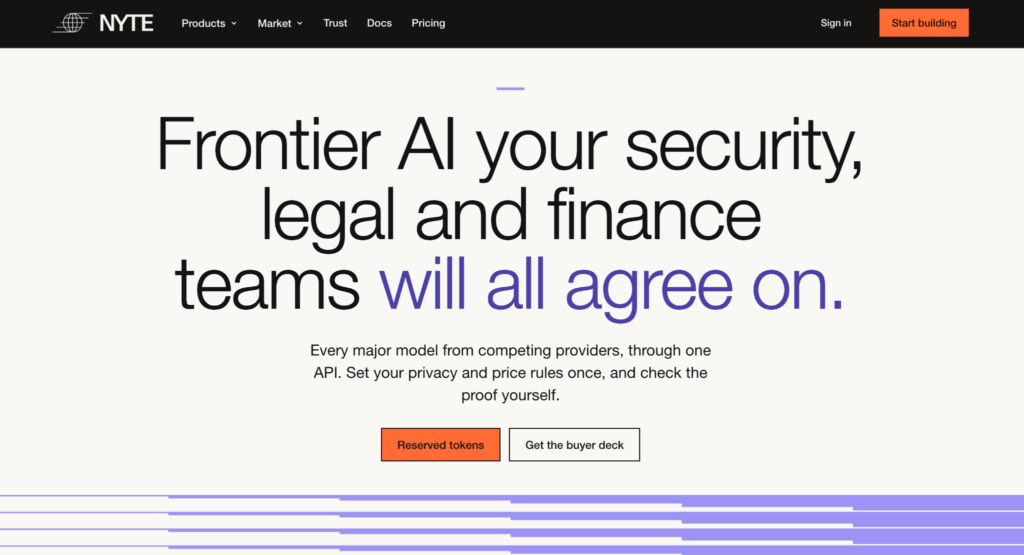
NY Token Exchange is a marketplace for AI usage built on TrustedRouter. Through one OpenAI-compatible API, competing providers, from Google and Amazon to much smaller rivals, serve hundreds of models, from OpenAI and Anthropic to open models such as Kimi.
Where it fits: enterprises that need provable privacy, one contract and competitive pricing.
Compared with OpenRouter: the same one-key access, plus published proof of the gateway software and requests that are blocked rather than downgraded.
2. Portkey
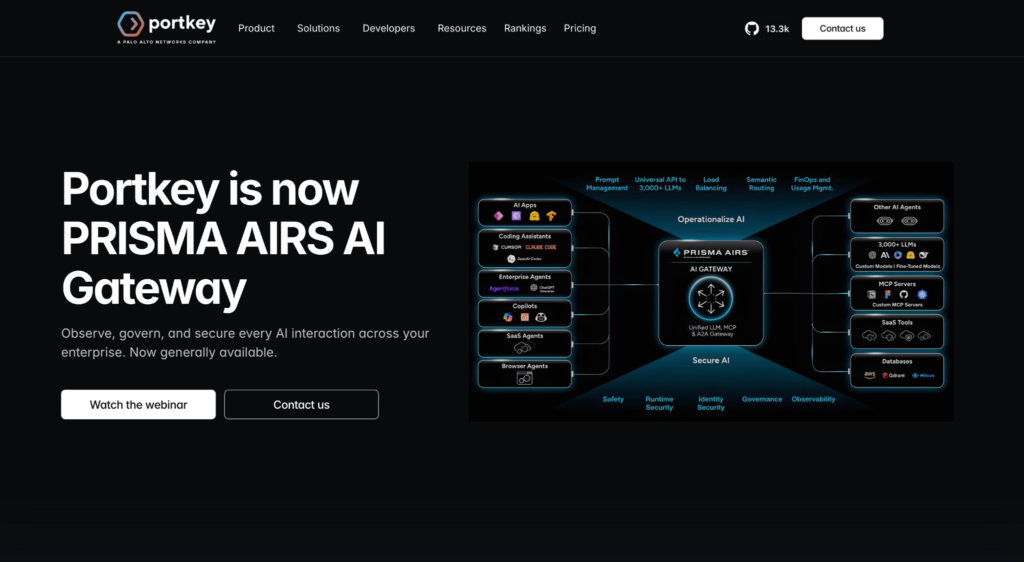
Portkey is a gateway that sits in front of AI providers you contract and pay separately. Palo Alto Networks completed its acquisition on May 29, 2026 and made it part of Prisma AIRS.
Where it fits: security teams standardizing on Palo Alto Networks that want routing and governance over existing provider accounts.
Compared with the exchange: Portkey adds control over contracts you already hold, while the exchange includes the providers, billing and failover in one contract.
3. LiteLLM
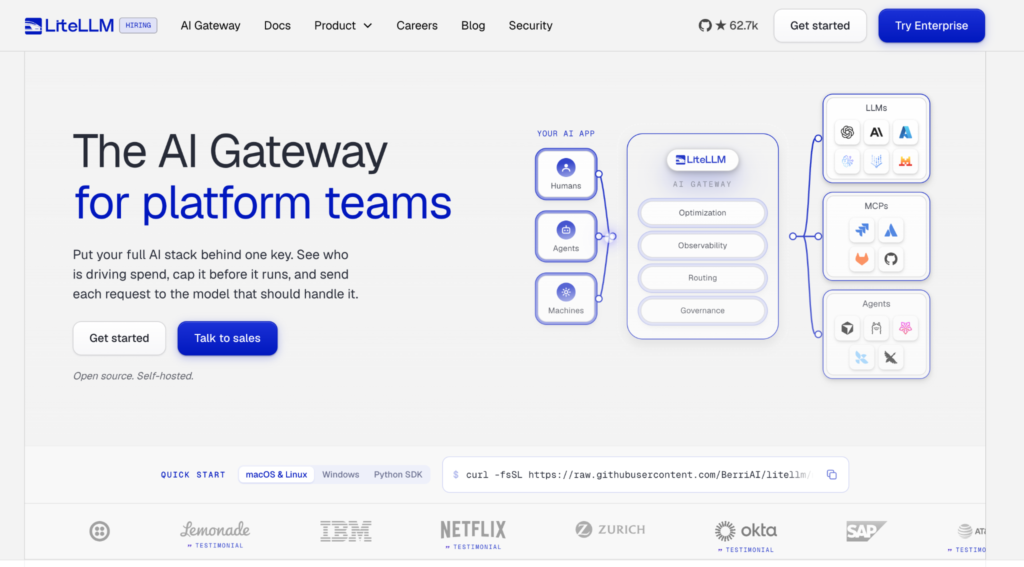
LiteLLM is an open-source, OpenAI-compatible proxy that your team hosts, patches and secures. In March 2026, two of its PyPI releases shipped credential-stealing malware, and a further compromised release on October 21 also reached the official Docker images.
Where it fits: teams with staff to run infrastructure that must keep the gateway inside their network.
Compared with the exchange: the exchange runs the gateway for you and publishes proof of what is running.
4. Amazon Bedrock
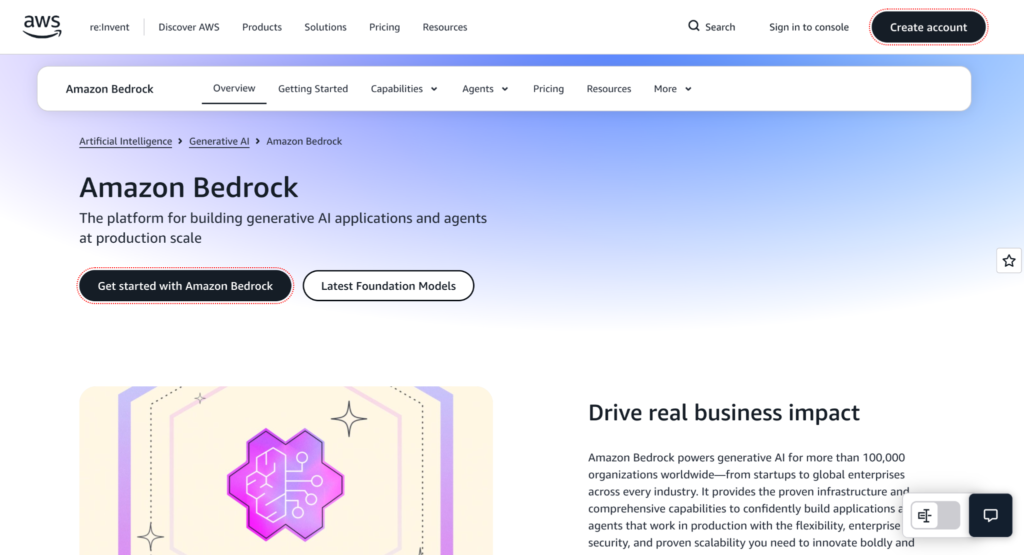
Amazon Bedrock offers models from several developers inside an AWS account, billed at AWS list prices. Processing geography depends on the chosen inference profile, so check it for regulated data.
Where it fits: teams that want AI usage on an existing AWS bill, identity system and committed spend.
Compared with the exchange: Bedrock covers one cloud’s catalog at one cloud’s prices, while the exchange routes across many providers, Bedrock included, so qualifying providers compete for each request.
5. Google Vertex AI
Google Vertex AI, now part of Google’s Gemini Enterprise Agent Platform, offers Gemini and partner models inside a Google Cloud account at Google’s list prices. Check model availability by region before committing a workload.
Where it fits: teams already building on Google Cloud that want one bill and familiar identity controls.
Compared with the exchange: Vertex AI covers one cloud’s catalog, while the exchange routes across many providers, Vertex AI included, under the same privacy and price rules.
Privacy you can prove
Most gateways describe privacy as policy. CoreAI security practices, such as tight access controls and encrypting data used for inference, are easier to enforce when the gateway itself can be checked. The exchange’s gateway runs on locked-down confidential hardware that publishes cryptographic proof, known as an attestation, of the exact software build handling each request. That build does not store prompts or outputs on standard requests. The gateway’s code is published for review under a source-available license, so security teams can compare the attested build with its source.
For the most sensitive work, Confidential routes run on providers’ verified confidential-computing hardware, with zero data retention. These routes are available on open models today.
The rules also fail closed. If no provider meets a company’s privacy requirements, the request is blocked rather than sent somewhere less private, and nothing reaches a provider.
One procurement note: a SOC 2 Type II audit is in progress, so treat the exchange as not yet SOC 2 certified and request the report once it is issued.
Pricing at scale
The exchange adds a 5.5% fee to provider cost on text and embedding usage, with no subscription. By comparison, OpenRouter’s fee lands on credit purchases, Portkey adds gateway plans on top of your provider bills, and the cloud catalogs charge their own list prices.
On the exchange, buyers set their rules once (which providers, what privacy level, how much to spend) and see each option’s price before a request runs. Because providers compete for each request, the same open model often costs less than on a single cloud. TrustedRouter’s published comparison, using list prices on October 19, 2026, found that gpt-oss-120b cost 75% less on its cheapest route than on Amazon Bedrock for a workload of 100 million input and 20 million output tokens a month. Results vary by model, route and privacy level, so price your own workload.
When you compare quotes, match the model version, the input-to-output token mix, cached tokens, processing region and privacy requirements. Otherwise, a lower rate may describe a different service.
Switching and selling capacity
Switching is designed to be light. Existing OpenAI SDK code keeps working after a change to the base URL and API key, and teams with negotiated provider contracts can bring their own keys. Test tool calls, streaming and structured outputs on your own workload before moving production traffic. For teams moving an existing OpenAI setup, the planning steps of any ChatGPT enterprise integration, from clear objectives to API and hosting choices, still apply.
The exchange is also two-sided. GPU operators can apply to sell inference under their own brand, using free, open-source serving software. Their routes go live after passing conformance checks, and confidential routes need independent verification as well.
Which alternative fits your team?
You need provable privacy, one contract and competitive prices. Start with the hosted token exchange, which offers a 30-day pilot on your own tasks.
You are standardizing on Palo Alto Networks. Portkey fits an existing security stack, as long as you are ready to manage each provider contract.
You must keep the gateway inside your network. LiteLLM works if you have the staff for hosting, patching and supply-chain controls.
You have committed cloud spend. Bedrock or Vertex AI keeps usage on the bill you already pay, at that cloud’s prices.
Whichever you shortlist, set pass criteria before the pilot: task quality, correct tool calls, response times from your regions, invoice accuracy and a test where the preferred private route is unavailable.
FAQ
Is a token exchange a cryptocurrency exchange?
No. The exchange sells AI usage billed by the token. It does not sell securities or cryptocurrency.
Does “New York” mean data stays in New York?
No. “New York” is the market’s name. Where requests run is set by each buyer’s route rules, which can restrict processing to US-hosted providers.
Is the gateway open source?
No. Its code is source-available, meaning it is published for review but not under an open-source license. The supplier software that GPU operators use is open source.
Is the exchange SOC 2 certified?
Not yet. A SOC 2 Type II audit is in progress, and the exchange should not be described as SOC 2 or HIPAA certified.












Comment