
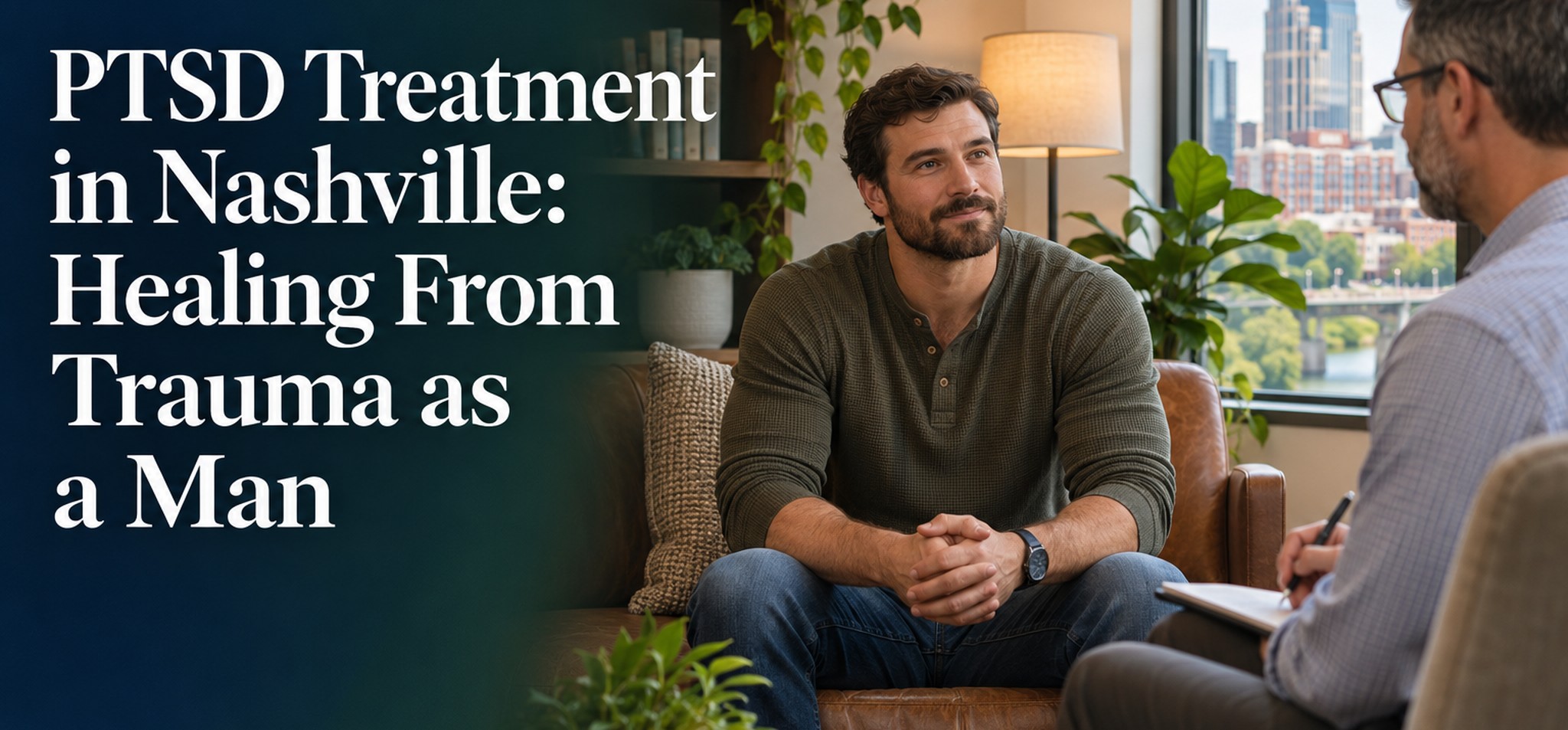
PTSD Treatment in Nashville: Healing From Trauma as a Man

Many men carry trauma for years without naming it. It might come from combat, a first responder career, a violent incident, a serious accident, or a childhood that was not safe. The memories may not be talked about, but they show up anyway: in nightmares, a short temper, heavy drinking, or a constant sense of being on guard.
If you are looking for PTSD treatment Nashville men can trust, it helps to understand how trauma affects men and what effective healing looks like.
What PTSD is
Post-traumatic stress disorder is a mental health condition that can develop after experiencing or witnessing a frightening, dangerous, or life-threatening event. It reflects how the brain's alarm system can stay switched on long after the danger has passed. It is not a sign of weakness, and it is treatable.
How PTSD shows up in men
Men often experience the classic symptoms of PTSD, but they may express them differently:
- Anger, irritability, or explosive outbursts
- Constant alertness, scanning rooms, or sitting with their back to the wall
- Nightmares and trouble sleeping
- Avoiding people, places, or conversations that bring up reminders
- Heavy drinking or substance use to numb feelings or get to sleep
- Emotional numbness or distance from partners and children
- Taking risks, such as reckless driving
Why men often avoid treatment
Many men were taught to handle hardship on their own. Talking about trauma can feel like reopening wounds or showing weakness. In some professions, such as the military, law enforcement, and firefighting, there may be an unspoken expectation to stay tough. Some men also worry that asking for help could affect their career.
The reality is that untreated PTSD often gets worse over time and can affect careers, marriages, and physical health. Treatment helps men regain control.
Common sources of trauma for men
- Military combat or deployment
- First responder and healthcare work
- Physical assault or violence
- Serious car or workplace accidents
- Childhood abuse or neglect
- Sudden loss of a loved one
Evidence-based PTSD treatments
Several therapies have strong research support for treating PTSD:
- Cognitive processing therapy (CPT), which helps men examine and change painful beliefs tied to trauma
- Prolonged exposure therapy, which gradually reduces the power of trauma memories
- Trauma-focused cognitive behavioral therapy
- Dialectical behavior therapy (DBT) skills for intense emotions
Treatment usually starts by building safety and coping skills before working directly with trauma memories. A good therapist moves at a pace that feels manageable.
The value of group support
Many men find group therapy especially helpful for trauma. Hearing other men describe similar experiences can break through isolation and shame. It also gives men a chance to practice trusting others in a safe setting.
When PTSD and other conditions overlap
PTSD often shows up alongside depression, anxiety, and substance use. Treating them together leads to better outcomes than addressing each one separately. Many men find that as trauma symptoms ease, they rely less on alcohol or other substances to cope.
Trauma and relationships
PTSD often strains marriages and family life. A man may pull away emotionally, avoid intimacy, or react with anger to small frustrations. Partners can feel shut out or walk on eggshells. Treatment helps men understand these reactions and rebuild trust and communication at home, sometimes with the help of family sessions.
Choosing a level of care
Weekly therapy can work well for some men. Others need more support, especially if PTSD is affecting work, relationships, or safety. Intensive outpatient programs offer several sessions a week. Partial hospitalization programs offer treatment most of the day while men continue to live at home.
Triony Behavioral Health is an outpatient mental health treatment center in Nashville built specifically for adult men, offering partial hospitalization, intensive outpatient, and outpatient programs with a trauma-informed approach for men living with trauma, PTSD, depression, and anxiety.
How partners and families can help
Families often bear the weight of untreated PTSD. Learning about trauma, being patient with avoidance or irritability, and encouraging treatment without pressure can help. Family members should also take care of their own wellbeing, and may benefit from their own support.
What progress can look like
Healing from PTSD takes time, but many men notice meaningful change within a few months of steady treatment. Nightmares may ease, sleep often improves, and reminders lose some of their power. Men frequently describe feeling calmer with their families, more patient at work, and less dependent on alcohol to get through the night. Setbacks can happen, especially around anniversaries or stressful events, and a good care team helps work through them.
Taking care of the body
Trauma lives in the body as well as the mind. Regular physical activity, consistent sleep routines, and limiting alcohol and caffeine can help calm an overactive stress response and support the work done in therapy.
Questions to ask a PTSD treatment program
- Which trauma-focused therapies do you use?
- Are your clinicians trained in treating PTSD?
- Do you offer programs designed for men?
- Do you treat co-occurring depression or substance use?
- Which levels of care are available?
- Which insurance plans do you accept?
Healing is possible
Trauma can change how a man sees himself and the world, but it does not have to define the rest of his life. With the right support, many men find that memories lose their grip and life feels like their own again. If you or someone you love is in crisis, call or text 988, or call 911.







Comment