
How Generative AI Is Changing the Way Drivers Plan Car Modifications

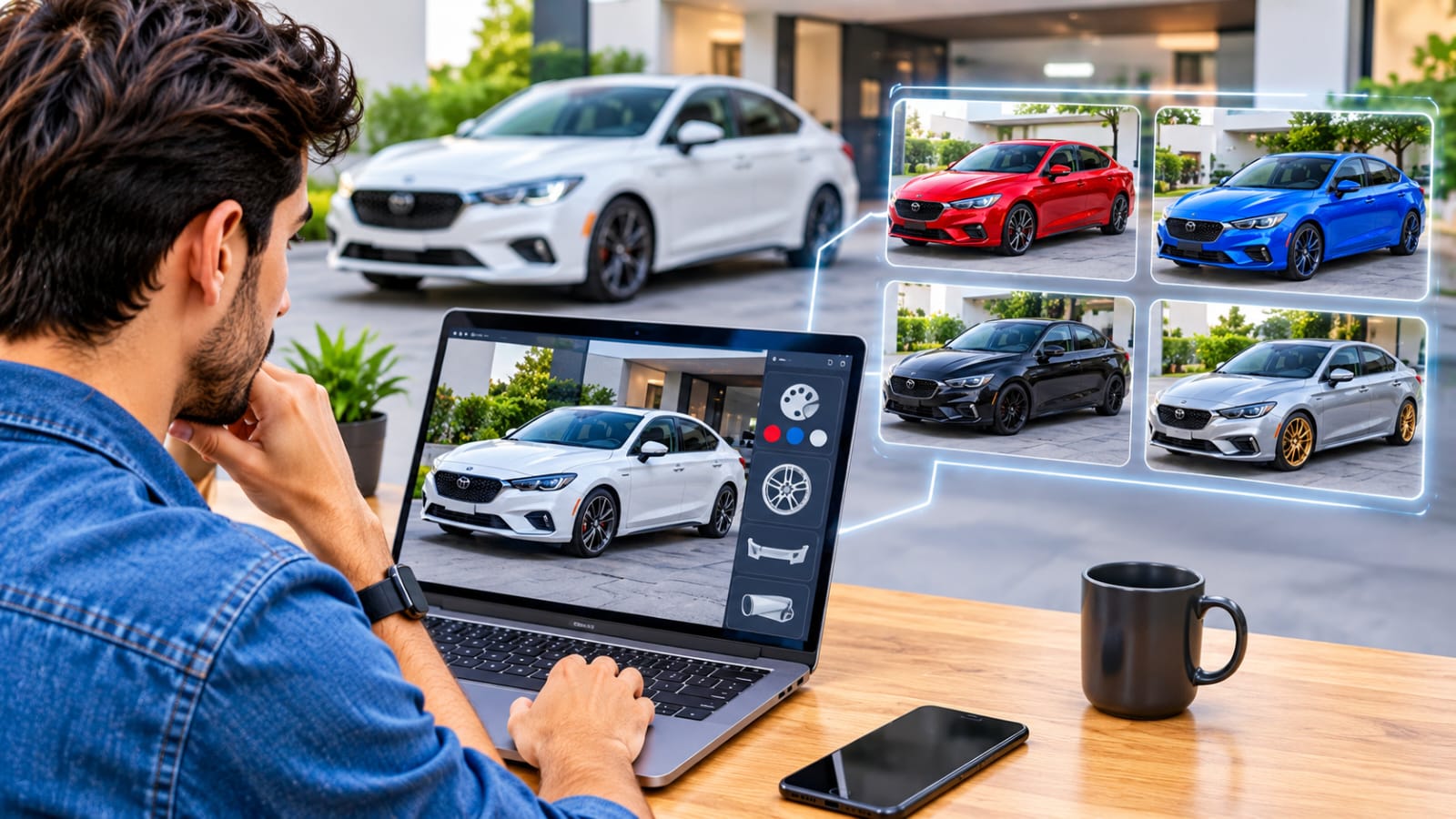
The automotive aftermarket has always had a visualization problem. Drivers spend real money on wheels, paint, wraps and body parts, yet they usually make those decisions from catalog photos of someone else’s car. A wheel looks great on a product page, a wrap color looks great on a swatch, and the combination on the buyer’s own car is only revealed after the parts are fitted. Returns are slow, wraps are expensive to redo, and paint is close to permanent.
Generative AI is starting to close that gap. Image models that can edit a photograph while keeping its lighting, perspective and reflections intact have made it possible to preview modifications on the exact car a person owns. That shift is small on the surface, but it changes how people plan builds, how shops sell, and how the aftermarket thinks about the path from inspiration to purchase.
From stock models to the car in your driveway
The first generation of online car customization tools relied on 3D models. Manufacturer configurators let buyers choose factory colors and trims for new cars, and enthusiast platforms built virtual garages where users could bolt parts onto modeled vehicles. These tools were valuable, but they had two limits. Each car had to be modeled by hand, so coverage was patchy, especially for older or less common vehicles. And the result was always a generic car, not the buyer’s own, with its particular color, existing wheels, ride height and surroundings.
Photo-based AI tools work from a single picture instead. The user uploads a photo of their car, describes or selects the change they want, and the model generates a new version of that same photo. Because the system never needs a 3D model of the vehicle, it works on almost any make, year or body style. That is the practical breakthrough: coverage stops being the bottleneck.
What the technology actually does
Under the hood, these tools combine several steps that used to require a skilled retoucher:
- Understanding the scene. The model has to recognize which pixels belong to the body, the glass, the tires and the background, so that a color change does not bleed into the windows or the road.
- Editing with constraints. When a user asks for new wheels, the model must keep the car’s angle and the position of the wheel arches consistent, otherwise the result looks pasted on.
- Preserving light. Paint and wrap previews are only useful if reflections, shadows and highlights behave the way they would on a real surface. Matte, satin and gloss finishes react to light very differently, and good models reproduce that.
The output is not a fitment calculation. It does not know whether a given offset clears a brake caliper. What it offers is a fast, realistic answer to a different question: will I like how this looks on my car?
Why this matters for buyers
For individual drivers, the benefit is mostly about avoiding regret. Modifications tend to be bought one at a time, so a build is the sum of separate decisions that were never seen together. Previewing a full combination, such as a satin wrap with bronze wheels and a front lip, before ordering any of it, helps people spend money in the right order and skip parts they would not have liked.
It also lowers the barrier for people who are new to modifying. A first-time buyer may not know whether a car looks better lowered or with a larger wheel diameter. Seeing the options side by side, on their own car, turns abstract specs into something easy to judge.
Why this matters for shops and dealers
Wrap installers, wheel retailers and tuning shops face the same visualization gap from the other side. Customers hesitate because they cannot picture the result, and staff spend time producing mockups by hand. A preview generated from the customer’s own photo can shorten that conversation considerably. It sets clearer expectations and reduces the risk of a finished job that does not match what the customer imagined.
Dealerships are using similar techniques for a different purpose. Instead of changing the car, they change the background, replacing cluttered lot photos with consistent, clean scenes across hundreds of listings. The underlying idea is the same: editing real vehicle photos quickly and convincingly, at a scale that manual retouching could never support.
Where tools like MODCAR fit in
A growing group of browser-based services now packages this capability for everyday drivers. MODCAR, for example, lets users upload a photo of their own car and preview paint colors, wheels, body kits, spoilers and wraps on it in roughly half a minute, without installing software. Tools in this category are typically designed as a planning step rather than a store: the goal is to help someone decide what they want before they talk to an installer or place an order.
The limits worth keeping in mind
AI previews are persuasive, which is exactly why they should be used carefully. A few limits matter:
- They are not engineering tools. Wheel fitment, suspension geometry and aerodynamic effects still need real specifications and professional advice.
- Source photos matter. A distorted wide-angle shot or harsh midday sun will produce a less reliable preview than a well-lit three-quarter photo.
- Colors shift between screens. A preview is a guide, but anyone choosing a wrap or paint should still look at a physical sample in daylight.
- Regulations vary. Lighting colors, window tint and ride height are regulated differently across regions, and a preview cannot tell you what is legal where you live.
Used as a visual check alongside proper specs, previews are useful. Treated as a guarantee, they can mislead.
What comes next
The direction of travel is clear. Image models keep getting better at preserving detail, and the cost of generating a preview keeps falling. It is reasonable to expect previews to become a normal part of buying wheels, wraps and body parts online, much as virtual try-on has become common for glasses and furniture. Retailers may start linking products directly to previews of a customer’s car, and shops may use generated images as part of their quotes.
For drivers, the change is simple but meaningful: the first time you see your car with new wheels or a new color no longer has to be the day the work is finished. Seeing the result first means fewer expensive surprises, more confident decisions, and builds that come together the way their owners imagined.






Comment