
How AI Is Helping Graduates Turn Academic Skills Into Professional Opportunities

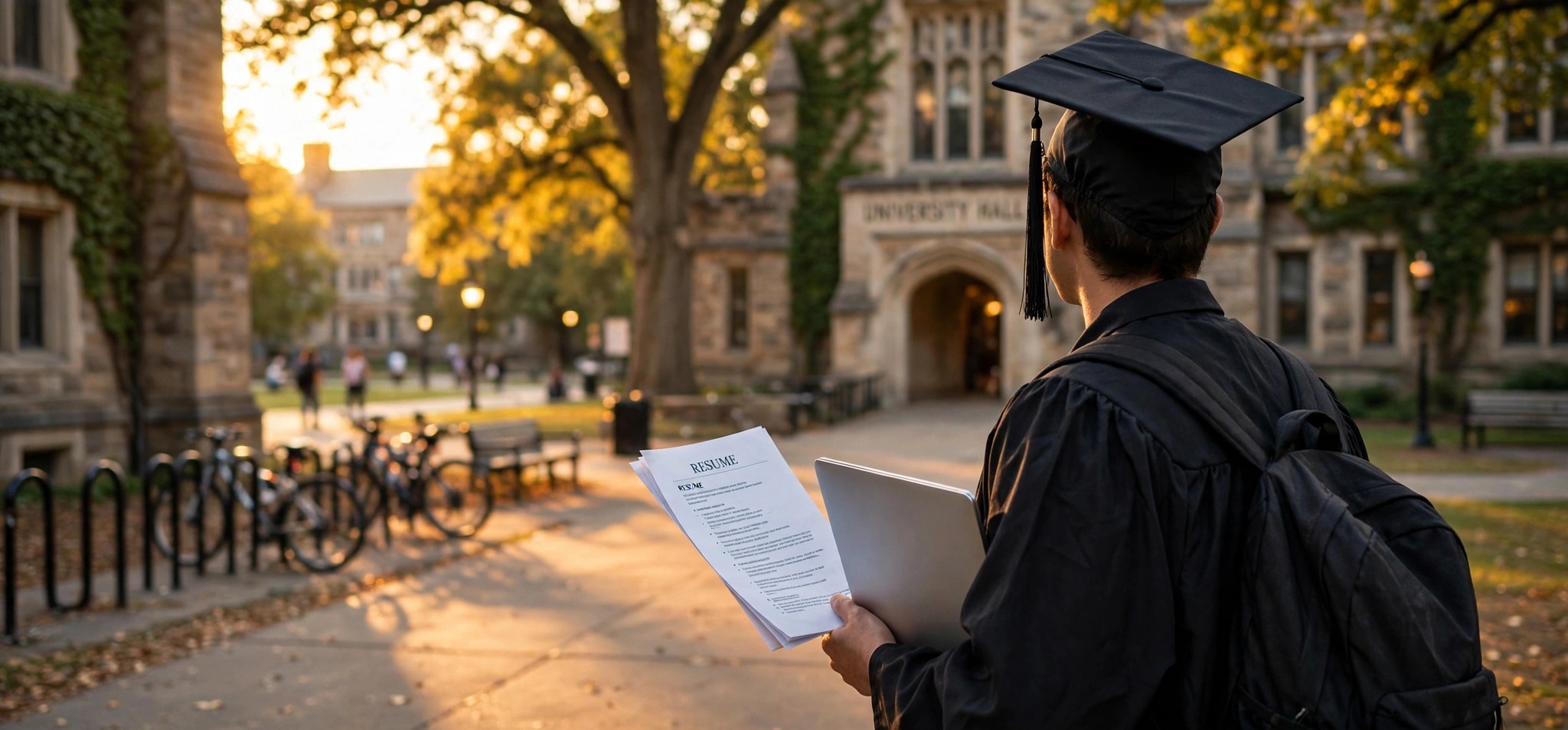
Graduating from college is an exciting milestone, but it also brings a question that many students struggle to answer: How do you convince an employer that your academic experience has prepared you for a real job?
Consider a computer science graduate who has built several applications, worked on group projects, and completed a challenging final-year assignment. On paper, they have plenty of experience. Yet when it comes to applying for their first job, they may struggle to describe what they have accomplished in a way that makes sense to a hiring manager.
This is a common problem across different fields of study. Students spend years developing technical knowledge, researching complex topics, and solving problems, but they rarely receive much guidance on how to communicate those abilities in a professional setting.
Artificial intelligence is beginning to make that transition easier. From organizing academic achievements to preparing job applications and presenting project work, AI tools are giving graduates practical ways to make better use of the skills they already have.
The real advantage is not that AI can make someone appear more qualified. It is that it can help them communicate their existing qualifications more clearly.
Why Academic Achievements Don’t Always Translate Into Job Opportunities
Universities and employers often evaluate abilities differently.
In college, success might mean receiving a high grade on a research paper, completing an assignment, or contributing to a group project. Employers, however, are usually interested in the practical value behind those experiences.
A marketing graduate might understand consumer behavior and campaign planning, but a recruiter wants to know whether they can apply that knowledge to a business problem. Similarly, an engineering graduate may have completed an impressive technical project but struggle to explain its purpose to someone without an engineering background.
The issue is not necessarily a lack of skills. It is often a gap between academic language and workplace expectations.
This is where graduates can benefit from looking at their education through a different lens.
Instead of simply listing subjects they studied, they can identify the problems they solved, the decisions they made, and the outcomes they achieved.
AI can support this process by helping students organize scattered information, recognize transferable skills, and express their experience in terms that employers understand.
Turning Classroom Experience Into Evidence of Professional Skills
Many graduates underestimate how much relevant experience they already possess.
A university project may involve planning schedules, analyzing data, coordinating with teammates, meeting deadlines, and presenting findings. These are all activities that appear in professional workplaces.
The challenge is identifying them and explaining why they matter.
For example, a student who helped organize a college festival might initially describe the experience as “participated in event management.”
A more useful explanation would highlight what they actually did, such as coordinating volunteers, managing registrations, resolving scheduling conflicts, or working within a budget.
Those details provide evidence of organizational and communication skills.
AI writing assistants can help graduates explore different ways to describe such experiences. By providing a few notes about a project, students can develop clearer summaries of their responsibilities and achievements.
However, the final description should always reflect their genuine contribution. AI can improve the wording, but it should not invent accomplishments or exaggerate results.
A useful starting point is to create a personal inventory of academic projects, internships, volunteering activities, certifications, and extracurricular responsibilities. This gives graduates a collection of real examples they can draw upon when applying for different positions.
Creating a Resume That Connects Education With Employer Expectations
Writing a first professional resume can be surprisingly difficult.
Experienced professionals can usually draw on previous job titles and workplace accomplishments. Recent graduates often have to build their applications around academic work, technical knowledge, internships, and transferable skills.
A resume that simply lists qualifications may not explain why a candidate is suitable for a particular position.
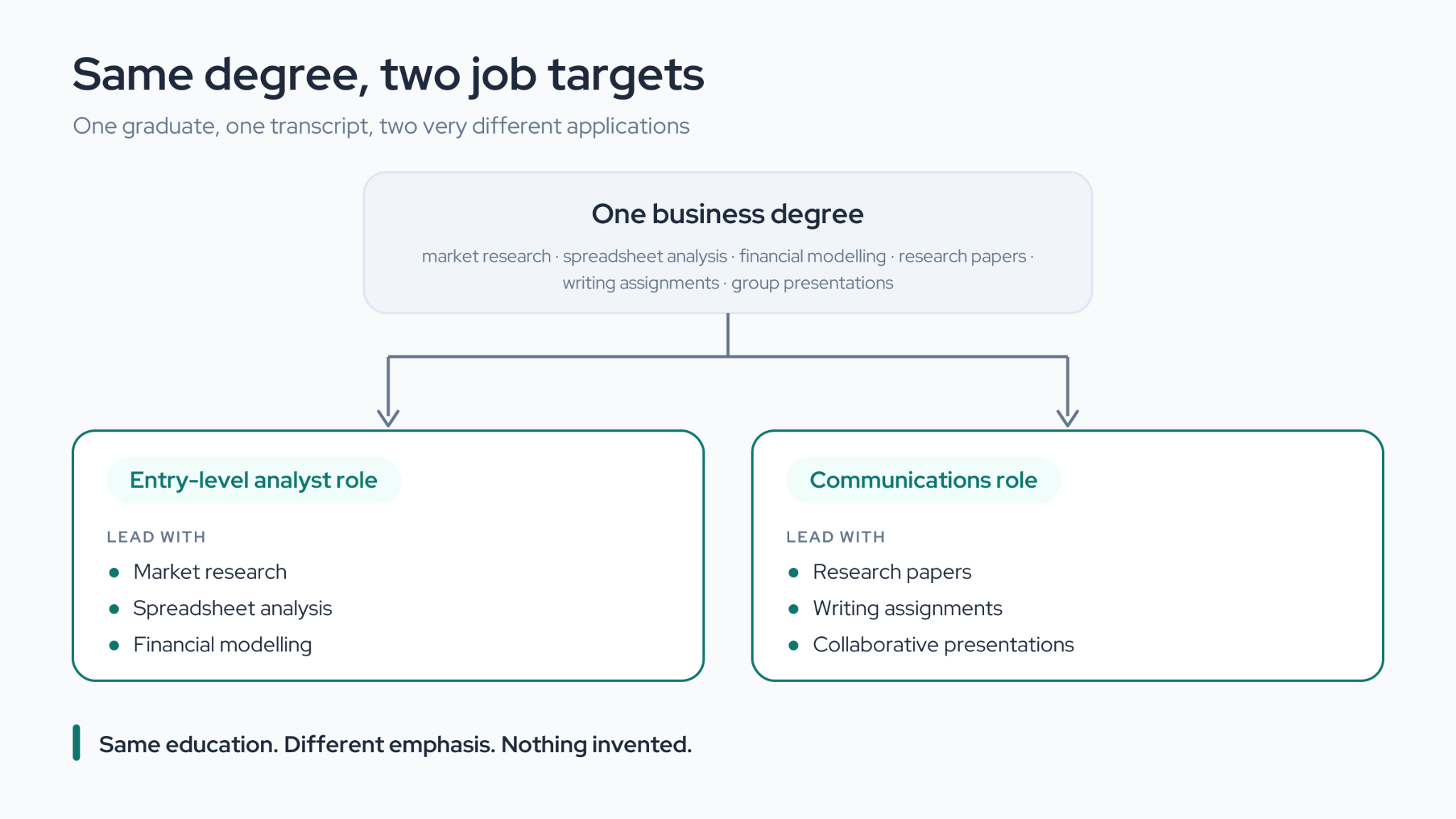
For instance, a business graduate applying for an entry-level analyst role could highlight coursework involving market research, spreadsheet analysis, and financial modeling. Someone applying for a communications position might instead emphasize research papers, writing assignments, and collaborative presentations.
The same educational background can support different career paths, depending on how the relevant experience is presented.
An AI resume builder can help graduates organize their education, skills, projects, and practical experience into a structured document. It can also make the initial drafting process less intimidating for students who are unsure how to describe their achievements professionally.
Still, creating a good resume requires more than choosing a template or generating polished sentences.
Graduates should review every section carefully, remove irrelevant information, and make sure their strongest qualifications are easy to identify. Where possible, they should include specific tools, methods, responsibilities, and measurable results.
A simple description of what a candidate accomplished is often more convincing than a paragraph filled with impressive-sounding language.
Presenting Academic Projects as Professional Work
Some abilities are difficult to demonstrate through a resume alone.
A design graduate might have created a detailed branding project. A data science student may have developed a predictive model. A business student could have conducted market research and proposed a strategy for a hypothetical company.
Each project offers evidence of practical thinking, but its value becomes clearer when the candidate can explain the work effectively.
This is why project portfolios, case studies, and presentations can play an important role in early career development.
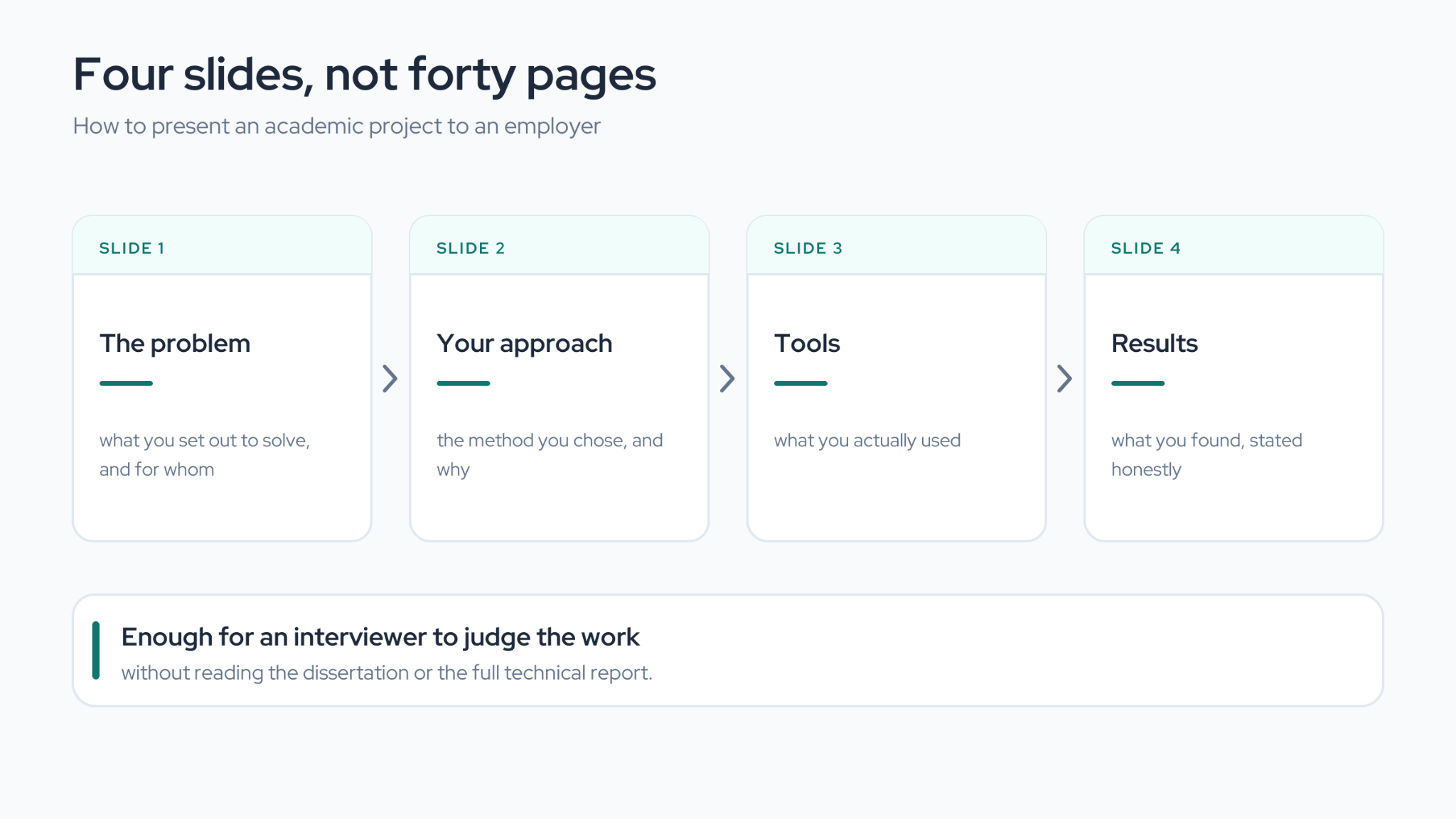
Instead of showing an employer a lengthy academic report, graduates can prepare a shorter explanation that covers the problem, their approach, the tools they used, and the results.
An AI presentation maker can help turn research notes, project summaries, and technical information into an organized slide deck. This is particularly useful when preparing for portfolio reviews, graduate recruitment assessments, or interviews that require candidates to explain previous work.
For example, someone applying for a junior data analyst position could prepare a brief presentation describing a university project that involved cleaning a dataset, identifying patterns, and communicating findings.
The slides do not need elaborate designs. A clear chart, a short explanation of the methodology, and an honest discussion of the results may be enough to demonstrate the candidate’s thinking.
The aim is to help interviewers understand the quality of the work without requiring them to read an entire dissertation or technical report.
Graduates who can explain complicated ideas simply often make their abilities easier for others to evaluate.
Building a Professional Identity Beyond the Resume
A resume is only one part of how a graduate presents themselves to potential employers.
Recruiters may also look at professional profiles, project repositories, writing samples, or online portfolios to understand a candidate’s interests and capabilities.
For students entering technology-related fields, a GitHub repository containing well-documented projects can provide useful evidence of practical experience.
Aspiring writers and marketers might benefit from publishing articles, campaign concepts, or research-based content. Design students can demonstrate their work through portfolios that explain the decisions behind their projects.
These materials help connect academic knowledge with practical application.
AI tools can assist graduates in writing project descriptions, refining portfolio introductions, and making technical explanations more accessible.
However, there is a difference between using AI to communicate work and relying on AI to create the appearance of work that was never completed.
An online portfolio should represent genuine skills and original contributions. A smaller collection of well-explained projects is usually more valuable than a large collection of generic, poorly understood examples.
Graduates should also keep their professional information consistent across platforms. Job titles, project details, dates, and skills should tell the same story wherever they appear.
Preparing for Interviews With Greater Confidence
Getting invited to an interview is encouraging, but discussing academic experience in a professional conversation can feel unfamiliar.
Graduates may know their subject well yet find it difficult to answer questions such as, “Tell me about a challenge you faced,” or “Describe a time you worked with others to solve a problem.”
AI-powered interview preparation tools can provide a convenient way to practice these conversations.
Students can explore common interview questions, receive suggestions for structuring their answers, and identify areas where their explanations lack detail.
One useful approach is to organize responses around four elements: the situation, the task, the action taken, and the result.
Consider a graduate who worked on a group software project. Instead of saying the team encountered difficulties, they could explain the specific problem, how responsibilities were divided, what they personally contributed, and what happened afterward.
This turns a vague statement about teamwork into a credible example of problem-solving.
Practicing with AI can help candidates recognize which experiences are worth discussing. It should not, however, encourage them to memorize artificial responses.
Interviewers may ask follow-up questions that require a deeper understanding of the situation. Graduates are better prepared when they can speak naturally about work they genuinely completed.
Understanding What AI Cannot Replace
While AI can make career preparation more manageable, it cannot replace the qualities that ultimately make a graduate valuable to an employer.
A well-written resume does not compensate for missing technical knowledge. An attractive presentation cannot rescue a project the candidate does not understand. And a polished interview answer means little if the person cannot explain their reasoning when questioned.
Employers still need people who can think critically, work with others, learn unfamiliar systems, and respond to unexpected problems.
These abilities develop through experience rather than automated content generation.
Graduates should therefore treat AI as a supporting resource, not a substitute for learning.
They can use it to clarify confusing ideas, improve the structure of their written work, identify gaps in their explanations, and prepare for unfamiliar professional situations.
They should also evaluate AI-generated suggestions carefully. Career advice can be generic, technical descriptions can contain errors, and generated content may overlook the requirements of a particular role.
The ability to question and improve AI output is becoming a useful skill in its own right.
Taking the First Step From Education to Employment
The transition from university to the workplace rarely happens in a straight line.
Some graduates secure employment quickly, while others spend months exploring opportunities, improving their portfolios, or reconsidering which roles suit their abilities.
What matters is making steady progress and learning to communicate the value of previous experiences.
A practical approach is to begin with one academic project, identify the professional skills it demonstrates, and create a clear explanation of the work. From there, graduates can improve their applications, prepare supporting materials, and practice discussing their experiences with confidence.
Over time, these small improvements help them develop a stronger professional identity.
Artificial intelligence can make several parts of this process easier, particularly the tasks that involve organizing information and communicating ideas. But the experiences, decisions, and abilities behind those materials must still come from the individual.
For graduates entering an increasingly competitive job market, that distinction is important. Technology can help them present their potential, but it is their knowledge, curiosity, and willingness to learn that will ultimately shape their careers.






Comment