
Icertis Alternatives That are Quicker to Implement: 13 Options by Team Size

The Icertis alternatives that are quicker to implement in 2026 are Concord and ContractSafe for small teams; FlowForma Contract, Juro, SpotDraft, HyperStart CLM, LinkSquares, and Oneflow for mid-size teams; and Ironclad, Agiloft, Docusign CLM, Sirion, and Conga CLM for enterprises. Vendor timelines measure different milestones, so compare how long each takes to put your first real contract live.
Your supplier agreements are sitting in email threads, a facilities contract hits its renewal notice date next month, and the auditor wants to know who approved the last three amendments. Meanwhile, the Icertis program on the roadmap is still being scoped. The question that matters is how soon your first real contract moves from request to signature. That depends less on a vendor’s headline figure than on your team’s size and on who owns the contract process: procurement, legal, or sales.
Every vendor claim below was checked on the vendor’s own site in November 2026. The list opens with procurement-led teams, whose contracts start as purchase requests or tenders, then moves through legal-led, sales-led, and small teams to enterprise platforms.
Key Takeaways
- Icertis reported a 70% cut in implementation timelines for 2025 but gave no baseline, so the headline can’t be turned into a plan.
- Vendor setup figures measure different milestones, from the first day of configuration to company-wide adoption, and only one of them is the date your contracts go live.
- Procurement-led teams can run purchases, tenders and contracts in one system with FlowForma Contract; legal-led teams can start with Juro or SpotDraft.
- Small teams that mostly need a searchable repository, reminders and simple approvals can start with Concord or ContractSafe.
- A 30-day pilot on one contract type is the fastest way to test any vendor’s claim before you sign.
| Platform | Team-size group | Best for | Vendor-stated setup time (milestone it measures) | Pricing model (as of November 2026) |
| FlowForma Contract | Mid-size | Procurement-led teams running purchases, tenders and contracts in one system | Business-critical processes up and running within a couple of hours (building one process) | Pricing on request |
| Juro | Mid-size | Legal teams whose colleagues create routine contracts on their own | Activation target of 30 days or less (first contracts sent) | Pricing on request, based on contract volume and integrations |
| SpotDraft | Mid-size | In-house legal teams that want the vendor to do setup and migration | Setup in Week 1 to go-live in Week 6 (published implementation plan) | Pricing on request, based on contract volume; implementation included |
| HyperStart CLM | Mid-size | Teams moving a legacy repository into a CLM quickly | 4-week phased rollout | Pricing on request, based on users or contract volume; implementation included |
| LinkSquares | Mid-size | Legal and finance teams that want a consultant-led rollout | Most customers fully up and running within 90 days | Pricing on request, based on users, contract volume and features |
| Oneflow | Mid-size | Sales teams that create contracts from CRM records | Contracts usually sent within a week of creating the account | Published Business plan, billed annually, 5 users included; Enterprise on custom quote |
| Concord | Small | Small teams that want published prices | 85% of customers finish core configuration on day one; full adoption in 2 to 3 weeks | Published plans, paid annually, 5 users included |
| ContractSafe | Small | Teams moving from shared drives to a searchable repository | Not published (checked November 2026) | Published prices by contract volume band, paid monthly or prepaid annually |
| Ironclad | Enterprise | Legal operations teams with conditional approval logic | Not published (checked November 2026) | Pricing on request, based on products, users and workflows |
| Agiloft | Enterprise | Enterprises that want to configure their own data model and workflows | Not published (checked November 2026) | Pricing on request |
| Docusign CLM | Enterprise | Enterprises already standardized on Docusign eSignature | Not published (checked November 2026) | Pricing on request |
| Sirion | Enterprise | Large enterprises that need post-signature obligation and performance management | Focused pilots in 4 to 12 weeks, from Sirion’s CLM planning guide (a market benchmark, not a Sirion timeline) | Pricing on request (checked November 2026) |
| Conga CLM | Enterprise | Revenue teams running quote-to-contract in Salesforce or Dynamics | Not published (checked November 2026) | Pricing on request |
The 13 Icertis alternatives compared
Each entry covers what the platform is, who it’s best for, what it does well for a buyer who needs speed, and one limitation, checked on vendor pages in November 2026. The five enterprise platforms trade some speed for depth. Ironclad, Agiloft, and Docusign CLM don’t publish a standard implementation duration, so scope the first workflow tightly; Sirion and Conga suit buyers who need depth more than a fast first release.
1. FlowForma Contract
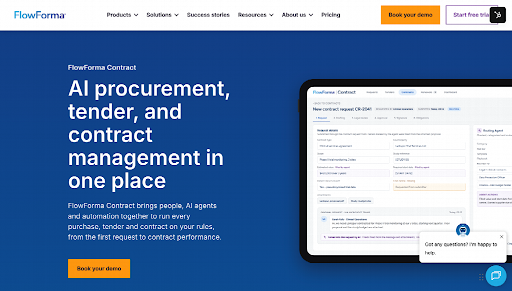
Best for: Procurement-led teams that run purchases, tenders, and contracts in one system.
FlowForma Contract is an AI-native product that brings people, AI agents and automation together to run contracts, procurement and tender management processes. It fits the way you already work and makes it better, with AI agents working inside your rules at every step and every decision on record. It runs purchases, contracts and tenders in one system. An intake agent turns an emailed request into a complete one, routing follows value, category, and delegation of authority, and only clauses that differ from your standard positions reach legal.
Your policy becomes rules your team writes, with every approval and agent action on record. It connects to any system with an API connector, including ERP and finance.
FlowForma says business-critical processes can be up and running within a couple of hours, which describes building one process, not a full rollout. A 30-day free trial with no credit card is available. The tender module serves organizations running tenders, so suppliers writing bids need a bid-writing tool.
2. Juro
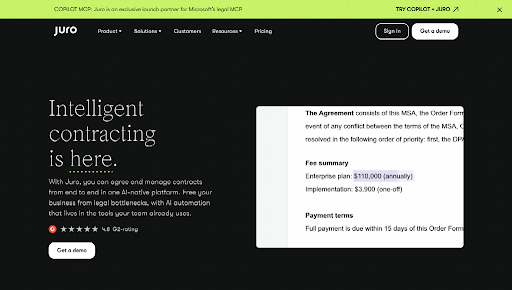
Best for: Legal teams that want sales, HR, and procurement colleagues to create routine contracts on their own.
Contracts in Juro are drafted, negotiated, approved, and signed in one browser-based editor. Juro’s Legal Engineers set up the key templates and integrations, and once a customer is activated its admins can change or create workflows in the platform without code.
Plans are priced on contract volume and integration complexity, which suits companies where many people touch a few contracts each.
The cost line to watch is integrations. Juro’s pricing page says its deeper integrations, such as Salesforce, HubSpot, and Workday, cost extra. If your contracts start in a CRM or HR system, put those connectors in the first quote rather than finding them after signature.
3. SpotDraft
Best for: In-house legal teams that want the vendor to handle setup and migration.
SpotDraft covers templates, workflows, a contract editor, e-signatures, a repository, and reporting, and its pricing page says in-house implementation is always included: SpotDraft’s team sets up workflows and integrations and migrates legacy contracts with no extra fees. That removes the most common delay in a CLM project, which is your own team finding time to build.
Plans are priced on contract volume (checked November 2026), so the number to watch is your peak month, not your headcount. Get the volume basis written into the order form, especially if your contracting is seasonal.
4. HyperStart CLM
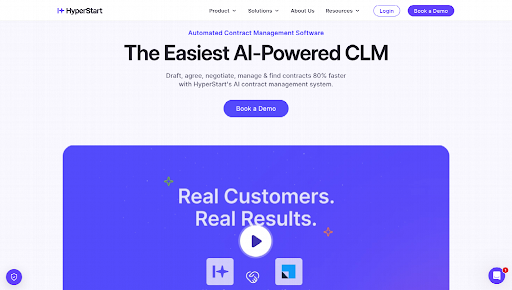
Best for: Mid-market teams that want a legacy contract repository moved into a CLM quickly.
HyperStart CLM’s pricing page promises implementation included in every plan: workflows, integrations, and contract migration with no extra fees, plus a named success contact from week one.
It prices on users or contract volume, never both at once, which keeps the quote easy to model. The same page cites a 4-week phased rollout.
The free trial lasts 7 days. That’s long enough to see the repository and its AI features, and not long enough to watch a contract move through procurement, legal, and finance. Treat the trial as a product tour and ask for a scoped pilot on your own contracts before you sign.
5. LinkSquares
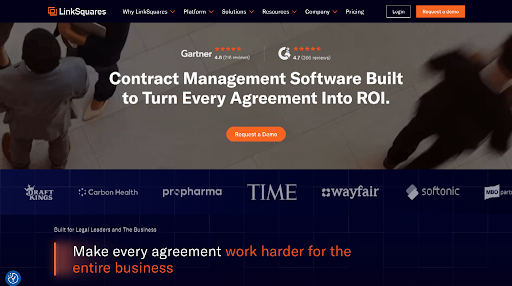
Best for: Legal and finance teams that want an in-house consultant to run the rollout.
LinkSquares positions its platform as one place for an in-house legal team’s contract work, and its onboarding is run by a dedicated in-house Implementation Consultant. The published plan runs in three blocks: building the foundation in weeks 1 to 4, refining in weeks 5 to 8, and adoption and go-live in weeks 9 to 12.
LinkSquares prices on users, contract volume, and features, and its pricing page says it’s upfront about implementation and onboarding costs.
The structure is the limitation. The plan is built around a company-wide go-live, so a first approval workflow inside 30 days is not what it’s designed to deliver. Choose LinkSquares when a complete, consultant-run rollout matters more than early speed on one contract type.
6. Oneflow
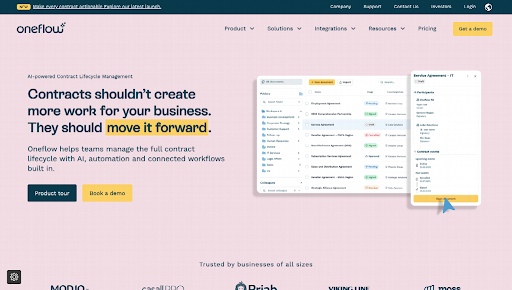
Best for: Sales teams that create and sign contracts from CRM records.
Oneflow runs contracts as web documents that are created, negotiated, and e-signed in the browser, with integrations for HubSpot, Salesforce, Microsoft Dynamics 365, and Pipedrive. Its onboarding page says customers usually start sending contracts within a week of creating an account, and a free trial needs no credit card.
Pricing is published: the Business plan is billed annually with 5 users included and adds approvals before signing and lifecycle rules with automated reminders, while Enterprise is quoted.
The limitation is in the tiers: single sign-on, SCIM, shared templates, and the account audit log sit on Enterprise, and eID signatures and AI Review are paid add-ons. A multi-entity team should price Enterprise from the start.
7. Concord
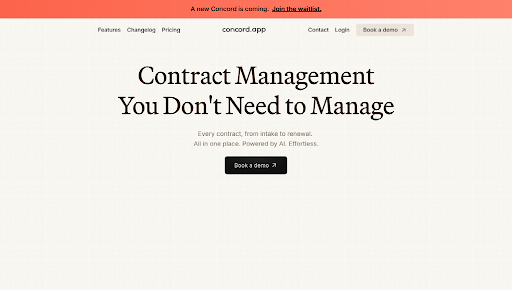
Best for: Small teams that want published prices and a fast first setup.
Concord is a contract management platform with drafting, negotiation, e-signature, a searchable repository, and deadline reminders. E-signatures, documents, and free viewer and guest seats are included in every plan, along with AI Copilot and data extraction.
The limitation sits in the plan table. Intake forms, approval workflows, and the Salesforce, HubSpot, Google Drive, and Box integrations start on the Business plan, and the clause library, subsidiary management and Open API sit on Enterprise.
A team that needs requests routed by value is a Business customer at least, so price that tier, not the entry plan.
8. ContractSafe
Best for: Small legal or operations teams moving contracts out of shared drives and into a searchable repository.
ContractSafe is a contract management platform built around an AI-organized repository with search, date management, and user permissions. Every plan includes all users, a free trial, onboarding and training, data and document migration, and a dedicated customer success manager. That combination removes two common reasons a small rollout stalls: per-seat arguments and the migration nobody has time for.
Workflow is where you move up the tiers. Approval workflows, e-signature, redlining, and the Docusign integration start on the Finalize plan, while templates, intake forms, the Salesforce integration and APIs sit on Maximize. ContractSafe doesn’t publish a setup duration, so ask for one in writing.
9. Ironclad
Best for: Enterprise legal operations teams with complex, conditional approval logic.
Ironclad sells CLM, an AI assistant, and eSignature, and its no-code Workflow Designer builds approval routing with conditional logic for contract variations. Implementation is sold in packages, from a Self-Start route your own team runs to full-service deployments, so you can buy as much help as the configuration needs.
Ironclad doesn’t publish a standard implementation duration on its pricing or implementation pages. Its pricing FAQ also says some integrations are included and others are add-ons.
Get the integration list priced before you compare Ironclad’s quote with a lighter tool’s, because that line is where enterprise CLM quotes most often grow.
10. Agiloft

Best for: Enterprises that want to configure their own contract data model and workflows.
Configuration is the core of Agiloft’s enterprise CLM: workflows, approvals, data models, and automations can be changed without writing code or raising a support ticket. Agiloft also markets solutions for procurement teams as well as legal.
The flexibility is also the limitation: when the data model and workflows are yours to configure, so is the design work before go-live. Agiloft prices on request and doesn’t publish an implementation duration.
11. Docusign CLM
Best for: Enterprises already standardized on Docusign eSignature.
Docusign CLM is the contract lifecycle product within Docusign’s Intelligent Agreement Management platform. It generates agreements from dynamic templates populated with data from systems such as Salesforce, applies conditional rules for review of non-standard terms, and lets legal maintain a library of pre-approved clauses. Docusign lists interoperability with Salesforce and SAP Ariba, which matters if your contracts start in either.
Pricing runs through Docusign’s enterprise sales team, and the CLM product page doesn’t state an implementation duration. If speed is the reason you’re leaving Icertis, ask Docusign to scope the first workflow and its go-live date in the quote rather than accepting a program estimate.
12. Sirion
Best for: Large enterprises that need post-signature obligation and performance management.
Sirion is an enterprise CLM covering contract storage, creation, and post-signature management of performance, governance, and risk. Its AgentOS lets teams design and orchestrate custom AI agents, and its SAP Ariba integration runs both ways: sourcing data flows into Sirion, and executed terms return to Ariba for purchasing and invoice validation.
Sirion’s CLM planning guide is a market benchmark, not a timeline for its own platform. It treats a focused pilot of 4 to 12 weeks as the fast route and full enterprise integration as a longer program, which is the limitation for a buyer leaving Icertis over speed. Pricing is on request, so scope a pilot before committing to the full rollout.
13. Conga CLM
Best for: Revenue teams that want contracts on the same record as quotes in Salesforce or Dynamics.
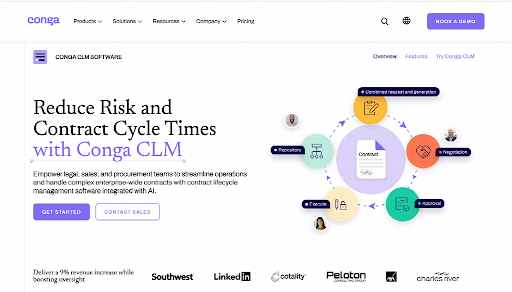
Conga CLM lets teams manage contracts without leaving Office, Dynamics, or Salesforce, compares contract language with a negotiation playbook, and tracks obligations with customers and suppliers.
It connects to CRM, ERP, and procure-to-pay systems for both buy-side and sell-side contracts, and its AI gives legal, sales, and procurement quick summaries and answers to contract questions.
The limitation for a speed-driven buyer is that Conga prices on request and doesn’t publish an implementation duration, so get the first workflow scoped and dated in the quote.
Why do buyers look for Icertis alternatives that are quicker to implement?
Icertis is built for enterprise contract intelligence across many entities, and its 2025 results claim a 70% cut in implementation timelines. Buyers still look elsewhere when they need one workflow live this quarter, or when the gap is approvals and a repository, not obligation tracking at scale.
What Icertis does well
Icertis’s March 10, 2026 results release reported a record number of go-lives in 2025 alongside that 70% reduction. The company credits the faster timelines to preconfigured solutions with embedded setup and closer work with its systems integrator partners.
The same release names Icertis the only SAP Solution Extension for contracting with native SAP Ariba integration, and describes SAP Ariba Contract Intelligence by Icertis as speeding deployment with preconfigured integrations. If you run SAP Ariba, that route deserves a serious look.
Why buyers still shortlist alternatives
A percentage with no starting point doesn’t help you plan: the same cut on a 9-month project and on an 18-month one lands in different quarters. Icertis’s release states no standard implementation duration, so treat any month range attributed to Icertis as an estimate and ask Icertis for a dated plan on your own scope.
The more common reason to look elsewhere is scope. Many teams that open an Icertis evaluation have a narrower problem: supplier agreements in inboxes, approvals nobody can trace, and renewals found after the notice date. For procurement teams, the problem often starts before the contract exists, in the purchase request that should have created it.
A platform built for portfolio-wide contract intelligence can be more than that problem needs before the first contract moves.
What does “quicker to implement” mean when vendors quote go-live times?
“Quicker to implement” has no standard meaning. One vendor counts the day core settings are done, another the first contract sent, another full adoption. Concord reports that 85% of customers finish core configuration on day one, while LinkSquares plans a 12-week rollout, so compare figures only when they measure the same milestone.
Look at what each figure actually counts. Concord’s September 2025 data separates core configuration on day one from full organizational adoption in 2 to 3 weeks.
Juro’s implementation guide counts a customer as activated the moment it starts sending contracts through Juro, targets 30 days or less, and reported an 18-day average implementation time on that page (checked November 2026).
SpotDraft’s published implementation plan runs from setup in Week 1 to go-live in Week 6, with migrated contracts, templates, approvals and integrations ready by then. LinkSquares says most customers are fully up and running within 90 days and some in as little as six weeks.
Those are four different finish lines: configuration, the first contract sent, a go-live that includes migration and integrations, and a company-wide launch. FlowForma Contract’s couple of hours adds a fifth: the time to build one process, before any contract runs through it. Put them in one column without labels and SpotDraft looks slow, when it’s quoting more work.
When a vendor gives you a number, ask which milestone it describes and what your team has to deliver for the date to hold. A vendor that can’t answer both hasn’t given you a timeline yet.
Which Icertis alternatives fit small, mid-size, and enterprise teams?
Small teams with one contract owner need a repository, reminders and simple approvals, which Concord and ContractSafe cover. Mid-size teams with legal or procurement functions need multi-step approvals. Enterprises with several entities and ERP-driven contracting need depth, where Ironclad, Agiloft, Docusign CLM, Sirion and Conga CLM compete most directly with Icertis.
Team size is a proxy for something more useful: how many people touch a contract before it’s signed, and how many systems hold its data. A five-person operations team can live with one approver and a reminder. A procurement function with a delegation of authority, a budget check and a legal review can’t.
| Team-size group | Typical contracting need | Alternatives that fit | What to test first |
| Small (one contract owner, a few templates) | Searchable repository, renewal reminders, simple approvals | Concord, ContractSafe | Which plan tier includes approval workflows |
| Mid-size (a legal or procurement function) | Multi-step approvals, templates, intake, e-signature in one place | FlowForma Contract, Juro, SpotDraft, HyperStart CLM, LinkSquares, Oneflow | One real contract routed through every approver it needs |
| Enterprise (several entities, ERP-driven contracting) | Conditional routing, deep integrations, large migrations | Ironclad, Agiloft, Docusign CLM, Sirion, Conga CLM | Integration scope and who builds it |
The groups overlap at the edges: a large enterprise piloting one business unit can start with a mid-size tool. Place your team by the hardest contract you need to run, not by headcount.
How do you test a vendor’s implementation speed before you sign?
Test speed on your own contracts. Pick one contract type with a clean template and one approval path, give each finalist 30 days, and measure the date the first real contract moves from request to signature. Get the milestone, your obligations, and the acceptance criteria in writing before you sign.
A 30-day pilot plan
- Week 1: Choose the contract. Pick one high-volume type, such as a supplier services agreement, with one approved template and a single approval path. Name one owner and write down what “live” means.
- Week 2: Configure the routing. Set the approval rules, the template, and the signature step. Who builds it differs by vendor. SpotDraft’s and Juro’s own teams set up templates and workflows, Ironclad sells packages from Self-Start to full service, and FlowForma Contract prototypes the process from a chat description or a diagram.
- Week 3: Run real contracts. Send live agreements through the flow, not a sample NDA. Note every point where someone falls back to email.
- Week 4: Measure and decide. Record the date the first real contract went from request to signature, and how many changes the vendor had to make to get there.
Trials help here, but check their length first. Some last a week, too short for a full approval cycle. Oneflow’s runs 14 days, ContractSafe includes a free trial on every plan, and FlowForma Contract’s 30-day free trial matches the length of this plan. Where a vendor offers no trial, ask for a scoped pilot before procurement starts, not after.
What to get in writing
- The milestone the quoted timeline describes, and the date for it.
- What your team must deliver, and by when, for that date to hold.
- How many legacy contracts the quote includes in migration, and who validates the data.
- Who builds and maintains each integration, and at what cost.
- The acceptance criteria for go-live, and what happens if the date slips.
- Whether purchase requests, tenders, and contracts share one record, or hand off between systems.
Should you switch from Icertis or stay?
Switch when most of your volume is standard agreements and you need a first workflow live within a quarter. Stay on Icertis when you depend on obligation tracking across many entities or native SAP Ariba contracting, and shrink the first release instead.
The decision rule
- If procurement owns the problem and contracts start as purchase requests or tenders: shortlist FlowForma Contract, because purchases, contracts and tenders sit in one system with every approval and agent action on record.
- If legal owns commercial contracting and wants the vendor to do the setup: shortlist Juro or SpotDraft, because both run onboarding with their own teams and publish timelines measured in weeks.
- If you need native SAP Ariba contracting and obligation tracking across many entities: stay on Icertis and cut the first release to one contract type, because Icertis is the only SAP Solution Extension for contracting.
If you’re midway through an Icertis rollout
Decide by where the delay comes from, not by what you’ve already spent. If it’s scope, cut the first release to one contract type and one business unit, and SAP Ariba customers can ask whether SAP Ariba Contract Intelligence by Icertis fits.
If it’s a platform that’s more than your process needs, run a parallel pilot on one workflow before you give notice. Four weeks of live contracts is the real test for any replacement.
Frequently Asked Questions
How much do Icertis alternatives cost in 2026?
Most Icertis alternatives quote prices on request, so compare pricing models before list prices. Concord, ContractSafe and Oneflow publish entry plan prices, while the others quote on contract volume, users, modules, or a mix, as of November 2026. If your headcount will grow faster than your contract volume, a volume-priced plan usually costs less over time.
What should you export from Icertis before you switch?
Export signed contracts with their metadata, approval history and renewal dates before the notice period ends. Ask for the export format in writing, and check that parties, effective dates, and notice periods arrive as fields, not just as PDFs. If a renewal date can’t be filtered in the new system, the migration isn’t finished.
Which Icertis alternatives include native e-signature?
Juro, Concord, SpotDraft, Oneflow, and FlowForma Contract include e-signature in the product, and Docusign’s eSignature sits alongside Docusign CLM. ContractSafe adds e-signature from its Finalize plan, and Ironclad sells eSignature as its own product. A built-in option removes one vendor, one contract and one integration from your rollout, which is worth weighing against brand familiarity.
Which Icertis alternatives cover procurement as well as contracts?
FlowForma Contract runs procurement, contract, and tender management in one system, from purchase intake to award notification and renewal. Sirion takes the integration route, sending executed terms back to SAP Ariba for purchasing and invoice validation. If your contracts begin as purchase requests, check whether intake and supplier selection are part of the product or an ERP integration.
Can business teams change approval rules without IT?
Platforms with no-code workflow builders let business admins change routing and templates after go-live. Ironclad’s Workflow Designer and Juro’s admin controls work this way, and FlowForma Contract says enhancements to a live process can be made in minutes. IT still owns single sign-on, security review, and integrations. If a vendor needs a developer to change one routing rule in the demo, budget IT time for every policy change.
What should you do next?
The Icertis alternatives that are quicker to implement prove it with your contracts, not with a vendor’s headline figure. Bring the same supplier agreement to each finalist and ask them to run it end to end.
Legal-led teams can hold Juro and SpotDraft to their published onboarding plans, and small teams can load real contracts into a ContractSafe trial. Procurement-led teams can book a demo of FlowForma Contract with a purchase request that becomes a contract. Whichever finalist wins, the number to keep is the date that first contract reached signature.







Comment