
Smart locks vs. traditional locks: when to upgrade

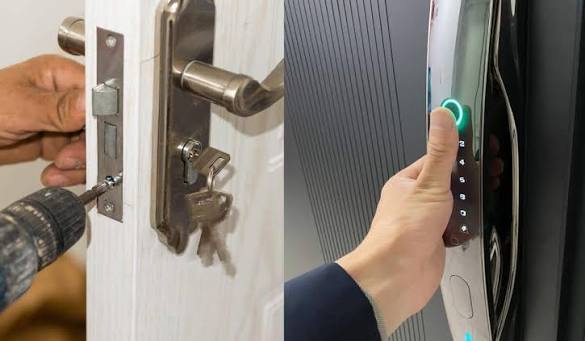
Walk through any hardware aisle or scroll any home-tech roundup and the message is the same: your front door should be smart. Keypads, apps and fingerprint readers promise to replace the key ring entirely. But a traditional deadbolt is still a perfectly good lock for many homes. The right answer depends on the problem you are trying to solve, and sometimes a residential locksmith service is the simplest fix.
Below is how the two compare, and when an upgrade is actually worth it.
What smart locks do well
A smart lock replaces or supplements the key with another way to open the door. Depending on the model, that can be a keypad code, a phone app, a key fob or a fingerprint. The practical advantages are easy to see:
- No key to lose. If your household regularly misplaces keys, a code or phone-based entry removes the most common cause of lockouts.
- Easy access for other people. Many models let you create separate codes for a dog walker, a cleaner or a visiting relative, and delete them later without collecting a key.
- Some locks record when the door was opened, which can be useful for families with children coming home from school.
- Hands full of groceries and a keypad on the door is a small daily improvement.
Where smart locks fall short
Smart locks add parts, and every added part is something that can fail. Before upgrading, weigh these points:
- Most run on batteries. A dead battery or a failed connection can leave you outside, so you still need a backup way in, such as a physical key or an override.
- Software and connectivity. App-based locks depend on a phone, a network or an account. If any of those fail, the door may be harder to open.
- Not every smart lock fits every door. Door thickness, bore size and existing hardware all matter, so measure or check the product’s fit guide before buying.
- Codes need to be changed when people leave the household, and batteries need to be replaced on time.
None of these are reasons to avoid a smart lock. They are reasons to choose one deliberately instead of buying whatever is on sale.
When a traditional lock is enough
A mechanical deadbolt has no battery, no app and no network. It works the same way it did the day it was installed, and a well-made one is very difficult to defeat with simple tools. For many homeowners, the real issue is not the lock itself but who has a key to it.
That is where re-keying comes in. Re-keying changes the internal pins of a lock so that old keys stop working and a new key takes over, while the lock hardware stays on the door. It is a sensible answer if:
- You just moved into a home and do not know who has copies of the keys.
- A set of keys was lost or stolen.
- A roommate, tenant, contractor or former partner no longer needs access.
In those cases, the lock itself is fine, so re-keying solves the problem without replacing hardware or adding electronics. If the lock is worn, damaged or poorly made, a lock change is the better route.
When to upgrade to a smart lock
Upgrading makes the most sense when the way you use your door has changed, not just because a new product exists. Consider a smart lock if:
- Lost keys are a recurring problem in your household.
- Several people need access on different schedules.
- You want to know when the door is used.
- Your door and frame are in good condition. A smart lock does not make up for a weak door or a loose strike plate.
Consider keeping or re-keying a traditional lock if the household is small, keys are rarely lost, and you prefer a system with fewer things to maintain.
When to call a residential locksmith service
Whichever lock you choose, a few situations call for a person rather than a product:
- You are locked out. Smart lock or traditional, a locksmith who uses non-destructive entry methods can often get you inside without damaging the door.
- Keys were lost or stolen. A re-key or lock change addresses the security risk.
- You are not sure which option fits your door. A locksmith can look at the door, the existing hardware and how your household uses it.
Local homeowners can find home lockout and re-key help from a mobile locksmith who comes to the house. Kiara Locksmith is based in Oak Park, Illinois, and handles residential lockouts, lock changes and re-keys in Oak Park, River Forest, Forest Park, Berwyn and nearby suburbs, seven days a week from 6 AM to 11:30 PM. See https://kiaralocksmith.com/services/ for the full list of services.
A practical way to decide
Ask yourself three questions. Is the problem keys, access or visibility? Would a re-keyed traditional lock solve it? And do you want another device to power and maintain? If a re-key fixes the problem, you may not need to upgrade. If your household needs flexible access, a smart lock may be worth it, as long as you plan for batteries and a physical backup.
Kiara Locksmith is an Oak Park, Illinois locksmith that does residential lockouts, lock changes and re-keys at the customer’s door, seven days a week from 6 AM to 11:30 PM.







Comment