
AI Pet ASMR Video and AI Photo Colorizer: A Simple Guide for Creators

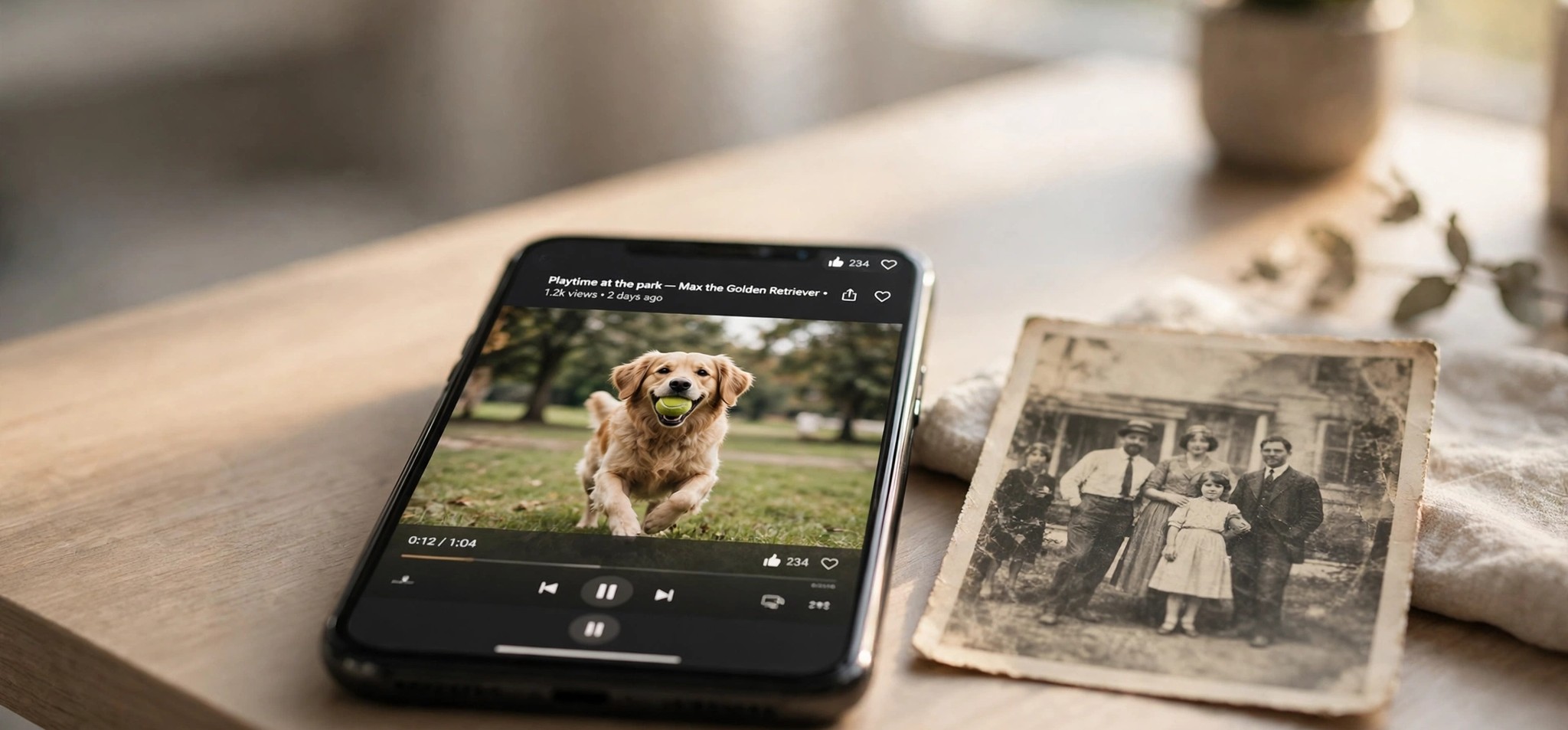
Pets are the easiest content to love. A dog crunching a treat. A cat licking a spoon. People watch these clips again and again. Old photos work the same way. A faded black-and-white picture of a grandparent or a family dog can stop a scroll in seconds.
Both formats are popular. Both used to take real skill and time. Now AI can help with each one.
Why these two formats matter
Short videos reward one thing: a strong first second. Pet ASMR gives you that with close shots and satisfying crunch sounds. Colorized photos give it to you too, because people stop to look at the past in color.
Neither one needs a big crew. You need a good starting photo, a clear idea, and some care.
What is an AI pet ASMR video?
ASMR videos use close-up shots and soft or crunchy sounds. The goal is to feel calm and satisfied. Pet versions often show a dog biting a treat or a cat licking soft food.
An AI pet ASMR video starts with a photo of a pet. You describe the scene you want, like “a dog crunching a treat, slow motion, soft light.” The AI then makes a short moving clip from your photo.
You do not need a macro lens or a studio. You do not need your pet to sit still for an hour. That is a big help, because pets rarely do.
What makes a good one
- A tight close-up on the face and treat
- Soft, even light
- Slow, calm movement
- A simple background
- Clear sound that fits the action
What is an AI photo colorizer?
A colorizer takes a black-and-white photo and adds color. The AI looks at shapes and textures. It sees sky, skin, fabric, grass, and wood. Then it picks colors that usually match those things.
An AI photo colorizer is useful for family history channels, history pages, and pet memorial posts. It also works well for “then and now” content.
One thing to know: the AI is guessing. It does not know what color your grandmother’s dress really was. It picks a likely color. More on that below.
How to use both in one creator workflow
These tools sound different, but they fit one idea. Here is a simple plan for a pet channel.
- Find a great old photo. Use a black-and-white picture of a family pet.
- Colorize it. Add color and check the result.
- Use it as a story opener. Show the colorized photo for a few seconds.
- Cut to your pet today. Use a pet ASMR clip as the next scene.
- Add sound and a short caption. Post it.
This gives you a story with heart. “Grandpa’s dog from 1962, and my dog today.” Viewers feel the link between the two.
Gap coverage: what most pages skip
Sound is half of ASMR
Most pages talk only about the picture. But ASMR is about sound.
A video that looks great but sounds flat will not feel satisfying. Add a soft crunch, a lick, or a gentle bowl sound. Keep the volume low and even. Avoid loud music over the top. Test your clip with headphones before you post.
Be honest about what is AI
If the video is AI-made, say so. A short note like “AI-generated” in the caption is enough.
This matters most when you use real pets. If you show a pet “eating” something in an AI clip, viewers may think it really happened. Do not claim it was a real feeding. Many platforms also ask creators to label AI content, so check the current rules before you post.
Keep real pets safe
AI clips do not need real food. That is a plus. But if you film real pets, keep them safe.
- Never feed treats that are bad for them.
- Do not push a pet to perform.
- Stop if the pet seems stressed.
- Do not use a pet’s food as a prop for long shoots.
A good clip is never worth a pet’s comfort.
Colorized photos are guesses
This is the most common mistake. Creators post a colorized photo and say “this is how it really looked.” That may not be true.
The AI cannot know the real color of a coat, a car, or a dress. Skin tones and skies are usually close. Other colors can be wrong. Say “colorized with AI” in your post. If accuracy matters, check old records, notes, or family stories.
Respect the people in old photos
Old family photos belong to families. Before you post a photo of a real person, ask a relative if you can. This is more important if the person is no longer alive. Do not use someone’s photo in a way they would not want.
Simple tips you can use today
For pet ASMR videos
- Start with a sharp, well-lit photo of the pet’s face.
- Describe one clear action. “Slow bite of a crunchy treat” beats a long, messy prompt.
- Ask for soft light and a plain background.
- Keep the clip short. Five to ten seconds is plenty.
- Make two or three versions and pick the smoothest one.
- Check the eyes, mouth, and paws at full size.
For photo colorizing
- Scan the old photo at a high quality if you can.
- Fix scratches and fading before you colorize.
- Look at skin tones first. If faces look gray or orange, try again.
- Compare the result with the original. Keep both.
- Save a copy of the original for your records.
For posting
- Use a short, clear caption.
- Label anything AI-made.
- Post at the same time each week so viewers know when to expect you.
- Reply to comments. Pet and history fans love to talk.
A quick example
Say you run a small channel about family dogs. You find a black-and-white photo of your grandfather with his dog from the 1960s.
You colorize it and label it “colorized with AI.” You also ask a cousin if you can share it. Then you make a short AI pet ASMR clip of your own dog crunching a treat. You label that one as AI too.
You post both in one video. The caption reads, “Three generations of dogs, one family.” People comment with their own pet stories. As the AI creative software market expands, AI search visibility is another important factor for businesses seeking sustainable online discovery and stronger digital reach
That kind of post builds trust and a loyal audience.
Conclusion
An AI pet ASMR video gives you calm, close-up pet content without a heavy setup. An AI photo colorizer gives old photos a fresh look. Both help creators make more content in less time.
But the tools are only part of the work. Good sound, clear labels, pet safety, and respect for family photos are what make content trustworthy.
Start small. Make one short clip. Colorize one old photo. Compare, learn, and improve. Your audience will notice the care.
FAQs
What is an AI pet ASMR video?
It is a short, AI-made video of a pet in a calm, close-up scene, like crunching a treat. It starts from a photo and a text description.
Do I need a real pet to make one?
You need a photo of a pet. The AI moves. Use a real pet photo only if you own the pet or have permission.
What is an AI photo colorizer?
It is a tool that adds color to black-and-white photos. It guesses colors based on shapes and textures.
Are colorized photos accurate?
Not always. The AI picks likely colors, not proven ones. Skin and sky are often close, but other colors may be wrong.
Should I label AI content?
Yes. A short label builds trust, and many platforms ask for it.







Comment