
What Asbestos Surveying Looks Like When the Clipboard Goes Digital


For decades, an asbestos survey looked much the same: a surveyor with a clipboard, a camera and a bag of sample pots, followed weeks later by a printed report that ended up in a filing cabinet. The hazard has not changed. Asbestos is still sitting in millions of older buildings across the US, the UK and Europe, and it is still only dangerous when it is disturbed. What has changed is the toolkit used to find it, record it and keep track of it over the life of a building. For property owners, facilities teams and contractors, that shift is turning a one-off compliance exercise into a live data set.
From Paper Notes to Tablet Software
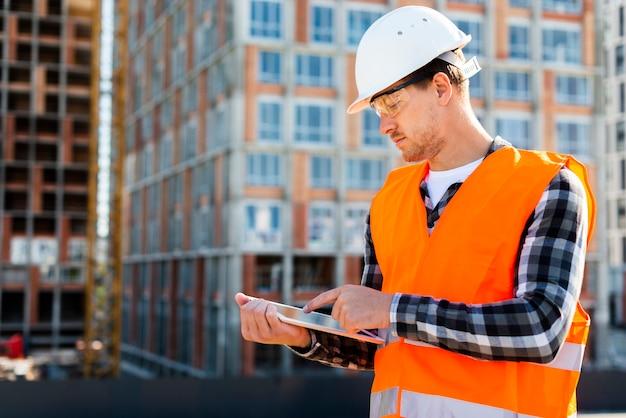
The most widespread change is also the least dramatic. Many surveyors now record their findings straight into tablet software as they walk the building. Each sample point is pinned to a floor plan, photographed and tagged with its location, material type and condition at the moment it is recorded.
That matters because the old method relied on someone transcribing handwritten notes into a report afterwards, and every manual step was a chance for an error. A sample labeled as coming from the second-floor riser that actually came from the third floor is not a small mistake when a contractor later drills into the wrong one. Digital capture closes that gap and makes reports faster to produce and easier to check.
Drones for the Places People Shouldn’t Climb
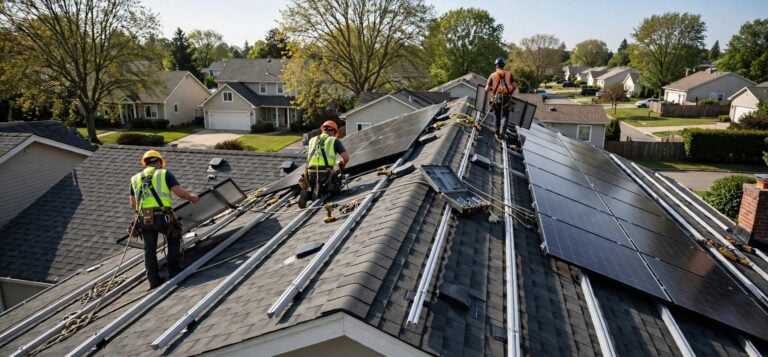
Roofs are one of the most common places for asbestos cement products, from corrugated sheeting on industrial units to gutters, downspouts and soffits on older homes. They are also among the most dangerous places to send a surveyor, because fragile cement sheets can give way underfoot.
Drones fitted with high-resolution cameras let surveyors inspect large roof areas from the ground, spotting likely asbestos cement, assessing condition and planning safe access before anyone goes up. On a warehouse or farm building, that can turn a risky climb into a short flight.
The limitation is important, though. A drone can show what a material looks like, but asbestos cannot be confirmed by appearance alone. Visual surveys still need to be backed up by physical samples analyzed in a laboratory before anyone can say for certain what a roof is made of.
The Lab Side of the Equation
Bulk samples taken during a survey are usually analyzed using polarized light microscopy, which identifies asbestos fibers by how they interact with polarized light. Air samples taken during and after removal work are commonly counted using phase contrast microscopy, and transmission electron microscopy is used where very fine fibers or very low concentrations need to be detected.
The science behind these methods is well established. What technology has changed is the workflow around them. Laboratory information systems now link sample numbers directly to the survey record, so results can flow back into the report automatically instead of being retyped. For a building owner waiting to start a project, that cuts down the time spent chasing paperwork.
Cloud Registers and the Duty to Manage
In the UK, anyone responsible for non-domestic premises has a legal duty to manage asbestos, which includes keeping an up-to-date register of where it is and what condition it is in. In practice, that register was often a binder in a site office that contractors never saw.
Cloud-based registers change who can see the information and when. A facilities manager can share access with a visiting electrician before the job, update an item’s condition after a routine inspection and keep a full audit trail of who viewed what. For organizations with dozens or hundreds of sites, such as retail chains, schools or housing providers, a central register turns asbestos from a stack of separate reports into something that can be searched, filtered and reported on.
US property managers are seeing a similar push for better records, especially as renovation of older commercial stock picks up and contractors increasingly ask for documentation before quoting.

What Technology Can’t Replace
It is easy to overstate what software and hardware can do here. A surveyor still has to decide where to sample, lift the floor tile, open the riser and recognize the materials that look harmless. A register is only as good as the survey behind it, and a polished digital report built on a rushed inspection is still a rushed inspection.
The removal work itself is also stubbornly physical. Enclosures, negative pressure units, careful wetting and bagging of waste, and independent air testing at the end are what keep fibers out of the air. In the south of England, for example, homeowners and businesses arranging asbestos removal in Hampshire increasingly receive their survey results digitally, but the job on site still depends on trained crews following regulated methods.
Why It Matters for Property Owners
For anyone holding older property, whether a single building or a portfolio, the practical gains are clear enough. Better data means fewer surprises mid-project, fewer delays while contractors wait for answers, and a clearer picture of where money will need to be spent over the next few years.
The buildings have not gotten any younger, and the material inside them is not going anywhere on its own. What technology offers is a way to know exactly where it is, share that knowledge with the people who need it and plan its removal on your own timetable rather than finding out the hard way.






Comment