
What Features Should an MVP Include? A Feature Prioritization Framework

An MVP should include only the essential features needed to solve a core user problem, deliver immediate value, and validate demand with real users.
The focus is on creating the simplest path from signup to the desired outcome, removing only the barriers that prevent users from experiencing that value. Features that don’t directly support the core workflow, user activation, or product validation should be reserved for future versions.
According to CB Insights’ March 2026 research, 43% of 385 failed VC-backed startups with identifiable failure reasons cited poor product-market fit as a cause of failure.
Before deciding which features to make it into your MVP, you need a structured way to separate essential functionality from distractions.
That’s where MVP feature prioritization frameworks help, providing a systematic approach to evaluating, ranking, and selecting features that maximize learning while minimizing development time and cost.
What Is a Feature Prioritization Framework for an MVP?
Building an MVP isn’t about packing in as many features as possible. It’s about identifying the smallest set of features needed to validate your idea with real users.
A feature prioritization framework is a decision-making method that helps teams determine:
- Which features should be included in the MVP?
- Which ideas should be postponed?
- Where should development time and budget be invested first?
Instead of relying on opinions or assumptions, these frameworks evaluate features based on factors such as:
- User value
- Business impact
- Validation potential
- Development effort
- Technical complexity
Popular frameworks such as MoSCoW, RICE, the Impact-Effort Matrix, and the Kano Model help teams make objective decisions, avoid scope creep, and launch faster with a focused product.
The goal is simple: build only what is necessary to test your core product
What Are MVP Features?
MVP features are the essential functionalities required for users to experience a product’s core value and for founders to validate their primary business hypothesis.
Unlike features in a fully developed product, MVP features are chosen based on necessity rather than completeness. Their purpose is to answer a simple question: Does this solution solve a real problem that users are willing to adopt?
A feature belongs in an MVP only if it helps:
- Deliver the core value proposition
- Validate a key assumption about users or the market
- Remove a critical barrier to user adoption
- Enable users to reach the product’s activation point
Any feature that doesn’t support one of these goals should typically be postponed until after the MVP has been tested with real users.
Think of MVP features as the minimum set of capabilities needed to learn, validate, and improve, not the minimum set needed to impress.
What Features Should an MVP Include?
An MVP should include only the features required to help users achieve a specific outcome and experience the product’s core value.
A practical way to determine MVP features is to map the simplest journey from signup to value and ask:
- What is the user’s primary problem?
- What is the smallest workflow that solves it?
- Which features are absolutely required for that workflow to work?
Include Features That: |
Exclude Features That: |
| Deliver the product’s core value proposition | Exist only to match competitors |
| Help validate your main business hypothesis | Serve edge cases or rare scenarios |
| Remove critical barriers to user adoption | Add unnecessary complexity |
| Enable basic onboarding and activation | Can be introduced after user validation |
Example
For a task management SaaS, users primarily want to create and manage tasks.
The MVP may only require:
- Task creation
- Task assignment
- Task status updates
Features such as:
- Advanced reporting
- Workflow automation
- Third-party integrations
- Custom dashboards
can be added later once demand and product-market fit are validated.
A successful MVP is not the smallest product you can build. It’s the smallest product that can reliably deliver value, test your assumptions, and generate meaningful user feedback.
For startups moving from feature planning to execution, professional MVP development services can help translate prioritized requirements into a functional product designed for real-world validation.
How to Prioritize Features for MVP Development
Successful MVPs are not built by choosing as many features as possible. They are built by identifying the smallest set of features that can validate a core business assumption and deliver value to users.
A practical approach to MVP feature prioritization involves four steps:
1. Define Your Core Hypothesis
Every MVP should be designed to test a specific assumption about the market, users, or product.
Ask yourself:
- What problem are we solving?
- Who are we solving it for?
- What assumption are we trying to validate?
For example, a task management startup might have the following hypothesis:
Freelancers need a simpler way to organize and track project tasks.
This hypothesis becomes the foundation for all prioritization decisions.
2. Map the User Journey
Next, identify the simplest path users must take to achieve the product’s core value.
A basic user journey might look like this:
Sign Up
↓
Create Task
↓
Assign Task
↓
Update Status
↓
Track Completion
The goal is to understand the minimum workflow required for users to experience the intended outcome.
3. List All Potential Features
Brainstorm every feature idea without filtering.
This list may include:
- Core functionality
- User requests
- Competitor-inspired features
- Internal stakeholder suggestions
- Future product ideas
At this stage, quantity is more important than prioritization.
Example:
✓ Task Creation
✓ Task Assignment
✓ Status Tracking
✓ Notifications
✓ File Sharing
✓ Analytics Dashboard
✓ AI Recommendations
✓ Third-Party Integrations
4. Filter Features by Value
Evaluate each feature against a simple question:
Does this feature directly contribute to delivering value or validating the hypothesis?
A feature should remain in the MVP only if it:
- Delivers the core value proposition
- Helps validate a critical assumption
- Removes a major barrier to adoption
- Supports onboarding or activation
Features that fail all four criteria should be moved to the post-MVP roadmap.
The MVP Prioritization Flow
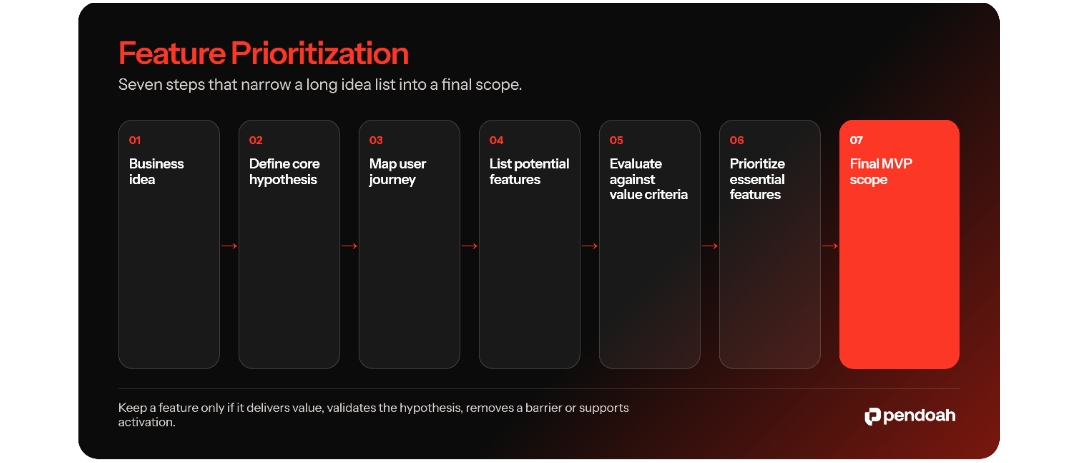
Figure 1. Seven steps to narrow a product idea into a focused MVP feature scope.
The objective is not to build a complete product. The objective is to launch with the minimum functionality required to learn whether users truly need the solution and are willing to use it.
MVP Feature Prioritization Frameworks
Once you’ve identified potential MVP features, the next step is deciding which ones deserve a place in the first release. MVP feature prioritization frameworks help product teams evaluate features objectively, focus on the highest-value opportunities, and avoid unnecessary complexity that delays launch.
The frameworks below provide different ways to assess features based on user value, business impact, implementation effort, and learning potential.
1. MoSCoW Method
The MoSCoW framework divides features into four categories based on necessity.
MUST HAVE → Essential for launch
SHOULD HAVE → Important but not critical
COULD HAVE → Nice-to-have additions
WON’T HAVE → Deferred for future releases
Best for: Aligning stakeholders and preventing scope creep.
Example: Task Management App
Must Have
- Create tasks
- Edit tasks
- Mark task status
Should Have
- Task reminders
Could Have
- Custom themes
Won’t Have
- AI task suggestions
- Third-party integrations
2. Impact-Effort Matrix
This framework compares the value a feature creates against the effort required to build it.
HIGH IMPACT
│
QUICK WINS │ BIG BETS
(Build First) │ (Consider Later)
│
──────────────────────┼──────────────────────
│
FILL-INS │ TIME SINKS
(Optional) │ (Avoid)
│
LOW IMPACT
LOW EFFORT → HIGH EFFORT
Best for: Fast decision-making when resources are limited.
Rule of thumb: MVP features should primarily come from the Quick Wins quadrant.
3. RICE Scoring Model
RICE provides a quantitative way to compare competing features.
Formula
RICE Score = (Reach × Impact × Confidence) ÷ Effort
| Factor | Question |
|---|---|
| Reach | How many users will benefit? |
| Impact | How much value will it create? |
| Confidence | How certain are your estimates? |
| Effort | How much work is required? |
Example
| Feature | Reach | Impact | Confidence | Effort | Score |
|---|---|---|---|---|---|
| User onboarding | 1000 | 3 | 80% | 2 | 1200 |
| Custom themes | 300 | 1 | 70% | 4 | 52.5 |
In this example, onboarding clearly belongs in the MVP while custom themes can wait.
Best for: Data-driven product teams.
4. Kano Model
The Kano Model prioritizes features based on their effect on customer satisfaction.
DELIGHTERS
▲
│
│
PERFORMANCE ◄──┼──► MORE VALUE
│
│
BASIC NEEDS
Basic Needs
Expected features users assume will exist.
Example: Login, payment processing, task creation.
Performance Needs
Features that improve the experience as they get better.
Example: Speed, search quality, reporting.
Delighters
Unexpected features that create excitement.
Example: AI recommendations or smart automation.
Best for: Understanding user expectations and satisfaction.
5. User Story Mapping
This framework organizes features around the user’s journey instead of individual feature requests.
Discover → Sign Up → Create Task → Assign Task → Complete Task
MVP RELEASE
───────────────────────────────────────────────
✓ Sign Up
✓ Create Task
✓ Assign Task
✓ Complete Task
Future Releases
───────────────────────────────────────────────
○ Notifications
○ Analytics
○ Integrations
○ AI Suggestions
Best for: Defining the minimum end-to-end experience required to deliver value.
Which MVP Prioritization Framework Should You Use?
Not every MVP feature prioritization framework is suitable for every product team. The best choice depends on factors such as your product stage, team size, available resources, and the amount of user data you have collected.
- MoSCoW Method: Best for startups seeking quick stakeholder alignment and a simple way to categorize features.
- Impact-Effort Matrix: Ideal for early-stage MVPs with limited resources that need to maximize value while minimizing development effort.
- RICE Scoring: Most effective for data-driven teams that have enough user insights to score opportunities objectively.
- Kano Model: Useful for understanding which features drive customer satisfaction and which are simply expected.
- User Story Mapping: Best for defining the minimum viable user journey and ensuring a complete end-to-end experience.
While each framework offers valuable insights, relying on a single approach can leave gaps in the decision-making process. Some frameworks focus on user satisfaction, others on business value or development effort.
To create a more balanced prioritization system, the Pendoah team combines the most effective elements of multiple frameworks into a single MVP scoping workflow.
The Pendoah MVP Prioritization Framework™
Most MVP prioritization frameworks answer only part of the problem.
- MoSCoW helps categorize features.
- RICE helps score opportunities.
- Kano helps understand user expectations.
- Impact-Effort highlights quick wins.
- User Story Mapping visualizes the user journey.
The challenge is that founders rarely need only one of these perspectives. They need a system that answers a bigger question:
“What is the fastest path to validating demand while building the smallest possible product?”
The Pendoah MVP Prioritization Framework was created to answer that question.
Rather than prioritizing features in isolation, the framework evaluates every feature against user value, business validation, implementation effort, and product viability to create an MVP scope that is both lean and strategically focused.
The Pendoah Principles
Every feature included in an MVP must satisfy at least one of the following objectives:
- Deliver Value
- Validate Demand
- Enable Adoption
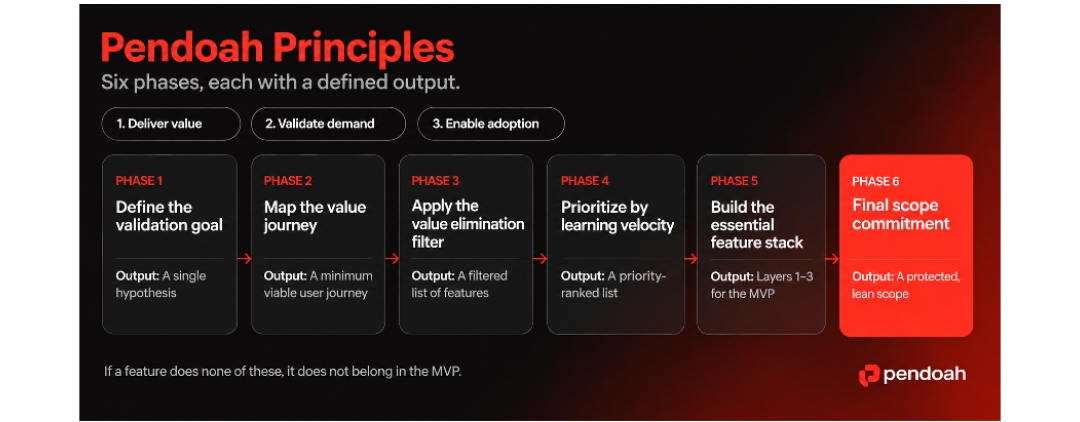
Figure 2. Pendoah’s six phases keep MVP scope focused on validation.
Phase 1: Define the Validation Goal
Most teams start by listing features.
Pendoah starts with a different question:
What are we trying to prove?
Examples:
- Users will pay for automated expense tracking.
- Small businesses need AI-powered customer support.
- Online sellers want real-time inventory forecasting.
The goal is not to build software.
The goal is to validate a business assumption.
Business Idea
│
▼
Core Assumption
│
▼
Validation Goal
Output
A single hypothesis the MVP is designed to test.
Phase 2: Map the Value Journey
Instead of asking what features users want, ask:
How does a user reach value?
Every product follows a journey.
Discover
↓
Sign Up
↓
Get Started
↓
Complete Core Action
↓
Experience Value
For example, in a project management tool:
Sign Up
↓
Create Project
↓
Add Tasks
↓
Assign Team Members
↓
Track Progress
The objective is to identify the shortest path between a user’s problem and their desired outcome.
Output
A minimum viable user journey.
Phase 3: Apply the Value Elimination Filter
At this point most teams have a long list of requested features.
Now the Pendoah framework becomes aggressive.
Every feature must pass one or more of these tests.
Core Value Test
Does the feature directly help users achieve their primary goal?
Validation Test
Does the feature help prove or disprove the business hypothesis?
Adoption Test
Does the feature remove a major obstacle to onboarding or activation?
Trust Test
Does the feature create the minimum credibility required for users to engage?
Examples:
- Authentication
- Basic security
- Essential account settings
- Core notifications
Feature Assessment
Feature Idea
│
▼
┌──────────────────────┐
│ Core Value Test │
└──────────┬───────────┘
│
▼
┌──────────────────────┐
│ Validation Test │
└──────────┬───────────┘
│
▼
┌──────────────────────┐
│ Adoption Test │
└──────────┬───────────┘
│
▼
┌──────────────────────┐
│ Trust Test │
└──────────┬───────────┘
│
▼
Pass Any Test?
│
┌─┴─┐
│Yes│ → Candidate MVP Feature
└─┬─┘
│
No
│
▼
Post-MVP Roadmap
Output
A filtered list of value-driven features.
Phase 4: Prioritize by Learning Velocity
Most frameworks prioritize features by value alone.
Pendoah prioritizes by learning velocity.
The question becomes:
“Which features help us learn the most in the shortest time?”
Every remaining feature is evaluated according to:
User Value
+
Validation Impact
+
Business Importance
+
Implementation Simplicity
Features that generate high insight while requiring relatively low effort move to the top.
HIGH LEARNING
│
│
│ BUILD FIRST
│
──────┼──────────────────► LOW EFFORT
│
│
│
▼
HIGH EFFORT
Output
A priority-ranked feature list.
Phase 5: Build the Essential Feature Stack
Now features are grouped into layers.
Layer 1: Core Features
Without these, the product cannot deliver value.
Examples:
- Account creation
- Product creation
- Payment processing
- Task management
Layer 2: Activation Features
Help users experience value faster.
Examples:
- User onboarding
- Basic tutorials
- Email verification
- Progress indicators
Layer 3: Validation Features
Help gather insights and measure adoption.
Examples:
- Analytics events
- Feedback collection
- Usage tracking
Layer 4: Growth Features
Useful but not required for validation.
Examples:
- Referrals
- Advanced reporting
- Integrations
- Automations
Only Layers 1-3 belong in most MVPs.
Once the essential features are defined, choosing the right software development services can help teams turn the approved scope into a usable product while maintaining quality, security, and future scalability.
Phase 6: Final Scope Commitment
This is where many startups fail.
A feature might be valuable, but valuable does not mean essential.
Before a feature enters development, ask:
If we remove this feature today, can we still validate our hypothesis?
If Yes
Remove it.
If No
Keep it.
This final checkpoint protects the MVP from scope creep.
The Complete Pendoah MVP Prioritization Workflow
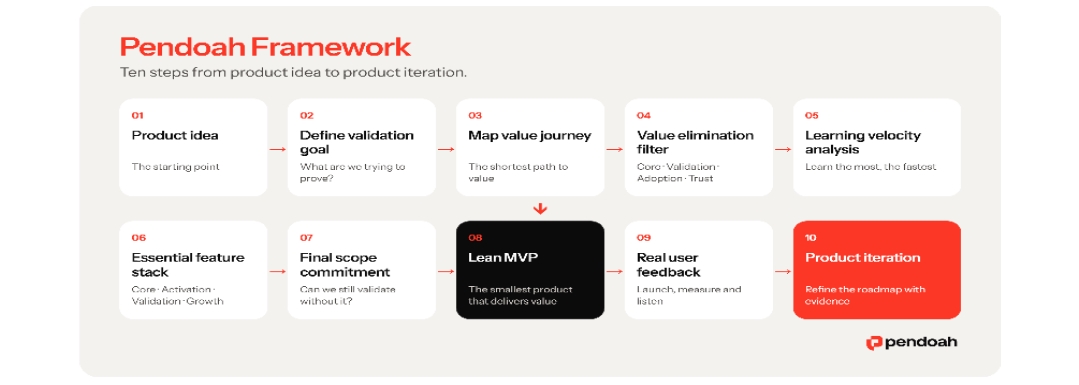
Figure 3. Pendoah’s ten-step framework connects product ideas to iterative improvement.
Why the Pendoah Framework Is Different
Most prioritization frameworks optimize features.
The Pendoah framework optimizes validation.
Instead of asking:
“Which features should we build?”
It asks:
“What is the minimum set of features required to learn whether this business should exist?”
That shift in thinking helps founders launch faster, reduce development costs, collect feedback earlier, and move toward product-market fit with significantly less risk.
Which Features Should Be Excluded From an MVP?
One of the biggest reasons MVPs fail is overengineering. Teams often spend months building features they believe users will want before validating whether users actually need the core solution.
As a rule, an MVP should exclude any feature that does not directly:
- Deliver the product’s core value proposition
- Help validate a critical business assumption
- Remove a major barrier to adoption
- Enable users to reach the activation point
If a feature doesn’t contribute to one of these objectives, it should typically be moved to the post-MVP roadmap.
The Pendoah Exclusion Test
Before committing a feature to development, ask:
If we removed this feature today…
Can users still achieve their primary goal?
YES
│
▼
Remove it from the MVP
NO
│
▼
Keep it in scope
This simple test prevents scope creep and keeps development focused on validation rather than completeness.
Features That Usually Don’t Belong in an MVP
-
Advanced Administration Systems
Most startups don’t need sophisticated back-office functionality in their first release.
Examples include:
- Multi-level user roles
- Granular permission controls
- Enterprise-grade admin dashboards
- Complex audit trails
These systems add significant development effort without helping validate demand.
-
Complex Automations
Automations save time at scale, but MVPs rarely operate at scale.
Examples include:
- Workflow builders
- Automated email sequences
- Trigger-based notifications
- Background data synchronization
In early stages, many of these processes can be handled manually while you validate user interest.
-
Non-Essential Integrations
Founders often request integrations because competitors offer them.
However, integrations should only be included if they are necessary for delivering the core user outcome.
Examples:
- Slack integrations
- Zapier connections
- CRM integrations
- Secondary export tools
Ask whether users can still achieve value without them. If the answer is yes, postpone them.
-
Excessive UI Polish
A clean and usable interface is important.
Perfection is not.
Features commonly delayed include:
- Custom animations
- Advanced themes
- Extensive customization options
- Rare edge-case screens
Users will forgive a basic UI. They will not forgive a product that fails to solve their problem.
-
Community and Social Features
Many startups attempt to build a community before validating product value.
Typical examples include:
- User profiles
- Social feeds
- Discussion forums
- Leaderboards
- Sharing systems
These features are often most effective after a product has achieved initial traction.
-
Advanced Analytics Dashboards
Founders frequently want sophisticated reporting before understanding what metrics matter.
Instead of building customer-facing analytics platforms, focus on collecting essential usage data such as:
- Signups
- Activation rate
- Feature adoption
- Retention
- Conversion
Measure behavior first. Build dashboards later.
-
Multi-Platform Launches
A common mistake is launching everywhere at once.
Instead of building:
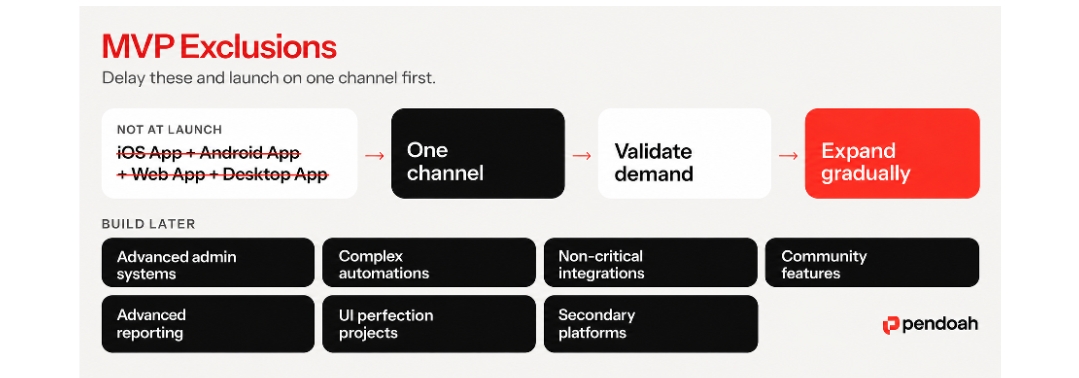
Figure 4. Launch on one channel, validate demand, and postpone nonessential features.
Concentrating resources on a single platform accelerates learning and reduces development costs.
The Key Principle
An MVP exists to validate a product idea, not to deliver a complete product.
If removing a feature does not prevent users from experiencing the core value of your product, that feature is probably a candidate for version 2.0.
The most successful MVPs are often not the ones that include the most functionality, but the ones that launch fastest and generate the clearest feedback from real users.
How Can User Data Improve MVP Feature Prioritization?
One of the biggest mistakes founders make is prioritizing features based on assumptions rather than evidence. While stakeholder opinions, competitor analysis, and industry trends can provide direction, user data reveals what customers actually need and value.
Instead of guessing which features deserve development resources, product teams can use feedback, behavioral analytics, usability testing, and customer interviews to make prioritization decisions based on real-world insights.
Why User Data Matters
User data helps teams:
- Understand which problems users care about most.
- Identify the features customers actually use.
- Reduce bias in roadmap decisions.
- Prevent feature bloat.
- Validate prioritization assumptions before investing development resources.
In short, good user data transforms feature prioritization from a subjective exercise into an evidence-based process.
How User Data Improves Prioritization
Uncovers Must-Have Features
Early user interviews and surveys often reveal which features are essential for adoption and which are merely desirable.
For example:
Users Need:
✓ Task creation
✓ Task assignment
✓ Due dates
Users Want:
○ Team chat
○ Custom themes
○ AI suggestions
This distinction allows teams to focus on essentials first.
Replaces Opinions With Evidence
Product decisions often become influenced by stakeholder preferences, competitor feature lists, or internal assumptions.
User data creates an objective source of truth.
Assumption:
“Users need an advanced dashboard.”
Data:
Only 12% of users access reports.
Decision:
Delay dashboard development.
The result is a roadmap based on user behavior rather than internal debate.
Prevents Feature Bloat
Many startups add features because they seem useful.
User behavior often tells a different story.
Common signals include:
- Low feature adoption
- High abandonment rates
- Unused navigation items
- Repeated customer complaints
These insights help eliminate unnecessary functionality before it consumes development resources.
Reveals the Real User Journey
Teams frequently design workflows based on how they think customers behave.
User research reveals how customers actually move through the product.
Expected Journey:
Signup
↓
Create Project
↓
Invite Team
↓
Track Progress
Actual Journey:
Signup
↓
Create Project
↓
Track Progress
This evidence helps simplify MVP requirements and focus development effort where it matters most.
Sources of Valuable MVP User Data
Not all data comes from analytics platforms. Early-stage startups can gather useful insights through:
Qualitative Data
- Customer interviews
- User surveys
- Usability testing
- Customer support conversations
- Beta user feedback
Best for understanding:
- User motivations
- Pain points
- Expectations
- Feature requests
Quantitative Data
- Signup rates
- Activation rates
- Retention metrics
- Feature adoption rates
- Conversion rates
- Session recordings
Best for understanding:
- What users do
- Where they drop off
- Which features generate value
Applying User Data to Prioritization Frameworks
User data becomes even more valuable when combined with prioritization frameworks.
| Framework | How User Data Helps |
|---|---|
| MoSCoW | Identifies true Must-Have features |
| Kano Model | Distinguishes basic needs from delighters |
| Impact-Effort Matrix | Validates feature impact assumptions |
| RICE | Improves confidence and reach estimates |
| User Story Mapping | Reveals actual user behavior patterns |
The Pendoah Perspective
At Pendoah, feature prioritization starts with hypotheses but is refined using evidence.
Assumptions
↓
User Research
↓
Behavior Data
↓
Feature Prioritization
↓
MVP Development
↓
User Feedback
↓
Iteration
This continuous feedback loop helps ensure that every feature added to the roadmap is supported by actual user needs rather than internal assumptions.
The best MVP feature prioritization decisions are not driven by opinions, trends, or competitor checklists. They are driven by user data.
The sooner you collect real feedback and usage insights, the easier it becomes to identify the features that truly contribute to product-market fit while avoiding costly development waste.
What Should Businesses Measure After Launch?
Launching an MVP is not the finish line. It’s the beginning of the validation process.
The Pendoah MVP Success Scorecard
After launch, focus on four categories of metrics:
Acquisition
↓
Activation
↓
Retention
↓
Revenue
If users move successfully through these stages, your MVP is generating meaningful traction.
1. User Activation
Activation measures whether new users experience your product’s core value for the first time.
Ask yourself:
Are users reaching the moment where they understand why the product is useful?
Examples:
Fitness App
User creates a workout plan.
Project Management Tool
User creates and assigns their first task.
CRM Platform
User adds their first customer record.
Sign Up
↓
Complete Core Action
↓
Activated User
A low activation rate often indicates onboarding friction or unclear value propositions.
2. Retention Rate
Retention is one of the strongest indicators of product-market fit.
While acquisition shows interest, retention shows whether the product solves a meaningful problem.
Measure:
- Day 7 Retention
- Day 30 Retention
- Returning user cohorts
100 Users Join
↓
75 Return Week 1
↓
50 Return Week 4
If users consistently return, your MVP is creating lasting value.
3. Time to Value (TTV)
Time to Value measures how quickly users experience their first successful outcome.
The faster users receive value, the more likely they are to remain engaged.
Signup
↓
First Success
Examples:
- Creating a first project
- Generating a first report
- Completing a first transaction
Reducing Time to Value is often one of the fastest ways to improve retention.
4. Customer Acquisition Cost (CAC)
Once user engagement improves, focus on acquisition efficiency.
CAC measures how much it costs to acquire a customer.
Marketing Spend
÷
New Customers
=
CAC
If customer acquisition costs are too high, scaling becomes difficult regardless of product quality.
5. Customer Lifetime Value (LTV)
LTV estimates the total value a customer generates throughout their relationship with your business.
Customer Revenue
×
Average Customer Lifespan
=
LTV
A healthy business typically generates significantly more value from a customer than it spends acquiring them.
Metrics to Ignore Early On
Many founders become distracted by numbers that look impressive but provide little insight.
Common vanity metrics include:
❌ Total downloads
❌ Raw page views
❌ Social media followers
❌ App store impressions
❌ Total signups
While these metrics may indicate awareness, they do not prove that users are receiving value or returning to the product.
The Pendoah MVP Measurement Framework
Rather than tracking dozens of KPIs, focus on answering four questions:
Are users signing up?
│
▼
Are they activating?
│
▼
Are they returning?
│
▼
Are unit economics improving?
If you can confidently answer “yes” to all four, your MVP is moving beyond validation and toward product-market fit.
The best post-launch metrics are the ones that reveal whether users are finding value in your product and whether the business can grow sustainably.
Conclusion
MVP feature prioritization is not about building fewer features. It’s about building the right features.
Frameworks like MoSCoW, RICE, Kano, Impact-Effort Analysis, and User Story Mapping provide structured ways to evaluate opportunities, but no single framework is perfect for every situation.
That’s why the Pendoah MVP Prioritization Framework™ combines the best elements of these methodologies into a practical workflow that helps startups reduce risk, eliminate unnecessary complexity, and launch faster.
Remember:
- Focus on the problem before the features.
- Prioritize learning over completeness.
- Exclude anything that doesn’t support the core user journey.
- Let real user data guide future development decisions.
- Measure activation, retention, and customer value after launch, not vanity metrics.
A great MVP isn’t the product with the most features. It’s the product that delivers the clearest path to validation, helping you determine whether your idea solves a real problem and deserves further investment.







Comment