
The Making of a Mogul: Aisha Hall’s Vision to Redefine an American Industry

After 10 years in federal prison, a longtime entrepreneur is building a parking marketplace around income, reciprocity and the possibility of a second act.
There are industries so woven into everyday life that few people stop to consider the opportunities hiding inside them. Parking is one of them.
Every car on the road eventually needs somewhere to stop. Yet in major American cities, drivers spend precious time circling blocks, paying high garage fees or walking farther than they planned. Nearby, driveways and private parking spaces sit unused for hours. Where most people see a familiar inconvenience, entrepreneur Aisha Hall sees the foundation of an economic system.
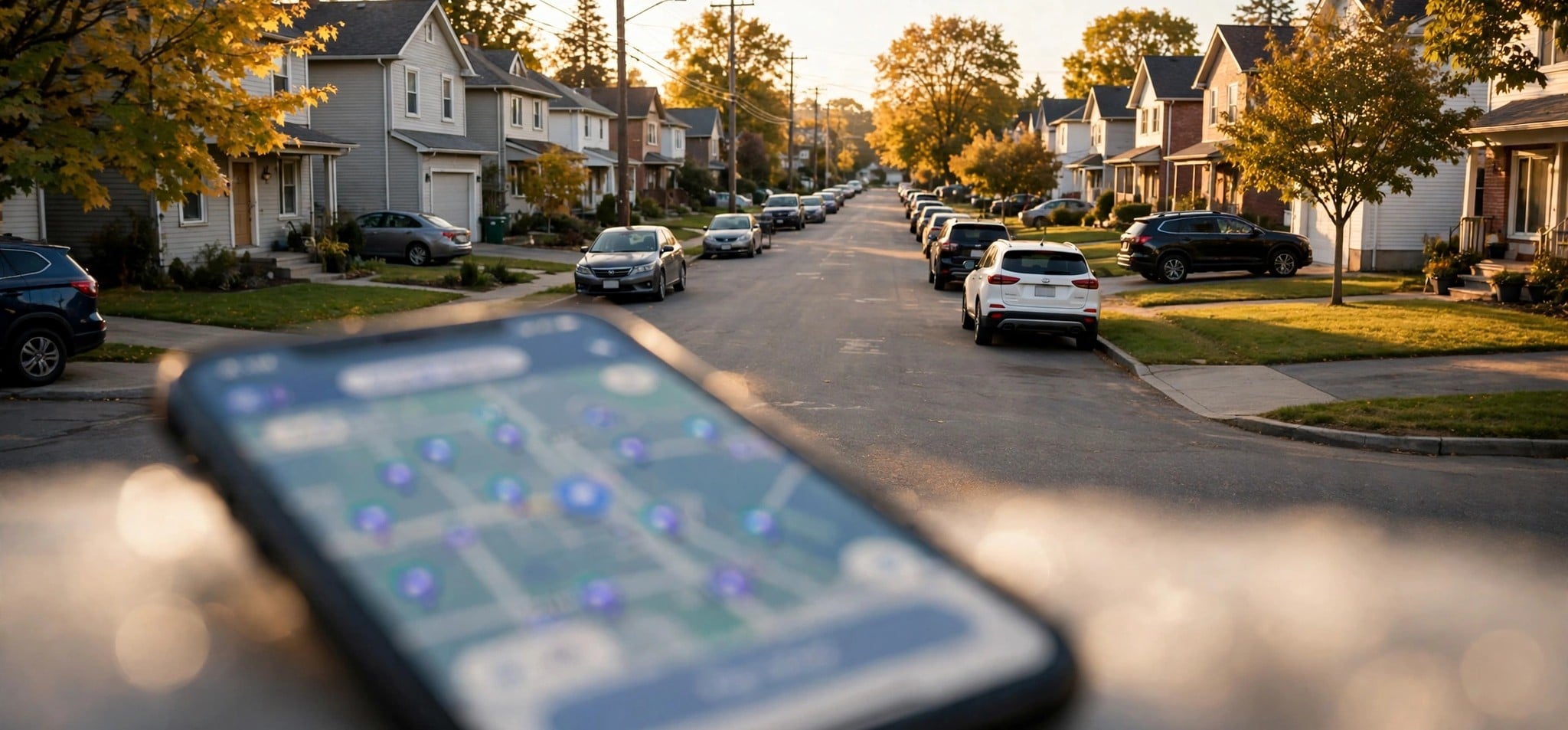
Hall is the founder and CEO of Spark Your Car, a completed mobile platform available on the Apple App Store and Google Play. It connects drivers looking for parking with homeowners, businesses and other authorized property holders who can make private spaces available. Think of the asset-sharing idea behind Turo, applied to driveways.
But Hall’s ambition is larger than building a useful app. “I build things around people. It is my true passion,” she says. Her aim is to turn an unavoidable need into a way for households to earn, drivers to save time and communities to participate in something bigger.
An empty driveway can become supplemental income. A driver heading to work, a concert or a hospital can gain another parking option. Businesses and institutions with eligible unused spaces can participate too. Spark also has a referral system, creating a way for people who do not own a parking space to earn by helping bring qualified hosts into the network.
For Hall, that matters. She wants a platform that rewards more than property ownership. She wants people to find value in what they already have, know or can contribute.
THE POWER OF OWNING THE SYSTEM
Hall talks about Black entrepreneurship in terms of ownership, not just participation. Black Americans build businesses and influence industries, she argues, yet too rarely own the large systems through which commerce moves. She wants more founders who look like her building platforms and infrastructure, not simply operating within someone else’s.
She admires industrialist Aliko Dangote for the scale of the enterprises he has built around essential needs. But she is not trying to become another Dangote. She is charting her own course in an industry with a simple underlying truth: every vehicle has to park.
Spark is for drivers and hosts of every background. Its broader significance to Hall is that a Black woman can build and own a technology marketplace intended to serve a universal need – and, if it succeeds, use that platform to open doors for others.
GIVE A SPOT TO GET A SPOT
Perhaps the clearest expression of Hall’s philosophy is Street Exchange, a feature already built into Spark. Members can share timely information about street parking spaces they are leaving. When a member pins a departing space, they earn a parking credit to access information contributed by others.
Its rule is as memorable as its name: “Give a spot to get a spot.”
Street Exchange does not reserve public curb space or guarantee that a reported spot will still be available. What it offers is a way for strangers to share fleeting, useful information. Someone leaving a space near a hospital may help a person rushing to visit a loved one. A departing commuter may help someone get to work without another long search.
Hall sees a psychological lesson in that exchange. In a world she believes is increasingly focused on taking, Street Exchange asks people to contribute before receiving. No one has to be wealthy to help another person. Sometimes the contribution is simply a few seconds and a piece of information. The app makes reciprocity practical rather than merely aspirational.
A COMEBACK ALREADY IN THE PUBLIC EYE
Hall was an entrepreneur long before Spark. She worked in financial services, founded a company at a young age and pursued ventures in real estate and other industries. Her career was interrupted when she went to federal prison, where she served 10 years.
Her past is not a hidden revelation. Hall has spoken publicly about her experiences, including appearances associated with The Breakfast Club and television projects such as American Gangster and My True Crime Story, with her story reaching audiences through BET, VH1 and Apple TV. She has already allowed difficult chapters of her life to be examined in public.
What she does not accept is that those chapters must be the last word. She believes a person can be accountable for past decisions and still build an extraordinary future.
That belief has practical consequences for Spark. Hall knows her felony conviction may complicate traditional fundraising, especially when investors examine leadership and risk. She also knows that every marketplace needs capital for customer acquisition, operations and expansion. Rather than make institutional investment her only path forward, she is pursuing funding while doing the work of recruiting hosts, developing partnerships and building adoption.
The distinction is critical: Spark’s core technology is already developed. Hall is not seeking capital to prove she can build an application. She is seeking the resources to turn a functioning platform into a scaled business. Its commercial results will still have to be earned – through reliable inventory, satisfied users, repeat bookings and disciplined execution.
A LEGACY MEASURED IN PEOPLE
Hall’s ultimate ambition is not simply a larger company valuation. She wants Spark’s future success to help finance and mentor other entrepreneurs, particularly people who have the ideas and drive but not the access to capital.
There is a through line connecting her past, the driveway marketplace and Street Exchange. She sees potential where others may see little value: in an unused space, a stranger’s information, an overlooked founder and a person rebuilding after incarceration.
She does not know how large Spark will become. No founder does. But she knows the company she wants to build: a people-centered economic system that turns everyday needs into opportunities to earn, share and move forward.
For Aisha Hall, the comeback is not about returning to where she once stood. It is about how far she can go beyond it.
Spark Your Car • sparkyourcar.com • Don’t Park It. Spark It.







Comment