
How Quantum Algorithms Work in Modern Computing Systems

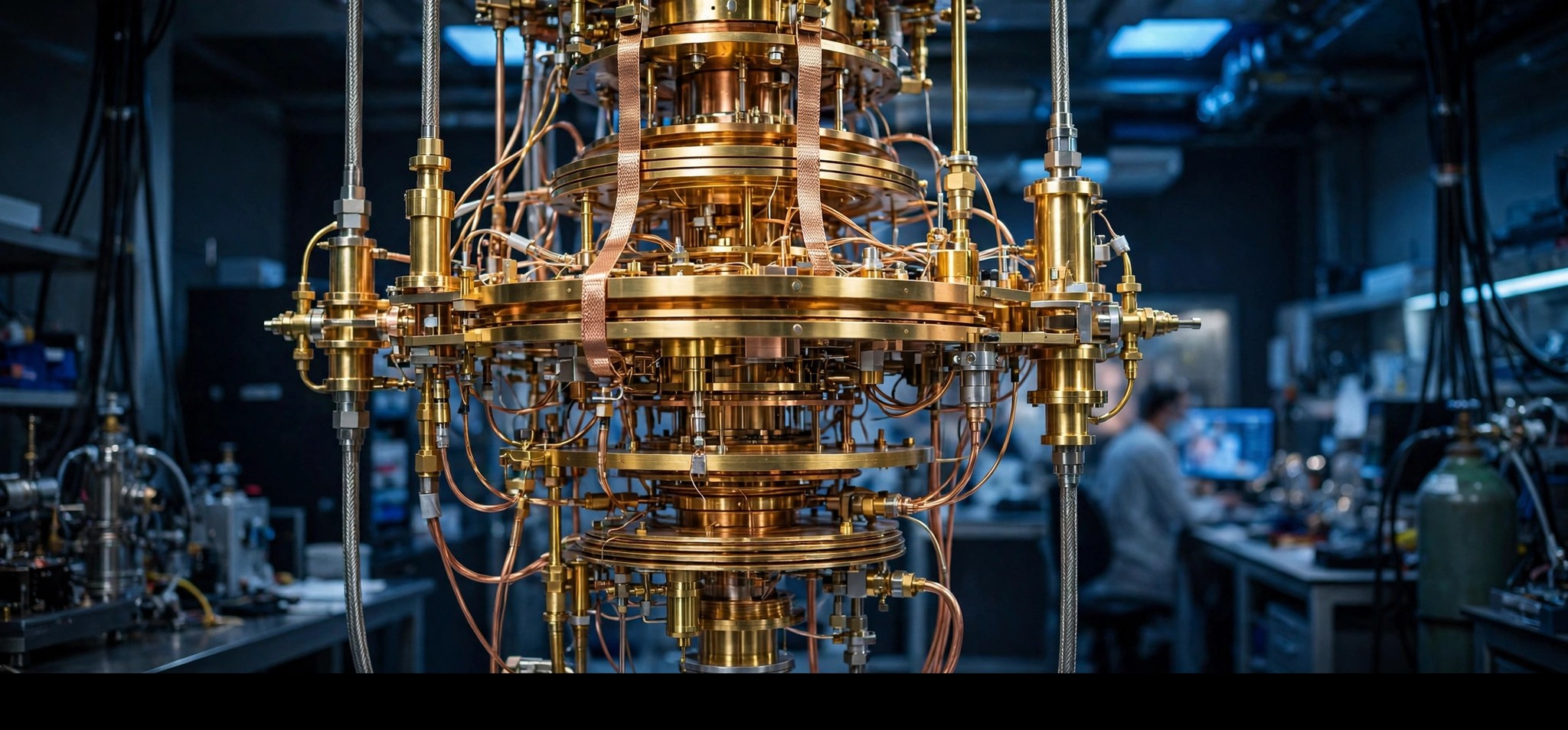
Quantum computing keeps opening doors that classical hardware can’t. The reason is structural — where traditional computers work with binary bits locked to 0 or 1, quantum machines use qubits governed by quantum mechanics. Different math plus a different computation model, and that’s before you even get to the speed question. Fundamentally different.
No algorithm solves everything. Quantum approaches are tuned for narrow problem types — simulation, optimization, cryptography, plus the kind of mathematical analysis that classical systems handle slowly or not at all. Outside those categories, classical hardware still wins. Know the boundary before assuming the technology applies to your use case.
What Are Quantum Algorithms in Modern Computing?
Specialized computational methods. Quantum algorithms run on quantum hardware using mechanics principles that have no direct equivalent in classical computing. Unlike classical algorithms, they process information through qubits — which hold quantum states instead of fixed binary values, giving the system a fundamentally different structure for computation. Frankly, that’s the whole point: it’s not just faster hardware, it’s a different model entirely.
Where does this actually apply? Exploring how superposition, entanglement, and quantum interference help solve specific computational problems is central to quantum algorithms in modern computing. These methods are particularly useful for complex simulations, optimization, plus mathematical calculations. Their effectiveness depends on the problem, algorithm design, plus the available hardware — not every problem benefits from this approach.
Fundamental Principles Behind Quantum Algorithms
Three principles drive everything. How information is represented, how it’s manipulated, plus how it’s measured — get any one of those wrong and the algorithm falls apart.
Superposition
Qubits can exist in superposed states before measurement — a fundamentally different model from classical bits. Classical bits are fixed — 0 or 1. Full stop. Qubits can exist in combinations of states before measurement, which changes what the hardware can represent during a computation. What that doesn’t mean — and this gets mangled constantly — is that the computer tries every answer simultaneously and reads out the winner. That’s not how it works. The interference step is where the real design happens: the algorithm has to deliberately shape probability so the right answer becomes more likely than the wrong ones. Get that wrong and measurement gives you garbage, no matter how clean the superposition was. The physics is subtle, and most explanations skip the part that actually matters.
Entanglement
Qubits entangle. When they do, their combined state holds correlations that can’t be reduced to describing each qubit separately — the relationship between them carries information the individual states don’t. That’s what makes entanglement useful rather than just strange.
This supports coordinated operations across all sorts of qubits and lets quantum circuits represent relationships that classical systems genuinely struggle to reproduce. And it’s that circuit-level coordination that makes entanglement useful rather than just interesting.
Quantum Interference
Interference is where probability amplitudes combine — reinforcing or cancelling one another. Algorithms exploit this. They push the probability of correct outcomes higher and reduce the likelihood of wrong answers through carefully designed interference patterns. Essential to most approaches, because measurement alone can’t expose all the information in a quantum state. Frankly, interference design is where most of the real algorithmic work happens.
How Quantum Algorithms Work Step by Step
Four stages. Each one contributes to transforming an initial quantum state into a measurable result.
1. Preparing Qubits
The process starts by initializing qubits into a known state — a controlled starting point for the computation. What does the initial state represent? Depending on the problem, the initial state may encode input information, possible solutions, plus a mathematical structure the algorithm works through. Each option demands a different initialization approach.
2. Applying Quantum Gates
Gates transform qubit states. Essential building blocks. There’s no clean classical equivalent — each gate performs a specific mathematical transformation on the qubit register, and the order matters completely.
Different gates handle different functions: creating superposition, changing quantum states, plus establishing entanglement. How does a sequence of gates turn into a useful computation? By arranging them so the interference patterns produce bias measurement toward the correct answer. Get the sequence wrong and the output is noise. Short gates, long consequences.
3. Processing Through Quantum Circuits
Quantum circuits chain gates into an organized sequence of operations. Each step shifts the state closer to one that contains information about the desired solution. Circuit design matters enormously — unnecessary operations increase complexity and make computations more vulnerable to errors. Shallow circuits perform better on near-term hardware. Frankly, this is one of the toughest practical constraints right now, and it directly limits which algorithms are worth running.
4. Measuring the Results
Measurement produces classical information from the quantum state. Snapshot only. The full quantum state can’t be directly observed — measurement collapses it into a definite classical outcome, and what came before is gone. Because results can be probabilistic, some algorithms run multiple times to build confidence in the answer. Is that inefficient? Not really — it’s built into the model, and it’s accounted for in the complexity analysis. Honestly, repeated sampling is just how it works. No way around it.
Common Types of Quantum Algorithms
Quantum Search Algorithms
Quantum search algorithms locate a desired item within a collection of possibilities. Grover’s algorithm is the clearest example — it offers a quadratic speedup for searching an unstructured collection compared with classical approaches. Why does that matter? Because for large unstructured search spaces, even a quadratic advantage cuts search time significantly. Not exponential — but real. Practically useful for large unstructured search spaces.
Quantum Factoring Algorithms
Factoring algorithms decompose large integers into prime factors. Shor’s algorithm demonstrates how quantum computing could improve the efficiency of this task, potentially affecting encryption systems that rely on the difficulty of integer factorization. That’s why the cryptography community is paying close attention and moving toward post-quantum alternatives.
Quantum Simulation Algorithms
Simulation algorithms model the behavior of quantum systems directly. Real use case. Molecular interactions, chemical reactions, plus material properties are exactly the kind of problems where classical computers hit a wall — the computational cost of simulating quantum behavior grows exponentially with system size. Quantum hardware sidesteps that scaling problem, which puts simulation at the front of the queue for near-term practical value. A quantum algorithm research overview digs into these approaches and where they’re headed in scientific and computational research.
The Importance of Mathematics in Quantum Algorithm Design
Mathematics is the foundation — not background. Key point. Linear algebra sits at the core: quantum states map to vectors, and gates perform matrix transformations on those vectors — every gate operation is a matrix multiplication on the state vector. Frankly, linear algebra is non-negotiable here. The mathematics isn’t incidental — it is what the algorithm is built from, top to bottom.
Group theory offers another useful framework for understanding symmetry, relationships between operations, plus structured transformations. These concepts help researchers analyze quantum systems and develop algorithms for problems with mathematical patterns. For a deeper look, group theory fundamentals explain how these structures connect to quantum computing.
Mathematical analysis also helps researchers estimate computational complexity and judge whether a quantum approach offers a real advantage. That judgment isn’t always obvious — all sorts of problems look like quantum candidates until the math says otherwise.
Challenges in Running Quantum Algorithms
Serious obstacles. These aren’t minor engineering details — they’re the reason large-scale useful quantum computation is still years away.
Quantum Noise: Environmental disturbances affect qubit states and introduce computational errors. Noise is the dominant constraint in near-term hardware — it isn’t worth much to underestimate how disruptive it is.
Limited Qubit Resources: Hardware restrictions cap the size and complexity of computations. Today’s processors are far too small for most algorithms of practical interest — what’s the current qubit count on useful fault-tolerant machines? Not enough.
Error Correction: Detecting and managing errors is essential for reliable computation. That overhead itself consumes qubit resources, which compounds the hardware limitation significantly.
Circuit Complexity: Deep circuits increase error risks and reduce practical performance. Shallow circuits work better — and that constrains which algorithms are currently viable.
Algorithm Development: Creating useful quantum algorithms requires specialized mathematical and technical expertise that’s still in short supply across the field.
Final Thoughts
A genuinely different model. Quantum algorithms use superposition, entanglement, interference, plus quantum circuits to tackle certain specialized problems more efficiently than conventional approaches — not everything, but specific categories where the advantages are real.
Hardware limitations and error management remain serious obstacles — that hasn’t changed. But research is making real progress on algorithm design and error correction. Honestly, as hardware improves, these methods will find their way into scientific discovery, optimization, plus advanced computing. Progress is slower than the press coverage suggests, but the direction is real. But that development is measured in years of hard engineering work, not in press releases. Honestly, teams that understand what the technology actually does — and what it doesn’t — are better positioned to make sensible decisions about when to pay attention.
FAQ
What is a quantum algorithm?
A computational procedure designed to run on quantum hardware and use quantum mechanics principles to solve a particular problem. Where do the advantages come from? From superposition, interference, plus entanglement — not just raw processing speed.
How are quantum algorithms different from classical algorithms?
Classical algorithms process information through binary bits. Quantum algorithms use qubits, quantum gates, plus quantum phenomena like interference and entanglement. The difference isn’t just speed — it’s a different computational model that only provides advantages for specific problem types.
Do quantum algorithms solve every problem faster?
No. Their advantages apply to specific computational problems. Many everyday tasks remain better handled by classical computers — and forcing a quantum approach onto the wrong problem doesn’t help anyone.
Why are quantum algorithms important?
They may help researchers address specialized challenges in simulation, optimization, cryptography, plus mathematical computation. For those categories, the potential speedups are meaningful enough that industry and academia are investing heavily in getting the hardware to catch up.







Comment