
Why Water Utilities Specify Independent Liner Leak Location Surveys for Reservoir Construction

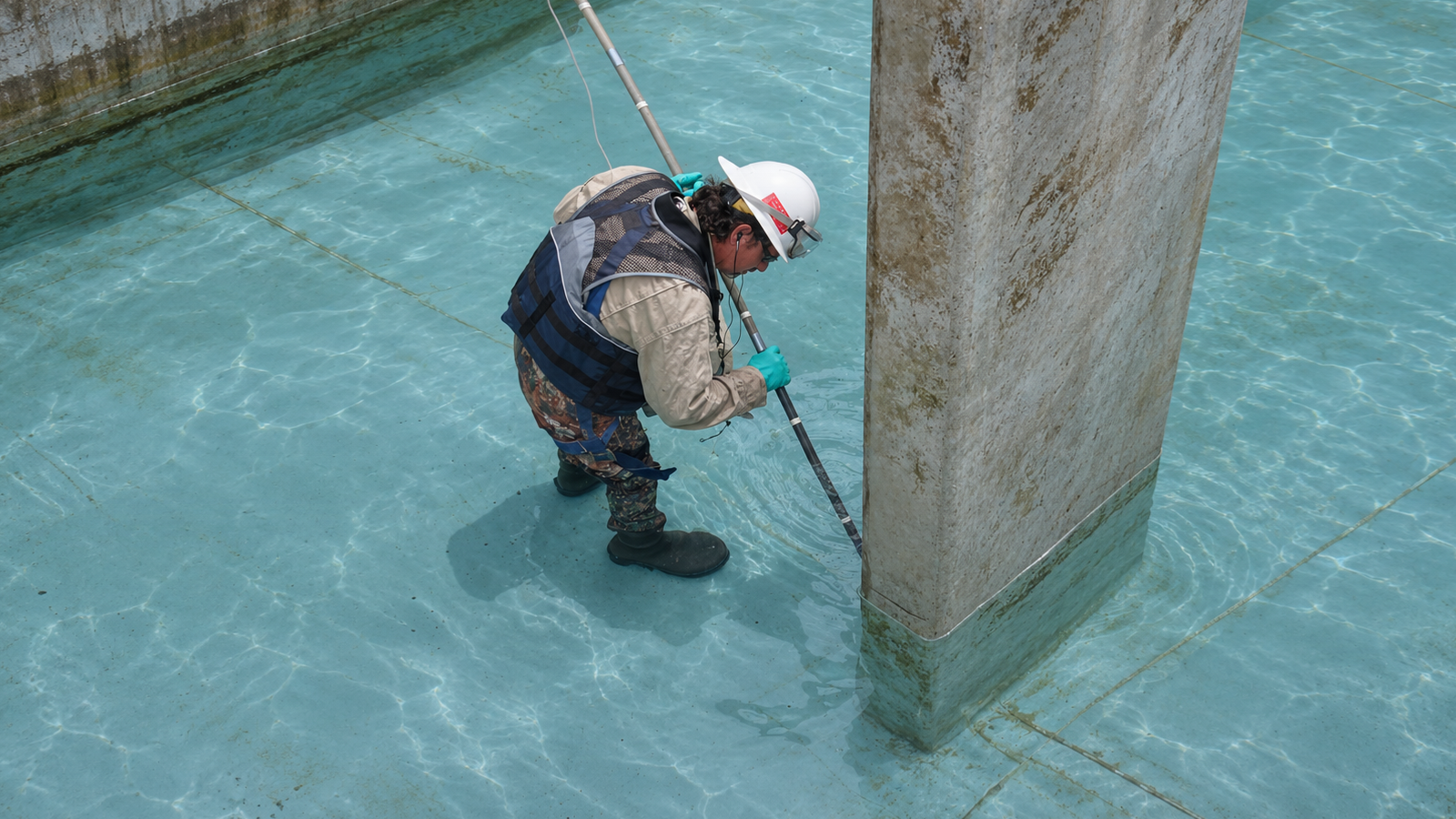
Water utilities operate under a simple but unforgiving rule: once a lined reservoir is buried, backfilled, or put into service, the cost of finding and fixing a leak increases by an order of magnitude. This single fact explains why independent liner leak location surveys have become a standard specification item in reservoir construction contracts across the water industry. A water reservoir liner survey conducted before final acceptance is not an optional add-on. It is the last reliable checkpoint before a geomembrane is covered with soil, concrete, or water, and the opportunity to verify its integrity disappears.
This article explains why utilities insist on third-party verification, how a water survey geomembrane liner inspection actually works, what risks it mitigates, and why the practice has become embedded in procurement specifications for new construction, rehabilitation, and expansion projects.
The Hidden Vulnerability of Geomembrane Liners
Geomembrane liners, whether HDPE, LLDPE, PVC, or reinforced polypropylene, are manufactured to extremely tight tolerances and tested extensively before they ever reach a job site. The material itself is rarely the weak point. The vulnerability shows up during installation: seaming, handling, anchoring, and the inevitable foot traffic of a construction crew working across thousands of square feet of exposed membrane.
A pinhole from a dropped tool, a seam that was not fully fused, a puncture from a sharp stone beneath the subgrade, or a small tear near a penetration fitting can all pass undetected by visual inspection alone. Industry data consistently shows that visual inspection, even when performed carefully by experienced installers, catches only a fraction of actual defects. Most leaks in geomembrane liners are smaller than a few millimeters, invisible to the naked eye, and located in places that are difficult to reach for close visual review, such as the base of a steep side slope or beneath a protective layer of geotextile.
This gap between what installers can see and what actually exists in the liner is the core reason utilities require a dedicated water survey geomembrane liner inspection rather than relying on the contractor’s own quality assurance process.
What an Independent Liner Leak Location Survey Involves
An independent leak location survey uses electrical methods to detect breaches in the liner that are invisible to the eye. The two most common approaches are the water puddle method, used on exposed liners before backfill, and the water lance or dipole method, applied after a protective soil cover has been placed.
Both techniques rely on the same underlying principle. An intact geomembrane liner is an electrical insulator. Water and soil, by contrast, conduct electricity. When a survey technician applies a voltage across the liner, using the reservoir water or a thin layer of water on an exposed liner as one electrode and a ground reference as the other, any breach in the membrane creates a path for current to flow. Sensitive detection equipment picks up this anomaly, and the technician can pinpoint the exact location of the defect, often to within a few centimeters.
This is fundamentally different from pressure testing pipeline sections or simply reviewing seam weld logs. Electrical leak location surveys test the entire installed liner system as a whole, including areas the installation crew may not have flagged for closer review, and they do so with a method that is sensitive enough to find damage measuring less than one millimeter across.
Why Utilities Require an Independent Third Party
A water utility could, in theory, rely on the liner installer to self-certify the integrity of their own work. Most utilities choose not to, and the reasoning is straightforward.
The first reason is conflict of interest. A contractor who installs the liner has a financial and schedule incentive to declare the work complete. An independent survey firm has no stake in the outcome beyond producing an accurate result, which means the findings carry more weight in acceptance decisions, warranty disputes, and regulatory documentation.
The second reason is specialized expertise and equipment. Leak location surveying requires calibrated instrumentation, trained technicians who understand how soil moisture, liner thickness, and ambient conditions affect readings, and the judgment to distinguish a genuine breach from background electrical noise. This is not a general construction inspection skill. It is a specialized discipline, and most liner installation companies do not keep this capability in-house.
The third reason is documentation and liability. Utilities are accountable to ratepayers, regulators, and, in many cases, bond covenants that require demonstrable due diligence in capital asset construction. An independent survey report, with GPS coordinates of any defects found and confirmation that identified defects were repaired and retested, becomes part of the permanent project record. If a leak is ever discovered after the reservoir is in service, that documentation protects the utility’s position in any dispute over responsibility.
The Cost of Skipping the Survey
The financial case for an independent survey becomes obvious when you compare the cost of the inspection itself to the cost of a missed defect. A full survey on a typical reservoir liner, whether exposed or covered, is a relatively small percentage of total project cost. A single undetected leak, by comparison, can lead to consequences that dwarf that figure many times over.
Water loss is the most direct cost. A small breach under constant hydraulic head can leak thousands of gallons per day, year after year, representing treated water that the utility paid to produce and will never bill a customer for.
Subgrade erosion is a more serious and less visible risk. Water migrating through a breach in the liner can wash out the soil beneath it over time, creating voids that eventually lead to liner settlement, localized liner stress, or even structural failure of the reservoir floor or embankment.
Groundwater contamination risk exists for certain reservoir contents and site conditions, and regulators increasingly expect utilities to demonstrate they took reasonable steps to prevent any exfiltration.
Finally, there is the sheer difficulty of post-construction leak detection. Finding a leak in a lined reservoir that has already been backfilled, planted, or placed into service is vastly more expensive and disruptive than finding it before the cover material goes down. It may require draining the reservoir, excavating cover soil, or hiring the same type of survey firm to perform a far more complicated in-service leak detection, often at several times the cost of a pre-acceptance survey.
When Surveys Are Specified in the Construction Timeline
Utilities typically specify leak location surveys at two distinct points in the construction sequence, and sophisticated specifications call for both.
The first survey happens on the exposed liner, after seaming and panel installation are complete, but before any cover soil, concrete topping, or protective layer is placed. This is the ideal window for defect detection because the entire liner surface is accessible, repairs can be made immediately with a liner patch, and the repaired area can be retested on the spot before anything is covered.
The second survey, where specified, happens after the protective soil cover or ballast layer has been installed, using the water lance or similar covered liner method. This step exists because cover placement itself is a common source of new damage. Equipment tires, sharp aggregate, or careless spreading can puncture a liner that passed its pre-cover inspection with a clean result. A post-cover survey catches this second wave of risk before the reservoir is filled with water.
Some utility specifications also call for a final survey once the reservoir has been filled to operating level, verifying the as-built, fully loaded condition of the liner under real hydraulic head. This is particularly common for large potable water reservoirs, reclaimed water storage, and lined ponds subject to regulatory oversight.
How This Fits into Broader Quality Assurance Specifications
Independent leak location surveys do not replace other elements of reservoir quality assurance. They complement destructive and non-destructive seam testing, such as air pressure testing of double track welds and vacuum box testing of extrusion welds, which verify seam integrity at the time of installation. Electrical leak surveys add a different layer of assurance: they test the finished, installed condition of the entire liner, not just the seams, and they do so after all installation activity, including anchoring, penetration sealing, and foot traffic, has already occurred.
Many utility specifications now reference recognized testing standards, such as ASTM D7007 for the electrical leak location methods used on exposed geomembranes and ASTM D7703 for methods used on covered geomembranes and geomembranes submerged under water. Referencing these standards in a specification gives the utility and its engineering consultants a clear, enforceable basis for acceptance criteria and gives contractors an unambiguous target for what constitutes a passing result.
The output of a well-run survey is also valuable beyond the immediate pass or fail decision. A survey report typically includes a scaled map of the liner showing the precise location of any defects found, their size classification, and confirmation of repair and retest. This document becomes part of the as-built record for the reservoir and is often requested years later during routine asset inspections, warranty claims, or when planning future reservoir maintenance.
FAQ: Independent Liner Leak Location Surveys
What is a water reservoir liner survey?
It is an independent, instrument-based inspection of an installed geomembrane liner that detects breaches too small to see visually, typically performed before backfill or final commissioning of the reservoir.
How accurate is electrical leak location compared to visual inspection?
Electrical methods routinely detect defects smaller than a few millimeters, including breaches hidden beneath soil cover or geotextile. Visual inspection alone misses a significant share of these defects because many are not visible from the surface.
Can a liner be surveyed after it has already been covered with soil?
Yes. The water lance or dipole method is specifically designed for covered geomembrane liners and can locate breaches through a layer of cover soil, though results are generally most reliable when the cover layer is relatively thin and uniform.
Who typically performs these surveys?
Specialized third-party geophysical survey firms with trained technicians and calibrated leak detection equipment, rather than the liner installation contractor itself, which preserves independence in the results.
What happens if the survey finds a defect?
The technician marks the precise location, the installer makes a repair using an approved patching method, and the repaired area is retested before the project moves forward. This cycle continues until the liner passes.
Are these surveys required by regulation?
Requirements vary by jurisdiction and reservoir type. Some state drinking water programs and environmental regulators expect documented leak testing as part of construction records, while in other cases the requirement comes directly from the utility’s own engineering specifications rather than a regulatory mandate. A few points utilities commonly weigh when setting their own requirements include:
- The reservoir’s intended contents, such as potable water, reclaimed water, or raw water storage
- The site’s proximity to groundwater resources or sensitive environments
- Bond or financing covenants that require documented due diligence
- Prior experience with liner defects on similar projects
How much does an independent survey typically cost relative to the overall project?
It represents a small fraction of total liner and reservoir construction cost, especially when weighed against the cost of excavating and repairing a leak discovered after the reservoir is already in service.
Conclusion
Independent liner leak location surveys have become a standard specification requirement because they address a risk that no other part of the construction process reliably catches: small, invisible breaches in a geomembrane liner that can lead to water loss, subgrade damage, and costly post-construction repairs. For water utilities accountable to ratepayers and regulators alike, the modest cost of a water survey geomembrane liner inspection is a sound trade-off against the far higher cost of discovering a leak after the reservoir has already been buried, filled, or placed into service. As reservoir construction specifications continue to mature, independent verification of liner integrity is likely to remain a fixed and expected part of the process, not an optional extra.







Comment