
What Happens If You Do Not Replace a Missing Tooth?

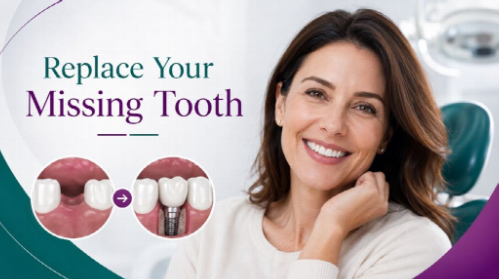
Losing a tooth can feel like a small problem at first, especially if the gap is not visible when you smile. Some people decide to leave the space untreated because it does not hurt, while others delay replacement because they are unsure whether they need a dental implant, bridge or denture.
In some cases, leaving a missing tooth space may be reasonable for a period of time. However, a gap can also affect chewing, speech, confidence, neighbouring teeth, gum health and the way your bite works. The longer a tooth is missing, the more likely it is that the surrounding mouth may adapt in ways that make future treatment more complicated.
This guide explains what can happen if you do not replace a missing tooth, when treatment may be recommended and how options such as dental implants, dental bridges, dentures and bone grafting may help restore function and appearance.
Why Replacing a Missing Tooth May Matter
A tooth does not work in isolation. Each tooth helps support the overall balance of the mouth. When one tooth is lost, the teeth beside it, the tooth opposite it and the surrounding bone and gums may all be affected.
The impact depends on several factors, including:
- Which tooth is missing
- Whether the gap is at the front or back of the mouth
- How long the tooth has been missing
- The condition of the neighbouring teeth
- The patient’s gum health
- The way the upper and lower teeth meet
- Whether several teeth are already missing
- The patient’s age, oral hygiene and general health
A missing front tooth may cause an obvious aesthetic concern, while a missing back tooth may affect chewing and bite stability. Both situations deserve proper assessment.
What Can Happen If You Leave a Missing Tooth Gap?
Not every missing tooth causes immediate symptoms. However, several gradual changes may occur over time.
| Possible change | What it may mean | Why it matters |
| Neighbouring teeth drift | Teeth beside the gap may tilt or move | Future bridge, denture or implant planning may become harder |
| Opposing tooth over-erupts | The tooth opposite the gap may move into the empty space | The bite can become uneven |
| Jawbone shrinks | Bone may reduce where the tooth root is missing | A future implant may require bone grafting |
| Chewing changes | Food may be chewed more on one side | This may overload other teeth |
| Food traps develop | Gaps and tilted teeth may trap food | Cleaning becomes harder and decay risk may increase |
| Smile confidence changes | The gap may affect appearance or speech | This can affect social and professional confidence |
| Bite imbalance develops | Forces may no longer be shared evenly | Teeth, fillings and crowns may be placed under extra stress |
Teeth May Move into the Space
One of the most common concerns after tooth loss is movement of the surrounding teeth.
Adjacent Teeth Can Tilt
The teeth next to a missing tooth may gradually lean into the space. This can change the shape of the gap and make it harder to clean around the area.
If these teeth tilt significantly, future replacement options may become more complex. For example, a dental bridge may not fit predictably, a denture may need more adjustment or an implant crown may require additional planning to restore the correct shape.
The Opposing Tooth Can Over-Erupt
Teeth naturally seek contact with the tooth opposite them. If a lower molar is missing, the upper molar above it may slowly move downwards into the empty space. This is called over-eruption.
Over-eruption can create bite problems and may reduce the space needed for a replacement tooth. In some cases, the over-erupted tooth may need treatment before the missing tooth can be restored.
The Jawbone Can Reduce After Tooth Loss
Natural tooth roots help stimulate the surrounding jawbone during biting and chewing. When a tooth is removed, that stimulation is lost. Over time, the bone in the area may shrink in height or width.
This process is often called bone loss, jawbone resorption or alveolar bone resorption.
Why Bone Loss Matters
Bone loss may not be visible at first, especially when the missing tooth is at the back of the mouth. However, it can affect future treatment options.
For dental implants, sufficient healthy bone is needed to support the implant fixture. If the bone has reduced too much, the dentist may recommend bone grafting before or during implant treatment.
What Is a Bone Graft?
A bone graft is a procedure used to increase the amount of bone in an area where implant placement is planned. It may involve adding grafting material to rebuild volume and support future treatment.
Bone grafting can improve implant suitability in selected cases, but it can also increase treatment time, complexity and cost. Not every patient needs a graft, and not every grafted site is suitable for an implant. A full dental implant assessment and appropriate imaging are needed before treatment can be recommended.
Chewing and Bite Function May Change
When one tooth is missing, people often adapt without realising it. They may start chewing more on the other side or avoiding certain foods.
This can create uneven pressure across the mouth. Remaining teeth, fillings, crowns or bridges may be exposed to greater forces than before.
Missing Back Teeth
Back teeth play an important role in grinding and chewing food. If a molar or premolar is missing, patients may notice difficulty eating tougher foods such as meat, crusty bread or raw vegetables.
Over time, chewing mainly on one side can place extra pressure on the remaining teeth.
Missing Front Teeth
Front teeth help with biting, speech and smile appearance. A missing front tooth may affect pronunciation of certain sounds and can have a significant impact on confidence.
Food Trapping and Dental Hygiene Problems
A missing tooth space can make cleaning more difficult, especially if neighbouring teeth tilt or the gum shape changes.
Food may become trapped in the gap or around the teeth beside it. This can contribute to plaque build-up, bad breath, gum inflammation and tooth decay.
Good dental hygiene is essential whether the gap is replaced or not. Patients should maintain:
- Twice-daily brushing with fluoride toothpaste
- Daily interdental cleaning
- Regular dental hygiene appointments
- Routine dental examinations
- Professional advice on cleaning around gaps, bridges, implants or dentures
A dental hygienist can recommend interdental brushes, floss, water flossers or specialist cleaning aids depending on the shape of the gap and the replacement option chosen.
Does Every Missing Tooth Need to Be Replaced?
Not always. In some cases, a dentist may advise monitoring the space rather than replacing the tooth immediately.
Leaving a gap may be considered when:
- The missing tooth is a wisdom tooth
- The gap does not affect chewing or appearance
- The surrounding teeth are stable
- The bite remains comfortable
- The patient has medical factors affecting treatment
- The risks of replacement outweigh the benefits
- The patient prefers not to have further treatment after being informed of the options
However, this decision should be made after a dental assessment. A gap that seems harmless at first may still influence the bite, gum health or future treatment options.
Main Options for Replacing a Missing Tooth
There are several ways to replace a missing tooth. The right option depends on the location of the gap, bone levels, gum health, neighbouring teeth, cost, treatment goals and personal preference.
Option 1: Dental Implants
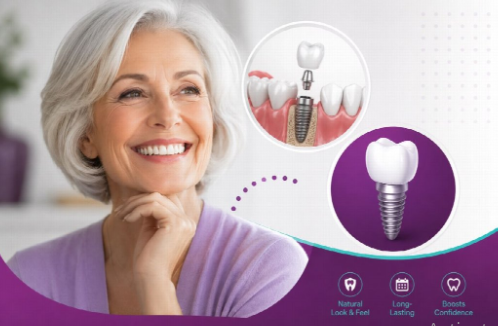
A dental implant is a titanium post placed into the jawbone to act as an artificial tooth root. Once healed, it can support a crown, bridge or denture.
A single dental implant can replace one missing tooth without routinely preparing the neighbouring teeth for crowns. For multiple missing teeth, implants may support a bridge or stabilise a denture.
Patients considering implant treatment should arrange an assessment with a qualified dental implant dentist who can examine the teeth, gums, bone levels and bite before advising whether implants are suitable.
Benefits of Dental Implants
Dental implants may offer:
- A fixed replacement tooth
- Strong chewing support
- A natural-looking implant crown
- Independent support without relying on adjacent teeth
- Help maintaining bone volume around the implant area
- A long-term replacement option for suitable patients
Important Considerations
Dental implants are not suitable for everyone. Suitability may depend on:
- Bone availability
- Gum health
- Smoking status
- Medical history
- Oral hygiene
- The position of nerves or sinuses
- Bite forces
- The patient’s ability to attend maintenance appointments
Implants also require ongoing care. Although an implant crown cannot decay like a natural tooth, the gum and bone around the implant can become inflamed if plaque is not controlled.
Option 2: Dental Bridges
A dental bridge fills a gap by attaching a replacement tooth to neighbouring teeth or implants.
Conventional Bridges
A conventional bridge is usually supported by crowns placed on the teeth beside the gap. It can feel fixed and stable, but it may require preparation of the supporting teeth.
This may be suitable when the neighbouring teeth already have large restorations or would benefit from crowns. It may be less ideal if the adjacent teeth are healthy and untouched.
Resin-Bonded Bridges
A resin-bonded bridge, sometimes called an adhesive bridge, uses a metal or ceramic wing bonded to the back of a neighbouring tooth. It is often more conservative than a conventional bridge and may be considered for selected front-tooth gaps.
However, it may not be suitable for every bite or every missing tooth position.
Option 3: Dentures
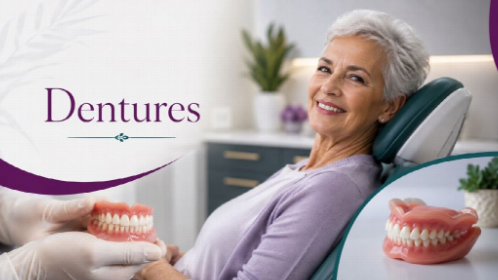
Dentures are removable appliances used to replace one, several or all missing teeth.
A partial denture can replace one or more teeth while fitting around the remaining natural teeth. Dentures can be a more affordable or less invasive option than implants or fixed bridges.
Benefits of Dentures
Dentures may be useful when:
- Several teeth are missing
- Surgery is not desired
- Implants are not suitable
- The patient wants a removable option
- A temporary replacement is needed while the mouth heals
Considerations with Dentures
Dentures require daily cleaning and must be removed as advised. They may need adjustment over time as the gums and bone change. Some patients adapt quickly, while others find removable appliances less comfortable or less stable than fixed options.
Comparing Missing Tooth Replacement Options
| Option | Fixed or removable? | Best suited for | Main advantage | Main limitation |
| Dental implant | Fixed | One or more missing teeth with suitable bone and gum health | Does not routinely rely on neighbouring teeth | Requires surgery and sufficient bone |
| Conventional bridge | Fixed | A gap with suitable supporting teeth | Fixed replacement without implant surgery | May require preparation of adjacent teeth |
| Resin-bonded bridge | Fixed but more conservative | Selected front-tooth gaps | Less tooth preparation in suitable cases | May debond or be unsuitable for heavy bite forces |
| Partial denture | Removable | One or several missing teeth | Often more affordable and non-surgical | May feel less stable and needs daily removal |
| No replacement | No appliance | Selected cases only | Avoids treatment cost and intervention | Teeth may move; bone and bite changes may occur |
When Should You Replace a Missing Tooth?
It is sensible to seek dental advice soon after a tooth is lost or extracted. Early assessment allows the dentist to explain whether the space should be preserved, monitored or restored.
Prompt advice is particularly important if:
- The missing tooth is visible when smiling
- Chewing has become difficult
- Teeth are moving into the gap
- Food is trapping around the space
- You are considering an implant
- Several teeth are missing
- You have gum disease
- You have pain, swelling or infection
- The gap is affecting confidence or speech
Planning early does not mean treatment must begin immediately. It simply gives you more control over your options.
How Lodge Causeway Dental Centre Can Help
Bristol Dentists at Lodge Causeway Dental Centre, provide dental implant assessments and missing-tooth replacement options for patients in Fishponds, Bristol and surrounding areas.
The practice offers general dentistry, dental hygiene, emergency dental care, dental bridges, dentures and dental implants. This allows patients to discuss both fixed and removable tooth-replacement options, as well as any hygiene or gum treatment needed before restorative care.
For implant patients, assessment may include reviewing oral health, bone levels, bite function and medical history. If additional procedures such as bone grafting are needed, these can be explained as part of the treatment planning process.
Key Takeaways
A missing tooth is not always an emergency, but it should not be ignored.
Important points to remember:
- Teeth next to a gap can drift or tilt.
- The opposing tooth may move into the space.
- Jawbone can reduce after tooth loss.
- Food trapping may increase plaque and decay risk.
- Chewing may become less balanced.
- Dental implants, bridges and dentures each have different advantages.
- Bone grafting may be needed if there is not enough bone for an implant.
- Good dental hygiene is essential with every replacement option.
- The best choice depends on a personal clinical assessment.
Final Thoughts
Leaving a missing tooth untreated may seem simple in the short term, but changes to the teeth, gums, bone and bite can develop gradually. These changes may affect comfort, chewing, appearance and the complexity of future treatment.
The right solution is not the same for every patient. Some gaps can be monitored, while others are better restored with a dental implant, bridge or denture.
A professional dental assessment can help you understand what is happening in your mouth, what risks apply to your situation and which replacement option offers the best balance of health, function, appearance and long-term maintenance.







Comment