
How Do Engineered Vacuum Pump Systems in Australia Work in 2026?

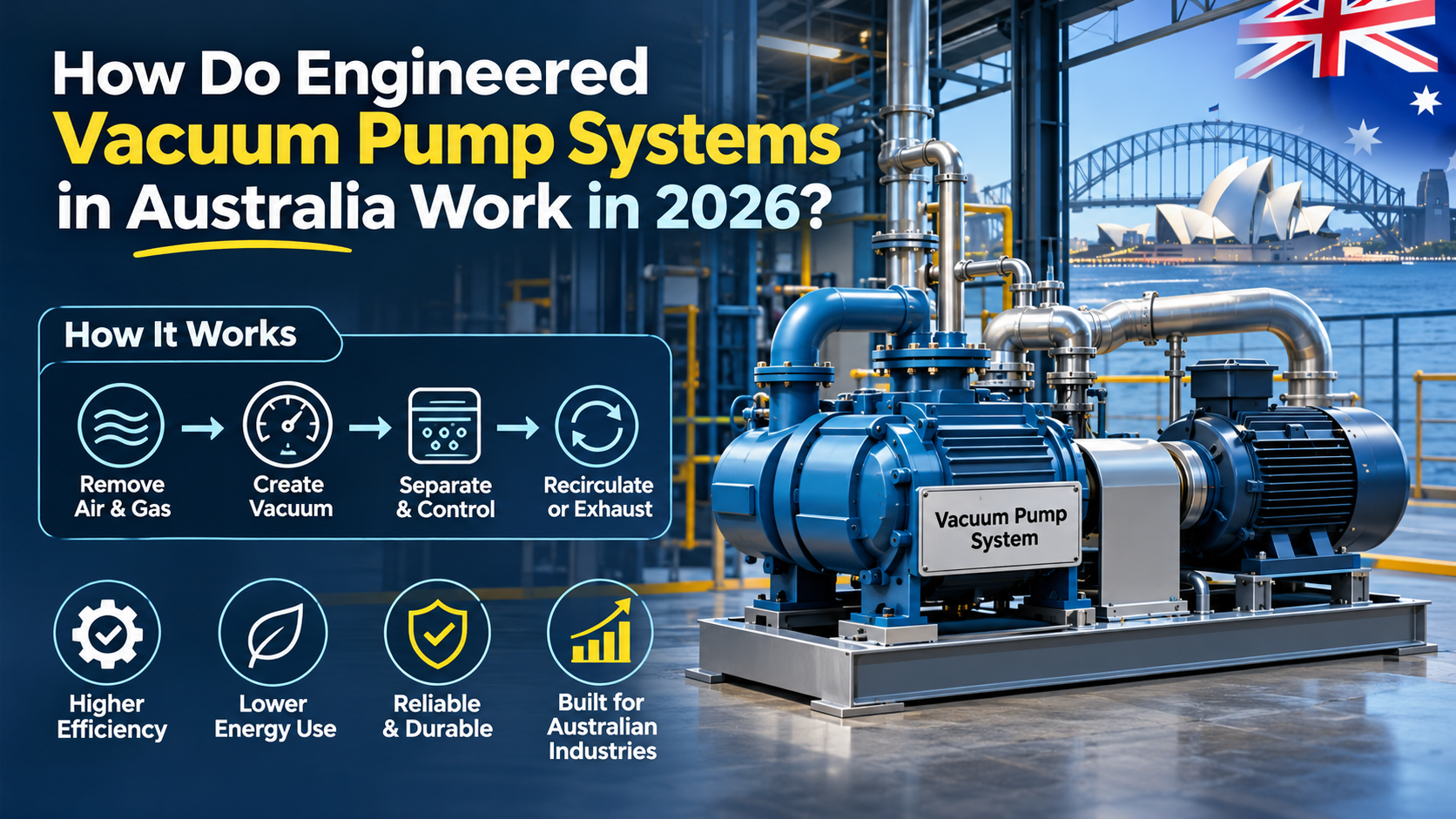
Walk into almost any Australian factory and there is a good chance something is being held, dried, moved or packed under vacuum. Food plants use it to seal trays. Mines use it to dewater filter cake. Hospitals rely on it for suction lines. Yet most people only think about the pump when it stops.
Engineered vacuum pump systems in Australia are a different beast from an off-the-shelf unit bolted to a skid. They are designed around a specific process, with the pump, controls, receivers, filtration and pipework treated as one system. This guide explains how they are put together, how centrifugal pumps fit in, and what buyers should check before signing off on a design.
What Makes a Vacuum System “Engineered”?
A standard vacuum pump is sold on a datasheet. You pick a flow rate and an ultimate pressure, and that is about it. An engineered package starts from the other end: the process.
The designer asks what gas or vapour is being removed, how much of it, at what temperature, and how often the load changes. Is there moisture? Solvent? Fine powder? Will the line run 24 hours a day or only during a batch cycle?
Those answers decide the pump technology, the number of pumps, the size of the receiver tank and the type of separators upstream. They also drive the control logic. A system that runs three pumps in lead-lag with variable speed drives behaves very differently from one large pump running flat out.
In short, the engineering is in matching the hardware to the real duty, not the brochure duty.
The Main Vacuum Technologies and Where They Suit
No single pump type wins everywhere. Each has strengths that make sense in particular plants.
- Liquid ring pumps handle wet, dirty and condensable loads well. They are common in paper mills, mineral processing and chemical plants.
- Oil-lubricated rotary vane pumps reach a deep vacuum at modest cost and suit packaging, moulding and lab work.
- Dry screw and claw pumps run without oil in the compression chamber, which matters for food, pharmaceutical and solvent recovery duties.
- Roots boosters sit in front of a backing pump to lift throughput at lower pressures.
An engineered system often combines two of these. A dry screw pump with a booster, for example, can cover a wide pressure range without contaminating the product.
Where Centrifugal Pumps Fit Into the Picture
Vacuum and liquid handling are closely linked. Many process lines that need vacuum also need to move water, slurry or chemicals, and centrifugal pumps do most of that work.
Liquid ring vacuum pumps, for instance, need a steady supply of seal water. That supply is usually delivered and recirculated by a centrifugal pump through a heat exchanger. If that small pump is undersized, the vacuum pump heats up, its capacity drops and the whole process slows down.
Centrifugal pumps also handle condensate removal, cooling water circuits and transfer between vessels. Selecting them against a proper system curve, rather than a guessed head figure, keeps them running near their best efficiency point. That reduces vibration, seal wear and power bills.
Treating vacuum and centrifugal equipment as one design package avoids the finger-pointing that can happen when two suppliers each blame the other’s gear.
Designing for Australian Conditions
Local conditions shape the design more than people expect. Ambient temperatures in northern Queensland or the Pilbara can push cooling systems hard, and air-cooled pumps lose capacity in sustained heat.
Remote sites add their own challenges. Spare parts may be days away, so designers tend to favour standardised components, duty-standby arrangements and simple, robust controls that local electricians can maintain.
Compliance matters too. Electrical work must meet AS/NZS 3000, and pressure equipment such as receivers may fall under AS 1210 and state registration rules. Hazardous area sites need equipment rated to the right zone. Good engineering firms build these requirements into the design from day one rather than retrofitting them later.
Water quality is another quiet factor. Hard or recycled water can scale seal water circuits, so filtration or treatment is often worth the modest extra cost.
Energy Efficiency and Lifecycle Cost
Vacuum systems can be some of the hungriest electrical loads on a site. Over a 15-year life, power usually costs far more than the original equipment.
A few design choices make a big difference:
- Variable speed drives that match pump output to actual demand instead of throttling or bleeding air.
- Correctly sized receivers that smooth out peaks so pumps cycle less.
- Leak surveys on distribution pipework, since even small leaks force pumps to run harder.
- Heat recovery from oil-cooled or water-cooled pumps for washdown or space heating.
When comparing quotes, it pays to ask for a lifecycle cost estimate, not only a capital price. A cheaper skid that draws 20 percent more power is rarely the bargain it looks like.
How Specialist Suppliers Approach a Project
Most engineered projects follow a similar path. It starts with a site survey and a review of process data, followed by a functional specification and a general arrangement drawing that the client signs off.
From there, the package is fabricated, wired and often factory acceptance tested before shipping. Installation, commissioning and operator training follow. Australian firms that focus on this work, such as Emtivac, typically cover both vacuum systems and centrifugal pumps, which helps keep the design consistent across the whole line in 2026.
Whoever you choose, ask to see similar projects, check how they handle after-sales service, and confirm which spare parts are held locally. Those details matter far more on a wet Monday when a pump trips than any glossy brochure.
Maintenance Habits That Keep Systems Running
Even the best-designed system degrades without care. Most failures trace back to a handful of causes: contaminated oil, blocked inlet filters, worn seals and poor seal water quality.
A sensible maintenance plan includes regular oil analysis, filter checks, vibration readings and a simple log of operating pressure and motor current. Trends in those numbers often warn of trouble weeks before a breakdown.
Condition monitoring has become more affordable, too. Wireless vibration and temperature sensors can feed data to a plant dashboard, letting maintenance teams plan work during scheduled shutdowns instead of reacting to failures. For sites running around the clock, that shift alone can justify the investment.
Conclusion
Vacuum rarely gets attention until it fails, but it quietly supports packaging, mining, food, medical and chemical processes right across the country. Well-planned engineered vacuum pump systems in Australia begin with a clear understanding of the process, choose the right pump technology, and treat supporting centrifugal pumps as part of the same design. Local climate, remote access and compliance standards all shape the final package. Add energy-efficient controls and a disciplined maintenance routine, and the system should deliver reliable performance for many years. For plant managers, the lesson is simple: invest time in the specification, and the hardware will repay it.






Comment