
How to Choose the Right O General AC for Extreme Summer Temperatures in UAE

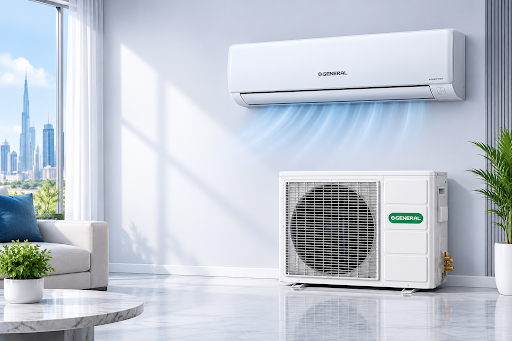
The UAE’s climate creates unique challenges for residential and commercial air conditioning. During summer, outdoor temperatures can rise significantly, making reliable indoor cooling essential for homes, offices, retail spaces, restaurants, and commercial buildings.
At the same time, electricity consumption and long operating hours have encouraged property owners to pay closer attention to energy-efficient cooling solutions. Choosing an air conditioner is no longer just about cooling capacity. Buyers also need to consider compressor technology, operating efficiency, installation requirements, and long-term performance.
This is where understanding modern air conditioning technology becomes important. Selecting the right O General AC Supplier involves evaluating the property’s cooling requirements and comparing available models according to their technical specifications.
Why Energy-Efficient Air Conditioning Matters in the UAE
Air conditioners can account for a significant portion of electricity consumption in buildings, particularly during the hottest months.
In residential properties, cooling systems may operate throughout the day. Commercial environments such as offices, supermarkets, restaurants, and retail stores can have even longer operating schedules.
Several factors influence air conditioning energy consumption:
- Outdoor temperature and humidity
- Indoor temperature settings
- Property insulation
- Room size and ceiling height
- Number of occupants
- Window size and sunlight exposure
- Air conditioner capacity
- Compressor technology
- Maintenance condition
Understanding these factors helps property owners make better purchasing decisions and identify systems that match their actual cooling requirements.
Understanding Inverter AC Technology
One of the important developments in modern air conditioning is inverter compressor technology.
Traditional fixed-speed compressors generally operate at a set speed, switching on and off according to cooling demand. Inverter systems can adjust compressor speed to respond to changing temperature requirements.
Potential advantages include:
- More flexible compressor operation
- Better adjustment to changing cooling demand
- Reduced temperature fluctuations under suitable operating conditions
- Potential electricity savings compared with equivalent fixed-speed models
- More consistent operation during extended cooling periods
However, actual energy consumption depends on the model, installation quality, property conditions, and usage habits.
When comparing different systems, buyers should examine the energy-efficiency specifications rather than assuming every inverter model provides identical results.
Choosing the Right AC Capacity for Your Property
Selecting the correct cooling capacity is essential for effective air conditioning.
An undersized unit may struggle to maintain comfortable temperatures during periods of extreme outdoor heat. An oversized system may also operate inefficiently depending on its configuration and the characteristics of the space.
Before purchasing an AC, consider the following:
Room size: Larger rooms generally require greater cooling capacity.
Ceiling height: Higher ceilings increase the volume of air that needs cooling.
Sunlight exposure: Rooms receiving direct sunlight may experience additional heat gain.
Occupancy: The number of people using a room influences its cooling load.
Equipment: Computers, lighting, appliances, and other equipment generate additional heat.
Insulation: Building insulation affects how quickly heat enters the property.
For larger villas and commercial buildings, a professional cooling-load assessment can help determine the appropriate capacity.
Different Types of O General Air Conditioning Systems
Different properties require different AC configurations. Understanding the available system types makes it easier to select suitable equipment.
1. Wall-Mounted Split AC
Wall-mounted split systems are commonly considered for bedrooms, apartments, living rooms, and individual offices.
They provide independent cooling for specific rooms and can be practical where separate temperature control is preferred.
When comparing models, buyers should review cooling capacity, compressor technology, electrical requirements, and energy-efficiency specifications.
2. Ducted Air Conditioning
Ducted AC systems distribute conditioned air through concealed ductwork and multiple air outlets.
They can be considered for villas, larger residential properties, offices, and commercial environments where centralized air distribution is preferred.
Important selection factors include:
- Total cooling requirement
- Number of zones
- Ceiling space
- Duct arrangement
- Airflow requirements
- Indoor and outdoor unit specifications
3. Cassette AC Systems
Cassette air conditioners are commonly installed in suitable false-ceiling configurations.
They can be useful for offices, retail environments, meeting rooms, and commercial spaces requiring distributed airflow.
Their suitability depends on ceiling construction, room layout, and cooling requirements.
4. Commercial HVAC Systems
Larger buildings may require more comprehensive cooling arrangements.
Commercial HVAC planning can involve multiple zones, different occupancy patterns, equipment heat loads, and extended operating schedules.
The equipment should be selected according to the building’s actual requirements rather than relying only on its total floor area.
How to Improve AC Efficiency During UAE Summers
Purchasing an efficient air conditioner is only one part of managing cooling consumption. Daily operating habits and building conditions also make a difference.
Maintain a Suitable Temperature Setting
Extremely low thermostat settings can increase cooling demand. Choosing a comfortable temperature and avoiding unnecessary adjustments can support more consistent operation.
Clean Air Filters Regularly
Dust accumulation can restrict airflow and affect cooling performance.
Cleaning filters according to the manufacturer’s maintenance instructions helps maintain proper airflow.
Improve Room Insulation
Curtains, window coverings, sealed gaps, and suitable insulation can help reduce unwanted heat entering indoor spaces.
Keep Outdoor Units Clear
Outdoor units need appropriate airflow to release heat. Their surroundings should remain clear of obstructions and excessive debris.
Schedule Regular Maintenance
Professional maintenance can help identify airflow problems, refrigerant-related issues, electrical concerns, and other conditions that may affect system performance.
What Makes an AC Suitable for Extreme Temperatures?
Not every air conditioner is designed for the same operating conditions.
For UAE buyers, it is important to review the manufacturer’s specified operating-temperature range and performance data.
Important specifications include:
- Maximum operating ambient temperature
- Cooling capacity at relevant test conditions
- Power consumption
- Energy-efficiency ratio
- Refrigerant type
- Compressor technology
- Electrical requirements
- Heat exchanger specifications
A model’s performance at standard test conditions may differ from its performance under higher outdoor temperatures.
Therefore, buyers should review the exact technical documentation before selecting equipment for demanding applications.
Residential vs Commercial Cooling Requirements
Residential and commercial properties have different cooling patterns.
Residential Properties
Homes and apartments usually have different occupancy patterns throughout the day.
Bedrooms, living rooms, kitchens, and other areas can also have different cooling requirements.
Property owners should consider room dimensions, window exposure, ceiling height, and the number of occupants before selecting equipment.
Commercial Properties
Commercial buildings may experience higher internal heat loads from employees, customers, lighting, machinery, and electrical equipment.
Offices, retail stores, restaurants, and showrooms may also operate for extended periods.
For these environments, cooling capacity, zoning, airflow, and operating schedules should be evaluated together.
Why Comparing Exact Models Is Important
A common purchasing mistake is comparing air conditioners based only on their brand name or tonnage.
Different models can have different specifications, even when they belong to the same product category.
Before purchasing, compare:
- Exact model number
- Cooling capacity
- Inverter or fixed-speed technology
- Energy-efficiency specifications
- Power consumption
- Refrigerant type
- Indoor and outdoor unit dimensions
- Operating-temperature limits
- Warranty information
- Product availability
A detailed comparison helps buyers identify equipment that matches their intended application.
Choosing the Right O General AC Supplier
Once the property’s cooling requirements are clear, the next step is comparing available products and purchasing options.
Working with an experienced O General AC Supplier can help buyers explore available models, review product specifications, and compare different capacities for residential and commercial applications.
Before confirming an order, ask for the exact model number, technical specifications, availability, warranty details, and complete quotation.
Buyers should also confirm whether the quoted product is suitable for their intended installation and operating conditions.
What to Check Before Purchasing
Before selecting an air conditioning system, consider this practical checklist:
- Identify the property type.
- Calculate the required cooling capacity.
- Determine the preferred AC configuration.
- Compare inverter and fixed-speed options.
- Review energy-efficiency specifications.
- Check the operating-temperature range.
- Confirm the exact model number.
- Verify product availability.
- Review warranty information.
- Compare complete quotations.
These steps can help prevent purchasing decisions based solely on price or general product descriptions.
The Future of Energy-Efficient Cooling in the UAE
As buildings become more focused on energy consumption and indoor comfort, efficient cooling technology will remain an important consideration.
Modern inverter systems, improved heat exchangers, better controls, and more thoughtful building design can all contribute to better cooling management.
Property owners are also becoming more interested in understanding the relationship between air conditioning capacity, electricity consumption, and long-term operating costs.
For anyone researching O General AC, comparing technical specifications and selecting a model that suits the property’s cooling requirements is a sensible starting point.
Final Thoughts
Choosing an air conditioner for the UAE climate requires careful consideration of cooling capacity, energy efficiency, compressor technology, building design, and expected operating hours.
Whether the requirement is for a bedroom, apartment, villa, office, or commercial building, the best purchasing decision begins with understanding the property’s actual cooling needs.
By comparing exact models, reviewing technical specifications, maintaining the equipment properly, and considering energy-efficient technologies, buyers can make more informed decisions about their long-term cooling requirements.
A well-selected air conditioning system can support indoor comfort while helping property owners manage their cooling needs more effectively.







Comment