
How to Plan a Focused 30-Minute Tennis Ball Machine Workout

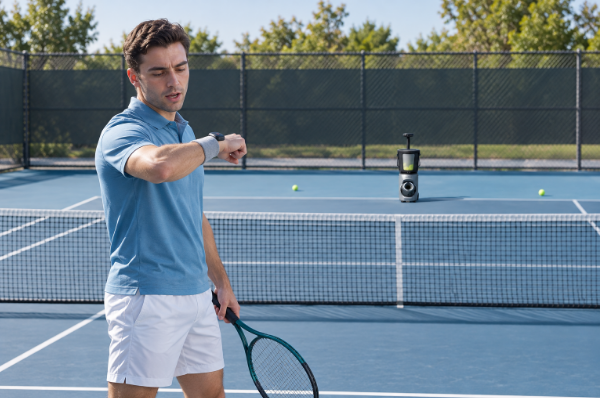
A focused 30 minute tennis ball machine workout can improve one specific part of your game without requiring a long court booking. The key is to divide the session into short blocks with clear goals instead of hitting as many balls as possible. Lumistar is one option for players building structured solo sessions, but the same framework works with any programmable tennis ball machine that offers suitable control over placement, pace, and feed interval.
What Should a 30-Minute Tennis Ball Machine Session Include?
An effective 30-minute session should include a short warm-up, one technical focus, a movement block, and a measurable finish. Each section has a different purpose, allowing practice to progress from controlled preparation to more demanding execution.
| Time | Training block | Main objective |
| 0–5 minutes | Warm-up and controlled hitting | Prepare the body and establish clean contact |
| 5–15 minutes | Technical repetitions | Improve one stroke or directional pattern |
| 15–25 minutes | Movement practice | Connect footwork, contact, and recovery |
| 25–30 minutes | Pressure challenge | Test consistency with a measurable target |
Choose one objective before arriving at the court. You might work on crosscourt forehand depth, backhand spacing, recovery after a wide ball, or consistency under pressure. Trying to repair several unrelated parts of your game in half an hour usually produces plenty of activity but little clear feedback.
Prepare the drill before the court reservation begins. Check the machine, organize the balls, place any targets, and decide which settings you will use. A few minutes of planning can prevent the session from becoming a sequence of adjustments.
How Should You Use the First Five Minutes?
Use the first five minutes to prepare your body and establish relaxed, controlled contact. This is not the time to test the machine’s maximum speed or widest placement.
Begin with a brief dynamic warm-up before starting the feed. Arm circles, lateral shuffles, split steps, and controlled shadow swings can help prepare the movements required during the session. Once you begin hitting, select a predictable placement and a comfortable interval.
Focus on three checkpoints:
- Prepare the racket before the ball reaches the bounce.
- Maintain a stable contact point in front of the body.
- Finish the stroke without losing balance.
The feed should give you enough time to organize your feet. If contact repeatedly happens late, reduce the speed or increase the interval. If the ball feels easy but controlled, add a little depth before increasing pace.
Treat this block as a quick assessment. Notice whether one side feels less coordinated, whether your first step is slow, or whether your contact point changes under even moderate pressure. Use that observation to refine the next block.
What Should You Practice During the Technical Block?
The 10-minute technical block should concentrate on one repeatable stroke pattern. A narrow task makes it easier to recognize whether contact, direction, or depth is improving.
Suitable goals include:
- Hitting crosscourt forehands beyond the service line
- Maintaining a consistent backhand contact point
- Alternating forehands and backhands without losing balance
- Directing approach shots into a large target zone
- Creating safer net clearance while maintaining depth
Divide the block into two five-minute rounds. During the first round, prioritize balance and stroke shape. Use a moderate feed and aim at a generous target. During the second, add only one difficulty, such as greater depth, a smaller target, or slightly more pace.
Avoid changing speed, spin, placement, and interval at the same time. When several variables change together, it becomes difficult to determine why the result improved or declined. Adjust one condition, hit enough balls to observe a pattern, and then decide whether the change was useful.
Count successful repetitions rather than total balls. Ten balanced shots that meet a clear target provide better feedback than 30 rushed swings with no defined standard.
How Can You Make the Movement Block More Effective?
An effective movement block connects the incoming ball, footwork, stroke, and recovery. The goal is not simply to run harder. It is to reach the ball with enough balance to hit well and prepare for the next feed.
For a structured drill, use two placements and begin near the center mark. Move toward the ball, hit into a large target, and recover before the next feed.
Repeat this sequence:
- Split step as the ball is released.
- Move toward the expected contact point.
- Use smaller adjustment steps near the ball.
- Hit with a clear directional target.
- Recover toward an appropriate court position.
Choose an interval that allows you to complete the entire pattern. If the next ball arrives before a realistic recovery is possible, the drill may reward rushed movement instead of efficient footwork.
Reduce the feed rate or placement width when balance begins to break down. Progress by preserving good movement as difficulty increases, not by reaching the most demanding settings as quickly as possible.
When Should You Add Responsive or AI-Based Practice?
Responsive practice should be added after the underlying stroke and movement pattern remain stable under predictable conditions. Uncertainty is useful only when it tests reading and recovery without completely disrupting technique.
A fixed pattern is usually better when you are learning a contact point or a specific sequence. Once that pattern becomes reliable, an AI tennis training partner can introduce a less scripted exchange. For example, TERO Pro uses visual perception and adaptive returns, requiring the player to read the developing ball instead of moving only from memory.
Keep the first responsive block short. Use manageable pace and placement so that unpredictability tests preparation rather than turning the drill into a chase. If stroke quality disappears, return to the programmed pattern and reduce one variable.
AI-assisted practice can add useful variation, but it cannot replace coaching or live match play. A coach can identify technical causes that a training system may not explain, while a real opponent introduces tactical intention, disguise, and score pressure.
How Should You Finish the Workout Under Pressure?
Finish with a five-minute scoring challenge that gives every ball a consequence. A simple score turns the final block into a test of concentration rather than another set of unmeasured repetitions.
Choose one large target zone and award yourself one point whenever the ball lands inside it with the intended direction and net clearance. For example, try to make 12 successful shots out of 20.
If you reach the goal comfortably, make the next session slightly harder by reducing the target or adding movement. If you miss it, repeat the same challenge next time rather than immediately increasing the difficulty.
Record the score and one brief observation, such as “contact became late after wide feeds” or “higher net clearance improved depth.” This gives the next session a useful starting point.
Make Every Minute Serve a Purpose
A productive 30-minute session requires one goal, a limited number of settings, and one result worth recording. Warm up, isolate one skill, connect it to movement, and finish with a measurable challenge.
The machine should support the plan rather than become the focus of it. Whether you use structured feeds or explore Lumistar’s more responsive training options, choose the simplest setup that tests the skill you want to improve. Clear objectives and repeatable measurements will do more for your practice than filling every minute with extra balls.






Comment