
Satyendra Kumar Vanapalli: How AI-Enabled CRM Systems Are Reshaping Enterprise Decision-Making

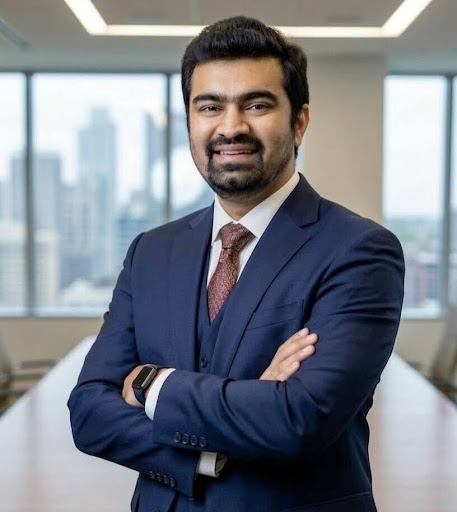
For more than 15 years, Satyendra Kumar Vanapalli has worked at the intersection of CRM technology and business strategy, helping organizations modernize platforms to improve operational efficiency, strengthen governance, and enable data-driven decision-making.
As a CRM Product Owner and enterprise CRM strategist for a global enterprise, he works on the design and implementation of AI-enabled CRM solutions that integrate automation, analytics, and artificial intelligence to support business modernization.
Over the course of his career, Vanapalli has designed, configured, and implemented CRM solutions across financial services, retail, manufacturing, and technology. His work includes contributing to the development of an AI-driven fraud detection capability that significantly improved fraud detection accuracy while helping reduce fraud-related losses for financial institution clients.
In the following interview, Vanapalli shares his perspective on the evolution of CRM, the growing role of artificial intelligence in organizational decision-making, and the future of integrated business platforms.
Q: You’ve spent more than 15 years working with CRM systems. What’s the biggest shift you’ve seen?
A: The biggest transformation has been the evolution of CRM from a system of record into a system of intelligence.
When I began my career, CRM platforms were primarily used to store customer information, manage sales activities, and track service cases. Today, organizations expect these platforms to provide real-time insights that help employees and executives make better decisions.
Artificial intelligence, predictive analytics, and automation have fundamentally changed how businesses use CRM. Instead of simply recording information, modern platforms can analyze customer interactions, identify emerging trends, predict business outcomes, and recommend actions that improve operational performance.
Organizations increasingly view CRM as a strategic business platform rather than simply an operational application.
Q: Can you share an example of that transformation?
A: One project that demonstrates this evolution involved developing an AI-driven fraud detection capability for financial institution clients.
By combining CRM data with transactional information and AI-based analytical models, the solution was able to identify suspicious behavioral patterns more quickly and accurately than traditional approaches. The implementation contributed to a significant reduction in fraud-related losses while improving detection speed and operational efficiency.
Projects like this illustrate how CRM has expanded beyond customer management. Today, it can support risk management, operational resilience, regulatory compliance, and executive decision-making.
Q: How is artificial intelligence changing everyday decision-making inside organizations?
A: AI enables organizations to make faster and more informed decisions by providing insights at the point where work is being performed.
Instead of waiting for weekly or monthly reports, business users can access real-time dashboards, automated recommendations, and predictive analytics directly within their CRM environment. This allows leadership teams to identify opportunities, monitor operational performance, and respond to emerging risks earlier.
My role is to translate business requirements into CRM capabilities that present meaningful information through dashboards, workflows, automation, and reporting. When analytics and AI are embedded into everyday business processes, organizations can spend less time gathering information and more time acting on reliable insights.
Q: Training seems to be a major part of your work. Why is it so important?
A: Technology alone does not create successful digital transformation.
Even the most advanced CRM platform will not deliver its full value unless users understand how to apply it effectively. Throughout my career, I have developed user training programs, implementation guides, e-learning materials, and live training sessions for sales, support, operations, and technical teams.
I also collaborate closely with business leaders, engineers, and subject matter experts to ensure documentation remains accurate as systems evolve.
One lesson I’ve learned is that successful CRM transformation depends just as much on user adoption as it does on technology. When employees trust the system and understand its capabilities, organizations can achieve significantly greater business value.
Q: What’s your approach to modernizing legacy CRM environments?
A: Every modernization effort should begin with understanding the business rather than the technology.
My first step is understanding existing business processes, identifying operational inefficiencies, and evaluating where automation and improved governance can create measurable value.
From there, I design CRM solutions that align with business objectives through configuration, workflow automation, validation rules, dashboards, reporting, and data governance.
Although every industry has unique requirements, I’ve found the underlying principles remain remarkably consistent: understand the business process, design intuitive user experiences, maintain high-quality data, and enable informed decision-making through technology.
Modernization succeeds when technology supports business strategy rather than forcing organizations to adapt to technology.
Q: Where do you see CRM heading over the next several years?
A: I believe CRM platforms will become increasingly predictive, adaptive, and AI-assisted while continuing to keep people at the center of strategic decision-making.
The next generation of CRM systems will continuously analyze customer behavior, recommend next-best actions, automate routine operational processes, and provide executives with predictive insights that improve organizational performance.
Organizations that invest in strong data governance, responsible AI implementation, workforce training, and scalable CRM architecture today will be better positioned to compete in an increasingly data-driven economy.
The future of CRM is not simply about automation. It is about creating integrated business ecosystems where people, trusted data, and artificial intelligence work together to enable faster, more confident, and more strategic decision-making.
About Satyendra Kumar Vanapalli
Satyendra Kumar Vanapalli is a CRM Product Owner and enterprise CRM strategist with more than 15 years of experience designing, implementing, and modernizing customer relationship management platforms across financial services, retail, manufacturing, and technology.
Throughout his career, he has served in leadership and consulting roles including CRM Product Owner, Senior Business Analyst, CRM Administrator, and CRM Consultant, leading enterprise CRM modernization initiatives across multiple industries.
His work includes contributing to AI-driven fraud detection capabilities, developing large-scale user training programs, and collaborating with cross-functional teams to align technology solutions with business objectives.
Vanapalli holds a Master’s degree in Information Assurance from a U.S. university, a Master’s degree in International Business from a U.K. university, and a Bachelor’s degree in Biotechnology.
His work focuses on helping organizations modernize CRM platforms through business process optimization, AI-enabled analytics, workflow automation, and user adoption strategies that improve operational efficiency, strengthen governance, and support data-driven decision-making.
Media Contact
- Email: [email protected]
- Country: United States
- Website: www.linkedin.com/in/satyendra-vanapalli-5005b131





Comment