
How to start an LLC: a plain-English guide for first-time owners

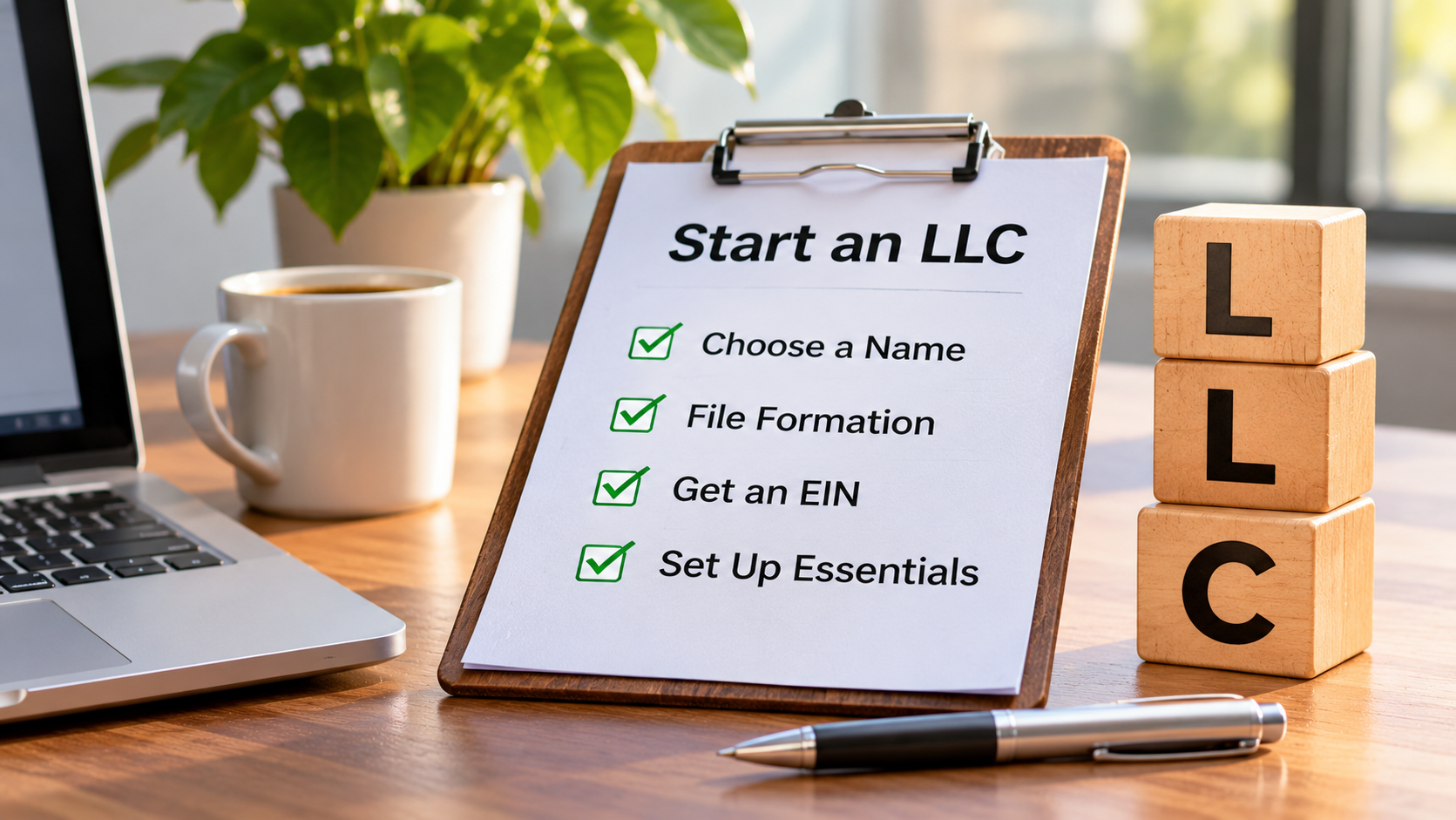
You’ve secured your first actual client. The invoice template is nearly complete, the logo is all set, and one question is keeping coming back to you: should this be an LLC? Many new owners leave that question unanswered for weeks. The paperwork isn’t the thing that delays them; it’s just that they don’t know the correct sequence of steps. Therefore, here is the order in which I actually carry out the process of setting up an LLC.
Decide whether you need one yet
It doesn’t have to be on the first day. Many people begin by working as sole proprietors and only set up the company when they start earning real income or when they begin to take on real risks. The protection begins to pay for itself if you’re entering into contracts, employing people, renting out space, or selling anything that could potentially harm someone. An LLC ensures that your personal assets are kept separate from the debts of the business, but it does not take the place of insurance and won’t save you from the consequences of your own poor decisions.
Pick your state, then pick a name that survives the search
Set up the company in the state where you carry on your business. It may seem like a clever idea until you find yourself having to register as a foreign LLC in your home state and pay again.
It has to be possible to tell your name apart from all the other businesses listed in your state, and most states provide a free online search service. Carry out the search before you become attached to any name. During that search, also check the domain name and the social media handles. Having a great name with a dead-end web address is a really bad thing to own.
How to start an LLC as a solo owner: the registered agent
A registered agent is something that every limited liability company should have; this involves a person or a company that has a physical address in the state and who is available during business hours to receive legal documents. A great many sole proprietors take on this responsibility themselves. The problem is that you actually have to be present, and in most states your address then becomes part of the public record. If that offends you, then you should employ a service, since it only costs a small amount each year and it avoids the need for you to sit by the door.
Forming an LLC: the filing, the fee, the wait
It is in this step that the formation becomes official. You submit the articles of organization to your Secretary of State, typically done online, and have to pay a fee. The filing fees vary from about $50 to $500 and the entire process takes roughly an afternoon’s work. However, approval may take longer, so it’s important to check your state’s current processing time before giving a client a date.
The form will request your company name, address, registered agent, and in some cases the person who manages the business. That’s all quite ordinary. Take care with the spelling, as correcting an error later usually involves making another filing and paying another fee.
Operating agreement: not always required, still worth it
It is not necessary in some states to draw up a written agreement. Yet you should do so even if you are the only member; the document will state who owns what percentage, who has the power to make decisions, and what occurs when a member wishes to withdraw. Moreover, it serves as proof that you regard the LLC as a distinct and separate entity, which is important should anyone ever question your liability protection, since the courts generally only recognise the separation as long as you do.
What the IRS does with your new LLC
A single-member LLC is normally considered a “disregarded entity”, so the IRS treats it as if it doesn’t exist for income tax purposes and you report the profit on your personal tax return in the same way as a sole proprietor; employment taxes are the only exception. When you have employees, then the LLC is treated as a separate entity for those taxes. If you want to be taxed as a corporation, you need to file Form 8832 to make that election, but I wouldn’t do that without having an accountant present.
Here’s the EIN. Even though a single-member LLC with no employees and no excise tax liability in principle doesn’t have to obtain one, I’d get it anyway. It’s free if you apply through the IRS, a number of banks require it, and it means you won’t have to give your Social Security number on vendor forms. For the exact official wording, hop over to this website, since it’s the IRS page concerning single-member LLCs. The rules, however, are different if you have partners, so make sure to read it in light of your own situation.
Open the bank account, then leave it alone
When the necessary documentation has been approved and you have your EIN, then open a business account and pass every dollar of business income and expenditure through it. Mixing personal and business funds is the fastest way of undermining the protection you’ve just paid for and it makes tax time a misery. If you’re unsure what the bank will require, click here to read our business bank account checklist before you go in.
After approval: the boring part that keeps you in good standing
Setting up an LLC is not a single occasion; in most states an annual or two-yearly report is required and in some cases there is a fee for it. A report on fees in 2026 shows that the cost for annual reports ranges from $15 in Kentucky to $150 in Arkansas. Furthermore, in addition to this you might also be required to obtain local licences or permits depending on the type of business and the city. When your approval is received, enter the renewal dates into your calendar immediately. Missing the deadline can cause the company to fall out of good standing, and that is a rather unpleasant situation to get out of.
What I’d do this week
Look up your name today and check the fee for your state tomorrow. You should file by Friday and open the account as soon as your approval arrives. All the other matters can be dealt with as the business develops, but the filing must come first, so focus your efforts on that. This is the way to set up an LLC without letting it use up your entire month.






Comment