
Dumpster Software Costs: What the Monthly Fee Leaves Out

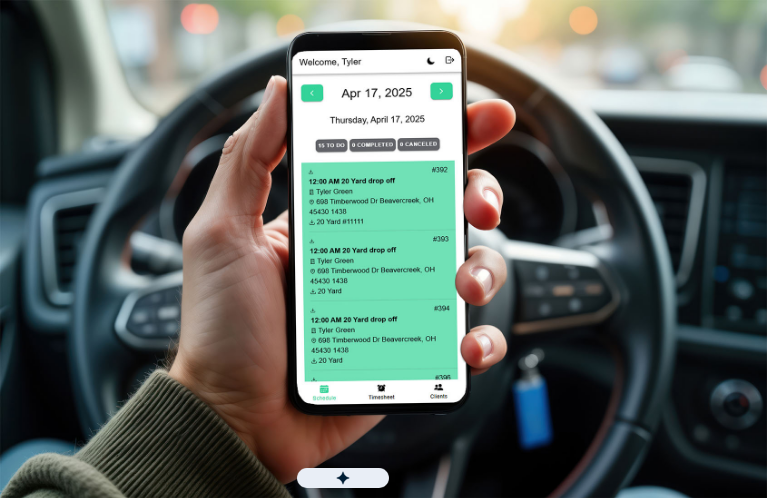
A software subscription is easy to compare when the only number on the page is a monthly fee. The harder comparison starts after a customer places an order. How many times does someone copy the address? Who checks container availability? How does the driver learn that the pickup moved? What supports the final invoice?
For dumpster rental operators, these questions connect software purchasing with the economics of running the business. A platform can have an attractive subscription price and still leave important work scattered across messages, spreadsheets and separate applications. Another system may offer more functions than the team will actually use.
The useful comparison follows a rental through the operation. It identifies which work the software supports, which work remains manual and what the company must do to keep the information accurate.
Start With a Complete Rental
Take a recent job with ordinary complications: a contractor needed a delivery, changed the placement instructions and requested collection a day later than originally planned. Follow the record from the first inquiry through the final payment.
Count the points where information changed hands. A salesperson may have confirmed the order, a dispatcher assigned the driver, the driver recorded delivery and an office employee reviewed the charge. Each handoff needs enough context for the next person to act.
This exercise produces a more useful requirements list than a collection of attractive screenshots. The business can see whether it needs stronger booking controls, clearer assignments, better field documentation or easier billing review. Those priorities can then shape the demonstration and purchasing decision.
An owner evaluating Dumpster Software Price should use that workflow as the comparison frame. Published prices provide a starting point. The decision also needs to account for the included functions, any separate services, implementation work and the way the team will use the system.
Separate the Subscription From the Operating Cost
The subscription is one part of the cost of using business software. Other parts may include setup, moving existing records, training employees and maintaining procedures as the operation changes. These costs can occur even when a vendor does not charge separate fees for them.
Payment processing, website services and third-party products also deserve their own line in a comparison. An owner should confirm which expenses belong to the core software package and which arise from optional services or transaction activity. Combining everything into one unexplained figure makes competing offers difficult to assess.
The same care applies to the cost of staying with the current process. Administrative work still consumes paid time when the tools are inexpensive. A dispatcher who repeatedly searches for an address or calls to confirm container availability is doing necessary work that could be organized more clearly.
The point is to identify the work accurately. Treating every minute spent in the office as a potential software saving would exaggerate the opportunity. Customers will still have questions, schedules will still change and employees will still need to make decisions.
Model Potential Savings With Visible Assumptions
A simple model can make the discussion more concrete. Suppose an operation handles 150 rentals in a month and estimates that duplicate entry takes ten minutes per rental. That represents 1,500 minutes, or 25 hours, of recurring work.
If a revised workflow removes six of those ten minutes, the modeled reduction is 15 hours for that month. It does not follow that the company will save 15 hours immediately. Employees may need training, some records may require correction and different job types may take different amounts of time.
Use the calculation as a testable assumption. Record the actual steps before implementation, repeat the measurement afterward and compare similar workloads. If order volume changes sharply, examine time per rental as well as total administrative hours.
Then decide what the recovered time is worth to the business. It may allow an employee to handle more customer inquiries, resolve outstanding invoices or finish work within the existing schedule. Those are different outcomes and should be measured separately.
Examine the Connections Between Features
A platform’s value often depends on the connections between its functions. A booking screen is useful, but the rental also needs an equipment assignment and a service record. A driver’s update is useful when the office can connect it to the correct job.
Bin Boss is an example of software organized around the dumpster rental workflow. Owners considering it can examine how the product’s customer-facing and operational tools fit their particular process, rather than judging each feature in isolation.
A demonstration should follow the same job across screens. Ask the vendor to change a service date, substitute equipment or explain a pending pickup. Observe where the revised information appears and which steps require someone to intervene.
Also ask what happens when information is entered incorrectly. A realistic demonstration includes corrections. An operation needs to know how it will recover from an inaccurate address, an incorrect container number or a disposal record entered against the wrong rental.
Include Adoption in the Purchasing Decision
Software can organize a process that employees understand. It is harder to make it useful when the team disagrees about who owns each step.
Before implementation, assign responsibility for customer records, dispatch changes, field updates and invoice review. Decide what a completed task means and how exceptions should be reported. These decisions make training more specific and reduce the chance that employees will continue using parallel records.
Start with representative rentals rather than the easiest possible demonstration. Include a short rental, a longer project, an exchange and a job with an access problem. The aim is to establish a process the team can repeat during a busy day.
Afterward, review a small set of practical measures: duplicate entries, unresolved assignments, invoice corrections and questions that required an extra call. These observations can show where the new process is helping and where it needs adjustment.
Choose a Cost You Can Explain
A strong software decision can be explained in ordinary business terms. The company knows what it is paying for, which operating problems it expects to address and how it will judge the outcome.
For dumpster operators, that means connecting the subscription to the work behind each rental. A clear price matters. So do reliable handoffs, usable records and an implementation plan that fits the people doing the job. Evaluating those elements together makes the purchasing decision more useful than choosing the smallest number in a comparison table.





Comment