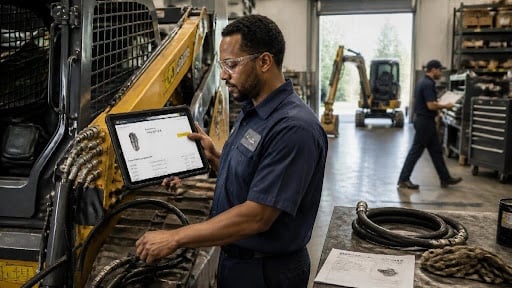
A broken machine can stop an entire job. The repair may be simple, but finding the correct component is often not. Aftermarket parts procurement digitalization brings catalogs, equipment records, supplier data, and order tracking into one workflow. It helps maintenance teams source parts faster while reducing costly ordering mistakes.
What Is Aftermarket Parts Procurement Digitalization?
Digital procurement replaces scattered calls, paper catalogs, and handwritten notes with searchable online systems. Buyers can identify a component, compare available options, confirm compatibility, place an order, and monitor delivery from one location.
The process is especially useful for mixed fleets. A contractor may operate several compact track loaders, two mini excavators, and a utility tractor from different manufacturers. Each machine has its own serial range, engine configuration, and component revisions. A digital record keeps those details connected to the correct asset.
Still, digitalization is more than placing orders online. A useful system should support:
- Equipment and serial number records
- Part number lookup
- Cross-reference information
- Technical specifications
- Purchase approvals
- Order and delivery tracking
- Service and replacement history
The goal is straightforward: make correct information easier to find and harder to lose.
Why Is Manual Parts Sourcing So Difficult?
Manual sourcing depends heavily on individual experience. A technician may recognize a hydraulic solenoid by sight, while a new buyer may only have a faded number and a few measurements. If that knowledge stays in someone’s notebook, the whole team loses access when that person is unavailable.
Paper records create similar problems. At 7:40 on a Monday morning, a mini excavator may be sitting beside an unfinished trench with a failed starter. The old invoice is somewhere in a workshop drawer. Meanwhile, the equipment plate is covered with mud, and three similar starter listings appear online. That is how rushed orders go wrong.
Machine modifications add another layer. An engine may have been replaced, or a previous owner may have installed a different pump. In that case, searching only by the machine model can return an incompatible component.
How Does a Digital Parts Search Work?
A reliable search begins with the machine, not the product photo. Record the manufacturer, model, serial number, engine model, and any number printed on the old component.
Step 1: Identify the Existing Component
Clean the identification area carefully. Look for:
- Stamped or engraved numbers
- Labels on motors, pumps, and controllers
- Casting numbers
- Electrical connector types
- Port locations and thread styles
- Mounting dimensions
A casting number may identify only the housing, not the complete assembly. Treat it as supporting information unless a catalog confirms otherwise.
Step 2: Use a Part Number Lookup
Enter the original number exactly as shown. Then check whether it has been replaced by a newer number. Manufacturers sometimes supersede components after a design change, so an older number may lead to a current replacement.
Search results should be checked against the equipment serial range. Two compact track loaders with the same model name may use different cooling fans, controllers, or hydraulic components depending on when they were built.
Step 3: Check a Cross-Reference Catalog
A cross-reference catalog connects an original number with compatible alternatives. It can save time, but the match still needs verification.
Compare the important specifications:
- Voltage, current, and connector pinout
- Pressure and flow ratings
- Shaft size and rotation
- Hose port size and position
- Mounting pattern
- Overall dimensions
A component that bolts into place may still operate incorrectly if its internal specifications differ.
How Can Digital Sourcing Improve Procurement Efficiency?
Centralized information reduces repeated work. Once a team confirms a component for a specific machine, it can save the part number, supplier, price, installation date, and service result in the equipment record.
This history helps the next buyer. Instead of starting another broad search, the buyer can review what previously fit and how long it lasted. Photos of labels and connectors can add useful confirmation.
B2B e-commerce for industrial parts can also support faster approvals. A maintenance manager may create the request, while a purchasing employee checks price, availability, shipping time, and payment terms. Clear roles prevent urgent purchases from bypassing basic compatibility checks.
A qualified aftermarket parts supplier should provide enough product information for the buyer to verify fitment. Useful listings include clear part numbers, dimensions, connector details, compatible models, and serial notes. A vague image and a long machine list are not enough evidence.
What Information Should a Fleet Keep?
Good fleet records do not need to be complicated. Each asset should have a digital profile containing:
- Machine model and serial number
- Engine model and serial number
- Hour-meter reading
- Installed attachments
- Previous component numbers
- Supplier and order records
- Installation dates
- Failure notes and service intervals
Photographs are useful too. Take clear images of equipment plates, component labels, wiring plugs, hydraulic ports, and mounting points. Store them with the machine record rather than on one employee’s phone.
At 4:20 on a dusty August afternoon, a tractor may return with a leaking hydraulic hose. A saved photo of the port and an earlier order record can settle the thread type before the machine is washed and measured. That small record may save an incorrect overnight shipment.
How Does Digital Procurement Control Fleet Costs?
Accurate sourcing supports fleet maintenance cost control in several ways. It reduces return shipping, repeat labor, emergency freight, and downtime caused by an incorrect component.
Purchase price should not be the only measure. Teams should also track:
- Delivery time
- Installation labor
- Return frequency
- Service life
- Warranty handling
- Downtime associated with the order
This creates a more realistic view of total cost. A low-priced part that arrives late or fails repeatedly may cost more than a higher-priced option with verified specifications and dependable availability.
Digital sourcing also reveals repeated failures. If the same loader replaces a hydraulic coupler every few months, the component may not be the root cause. Misalignment, excessive pressure, contamination, or poor hose routing may be shortening its life.
In Summary
Aftermarket parts procurement digitalization works when it connects accurate machine data with careful compatibility checks. Start with the serial number and existing component. Use part number lookup and cross-reference tools, but verify the technical details before ordering.
Keep the final purchase and repair result in the fleet record. Over time, that simple habit builds a dependable sourcing history. It improves procurement efficiency, limits ordering mistakes, and helps compact track loaders, mini excavators, and utility tractors return to work sooner.